
10 Animals With Real-Life Superpowers

Comic-book heroes get their powers from radioactive spiders and gamma rays. Real animals got theirs the slow way, through millions of years of natural selection, and some of the results would make a Marvel writer jealous. There’s a fish that shoots down prey with water, a beetle that fires boiling chemicals and a frog that spends the winter as a block of ice.
These 10 animals with real-life superpowers aren’t exaggerations or folklore. Each ability has been measured, filmed or tested in a lab, and several are now being studied for clues that could help with medicine, materials and even space travel. We’ve ranked them from merely impressive to frankly ridiculous.
10Archerfish: Sniper Spit
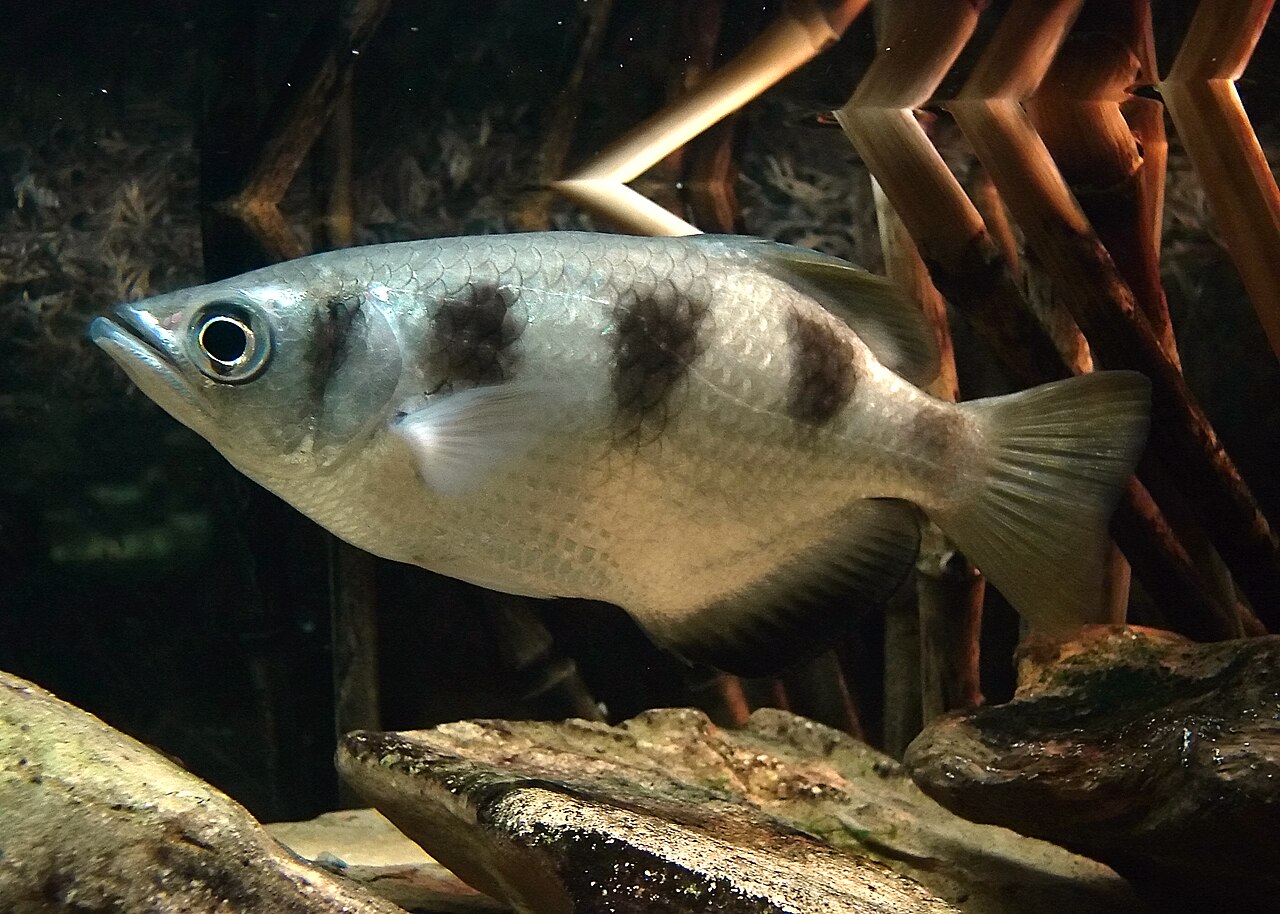
An insect resting on a leaf above a mangrove creek has no reason to fear a fish. Then a jet of water smacks into it like a bullet, and it tumbles straight into the mouth of a waiting archerfish.
The trick starts in the mouth. The fish presses its tongue against a groove in the roof of its mouth to form a narrow tube, then snaps its gill covers shut to force water out at high speed. Archerfish can bring down prey up to about 3 meters above the surface, and adults usually hit on the first shot. They also correct for refraction, the bending of light at the water’s surface that makes an insect appear somewhere it isn’t. Even the jet is engineered: the back of the stream travels faster than the front, so the water bunches into a heavy blob just before impact.
Their brains are as impressive as their aim. In a 2016 study led by Cait Newport at the University of Oxford, archerfish trained to spit at one human face picked it out from as many as 44 unfamiliar faces, with average peak accuracy of 81 percent in one experiment and 86 percent in another. That’s a remarkable feat for an animal with no neocortex.
9Lyrebird: Perfect Mimicry
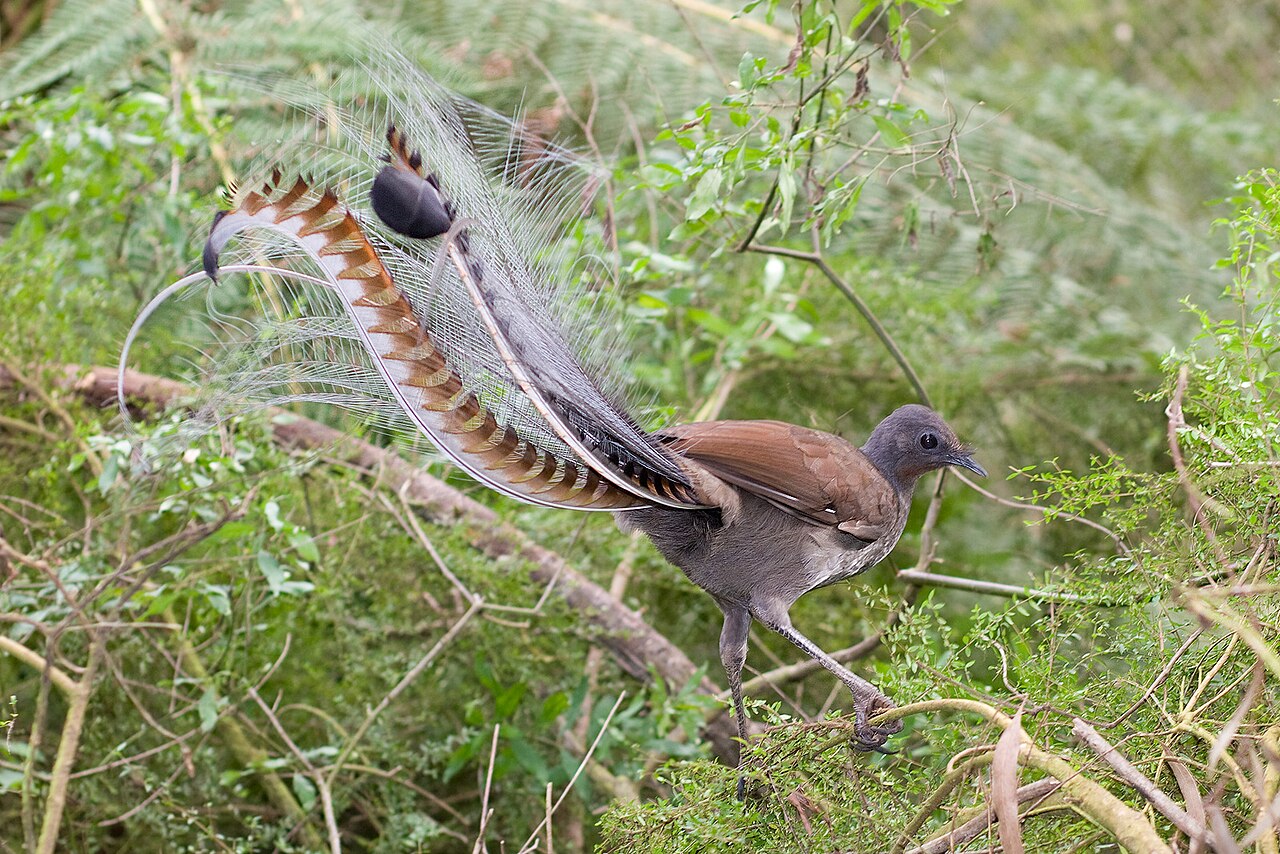
Walk through a eucalyptus forest in southeastern Australia and you might hear a kookaburra, a whipbird and a whole flock of agitated songbirds at once. There’s a good chance every one of those sounds is coming from a single bird.
The superb lyrebird is a pheasant-sized songbird that spends most of its time on the forest floor. Males grow spectacular tails up to about 70 centimeters long, made of 16 feathers, including two curved outer plumes shaped like the frame of a lyre. An estimated 70 to 80 percent of a male’s song consists of imitations of other species. In David Attenborough’s 1998 series The Life of Birds, a lyrebird mimicked camera shutters, a car alarm and a chainsaw. Two of the three birds featured were captive, which helps explain the mechanical repertoire.
The mimicry also has a sneaky side. A 2021 study published in Current Biology found that males create a convincing acoustic illusion of a mixed flock of birds mobbing a predator, and they perform it during courtship and mating. One leading idea is that the fake alarm keeps a female close, since leaving would seem risky. It’s a form of deception rarely documented in animal courtship.
8Bombardier Beetle: Boiling Chemical Spray
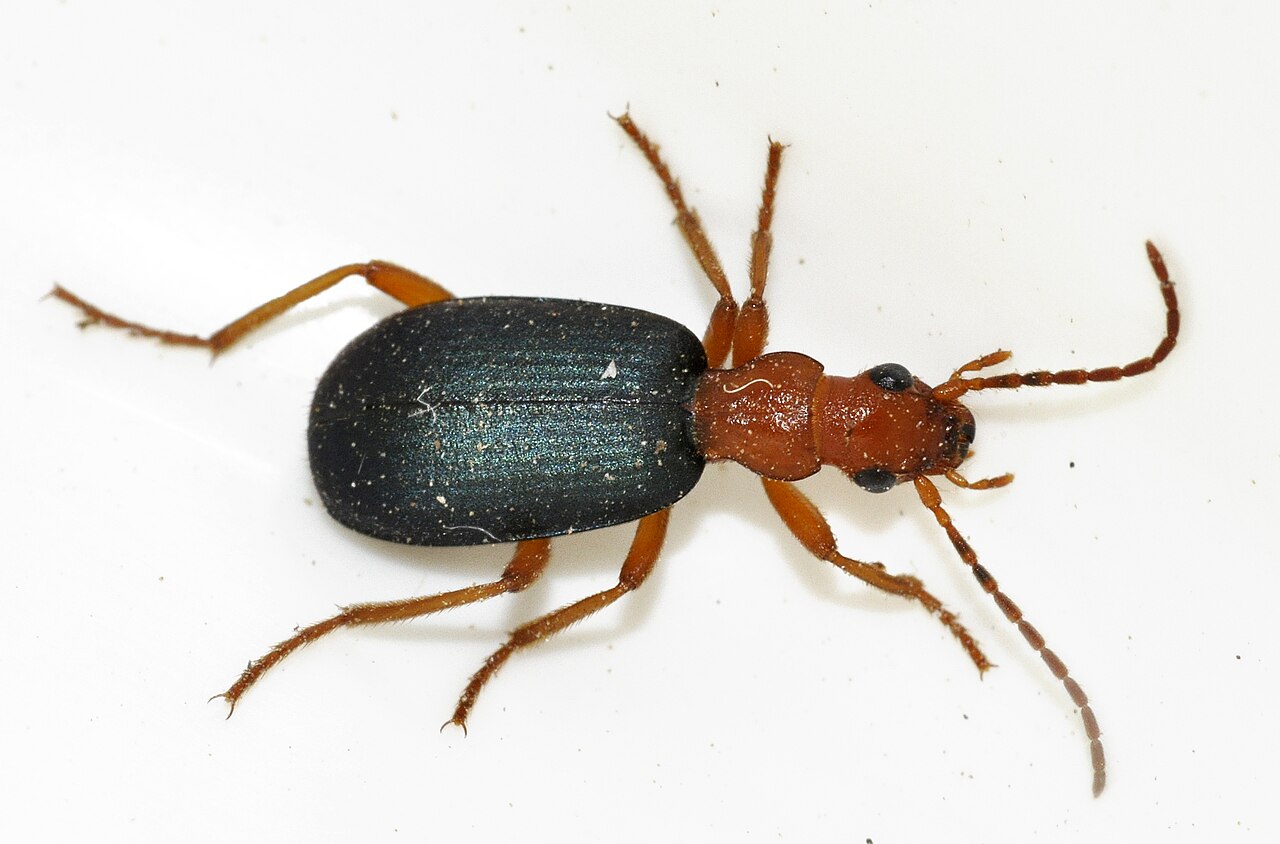
Grab a bombardier beetle and it will answer with an audible pop and a scalding spray, aimed with surprising accuracy at whatever is holding it.
The beetle carries a two-part chemical weapon. One reservoir stores hydroquinones and hydrogen peroxide. When threatened, it squeezes that mix into a reinforced reaction chamber lined with enzymes called catalases and peroxidases. The reaction heats the liquid to nearly 100°C, turns about a fifth of it into vapor and blasts out a cloud of irritating benzoquinone. The spray comes out in a rapid burst of about 70 pulses at roughly 500 pulses per second, and the beetle can swivel the tip of its abdomen to aim in many directions. More than 500 species belong to this group.
The weapon even works from the inside. In a 2018 study from Kobe University published in Biology Letters, Asian bombardier beetles were fed to Japanese toads. About 43 percent of the toads vomited the beetles back up, and every expelled beetle was alive. The beetles survived an average of about 40 minutes in the toads’ stomachs, apparently firing their spray until the toad gave up.
7Electric Eel: 860-Volt Shocks
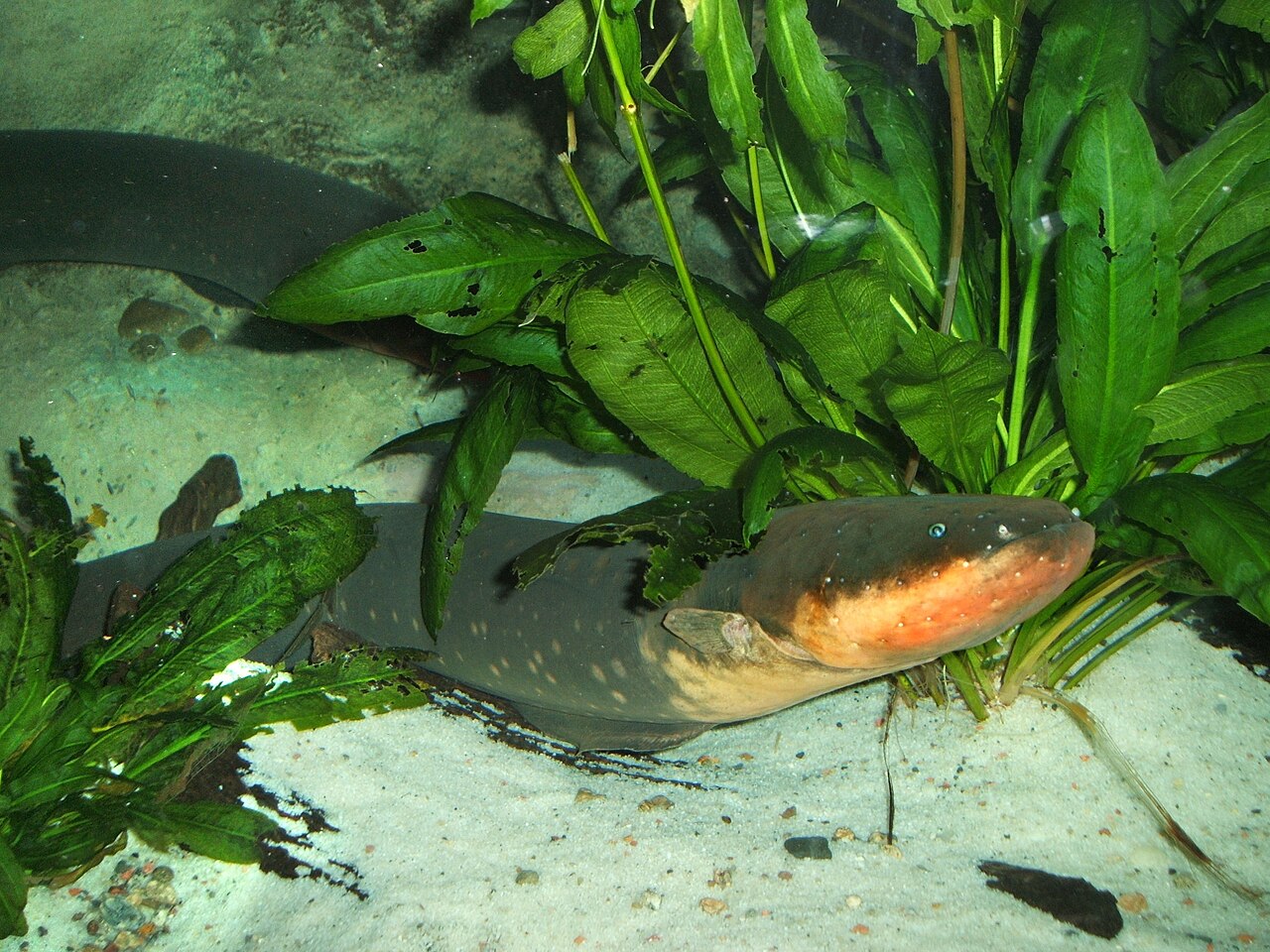
In 1800, the naturalist Alexander von Humboldt watched fishermen in South America drive horses into a muddy pool to make the electric eels inside exhaust their shocks. The eels fought back. Humboldt saw two horses stunned and drowned.
Despite the name, electric eels aren’t true eels. They’re knifefish, more closely related to catfish and carp. Most of their body is taken up by electric organs built from electrocytes, modified muscle cells stacked in series like batteries; the main organ holds some 6,000 of them. In 2019, scientists split the electric eel into three species and found that one, Volta’s electric eel, could discharge 860 volts, the strongest bioelectric shock ever recorded. The fish also breathe air, getting most of their oxygen by gulping at the surface.
Their behavior has surprised researchers, too. In 2016, biologist Kenneth Catania showed that electric eels will leap out of the water and press against a threat to deliver shocks directly, which lent support to Humboldt’s old account. And in 2021, scientists described more than 100 Volta’s electric eels hunting together in a lake off Brazil’s Iriri River, herding small fish into a ball before groups of up to 10 attacked at once.
6Wood Frog: Freezes Solid and Thaws Out
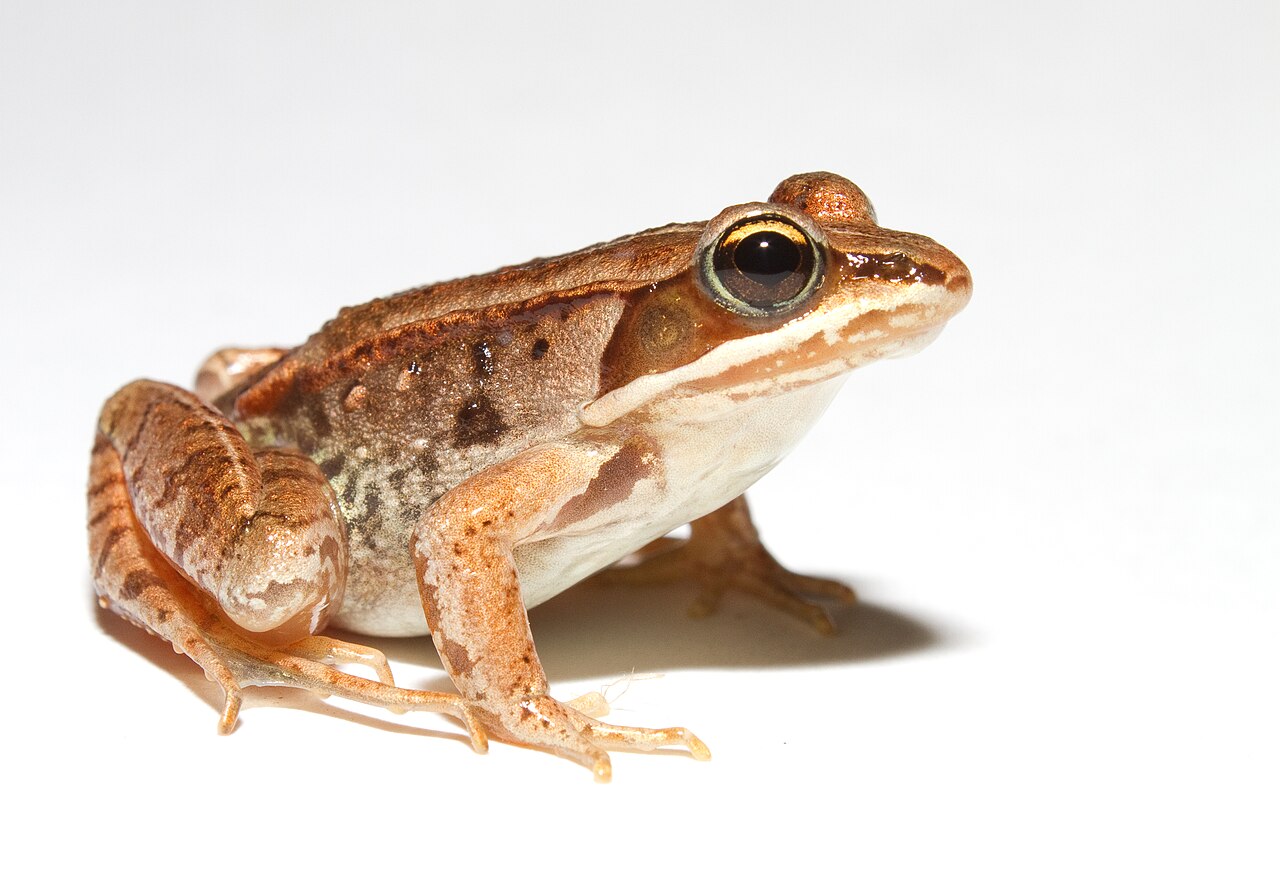
Every winter, wood frogs do something that should kill them. Their hearts stop beating, they stop breathing, and roughly two-thirds of the water in their bodies turns to ice. To anyone who found one in the leaf litter, the frog would look and feel like a dead, frozen lump.
The secret is sugar. As ice begins forming on its skin, the frog’s liver floods its bloodstream with glucose, which acts like antifreeze inside the cells. Ice forms in the spaces between cells instead, where it does far less damage, while the sugar-loaded cells avoid shrinking and dehydrating to the point of collapse. When spring arrives, the frog thaws, its heart restarts and it heads off to breed, often while snow is still on the ground.
Alaska’s wood frogs push the limits furthest. In a 2014 study in the Journal of Experimental Biology, researchers from the University of Alaska Fairbanks found that frogs overwintering outdoors survived temperatures as low as −18°C, and stayed frozen for up to 218 days with no deaths. Wood frogs from farther south had previously survived only to about −7°C in lab tests. The outdoor Alaskan frogs carried about 13 times more glucose in their muscles than frogs frozen in the lab.
5Peregrine Falcon: Record-Breaking Speed
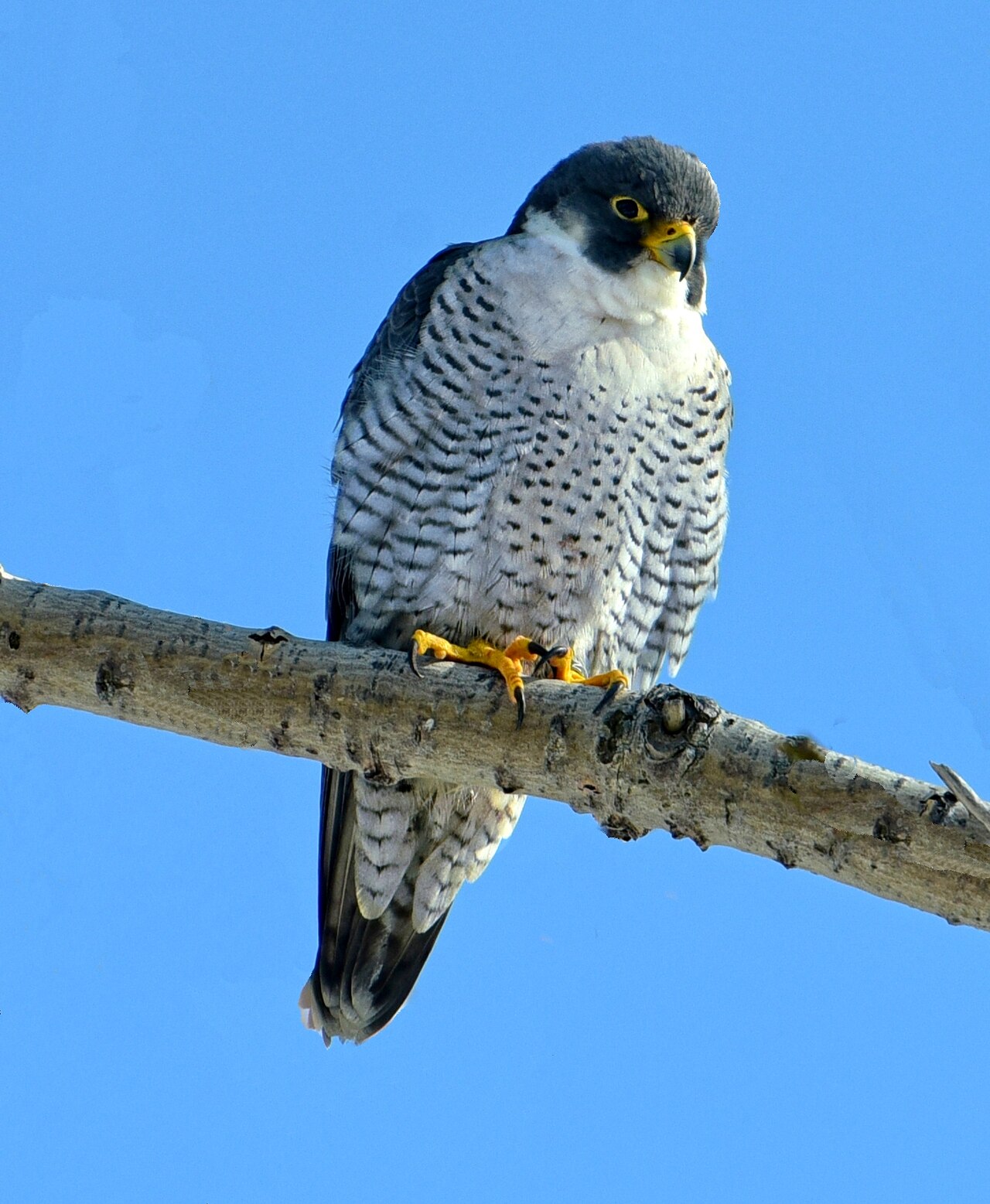
A peregrine falcon circles high above a city, spots a pigeon far below, tucks its wings into a teardrop and drops. What follows is the fastest movement in the animal kingdom.
The headline number comes from falconer Ken Franklin, who recorded his trained bird diving at about 389 km/h (242 mph) by jumping from an aircraft alongside it. Radar studies of wild birds have produced lower figures, but the peregrine’s dive, called a stoop, is still widely regarded as the fastest of any animal. The bird is built for it. Small bony tubercles in its nostrils are thought to guide air away and protect the lungs at speed, and a translucent third eyelid spreads tears and clears debris while it keeps watching its target. It typically strikes prey in midair with clenched feet.
Peregrines are also one of conservation’s great comebacks. The pesticide DDT thinned their eggshells so badly that populations crashed across much of the world in the mid-20th century. After DDT was banned in the United States in the early 1970s, captive breeding and releases helped them recover, and the species came off the US endangered list on August 25, 1999. Today they nest on skyscrapers, bridges and cathedrals, where city pigeons make an endless buffet.
4Mantis Shrimp: Bullet-Fast Punch
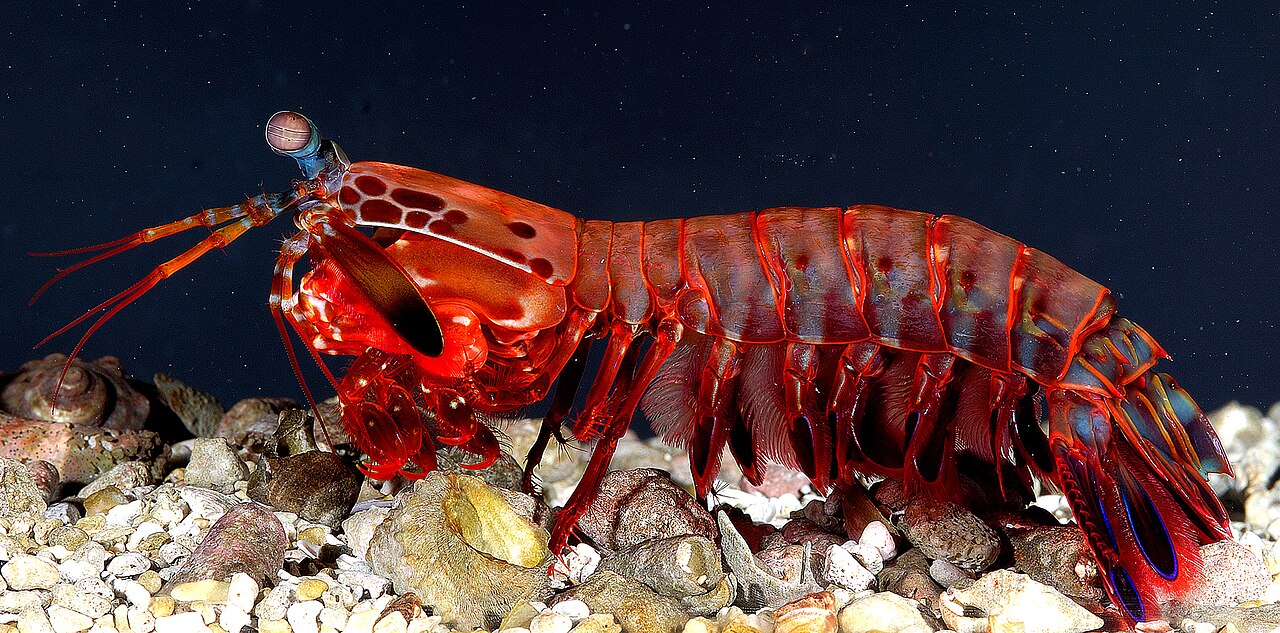
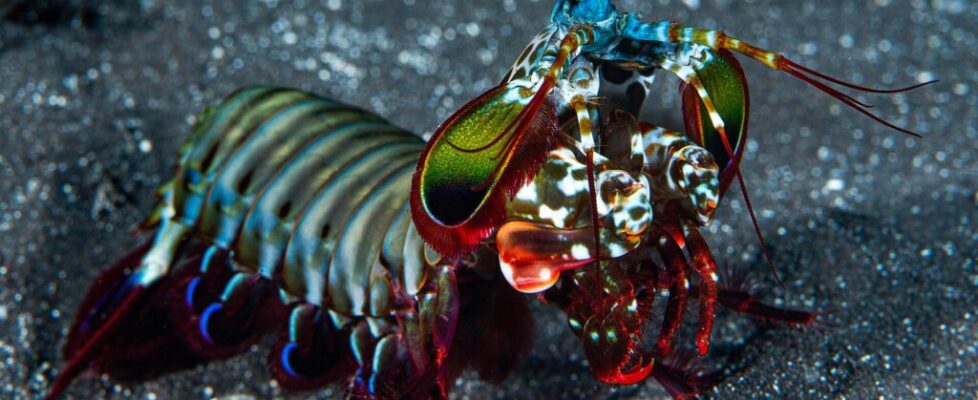
Pound for pound, the peacock mantis shrimp throws one of the fastest punches in nature. A 2004 study led by biologist Sheila Patek found that its club-like appendages accelerate at about 10,400 g and reach speeds of about 23 meters per second (51 mph) from a standing start.
The punch works like a crossbow. A saddle-shaped structure in the arm stores energy like a spring, and a latch releases it all at once. The strike is so fast that it creates cavitation bubbles in the water, and when those bubbles collapse they deliver a second shock wave and even a faint flash of light, a phenomenon called sonoluminescence. Prey effectively gets hit twice. Mantis shrimp use this to smash open snail shells and crab armor, and there are rare accounts of them cracking aquarium glass, usually when kept in tanks that are too small.
Their eyes are just as extreme. Humans have three types of color receptors; mantis shrimp have between 12 and 16 types of photoreceptor cells, letting them see ultraviolet and polarized light. At least six species can detect circularly polarized light, an ability almost unheard of in the animal kingdom. More than 520 species are known, ranging from a few centimeters to about 38 centimeters long.
3Axolotl: Regrows Body Parts
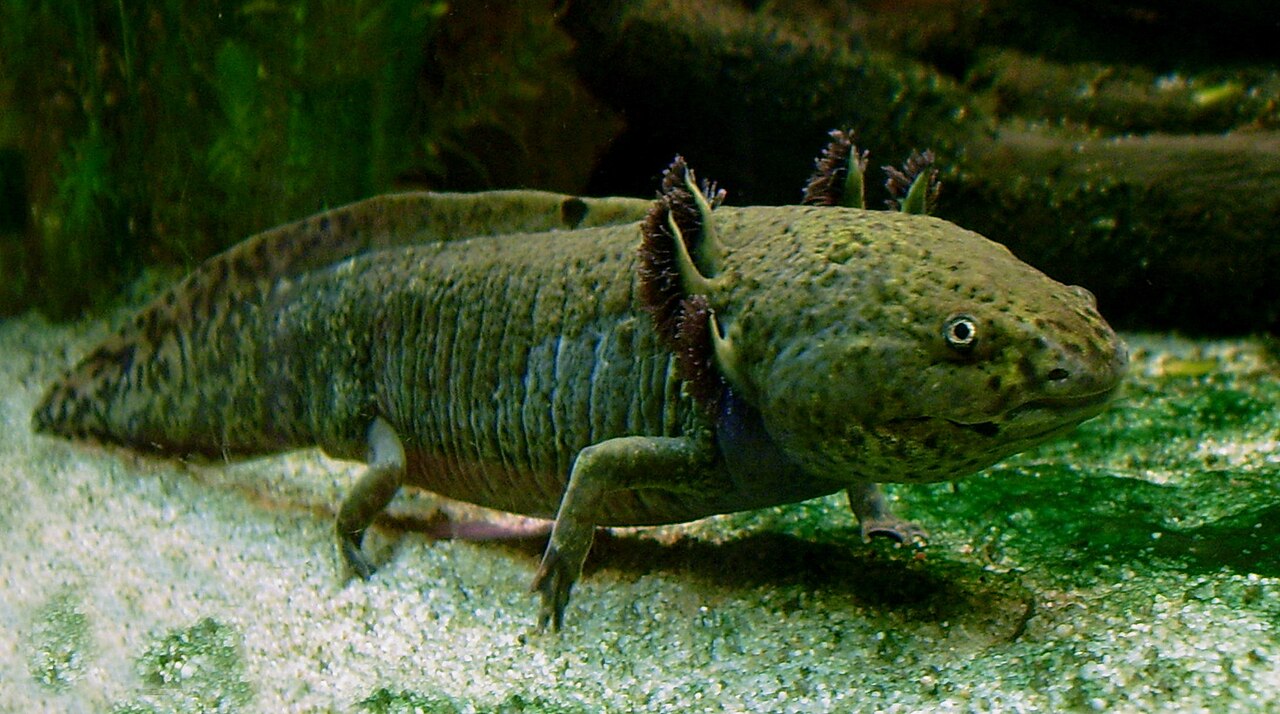
Lose a leg to a hungry neighbor, and an axolotl simply grows a new one, complete with bones, muscles and nerves in the right places, over a period of months. It can also regenerate parts of its spinal cord, heart, eyes and even brain.
This Mexican salamander is a permanent teenager. Axolotls reach sexual maturity without going through metamorphosis, so adults keep the feathery external gills and aquatic lifestyle of a larva, a trait called neoteny. In the wild they’re found only in the canals and wetlands of Lake Xochimilco on the edge of Mexico City, and the IUCN lists them as critically endangered. Surveys found about 6,000 axolotls per square kilometer in 1998, 1,000 in 2003 and only 100 in 2008, as pollution, invasive fish and urban growth took their toll.
Ironically, axolotls thrive everywhere except home. They’re bred in huge numbers as pets and lab animals, and scientists study them to understand how cells rebuild complex tissue without scarring. In 2018, researchers published the axolotl genome: about 32 billion base pairs, roughly 10 times the size of the human genome, though it encodes a similar number of proteins.
2Immortal Jellyfish: Reverses Its Life Cycle
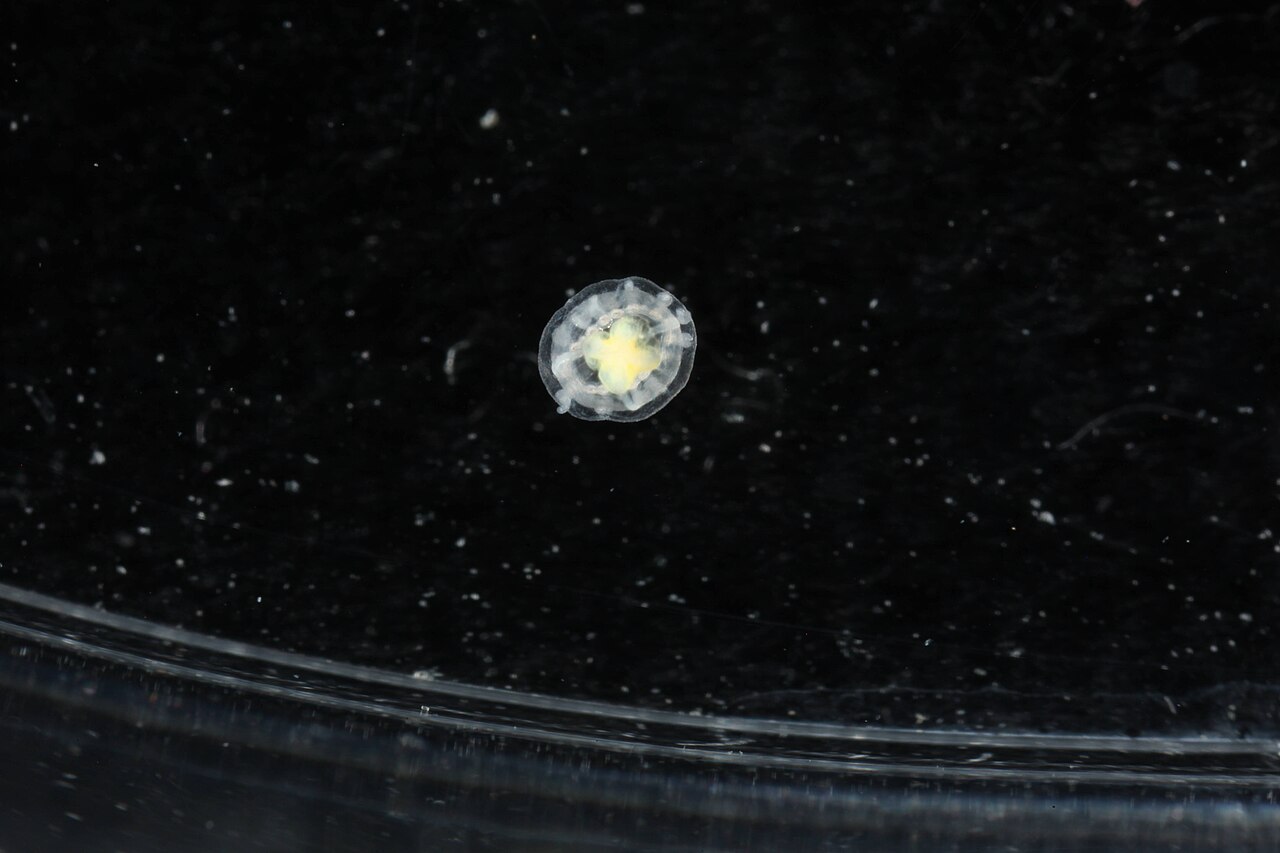
For most animals, getting old, sick or badly injured is the beginning of the end. When Turritopsis dohrnii runs into trouble, it can turn itself back into a baby.
Like many jellyfish, this one has two main life stages: a polyp colony anchored to the seafloor, which buds off tiny free-swimming medusae with bells about 4.5 millimeters across. Normally the medusa stage is a dead end that ends in death after reproducing. But when this species faces starvation, a sudden temperature change, low salinity, physical damage or old age, the medusa can absorb its tentacles and bell, settle down and transform back into a polyp. That polyp then produces fresh medusae, genetically identical to the original. The process relies on transdifferentiation, in which specialized cells change into different cell types.
The ability was documented in papers in the 1990s, most famously a 1996 study titled “Reversing the life cycle.” In 2022, Spanish researchers mapped the species’ genome and compared it with a close relative that can’t rejuvenate, finding differences in genes linked to DNA repair and stem-cell renewal. The jellyfish isn’t invincible, though. In the wild, most individuals are probably eaten or killed by disease before they ever get the chance to reverse.
1Tardigrade: Near-Indestructible
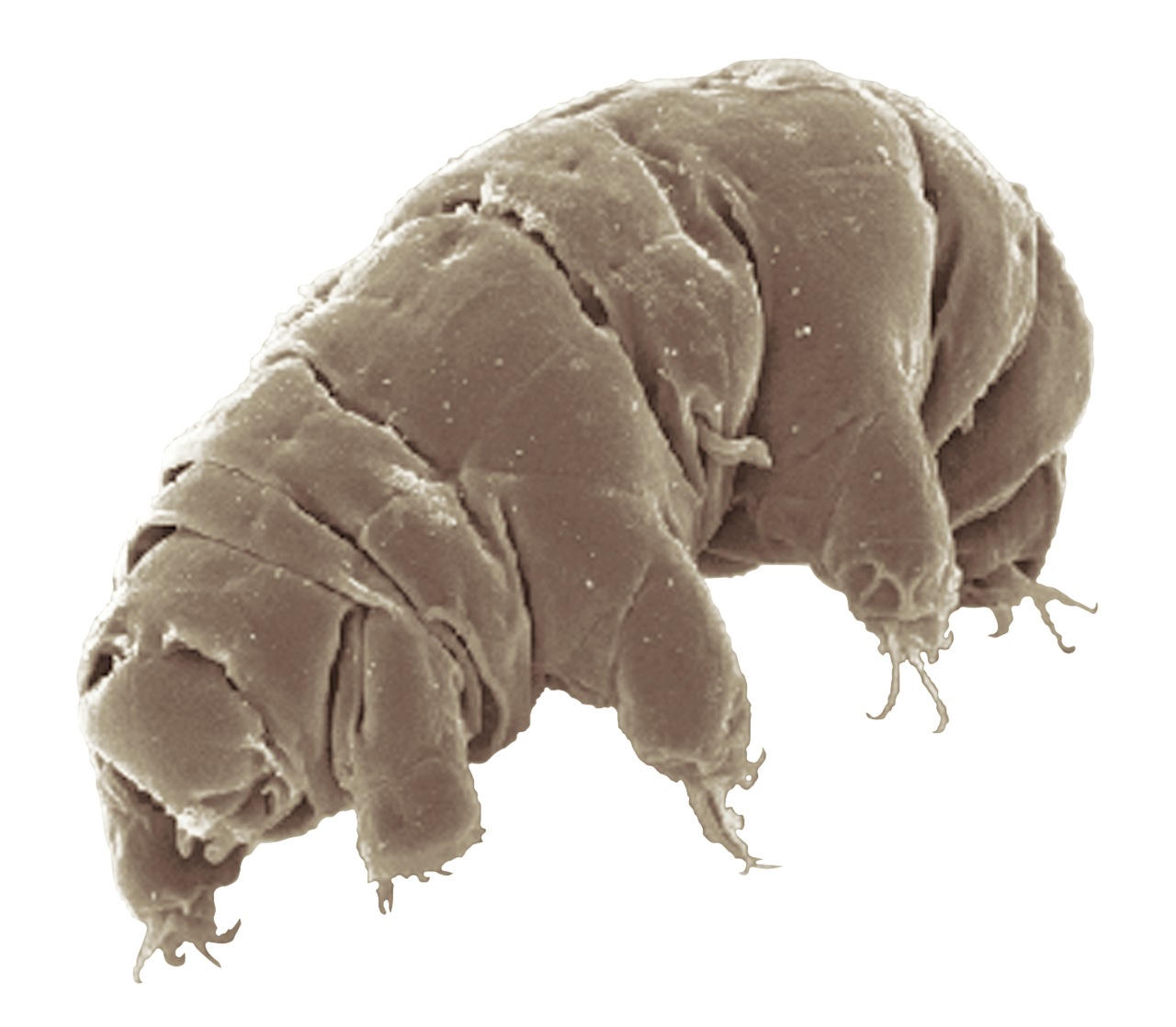
Freeze it to within a degree of absolute zero. Heat it beyond the boiling point of water. Expose it to the vacuum of space. A tardigrade in the right state has a real chance of shrugging it all off.
Tardigrades, also called water bears or moss piglets, are plump, eight-legged animals usually about half a millimeter long. German pastor Johann August Ephraim Goeze first described them in 1773 as “little water bears,” and about 1,500 species are now known, living everywhere from mountaintops and deep-sea mud to the moss in your gutter. Their secret is cryptobiosis. As they dry out, they pull in their legs and curl into a shriveled “tun,” with metabolism dropping to almost nothing. In this state they can tolerate temperatures from −272°C to a brief 149°C, plus intense pressure and radiation.
In 2007, dehydrated tardigrades rode the FOTON-M3 mission and spent 10 days exposed to open space. Vacuum alone barely bothered them; full solar ultraviolet light killed most, but a few survived. In 2016, Japanese researchers reported reviving tardigrades from a moss sample collected in Antarctica in 1983 and kept frozen for more than 30 years. That same year, scientists identified a tardigrade protein called Dsup that reduced X-ray damage to DNA in cultured human cells by roughly 40 percent.
Nature Did It First
Strip away the comic-book language and every power on this list is a solution to a specific problem: catching prey, surviving winter, escaping a predator or outlasting a drought. What makes them feel super is how far each animal pushes one ability past what seems physically possible.
Scientists are paying attention. Tardigrade proteins, axolotl genes and wood frog chemistry are all being studied for lessons in medicine and preservation. For more strange biology, explore the deep-sea creatures that look like aliens, or see which animals made our list of the deadliest animals on Earth.
Quick answers
What is the most indestructible animal?
The tardigrade, or water bear, is usually called the toughest animal on Earth. In its dried-out tun state, it can survive temperatures from about −272°C to a brief 149°C, extreme pressure, high radiation and the vacuum of space. Tardigrades frozen for more than 30 years have been revived. They aren’t truly indestructible, though, and active tardigrades are much more vulnerable.
Is the immortal jellyfish really immortal?
Not in the everyday sense. Turritopsis dohrnii can revert from its adult medusa stage to a juvenile polyp when stressed, injured or aging, which means it can potentially avoid dying of old age. But it can still be eaten, starve or die of disease, and most individuals in the wild probably never get the chance to reverse.
How do axolotls regrow their limbs?
When an axolotl loses a limb, cells near the wound gather into a structure called a blastema, a cluster of cells that can multiply and rebuild bone, muscle, nerves and skin in the right pattern. Over several months, a fully working limb grows back without scarring. Scientists study the process to learn how regeneration might be encouraged in humans.
Sources, further reading & photo credits
- Odontodactylus scyllarus — Wikipedia
- Archerfish — Wikipedia
- Superb lyrebird — Wikipedia
- Bombardier beetle — Wikipedia
- Electric eel — Wikipedia
- Wood frog — Wikipedia
- Peregrine falcon — Wikipedia
- Mantis shrimp — Wikipedia
- Axolotl — Wikipedia
- Turritopsis dohrnii — Wikipedia
- Tardigrade — Wikipedia
Cover image: Cédric Péneau · CC BY-SA 4.0 · via Wikimedia Commons. Photos throughout this list are sourced from Wikimedia Commons under the licenses noted in each caption.