

10 Abandoned Places That Feel Frozen in Time

A yellow Ferris wheel in northern Ukraine was reportedly days from its grand opening in the spring of 1986. It has stood still ever since. Places like that have a strange gravity. The clocks stopped, the people left, and the buildings just kept standing there, slowly collecting sand, ivy, ash, or silence.
This list rounds up 10 abandoned places frozen in time, from a diamond town drowning in Namibian dunes to a concrete island off Japan that once packed in more people per acre than almost anywhere on Earth. Some you can stroll through with a ticket. Others take a ferry, a permit, or real patience, and one is off-limits for now. All of them make you wonder what you’d leave behind.
10Houtouwan, China’s Green Ghost Village
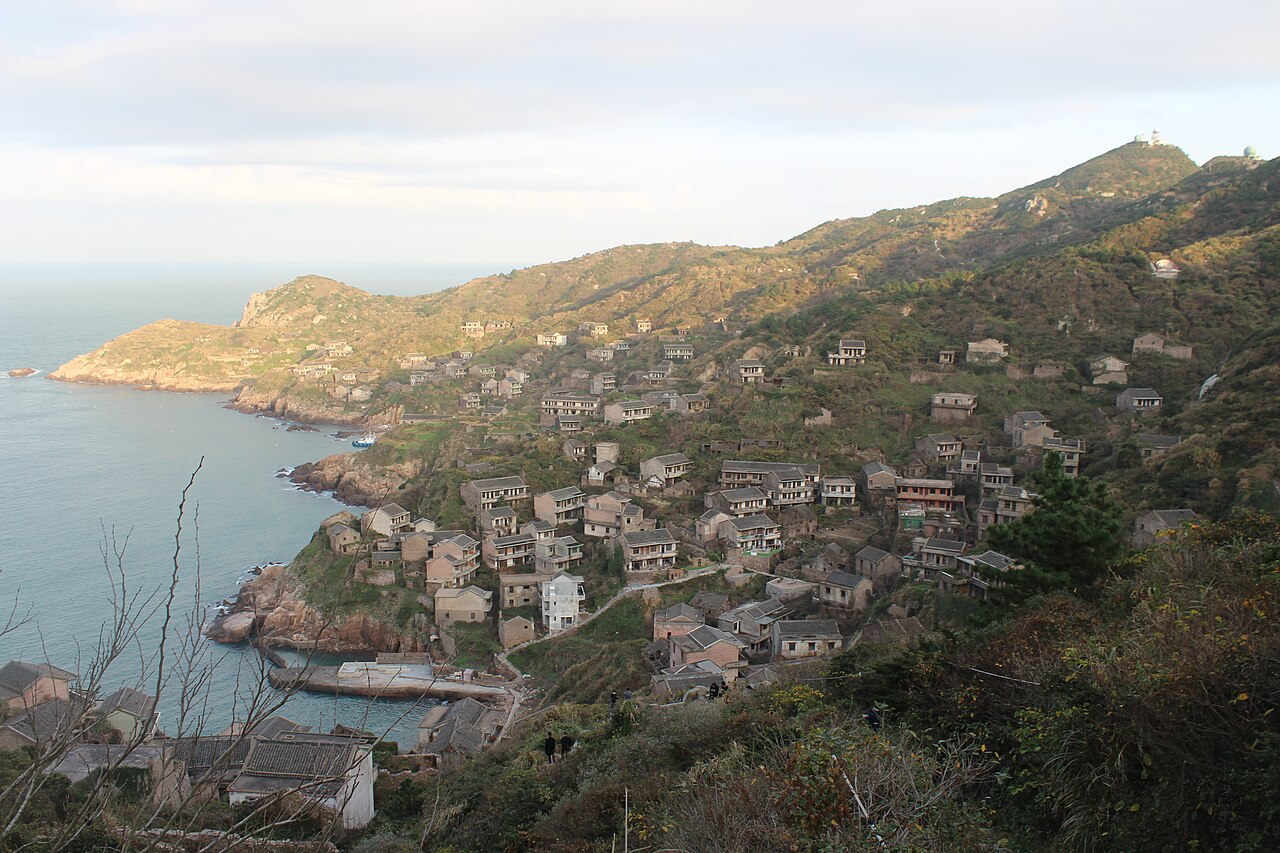
From the right angle, Houtouwan looks less like a village than a hillside that sprouted houses. Stone homes stacked above a small bay on Shengshan Island, at the outer edge of China’s Shengsi archipelago, are wrapped so thoroughly in ivy and creepers that entire facades have turned into living green walls. Windows peek out like eyes from a hedge.
It wasn’t always this quiet. In the 1980s, more than 3,000 people lived here, most of them earning a living from the rich fishing grounds of the East China Sea. But the village was remote, cramped, and hard to supply, and through the 1990s families drifted to the mainland for schools, jobs, and easier lives. By 2002 Houtouwan was officially depopulated and folded into a neighboring village. Then the plants moved in and got to work.
Photos of the overgrown houses went viral in the mid-2010s, and abandonment turned into an unlikely second career. A viewing platform opened in 2017, and a ticketed path now winds between the swallowed homes. Getting there takes commitment: a bus and a ferry of several hours from Shanghai, or a boat from Zhoushan, to neighboring Gouqi Island, then a bridge and a short taxi ride across Shengshan.
9Craco, Italy
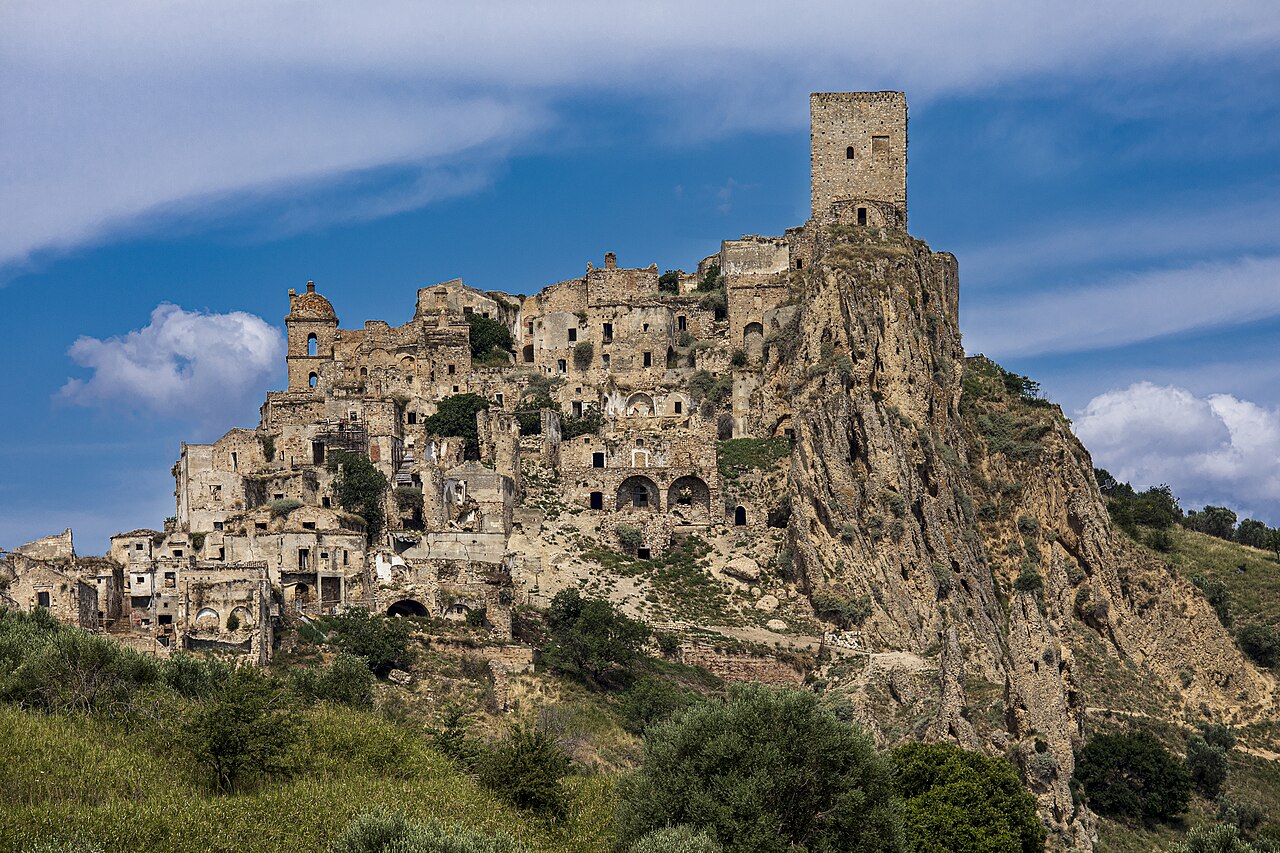
Craco doesn’t so much sit on its hill as erupt from it. The medieval town in southern Italy’s Basilicata region spills down a crag in tiers of pale stone, crowned by an old castle tower, and from a distance it looks perfectly alive. Get closer and the doorways gape, roofs have caved in, and weeds sprout from the church walls.
People lived up here for roughly a thousand years, and tombs in the area go back much further. What finally drove them out was the ground itself. In 1963 a series of landslides, likely worsened by new sewer and water works, forced an evacuation to a new settlement in the valley below. A flood in 1972 made any return impossible, and the 1980 Irpinia earthquake sealed the old town’s fate for good.
Hollywood couldn’t resist the eerie scenery. Mel Gibson shot scenes for The Passion of the Christ here, and Craco also turns up in the James Bond film Quantum of Solace. Today the historic center can only be entered on guided tours that start at a visitor center in the newer part of town, and every visitor gets a mandatory safety helmet. Come in the late afternoon, when the stone turns gold and the empty windows fill with shadow.
8Kolmanskop, Namibia
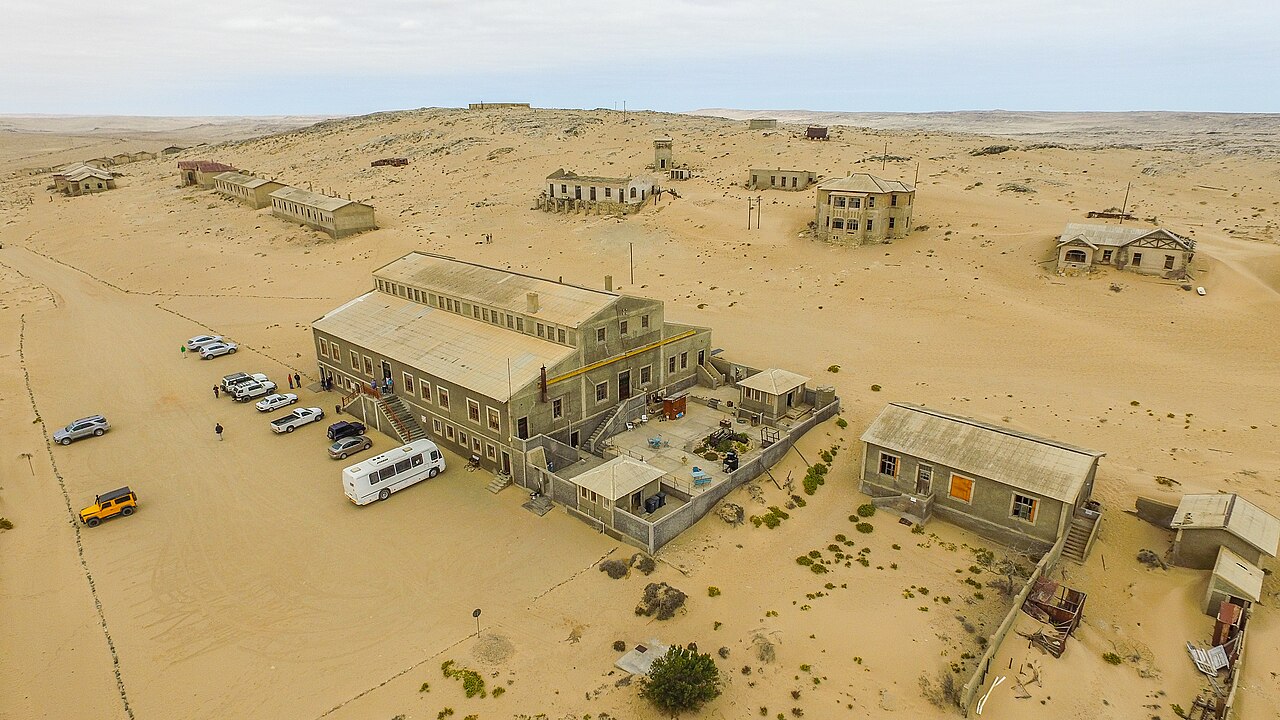
Open a door in Kolmanskop and you may find the Namib Desert got there first. Sand pours through windows and pools against bathtubs, rising halfway up walls painted in faded pastels, so that some rooms look like hourglasses stopped mid-flow.
The story starts in 1908, when railway worker Zacharias Lewala picked up a glittering stone near the tracks and showed it to his supervisor, August Stauch. It was a diamond, and the rush was on. German colonial authorities sealed off a vast stretch of desert as the Sperrgebiet, or “forbidden zone,” and Kolmanskop blossomed into a startlingly comfortable outpost with a hospital, a ballroom, a theater, a casino, a skittle alley, an ice factory, and what’s often cited as the first X-ray station in the Southern Hemisphere.
The boom didn’t last. Diamond yields fell after World War I, richer deposits turned up far to the south in 1928, and the last residents were gone by 1956. The ghost town sits about 10 kilometers inland from Lüderitz, inside the restricted diamond area, so you need a permit to enter. Guided tours run daily, and photographers can buy a special permit that grants access from sunrise to sunset, when the light on the dunes is at its best.
7Bodie, California
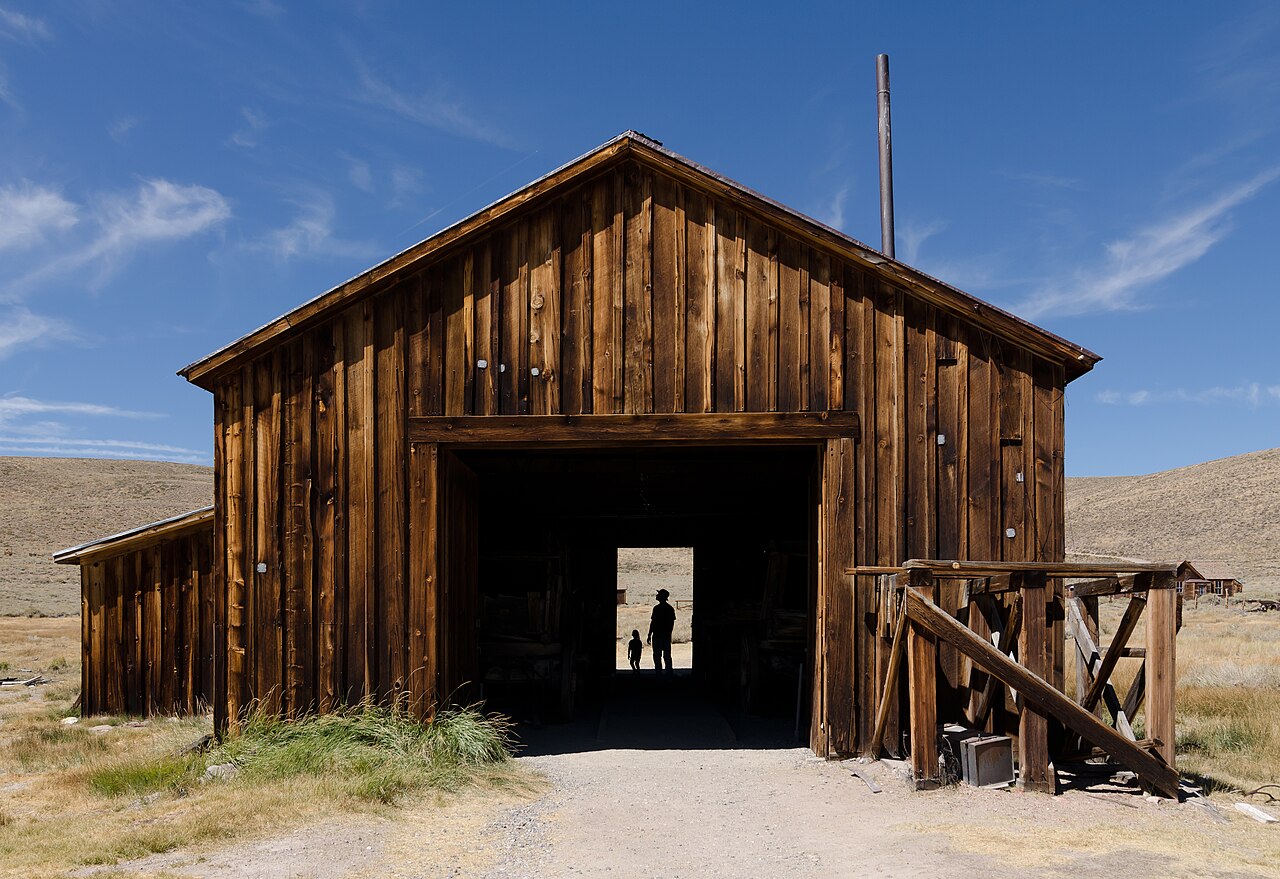
In Bodie, the shelves are still stocked. Peer through the dusty windows of this Eastern Sierra gold town and you’ll spot iron bedframes, tins on store shelves, a schoolroom with books on the desks, and a church with its pews in place, much as the last residents left them.
Gold turned up here in 1859, but Bodie didn’t explode until a rich strike in the late 1870s. By 1879 it held somewhere between 7,000 and 10,000 people and about 2,000 buildings, plus a reputation for saloons, shootings, and brutal winters at 8,379 feet. The story goes that a little girl whose family was moving there wrote, “Goodbye God, I’m going to Bodie.” Defensive locals later insisted she’d actually written, “Good, by God, I’m going to Bodie.”
The mines faded, a fire gutted the business district in 1932, and the last mine shut in 1942. California made Bodie a state historic park in 1962 and now keeps roughly 110 surviving structures in a state of “arrested decay,” repaired enough to stand but never restored to look new. Summer and early fall are the easy window; heavy snow usually closes the roads in winter, and the last three miles in are dirt.
6Pyramiden, Svalbard
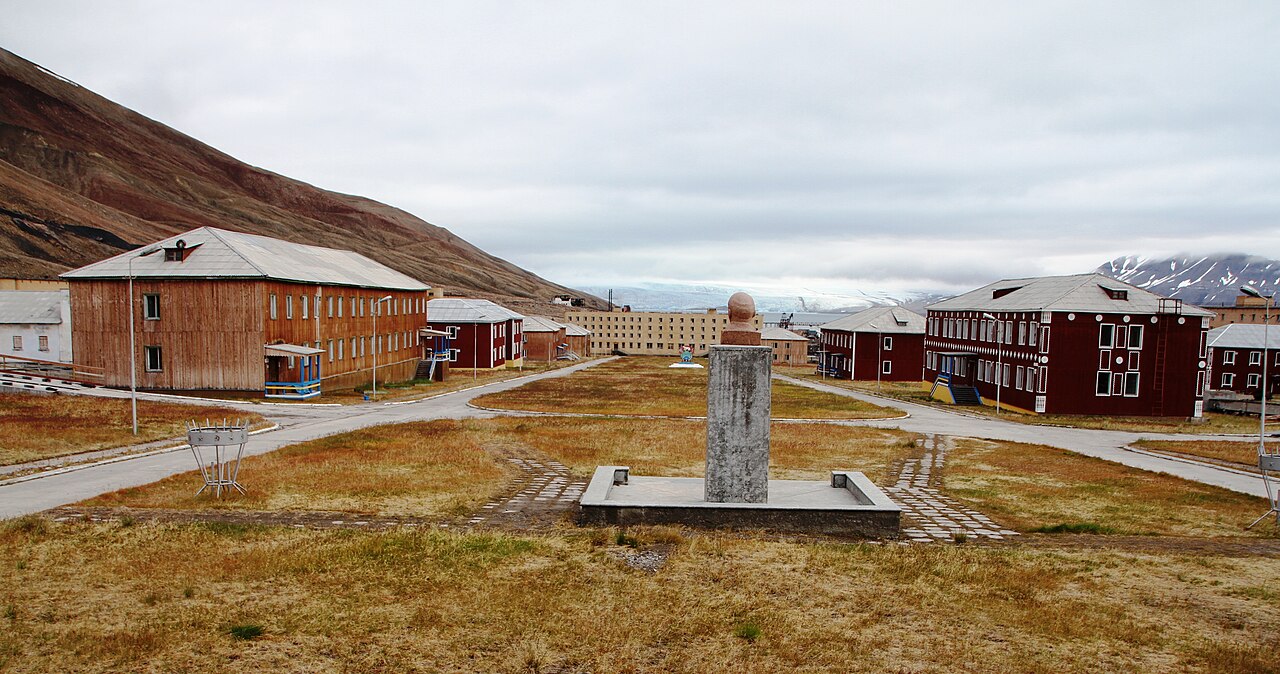
At the head of an Arctic fjord, a bust of Lenin billed as the world’s northernmost gazes out toward a glacier. Behind him stands an entire Soviet town: a palace of culture, a sports hall with a swimming pool, a canteen, and tidy apartment blocks arranged around a central square, all of it only about 1,250 kilometers from the North Pole.
Sweden founded Pyramiden as a coal settlement in 1910 and sold it to the Soviet Union in 1927. Under the state mining company Arktikugol it grew into a showcase of socialist life in the high Arctic, with well over a thousand residents in its heyday. Then the money ran out. Mining stopped on March 31, 1998, and by that October the last permanent residents were gone, leaving books, furniture, and murals behind in the cold, dry air that preserves almost everything.
Pyramiden is surprisingly reachable. In summer, boat trips run from Longyearbyen, and in late winter and spring, snowmobile tours make the journey. The old hotel reopened in 2013, so you can even spend the night, and a small crew of guides and caretakers lives there in summer. Polar bears roam the area, which is why groups travel with armed guides and you shouldn’t wander off alone.
5Kayaköy, Turkey
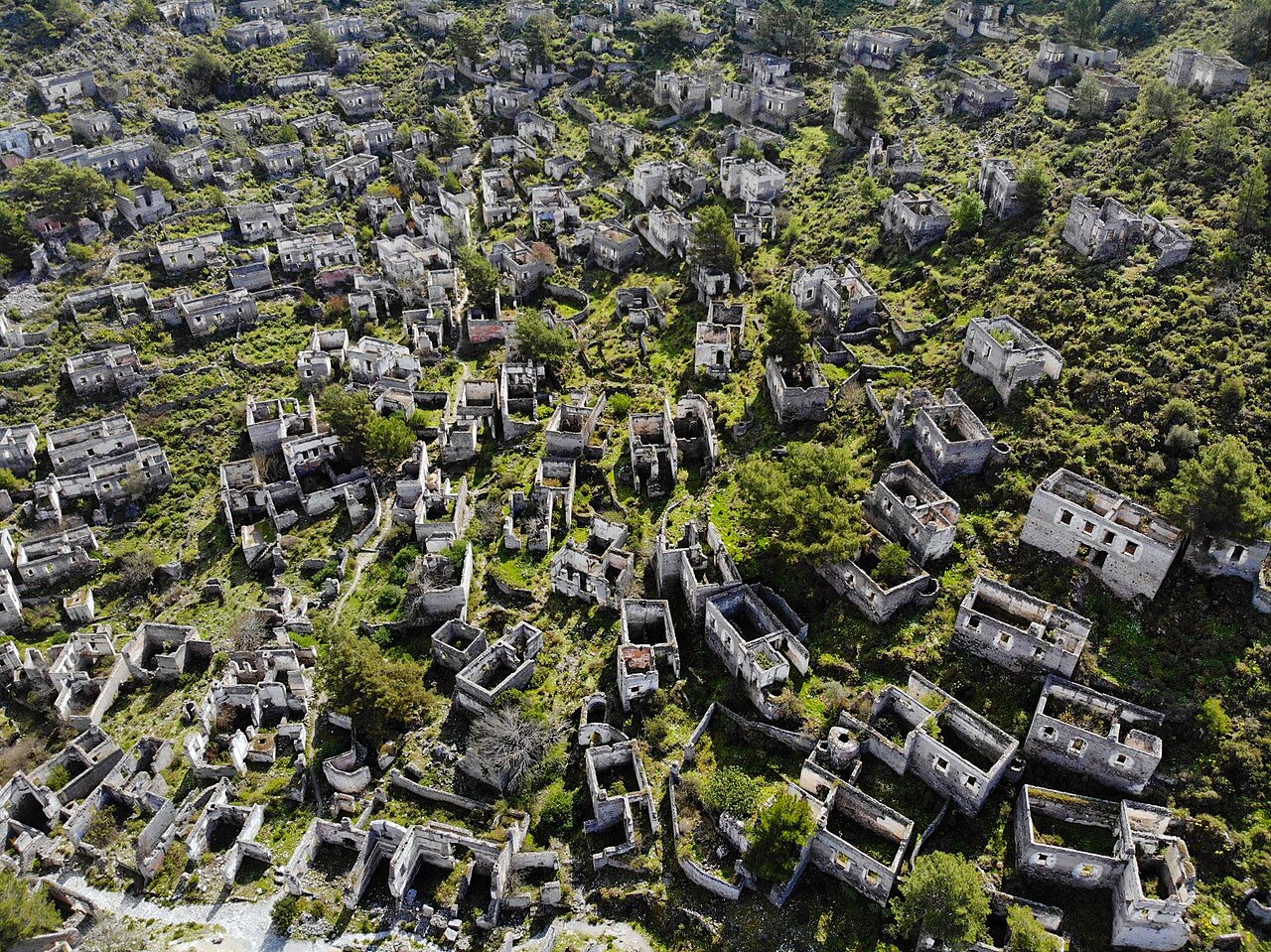
Hundreds of roofless stone houses climb the slopes above a quiet valley in southwestern Turkey, packed close but staggered up the hill. Locals like to say they were arranged so no house blocked another’s view. This was Levissi, a prosperous Greek Orthodox town of more than 6,000 people, and today it is one of the most haunting ghost villages in the Mediterranean.
Its emptying was the work of war and diplomacy. Many residents had already been deported or killed in the upheavals of World War I, and after the Greco-Turkish War, the 1923 population exchange between Greece and Turkey forced the remaining Orthodox Christians to leave. Some went on to found Nea Makri, near Athens. Muslims arriving from Greece were meant to take their place, but many refused to settle in the abandoned town, and a 1957 earthquake damaged much of what remained.
Today Kayaköy is a protected museum village about 8 kilometers south of Fethiye, easy to reach by car or local minibus and often paired with a hike down to the coast near Ölüdeniz. Around 500 houses survive as shells, along with two churches that are the site’s highlights. Go early or late to dodge the heat, and wear real shoes, because the paths are steep, rocky, and lined with crumbling walls.
4Plymouth, Montserrat
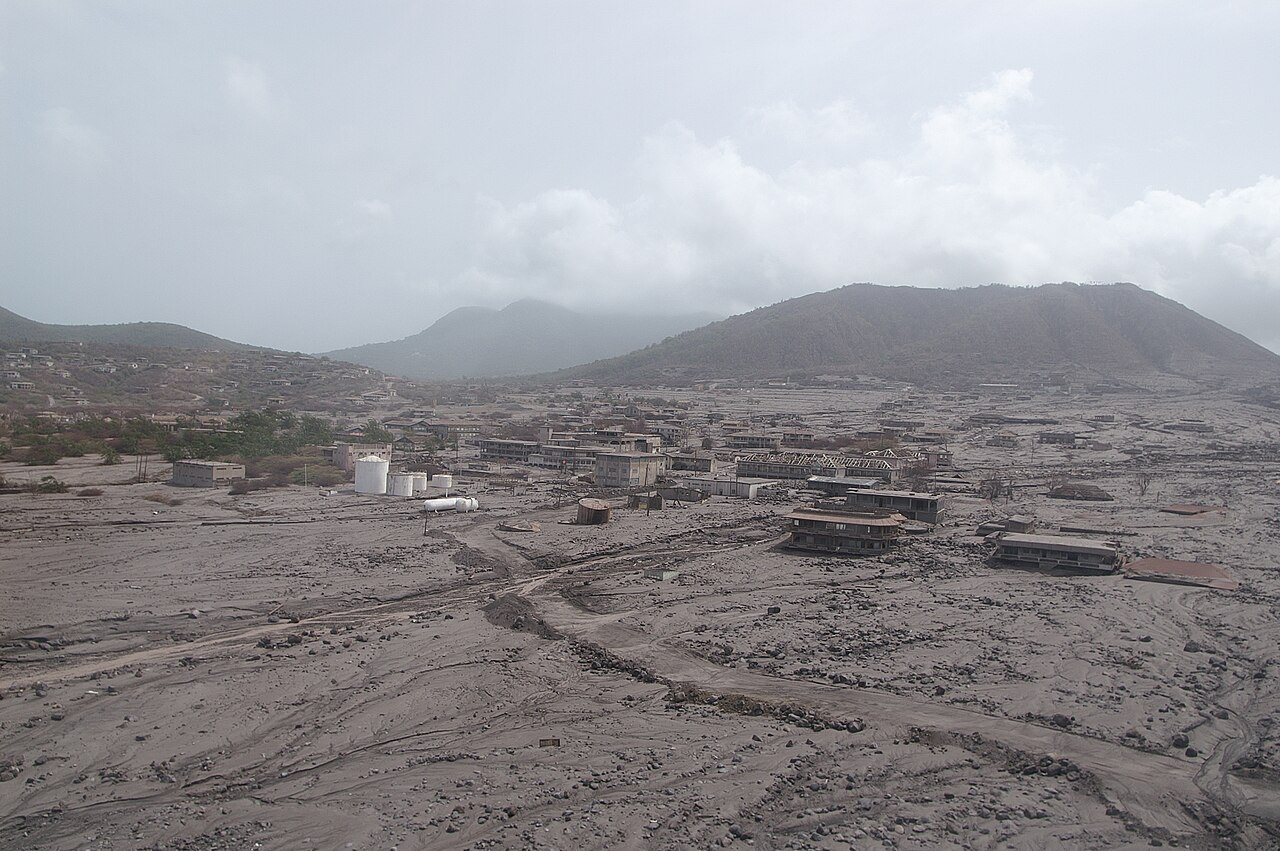
Plymouth is still, on paper, the capital of Montserrat. It is also buried. Rooftops and upper stories poke out of a gray plain of volcanic debris, and the ground floors of shops, churches, and government offices lie entombed below a landscape that looks more lunar than Caribbean.
The Soufrière Hills volcano, quiet for centuries, rumbled awake in July 1995. Plymouth, a town of about 4,000 people, was evacuated several times as ash fell, and the last evacuation in April 1996 turned out to be permanent. In June 1997, pyroclastic flows killed 19 people in the island’s central villages, and that August a series of eruptions destroyed most of the capital and set many of its buildings ablaze. Around two-thirds of Montserrat’s population left the island in the years that followed.
The whole southern half of the island became an exclusion zone, and Plymouth lies deep inside it. Visiting is possible but never casual: access depends on daily volcanic risk assessments, and visitors go in only with certified local guides when authorities give the green light. Even from the safe north, viewpoints look across ash-gray valleys toward a volcano that the Montserrat Volcano Observatory still watches around the clock.
3Ross Island, Andaman Islands
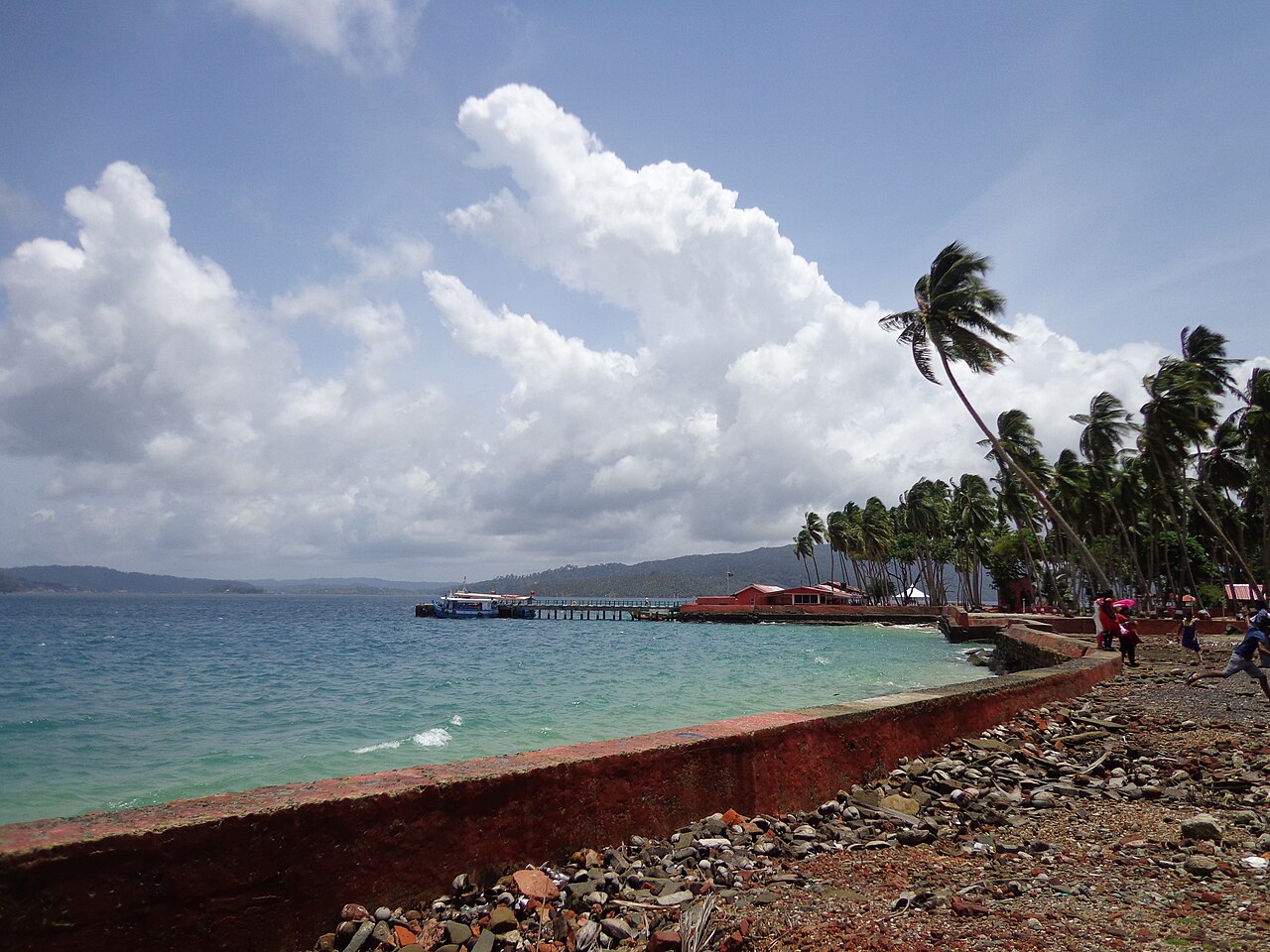
On Ross Island, the trees are winning. Massive ficus roots pour over brick walls like candle wax, prying apart arches and swallowing doorways, while spotted deer and peacocks wander through the remains of what was once the grandest address in the Andaman Islands.
The British seized the island in 1858, months after the great uprising of 1857, and made it the headquarters of a penal settlement for convicts shipped from mainland India, many of them political prisoners. Convict labor cleared the jungle and built the officials’ world: Government House, a church, a bakery, a hospital, a printing press, tennis courts, a swimming pool, and a ballroom. Admirers called it the “Paris of the East,” a fond nickname resting on brutal forced labor.
The good life ended fast. A powerful earthquake struck the islands in 1941, and in 1942 Japanese forces occupied the Andamans, stripping buildings and digging bunkers that still dot the shoreline. After the war, the settlement was wound down and the jungle took over. India renamed the island Netaji Subhas Chandra Bose Dweep in 2018, after the independence leader who is said to have raised the Indian flag here in 1943. Ferries make the short crossing from Sri Vijaya Puram, formerly Port Blair, and the island closes to visitors each evening.
2Hashima Island (Gunkanjima), Japan
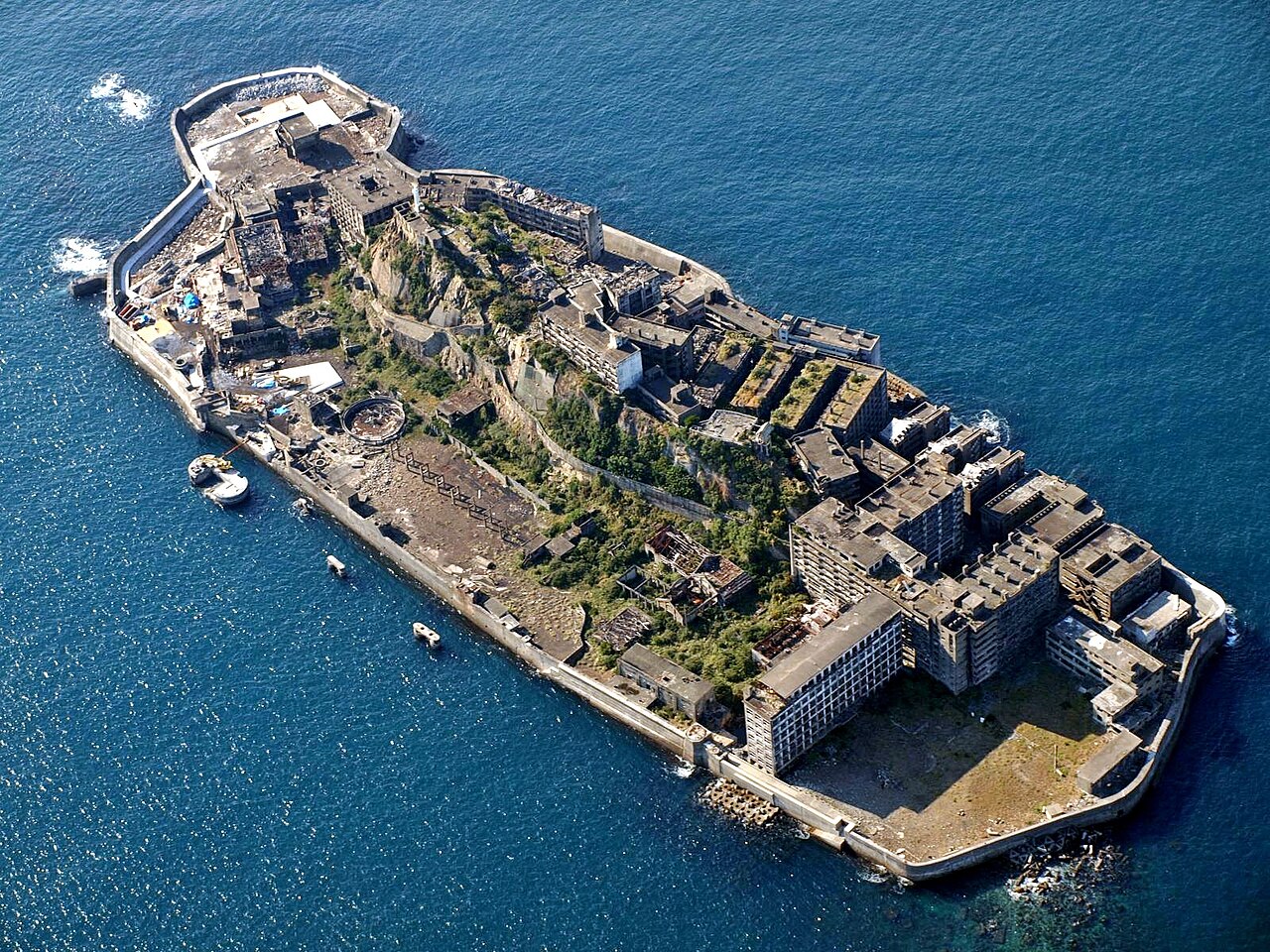
From the sea, Hashima looks like a warship cast in concrete, which is exactly why it earned the nickname Gunkanjima, or “Battleship Island.” Up close, the illusion gives way to something stranger: crumbling apartment blocks, staircases to nowhere, and a seawall wrapped around just 16 acres of rock off the coast of Nagasaki.
Undersea coal mining began here in 1887, and Mitsubishi later turned the island into a vertical company town, complete with schools, shops, a hospital, and what’s often cited as Japan’s oldest large reinforced-concrete apartment building, completed in 1916. By 1959, 5,259 people were squeezed onto the island, giving it one of the highest population densities ever recorded. Then Japan shifted from coal to oil, the mine closed in January 1974, and by that April everyone was gone.
Hashima carries a darker history, too. During World War II, Korean and Chinese laborers were forced to work in its mines under grim conditions, a legacy that sparked controversy when the island joined a UNESCO World Heritage listing in 2015. Since 2009, licensed boat tours from Nagasaki have been able to land visitors on a short walkway at the island’s southern end. The rest stays off-limits, and rough seas cancel plenty of landings.
1Pripyat, Chernobyl Exclusion Zone
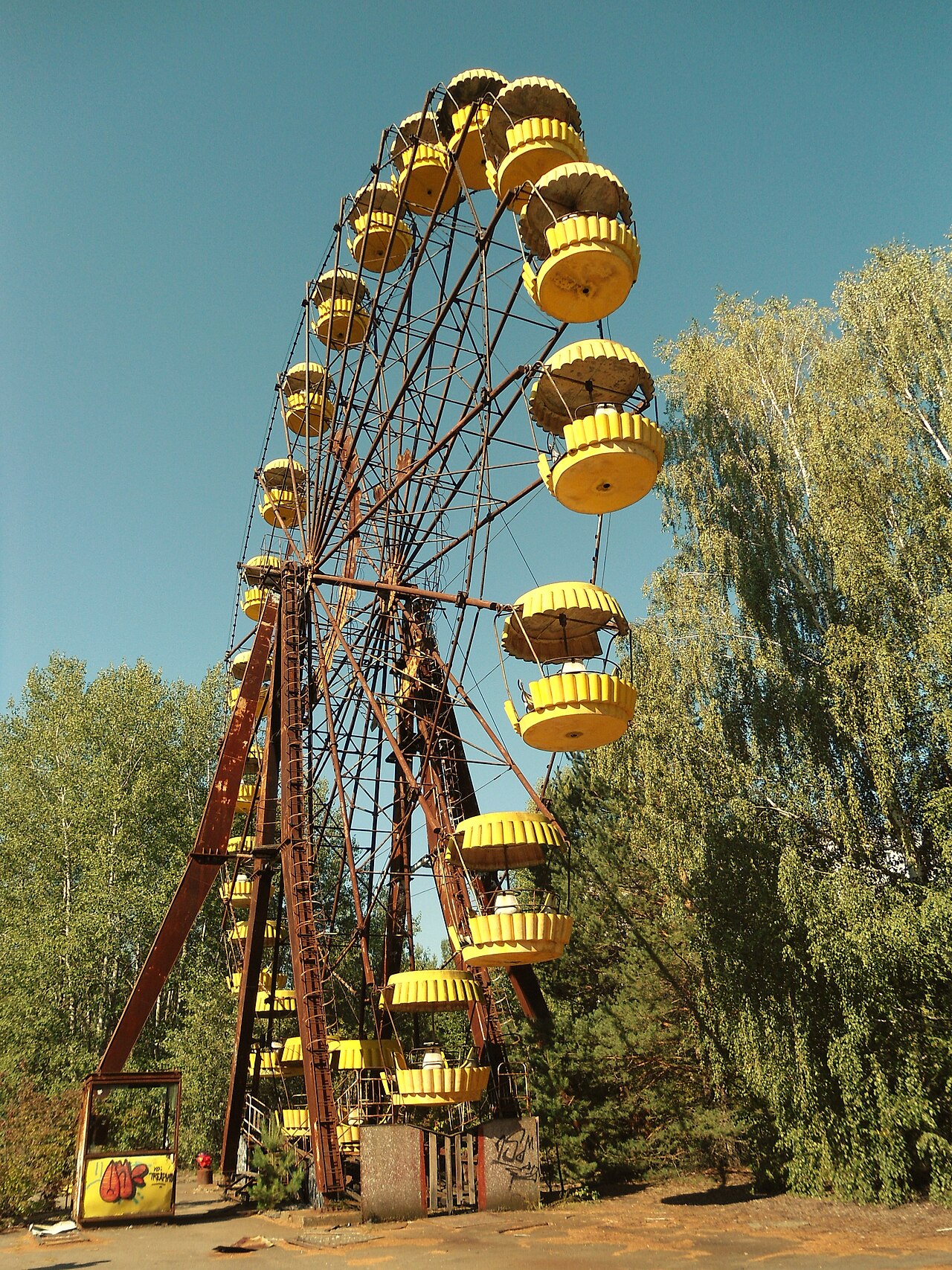
Pripyat’s yellow Ferris wheel was reportedly due to open for the May Day holiday in 1986. It never got the chance. Days earlier, on April 26, reactor No. 4 at the nearby Chernobyl Nuclear Power Plant exploded, and one of the newest cities in the Soviet Union became the most famous abandoned place on Earth.
Pripyat was founded in 1970 to house plant workers and their families, a model town of around 49,000 people with schools, a hospital, a palace of culture, and a swimming pool. On the afternoon of April 27, about 36 hours after the explosion, residents boarded a long convoy of buses, told to bring essentials for a few days away. They never came back. Today birch trees push through the pavement, and apartment blocks stand open to the weather.
Before the war, licensed guides led day trips from Kyiv into the Exclusion Zone, and in 2019, the year of the HBO miniseries Chernobyl, a record 124,000 or so visitors made the trip. The zone closed to tourists in February 2022, days before Russian troops occupied it during the full-scale invasion. As of 2025, it remained closed to tourism. If visits resume, expect the old rules: an approved operator, passport checks, and radiation screening on the way out.
Leave Only Footprints
Every place on this list stopped for a different reason: dwindling diamonds, a shifting hillside, a war, a volcano, a reactor. Yet they all tell the same story in the end. Humans build fast, nature waits patiently, and the waiting usually wins. If you visit, follow the rules, stick with your guide where one is required, and take nothing but photos, unless you fancy testing the Bodie curse.
Hungry for more places time forgot? Dig into lost cities that were rediscovered after centuries, or head underwater with famous shipwrecks and the stories behind them.
Quick answers
Can you visit Pripyat and Chernobyl right now?
Not as a tourist, for now. The Chernobyl Exclusion Zone closed to tourism in February 2022, and as of 2025 it remained closed because of the war. Before that, licensed operators ran day trips from Kyiv with passport checks and radiation screening. If tourism resumes, expect similar rules, so check the latest official guidance before making any plans.
What is the most famous ghost town in the United States?
Bodie, California, is often called the best-preserved ghost town in the American West. The former gold-rush boomtown became a state historic park in 1962, and about 110 buildings still stand in “arrested decay,” many with furniture and goods left inside. It sits at 8,379 feet in the Eastern Sierra, and its roads are usually snowbound in winter.
Is it legal to explore abandoned places?
It depends on the place. Every site on this list can be seen legally, though several require tickets, permits, or licensed guides. Elsewhere, many abandoned buildings are private property, and entering without permission is trespassing. Ruins can also hide rotten floors, loose masonry, and contamination, so stick to sanctioned tours and marked routes whenever they exist.
Sources, further reading & photo credits
- Hashima Island — Wikipedia
- Houtouwan — Wikipedia
- Craco — Wikipedia
- Kolmanskop — Wikipedia
- Bodie, California — Wikipedia
- Pyramiden — Wikipedia
- Kayaköy — Wikipedia
- Plymouth, Montserrat — Wikipedia
- Ross Island, South Andaman district — Wikipedia
- Pripyat amusement park — Wikipedia
Cover image: Xenia Ivanoff Erb · CC BY-SA 3.0 · via Wikimedia Commons. Photos throughout this list are sourced from Wikimedia Commons under the licenses noted in each caption.