
10 Ancient Mysteries Scientists Still Can’t Fully Explain

Somewhere in a museum in Athens sits a lump of corroded bronze that knew when the next eclipse was coming. It’s more than 2,000 years old, and nothing remotely like it survives from the same era. That’s the thing about the ancient world: just when archaeology seems to have it figured out, something turns up that refuses to fit the story.
Below are 10 ancient mysteries scientists still can’t fully explain, counted down from merely puzzling to truly head-scratching. Some have partial answers. Some have too many answers. A few have barely any. What they share is that experts are still arguing about them, and that’s exactly what makes them so much fun.
10The Baghdad Battery
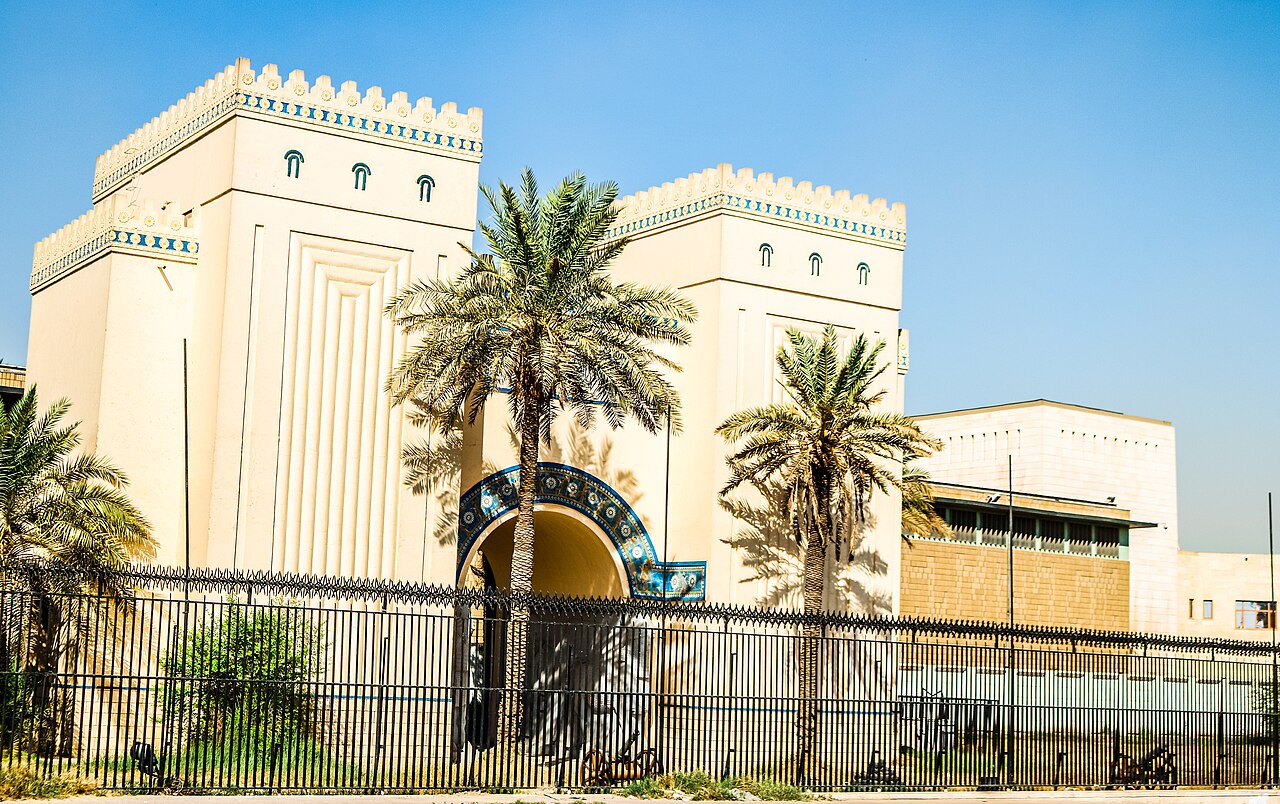
Fill a little clay pot with vinegar, slide in a copper tube and an iron rod, and you get electricity. That simple recipe is why a modest jar found in 1936 at Khujut Rabu, near Baghdad, became one of archaeology’s most argued-over objects. In 1938, Wilhelm König of the National Museum of Iraq’s laboratory described it and floated a startling idea: this might be a galvanic cell, built many centuries before Alessandro Volta.
The jar stands about 15 centimeters tall. Inside sat a copper cylinder, and inside that an iron rod. Replicas really do work. When the TV show MythBusters wired ten of them together in 2005, using lemon juice as the electrolyte, they produced a little over 4 volts.
So why aren’t historians rewriting textbooks? There are no wires, no conductors and no ancient texts describing electricity. Many archaeologists suspect the jar simply stored scrolls, as similar vessels from nearby Seleucia appear to have done. Even the date is disputed: König pegged it as Parthian, but the pottery style looks Sasanian, which would make it centuries younger. And to deepen the mystery, the object’s whereabouts have been unclear since the 2003 invasion of Iraq.
9The Plain of Jars
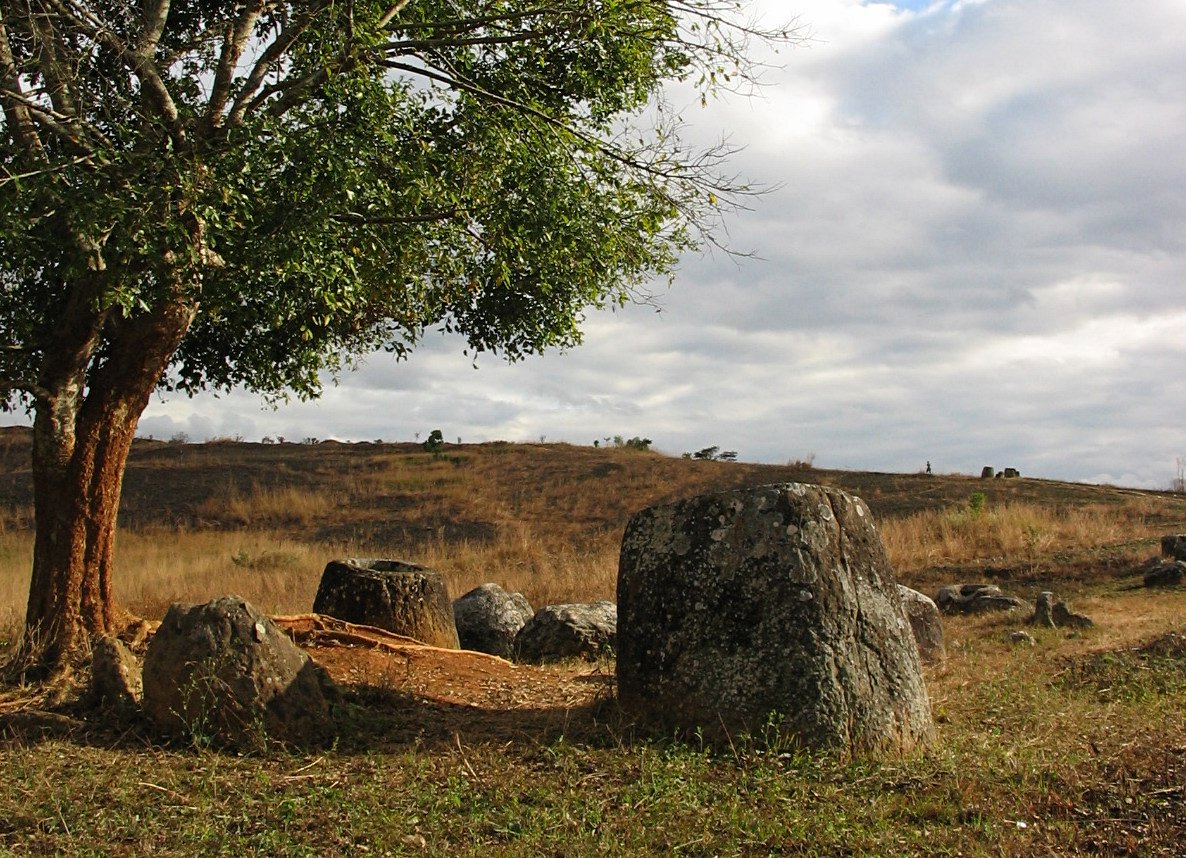
Imagine strolling across a grassy plateau and finding more than 2,000 giant stone jars lying around, as if a party of giants packed up and left. That’s the Plain of Jars in northern Laos. The jars range from about 1 to 3 meters tall, some weighing several tons, and they cluster across more than 100 sites on the Xiangkhouang Plateau.
Local legend has a tidy answer: a giant king named Khun Cheung had them made to brew rice wine after a great victory. Archaeologists favor a darker explanation. Since French researcher Madeleine Colani excavated here in the 1930s, digs have turned up human bones, cremated remains and burial goods around the jars, pointing to funeral rites. A 2021 study suggested some jars were set in place as early as 1240–660 BC, yet many burials around them are far younger, leaving researchers debating how long the sites stayed in use.
Nobody can say for sure who carved the jars or exactly how they figured in funerals. Research is slow for a grim reason. The region was heavily bombed during the Vietnam War era, and unexploded ordnance still litters the landscape. Only a small fraction of the jars has ever been properly investigated.
8The Longyou Caves
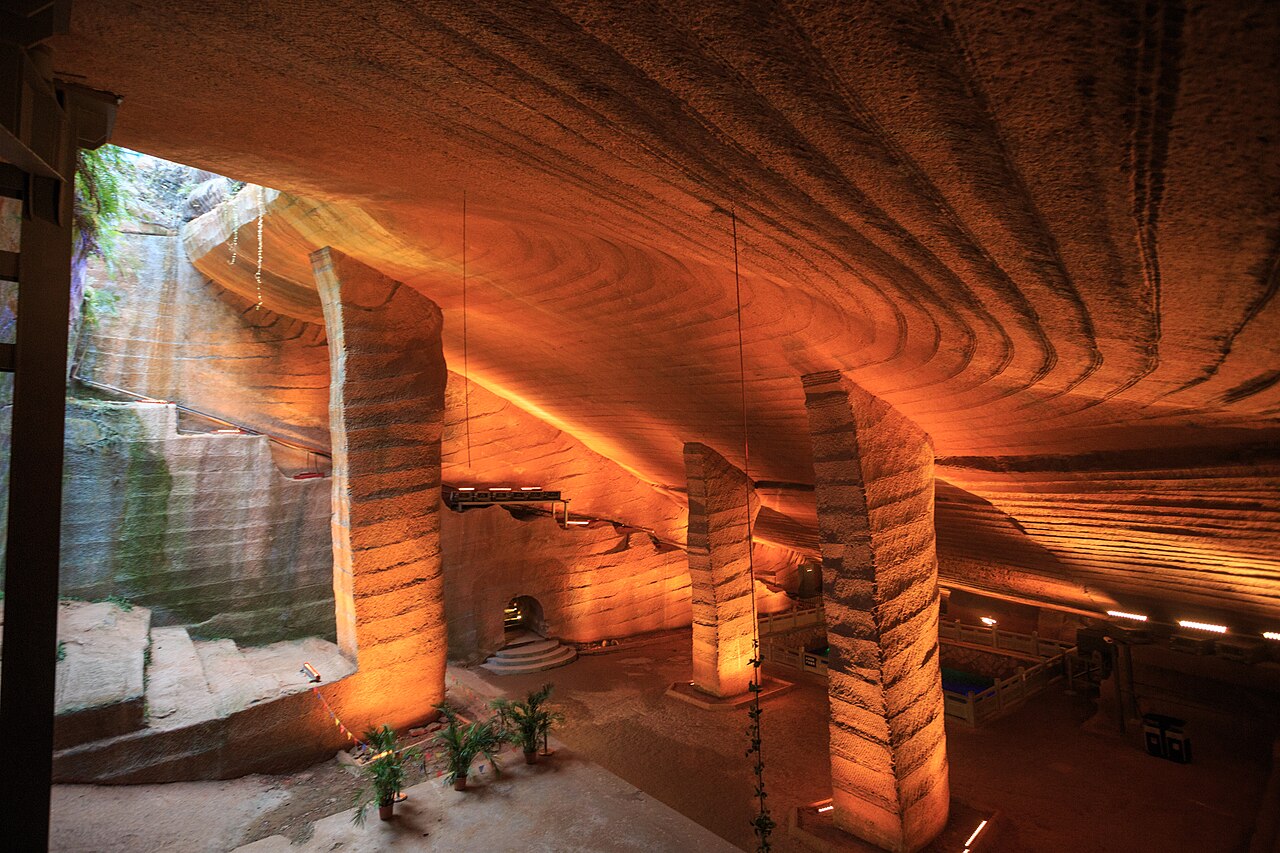
In June 1992, villagers in Longyou, in China’s Zhejiang Province, decided to pump the water out of a few local ponds. The ponds turned out not to be ponds at all. Beneath the water lay enormous, hand-carved caverns, and further searching revealed 24 of them.
The scale is startling. Each cave averages more than 1,000 square meters of floor space, ceilings rise as high as 30 meters, and the combined area tops 30,000 square meters. Walls, ceilings and support pillars are covered in neat, parallel chisel marks laid out in bands, as if a giant had combed the stone. Pottery fragments found in the silt suggest the caves are more than 2,000 years old.
Here’s the puzzle. Carving them would have demanded a huge workforce over many years, yet no surviving historical record mentions the project. Not one. Ideas range from imperial tombs to quarries to military barracks, but none is backed by firm evidence. Oddly, the caverns sit close together but have no connecting passages, even though a short tunnel would have been easy to dig. Whoever made them left little behind but their tool marks.
7The Nazca Lines
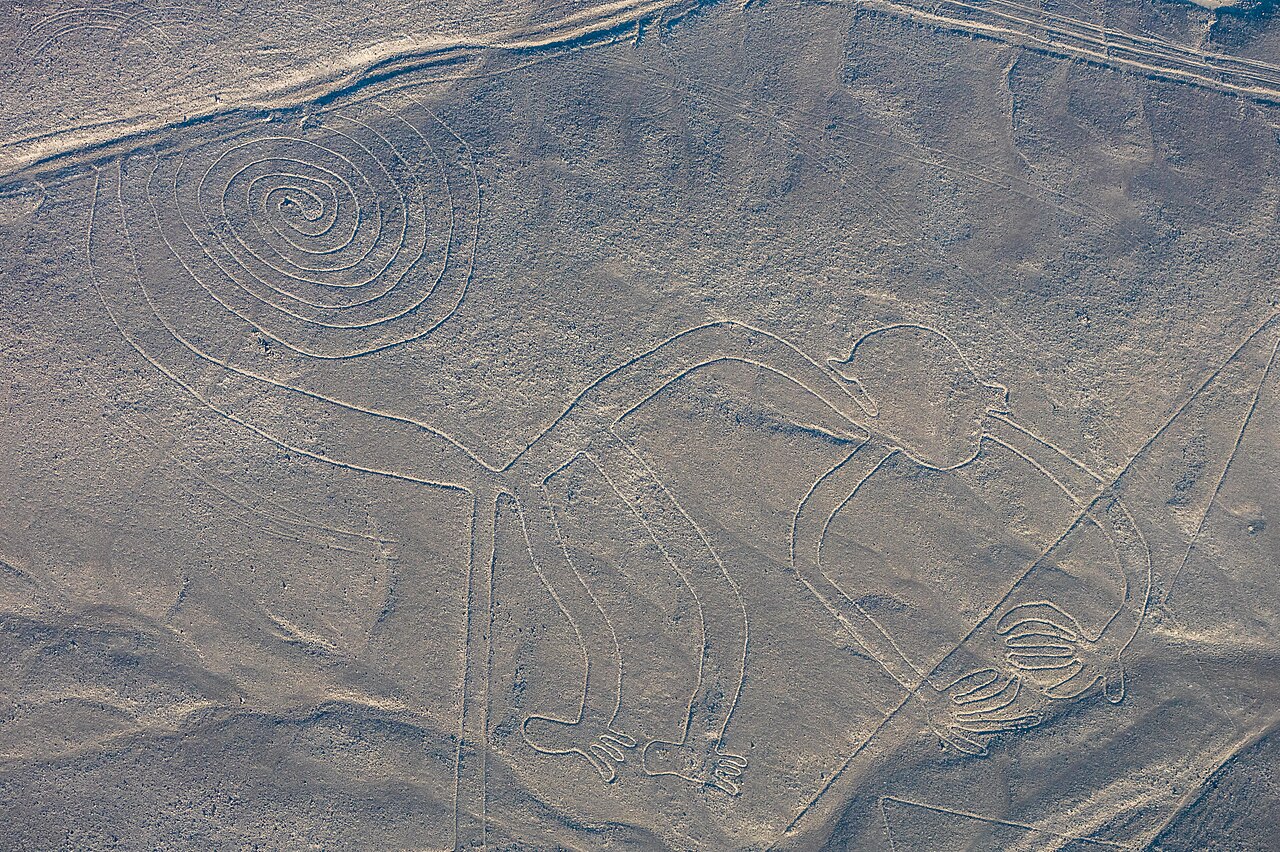
A hummingbird roughly 90 meters long. A monkey with a spiral tail. A spider, a killer whale and hundreds of perfectly straight lines running for kilometers across the desert. The Nazca Lines of southern Peru were created between about 500 BC and AD 500 by clearing away the reddish, iron-stained stones on the surface to reveal paler ground beneath.
The how isn’t really the mystery; experiments have shown that small teams with stakes and string can lay out the figures. The big question is why. Many designs are best appreciated from the air, a view their makers never had. German mathematician Maria Reiche, who spent decades studying and protecting the lines, argued they formed an astronomical calendar. Others think they were ritual pathways walked during ceremonies, or markers tied to water, the most precious resource in one of the driest places on Earth.
And the count keeps growing. In 2024, a Yamagata University team working with AI reported 303 previously unknown figurative geoglyphs found in just six months, nearly doubling the number of known figures. Many of the newcomers are small figures placed beside walking trails, which the researchers think were meant to be seen up close by small groups.
6Stonehenge
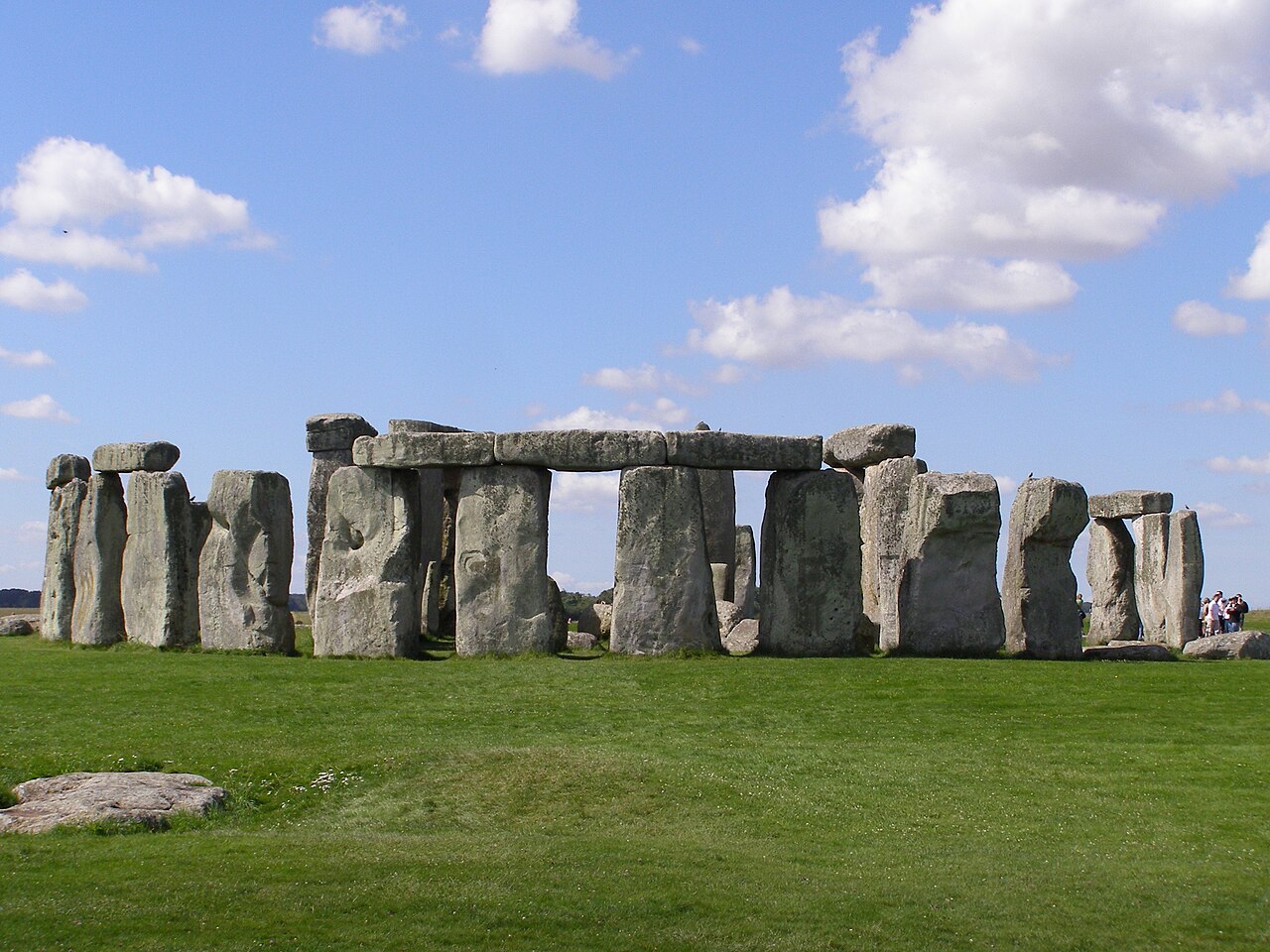
You’d think the most famous prehistoric monument on Earth would have run out of surprises by now. Not even close. In 2024, scientists analyzing the six-ton Altar Stone at the heart of Stonehenge traced it not to Wales, as long assumed, but to northeast Scotland, more than 700 kilometers away.
That discovery made an old question even harder: how, and why, did Neolithic people move these stones? The huge sarsens, many weighing around 25 tons, came from roughly 25 kilometers north. The smaller bluestones were hauled more than 200 kilometers from the Preseli Hills in Wales. All of it was done without wheels or draft animals, as far as anyone can tell. Construction stretched across more than a thousand years, from about 3000 BC to around 1500 BC.
Then there’s purpose. The stones line up with the midsummer sunrise and midwinter sunset, so a calendar or ceremonial role is widely accepted. Beyond that, theories range from a burial ground (cremated remains of dozens of people were found here) to a healing center to a monument uniting distant communities. There may be no single answer. The site was reworked by many generations, who may have wanted different things from it.
5The Walls of Sacsayhuamán
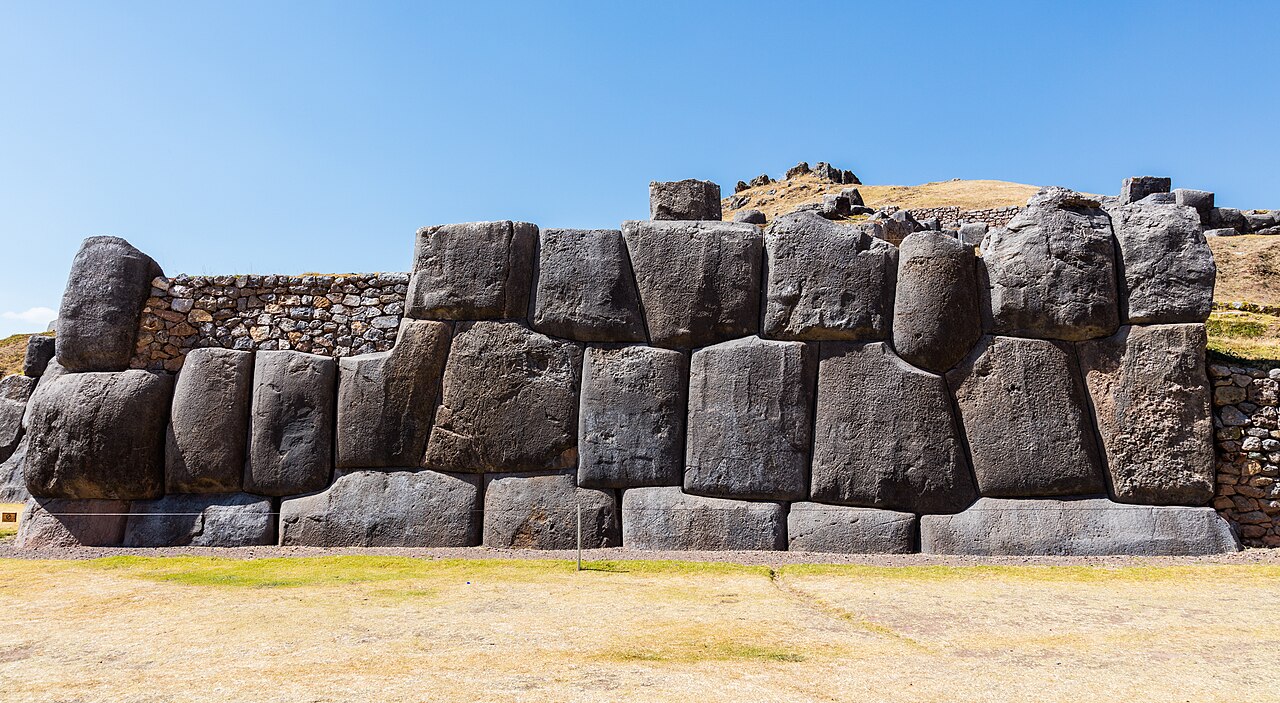
Try sliding a credit card between the stones of Sacsayhuamán and you’ll probably fail. The Inca complex above Cusco, Peru, is built from enormous limestone blocks cut with so many angles that each one locks into its neighbors like a jigsaw piece, with no mortar at all. Estimates for the largest block range from about 128 tons to nearly 200.
The site’s three tiered walls zigzag along a hillside, the longest running about 400 meters. Inca oral tradition credits the ruler Pachacuti with starting the project in the 15th century, and the Spanish chronicler Pedro Cieza de León later reported thousands of laborers quarrying and hauling stone with ropes. After the conquest, the Spanish used much of the complex as a quarry for their own buildings in Cusco. The giant stones survive mainly because they were too big to move.
Researchers have shown that hammerstones of harder rock can shape stone with surprising precision, so the cutting is less baffling than it looks. What remains debated is the logistics: how crews raised and adjusted blocks weighing 100 tons or more, again and again, to test the fit without iron tools or wheels. Ramps, levers, log rollers and sheer manpower all have supporters, but no experiment has fully recreated the feat.
4Linear A, the Script No One Can Read
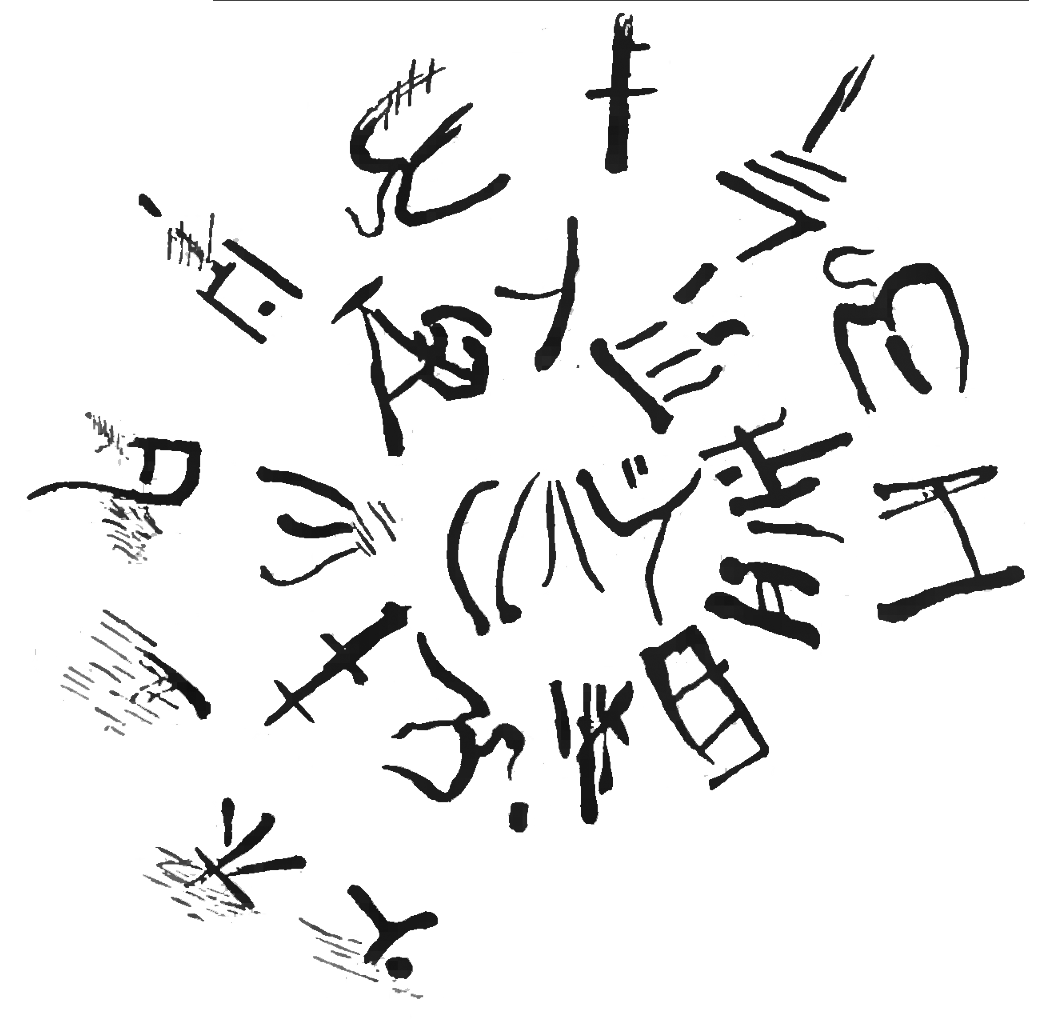
We can sound it out. We just have no idea what it says. Linear A, the writing system of Bronze Age Crete’s Minoan civilization, was used from roughly 1800 to 1450 BC and survives on about 1,400 inscriptions, scratched or painted on clay tablets, stone offering tables, jewelry and pottery. A large share of them come from a single site, Hagia Triada in southern Crete.
Its younger cousin, Linear B, was cracked in the early 1950s by architect Michael Ventris, who showed it recorded an early form of Greek. Because the two scripts share many signs, scholars can assign rough sound values to most Linear A symbols. The trouble is that the words they spell match no known language. The Minoan tongue seems to belong to no recognized language family, so reading it aloud is a bit like reciting a phone book in a language nobody has spoken for 3,000 years.
Only a handful of words are understood with any confidence. The most secure is ku-ro, which appears at the bottom of lists followed by a number and almost certainly means “total.” So at least some tablets were bookkeeping. Whatever else the Minoans wrote down remains locked away until someone finds a longer text or a bilingual inscription.
3The Moai of Rapa Nui
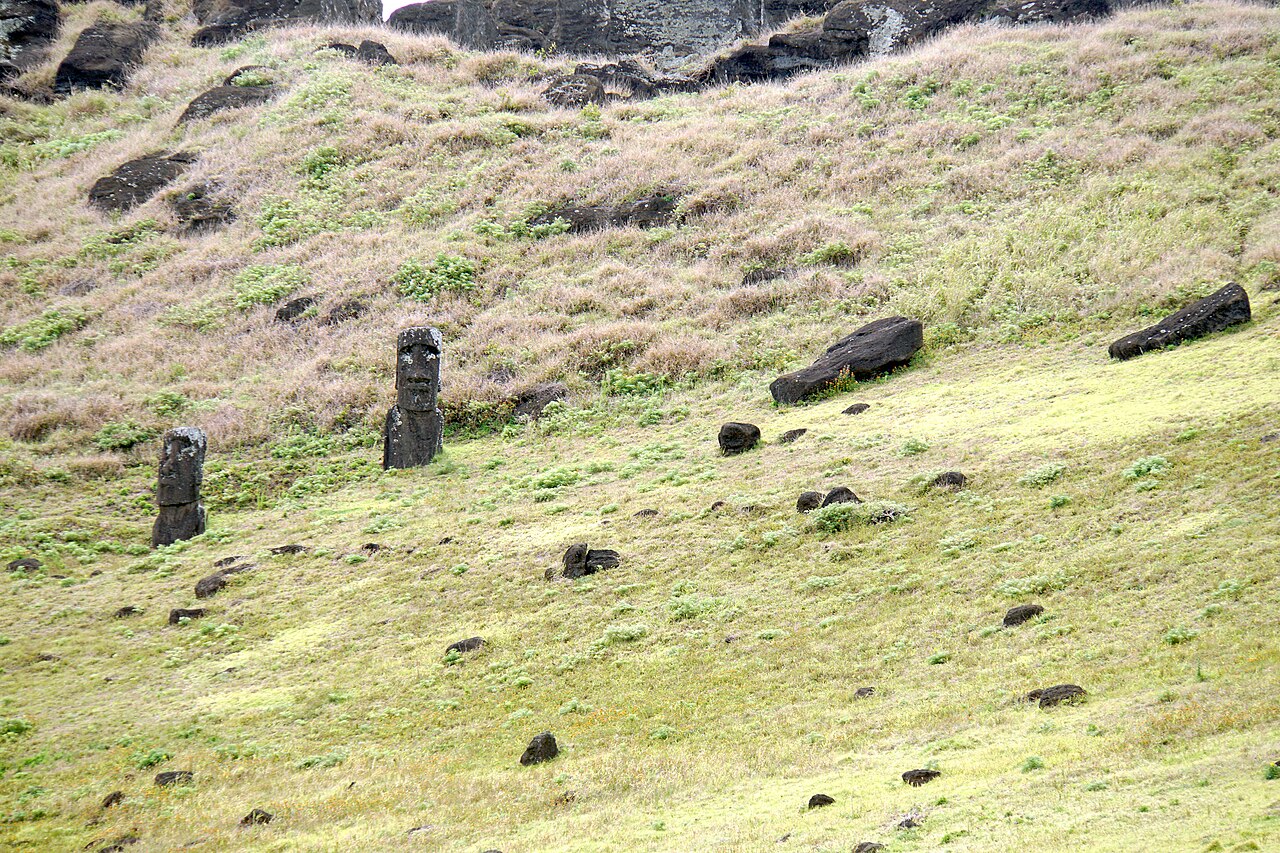
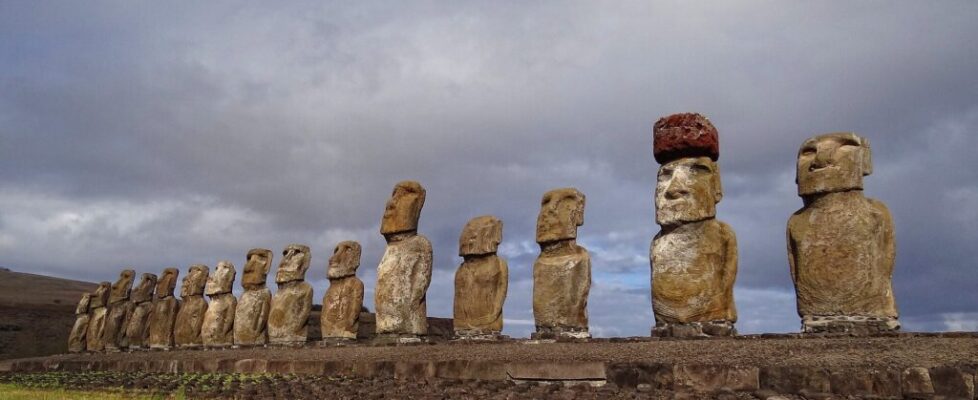
Easter Island is one of the most remote inhabited places on Earth, and its Polynesian settlers carved nearly 1,000 stone giants there using stone tools. The moai, made mostly from volcanic tuff quarried at Rano Raraku, average about 4 meters tall. The largest ever erected, nicknamed Paro, was nearly 10 meters high and weighed around 80 tons. An unfinished one still lying in the quarry would have been roughly twice as tall.
The great puzzle has always been transport. Many statues ended up kilometers from the quarry, on an island with no draft animals and few large trees. Rapa Nui oral tradition says the moai “walked.” In 2012, archaeologists Terry Hunt and Carl Lipo tested the idea: 18 people pulling on ropes rocked a 4.35-ton replica from side to side and moved it about 100 meters in roughly 40 minutes.
A 2025 study by the same pair analyzed 962 moai and argued that statues found along the island’s ancient roads have features, such as wider bases and a forward lean, that suit upright “walking.” Not everyone is convinced, and rival theories involving sledges and wooden frames still have supporters. How the islanders organized it all, and what drove them to build ever-bigger statues, remains hotly debated.
2Göbekli Tepe
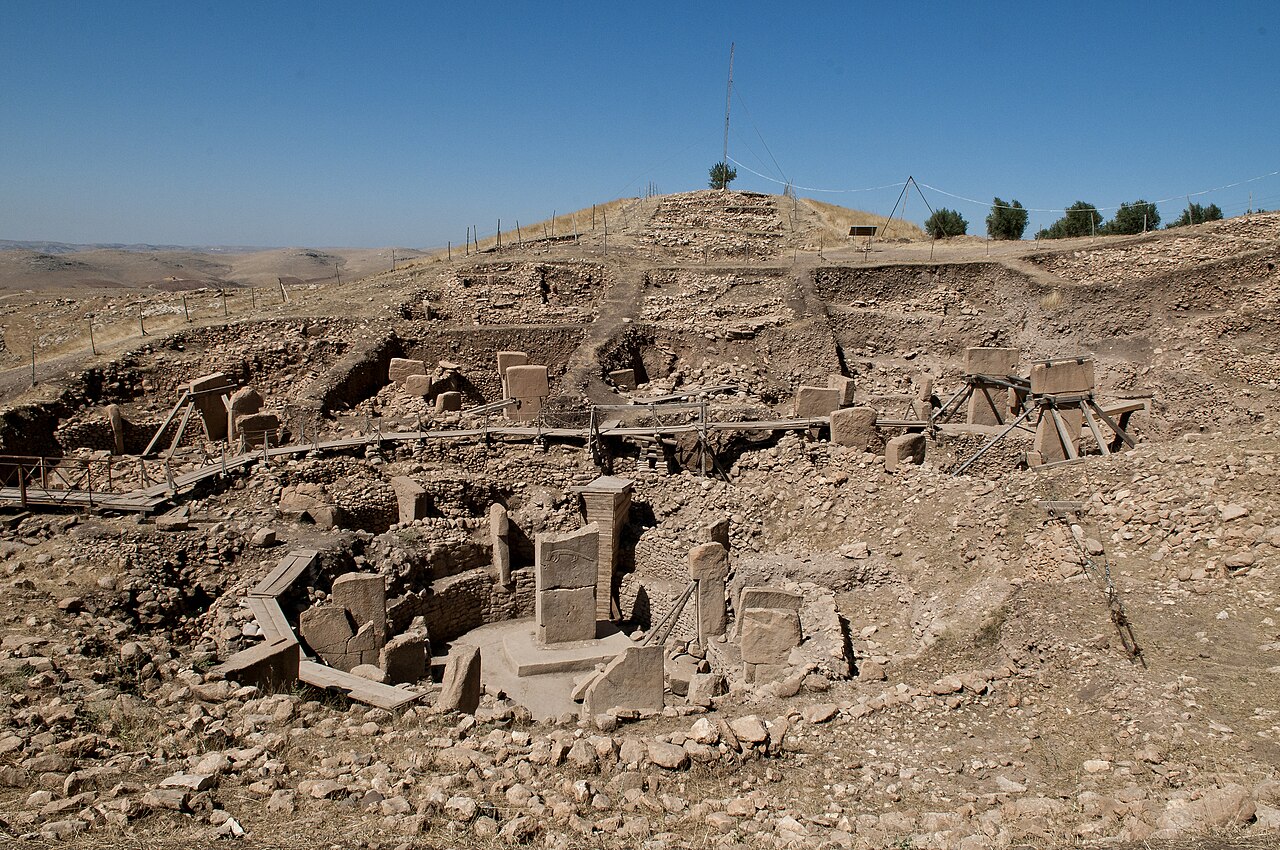
Göbekli Tepe shouldn’t exist, at least not according to the story archaeologists told for most of the 20th century. On a hilltop in southeastern Turkey, people raised rings of massive T-shaped limestone pillars starting around 9500 BC. That’s roughly 6,000 years before Stonehenge, built by people who were only beginning to experiment with farming, millennia before writing or the wheel.
German archaeologist Klaus Schmidt, who led excavations from 1995, called it a temple built by hunter-gatherers. The tallest pillars stand about 5.5 meters high and are carved with foxes, boars, snakes, vultures and scorpions. Some even have arms and hands carved along their sides, as if the pillars themselves were stylized people. Schmidt’s big idea flipped the textbooks: perhaps the urge to gather and build monuments helped push people toward farming, rather than the other way around.
Newer research has complicated the picture. Work since Schmidt’s death in 2014 has found signs of houses, water systems and grain processing, suggesting people lived here, too. Geophysical surveys indicate at least 20 large enclosures, only a handful of which have been excavated. Who organized the labor, what the carvings meant and why the site was abandoned are all questions still wide open.
1The Antikythera Mechanism
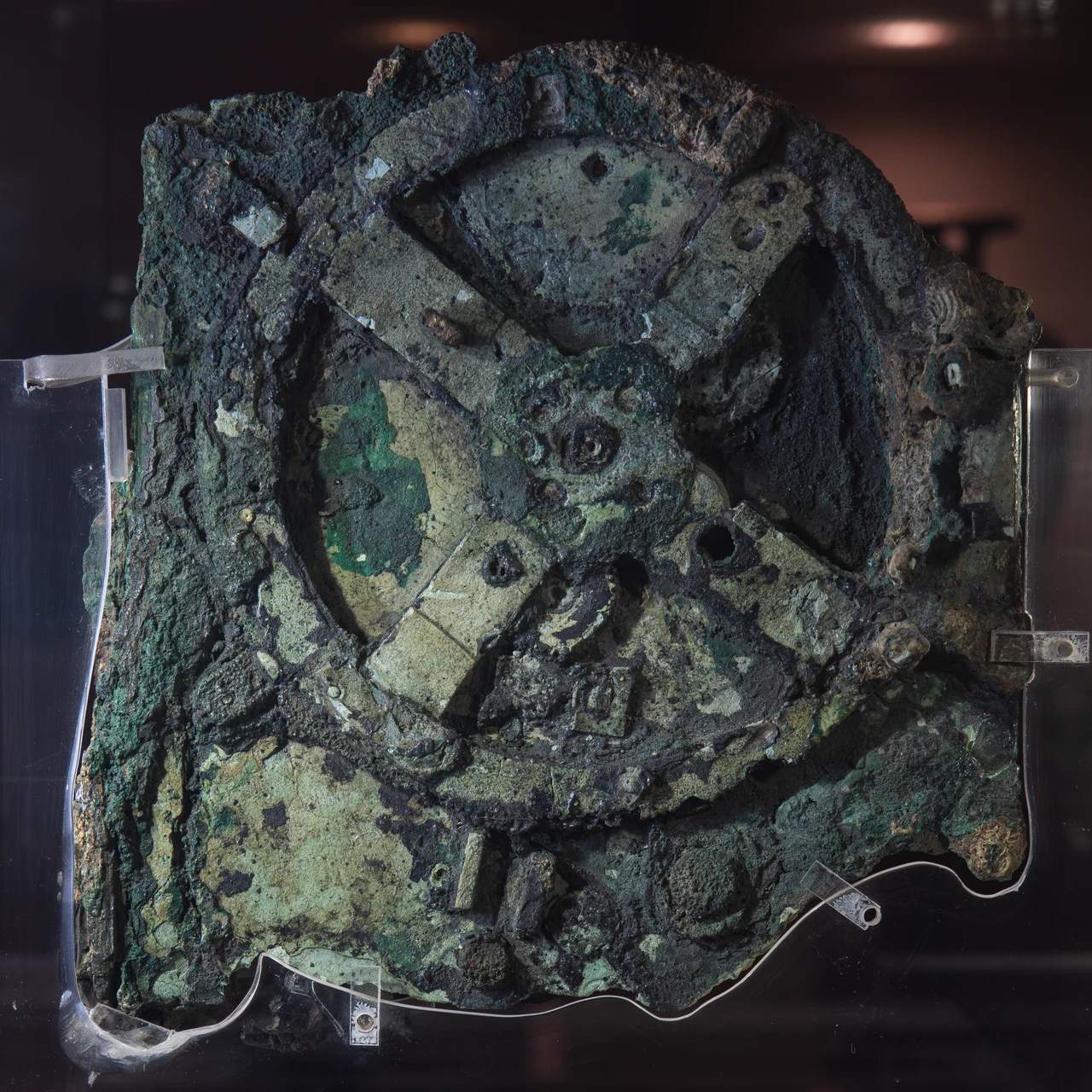
In 1901, sponge divers exploring a first-century-BC shipwreck off the Greek island of Antikythera hauled up bronze statues, glassware and a shoebox-sized lump of corroded wood and metal that attracted little attention. The following year, archaeologist Valerios Stais noticed a gear wheel embedded in it. More than a century of study has since revealed it as the oldest known analog computer.
Its 82 surviving fragments contain 30 interlocking bronze gears, and the complete device probably had more. Turn a hand crank, and it tracked the Sun and Moon through the zodiac, showed the Moon’s phase, predicted eclipses and counted down the four-year cycle of athletic games, including the Olympics. X-ray scans in 2005 revealed thousands of tiny inscribed characters, essentially a built-in user manual, and in 2021 a University College London team published a full reconstruction, including how it may have displayed the planets.
Here’s what still baffles experts. It was made sometime around the 2nd century BC, yet nothing of comparable complexity shows up again until astronomical clocks in 14th-century Europe. Who built it? Was it one of a kind, or the lone survivor of a lost engineering tradition? The Roman writer Cicero described a planetarium-like device made by Archimedes, but no other example has ever been found.
Still Waiting for Answers
What makes these puzzles irresistible is that the people behind them were every bit as clever as we are, just working with stone, bronze and an enormous amount of patience. Each new scan, dig or AI survey answers one question and raises three more, which is why these sites keep pulling researchers back decade after decade.
If you like your history with a side of unsolved, read about the lost cities that were rediscovered after centuries and the legendary treasures that have never been found. Just don’t expect tidy endings. The ancient world rarely hands them out.
Quick answers
What is the Antikythera mechanism?
The Antikythera mechanism is a hand-cranked astronomical calculator built in ancient Greece, probably in the 2nd century BC, and recovered from a shipwreck in 1901. Its bronze gears tracked the Sun and Moon, showed lunar phases, predicted eclipses and counted the cycle of the Olympic Games. Many researchers believe it also displayed the planets, though that part is reconstructed.
How were the Stonehenge stones moved?
Nobody knows for certain. The leading theory is that teams dragged the stones on wooden sledges, possibly over timber tracks, using ropes and a lot of manpower. The bluestones came more than 200 kilometers from Wales, and a 2024 study traced the Altar Stone to northeast Scotland, reviving debate over whether some stones traveled partly by sea.
How old is Göbekli Tepe?
Göbekli Tepe in southeastern Turkey dates to roughly 9500–8000 BC, so its oldest structures are more than 11,000 years old. That makes it about 6,000 years older than Stonehenge and roughly 7,000 years older than the Great Pyramid of Giza. It was built by people who were only just beginning to farm.
Sources, further reading & photo credits
- Ahu Tongariki — Wikipedia
- Baghdad Battery — Wikipedia
- Plain of Jars — Wikipedia
- Longyou Caves — Wikipedia
- Nazca lines — Wikipedia
- Stonehenge — Wikipedia
- Sacsayhuamán — Wikipedia
- Linear A — Wikipedia
- Moai — Wikipedia
- Göbekli Tepe — Wikipedia
- Antikythera mechanism — Wikipedia
Cover image: Bjørn Christian Tørrissen · CC BY-SA 3.0 · via Wikimedia Commons. Photos throughout this list are sourced from Wikimedia Commons under the licenses noted in each caption.