
10 Famous Inventions Discovered Completely by Accident

Not every breakthrough starts with a eureka. Some start with a dropped flask, a sticky mess, a mislabeled part, or a moldy dish somebody forgot to clean before a vacation. History’s labs and workshops are full of people who set out to do one thing, failed, and noticed that the failure was more interesting than the plan.
This countdown of inventions discovered by accident celebrates those lucky stumbles, from a toy that walked off a shelf to the drug that transformed medicine. Luck never did all the work, though. In every case, someone had to notice, wonder why, and spend years turning a fluke into something useful. Where a famous origin story has drifted into legend, we’ll say so.
10The Slinky
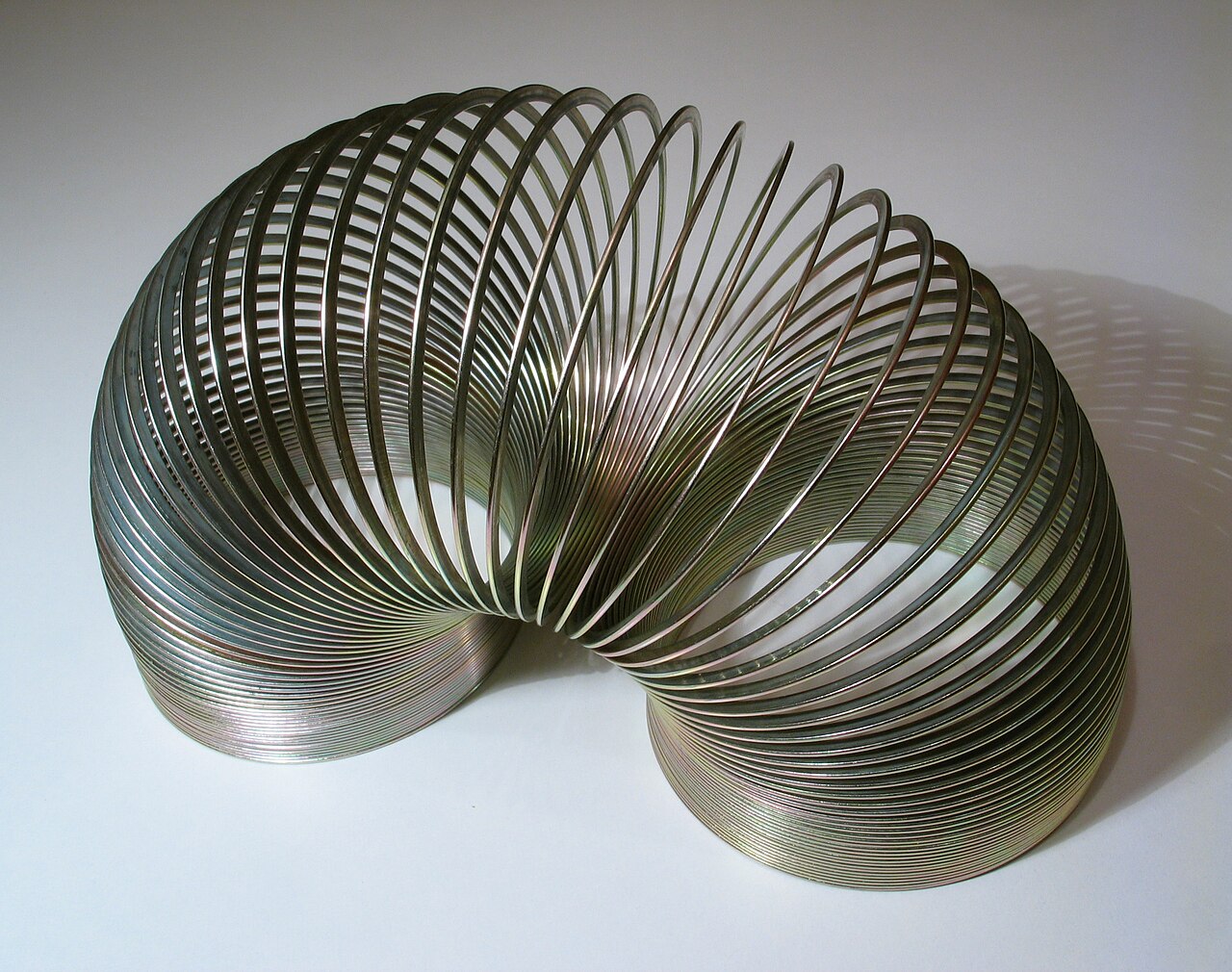
In 1943, naval engineer Richard James was working with springs meant to steady sensitive instruments aboard ships when, as the story goes, one tumbled off a shelf. Instead of clattering to a stop, it seemed to step its way down, coil over coil, and keep going. James went home and told his wife, Betty, that he thought there was a toy in it.
It took some tinkering to find the right steel and coil tension. Betty paged through a dictionary and picked “Slinky,” a word meaning sleek and graceful. In November 1945, the couple set up a demonstration at Gimbels department store in Philadelphia, pricing their springs at $1 each. They were nervous nobody would buy. The first 400 sold in about 90 minutes.
The Slinky became one of the best-selling toys of all time, with roughly 300 million sold in its first six decades. Richard left the family and the business in 1960 to join a religious group in Bolivia, and Betty took over, running the company for decades. The toy entered the National Toy Hall of Fame in 2000. It even found work outside the playroom: soldiers in the Vietnam War used Slinkys as makeshift radio antennas.
9Safety Glass
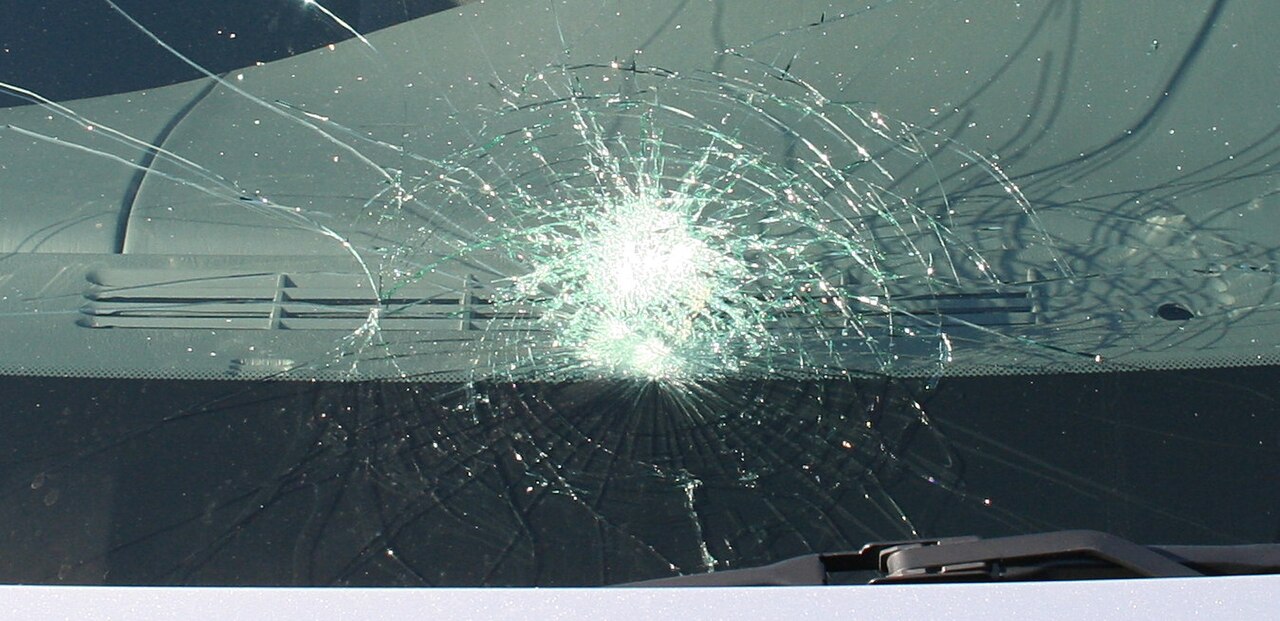
French chemist Édouard Bénédictus knocked a glass flask off a shelf in 1903 and braced for shards. Instead, the flask cracked into a spiderweb but kept its shape. According to his own account, it had once held a solution of cellulose nitrate, an early plastic, which had evaporated and left a thin, invisible film coating the inside. That film held the broken pieces together.
Bénédictus reportedly set the curiosity aside until he read about people badly injured by flying glass in early automobile crashes. Suddenly, his accident had a purpose. He developed glass with a layer of plastic sandwiched between sheets and patented it in 1909, and versions of it were sold under the name Triplex. Its first big job wasn’t in cars, though. During World War I, laminated lenses were used in gas masks.
Carmakers came around later, and today laminated safety glass is standard for windshields in much of the world. Modern versions bond a tough layer of polyvinyl butyral (PVB) between two panes. When struck, the glass may crack, but the plastic grips the fragments, helping keep occupants inside the car and debris outside. Laminated glass also protects storefronts, skylights, and aquariums, and thicker multilayer versions form the basis of bullet-resistant glass.
8Super Glue
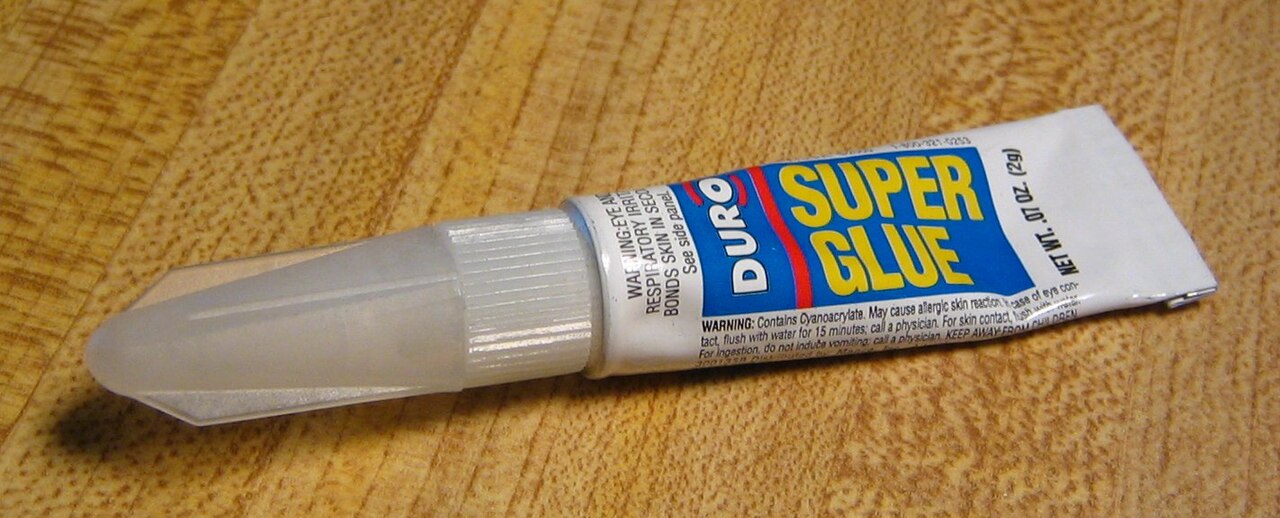
Harry Coover discovered super glue twice, and the first time he threw it away. Working for Eastman Kodak during World War II, he was hunting for a clear plastic to make precision gun sights. A family of chemicals called cyanoacrylates looked promising until they stuck to everything they touched. Too sticky. Rejected.
Years later, in 1951, Coover was supervising research at an Eastman facility in Kingsport, Tennessee, on heat-resistant materials for jet canopies when a colleague, Fred Joyner, spread a cyanoacrylate film between the two prisms of a refractometer to measure it. The prisms bonded together and refused to come apart. This time Coover saw the opportunity: an adhesive that set in seconds with no heat or clamping. Eastman put it on sale in 1958 as “Eastman 910.”
Coover was a natural showman. On the TV game show I’ve Got a Secret in 1959, he bonded a metal bar with a single drop, and then he and host Garry Moore were lifted off the stage hanging from it. The glue later found a far more serious use. During the Vietnam War, the US military explored spray-on cyanoacrylate to seal wounds and slow bleeding, and medical-grade versions now close cuts and incisions in hospitals.
7Mauveine, the Purple That Launched an Industry
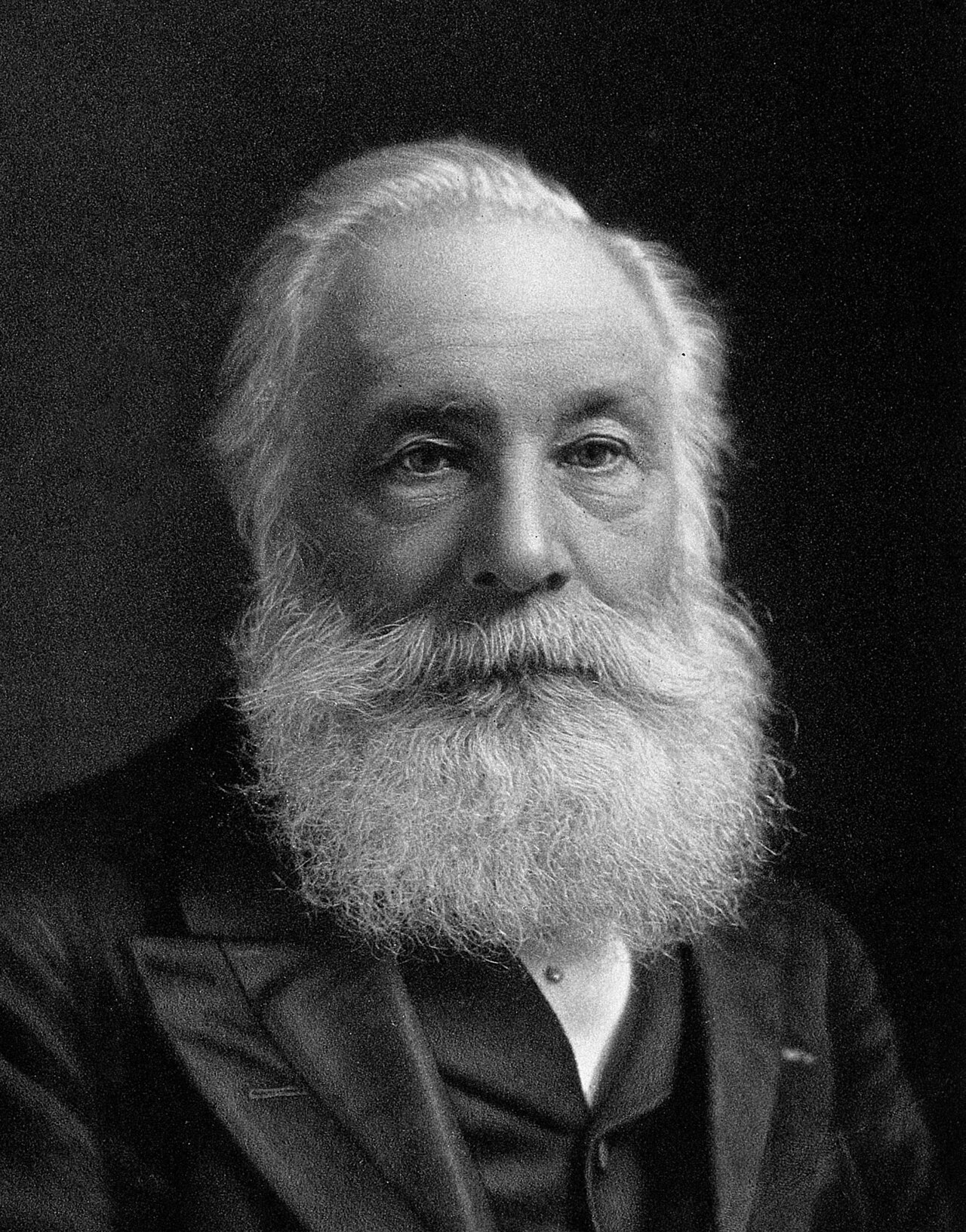
In 1856, an 18-year-old chemistry student named William Henry Perkin spent his Easter vacation trying to make quinine, the malaria drug, from coal tar chemicals in a makeshift lab at his family’s home in east London. He failed. What he got was a dark, sticky sludge. When he rinsed the flask with alcohol, though, the liquid turned a startling purple.
Perkin had stumbled onto mauveine, widely regarded as the first synthetic dye produced on an industrial scale. He tested it on silk, found that the color held, and, reportedly against his professor’s wishes, left his studies to commercialize it. He patented the dye that summer and opened a factory at Greenford, near London, the following year. Until then, purple had been a costly color; ancient Tyrian purple came from huge numbers of sea snails.
Fashion went wild. By the end of the 1850s the shade, now called mauve, was everywhere, and the satirical magazine Punch joked about an epidemic of “mauve measles.” More importantly, Perkin’s success helped launch the synthetic dye industry, which grew into the modern chemical and pharmaceutical industries; companies such as BASF, Bayer, and Hoechst began as dye makers. Scientists studying how dyes stain specific cells helped inspire early chemotherapy. Perkin was knighted in 1906.
6Velcro
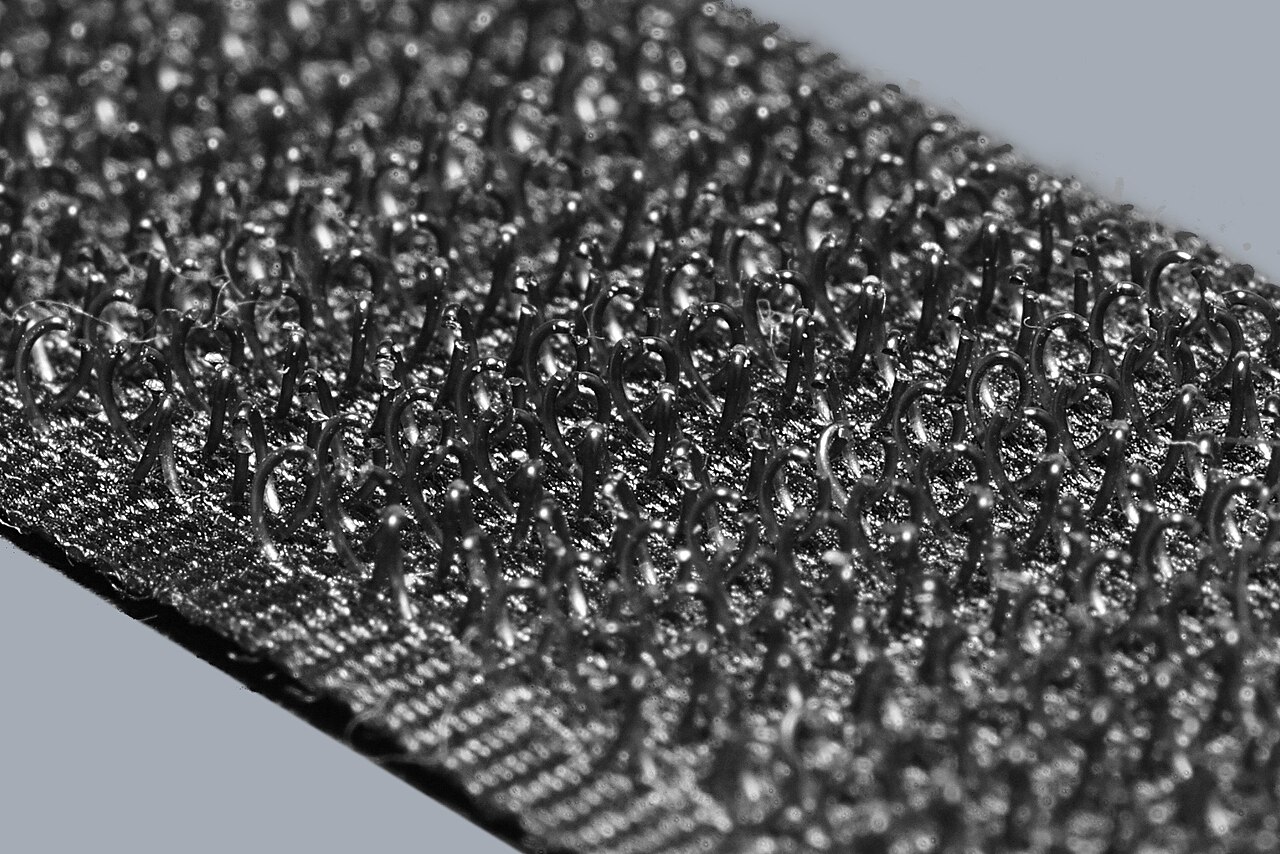
After a hunting trip in the Swiss Alps in 1941, engineer George de Mestral had an annoying chore waiting: picking burrs out of his dog’s fur and his own clothes. Most people would have grumbled and moved on. De Mestral reached for a microscope.
Under magnification, he saw that each burdock burr was covered in tiny hooks that snagged on anything with loops, like fabric and fur. If nature could build a fastener that clung so stubbornly, why couldn’t he? Turning the idea into a product took years. He worked with weavers in France, tried different materials, and eventually found that nylon could form durable hooks and loops. He patented the system in the 1950s and named it Velcro, from the French words velours (velvet) and crochet (hook).
The fashion world was initially unimpressed; early hook-and-loop looked cheap and clunky. The breakthrough came from aerospace. NASA used it to keep objects from drifting around in weightlessness during the Apollo era, and the material’s space-age image helped it spread to ski suits, sneakers, blood pressure cuffs, and children’s shoes. Today, hook-and-loop fasteners hold together everything from military gear to hospital equipment.
5Teflon
On April 6, 1938, DuPont chemist Roy Plunkett opened the valve on a cylinder of tetrafluoroethylene gas, and nothing came out. That made no sense; the cylinder weighed as much as a full one. So Plunkett and his assistant, Jack Rebok, did what curious chemists do. They cut it open.
Inside was a slippery, waxy white powder. The gas molecules had linked into long chains on their own inside the pressurized cylinder, forming polytetrafluoroethylene, or PTFE. The new material turned out to be astonishingly inert, shrugging off heat and almost every chemical, and it ranked among the slipperiest solids ever made. Its first important job was secret. During World War II, the Manhattan Project used it in equipment that handled uranium hexafluoride, a fiercely corrosive compound used to enrich uranium.
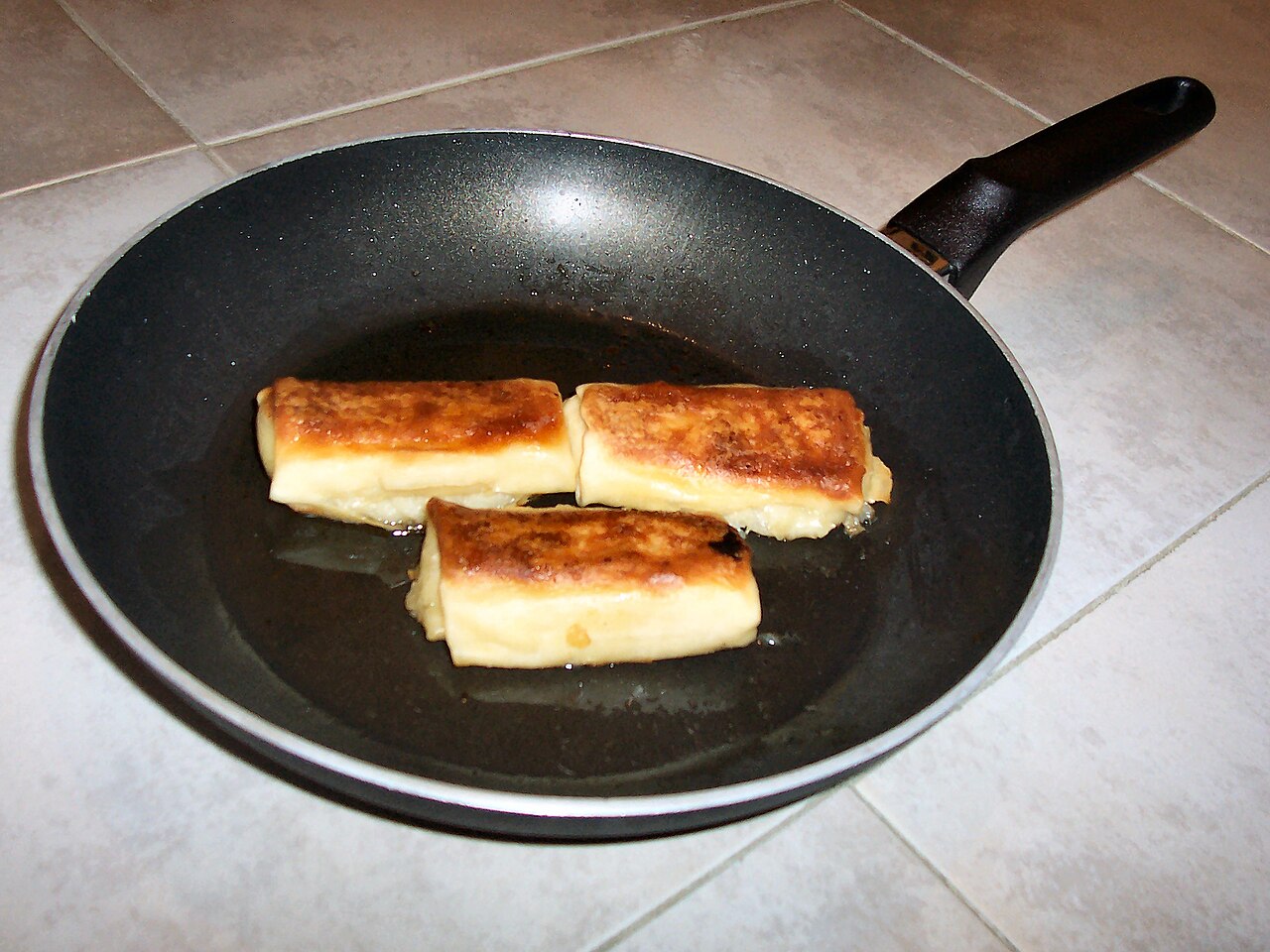
The Teflon trademark was registered in 1945, but the nonstick frying pan came from France. In the 1950s, engineer Marc Grégoire reportedly coated his fishing tackle with PTFE, and his wife, Colette, suggested he try it on her pans. The couple founded Tefal in 1956. Teflon’s success later came with a reckoning: PFOA, a chemical once used in making it, raised health and environmental concerns and was phased out by major US manufacturers by 2015.
4The Implantable Pacemaker
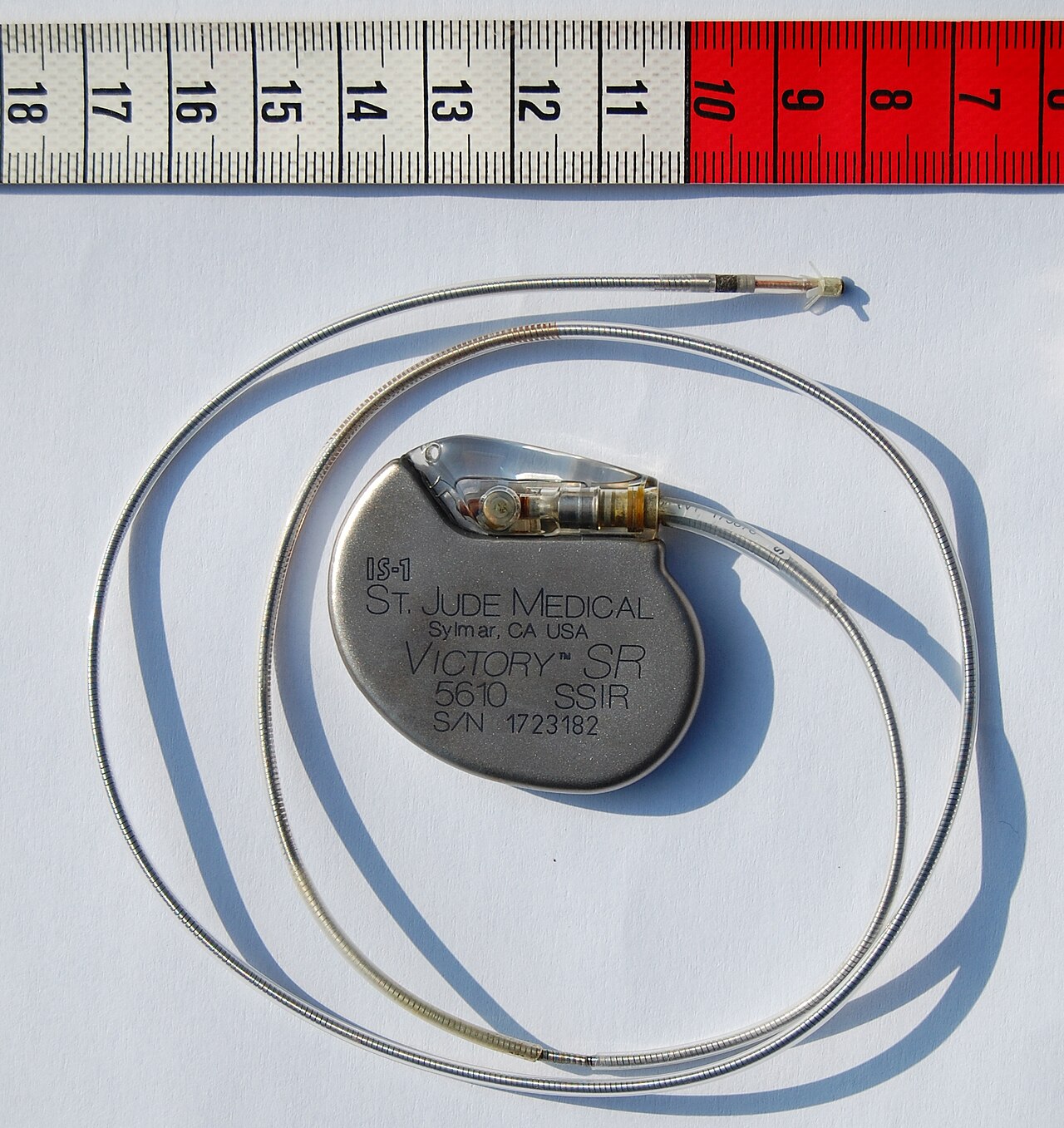
Wilson Greatbatch reached into a box for a resistor and pulled out the wrong one. It was 1956, and the engineer was building a circuit at the University of Buffalo to help record heart rhythms. The part he grabbed had a resistance of 1 megohm instead of the 10,000 ohms he needed, a hundredfold mistake. When he switched the circuit on, it began emitting short electrical pulses about once a second, much like a heartbeat.
Greatbatch recognized the pattern immediately. Heart block, a failure of the heart’s electrical signaling, was deadly, and the external pacemakers of the time were bulky machines tethered to wall outlets. His accidental circuit used so little power that it could, in principle, fit inside the body. Working with surgeon William Chardack, he shrank the design, tested it in animals, and in 1960 the team implanted it in a human patient in Buffalo.
Greatbatch wasn’t alone in the race. In Sweden in 1958, engineer Rune Elmqvist and surgeon Åke Senning implanted a pacemaker in patient Arne Larsson, though that first device failed within hours. Greatbatch’s design, licensed to Medtronic, became one of the first practical long-term models, and he later championed the lithium-iodide battery that let pacemakers run for years.
3The Microwave Oven
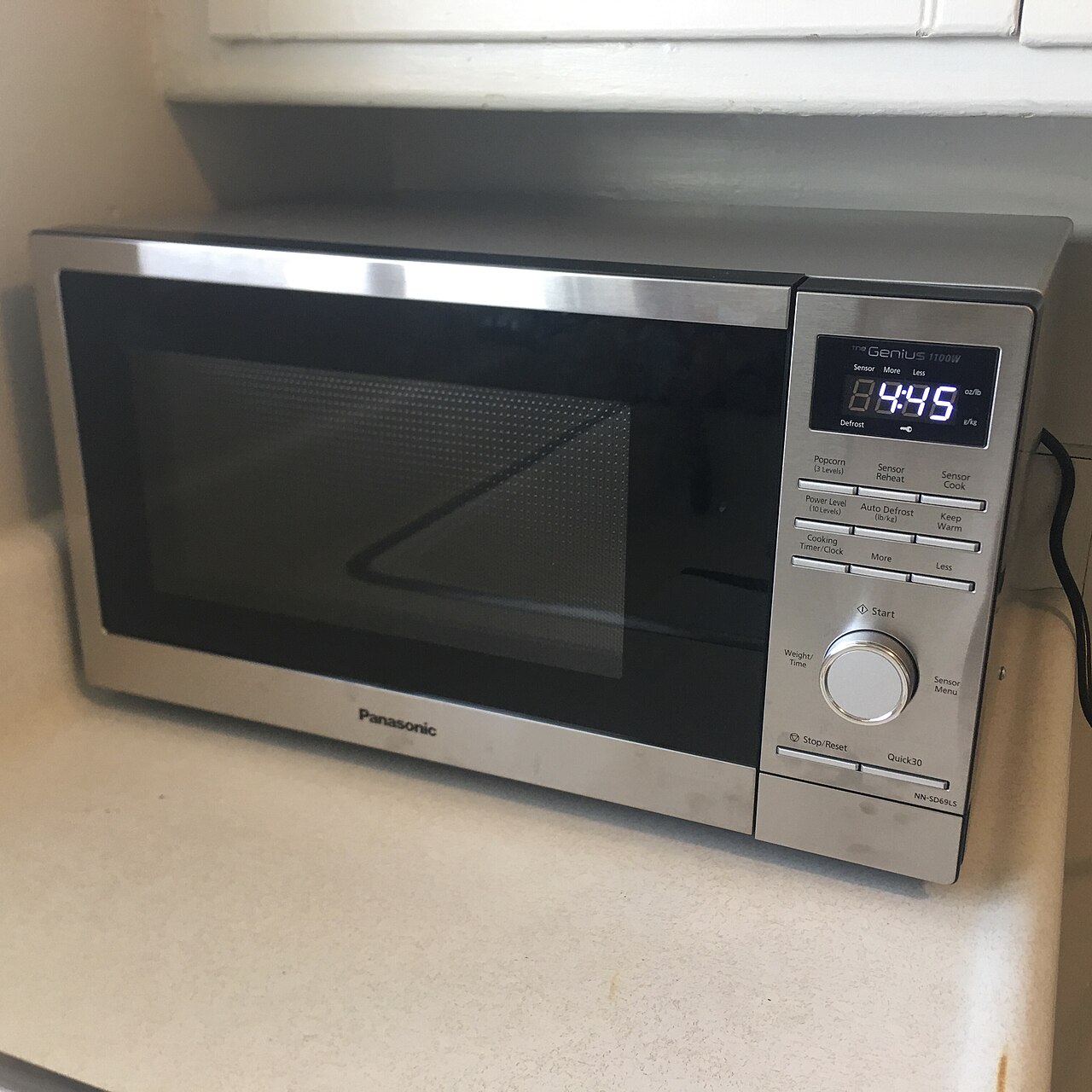
The most famous candy bar in engineering history melted in Percy Spencer’s pocket in 1945. Spencer, a largely self-taught engineer at the defense company Raytheon, was working near an active magnetron, the tube that generates microwaves for radar, when he noticed the chocolate (or, in some tellings, a peanut cluster bar) had turned to goo.
That’s the legend, and like many legends, it’s been polished over time. Spencer probably wasn’t the first radar worker to notice microwaves warming things; what set him apart was what he did next. He held popcorn kernels near the magnetron, and they popped. He tried an egg, which, depending on who tells the story, burst in spectacular fashion. Raytheon filed a patent for a microwave cooking process later in 1945, and Spencer’s curiosity turned a military technology into a kitchen one.
The first commercial model, the Radarange, arrived in 1947. It stood nearly 6 feet (1.8 meters) tall, weighed about 750 pounds (340 kilograms), needed water cooling, and cost around $5,000, so it went to restaurants and other big kitchens, not homes. Microwaves didn’t truly conquer home kitchens until 1967, when Amana, by then owned by Raytheon, introduced a countertop Radarange for $495.
2X-Rays
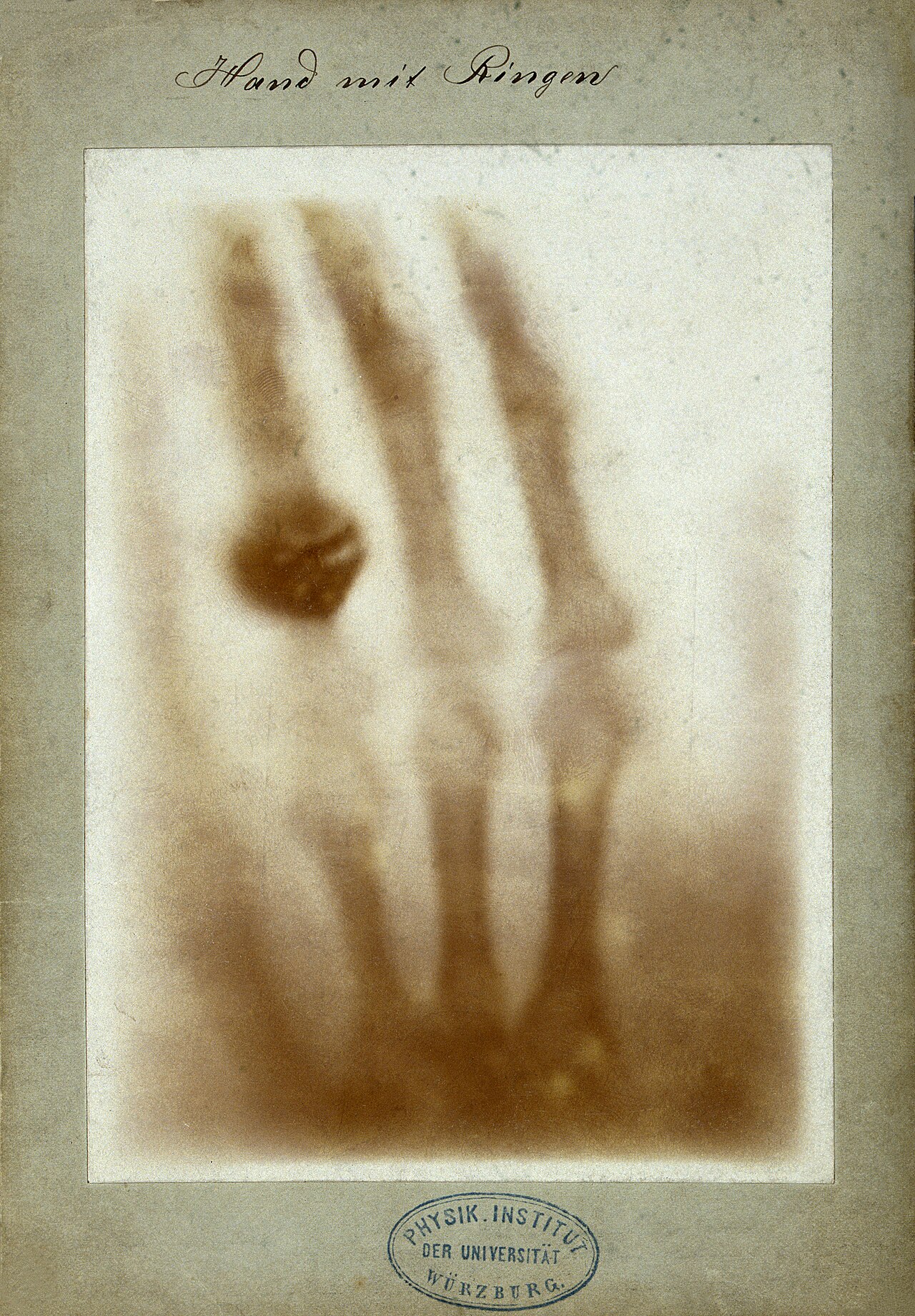
On the evening of November 8, 1895, physicist Wilhelm Conrad Röntgen was experimenting with a cathode-ray tube in his darkened lab in Würzburg, Germany. He had wrapped the tube in black cardboard so no light could escape. Yet across the room, a screen coated with a fluorescent chemical, barium platinocyanide, began to glow.
Something invisible was passing through the cardboard. Röntgen spent weeks investigating, reportedly eating and sleeping in his lab, and found the mysterious rays could pass through paper, wood, and flesh but were blocked by denser materials like bone and metal. Not knowing what they were, he called them “X” rays, X for unknown. On December 22, he made an image of his wife Anna Bertha’s hand that showed her bones and wedding ring in ghostly silhouette. She was reportedly unnerved to see her own skeleton.
Röntgen published his findings at the end of December 1895, and the news spread at astonishing speed. Within weeks, doctors were using X-rays to locate bullets and examine broken bones. In 1901, Röntgen received the first Nobel Prize in Physics, and he declined to patent his discovery. The early enthusiasm carried a cost, though. Radiation’s dangers weren’t understood, and some early researchers suffered serious burns and injuries.
1Penicillin
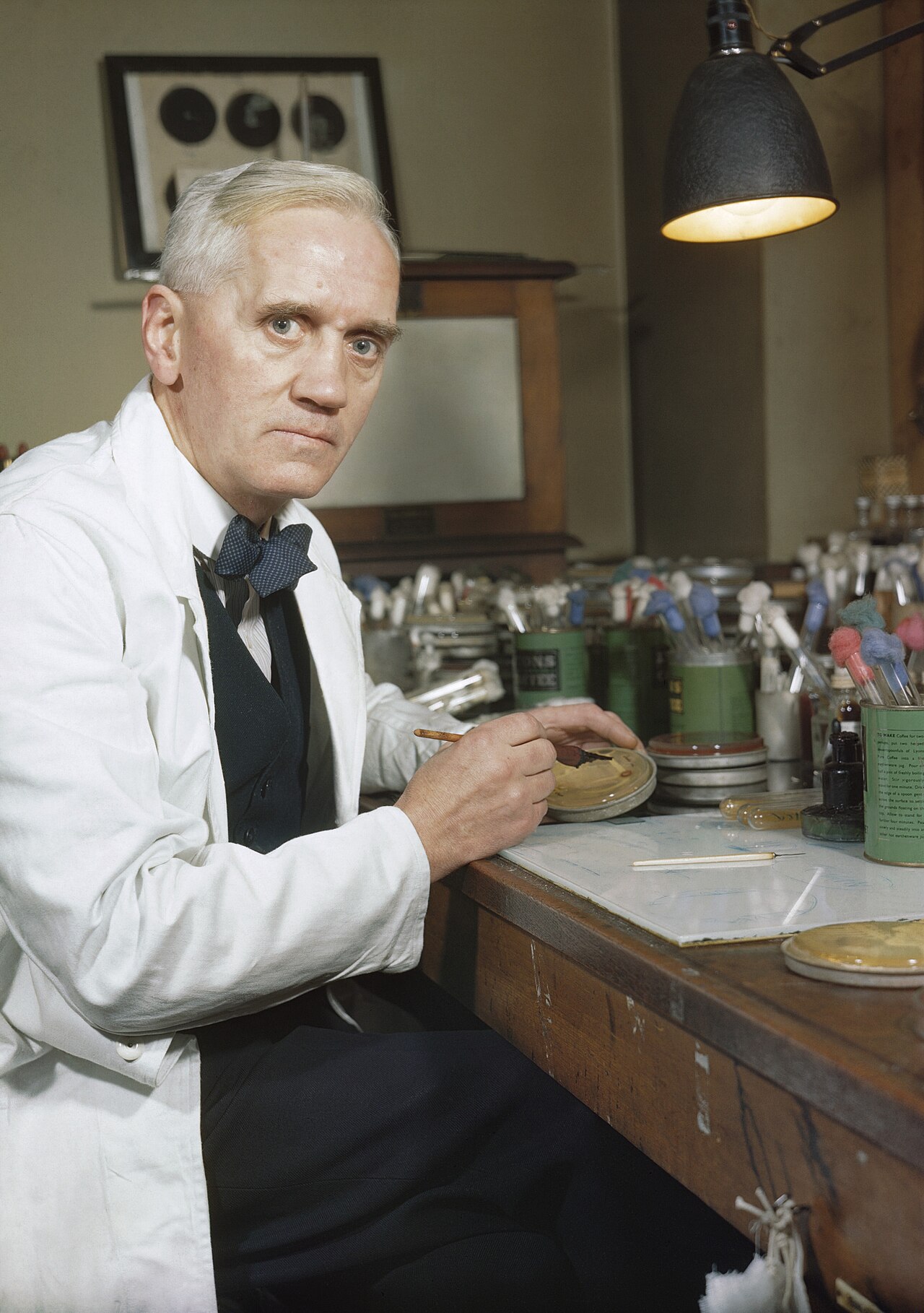
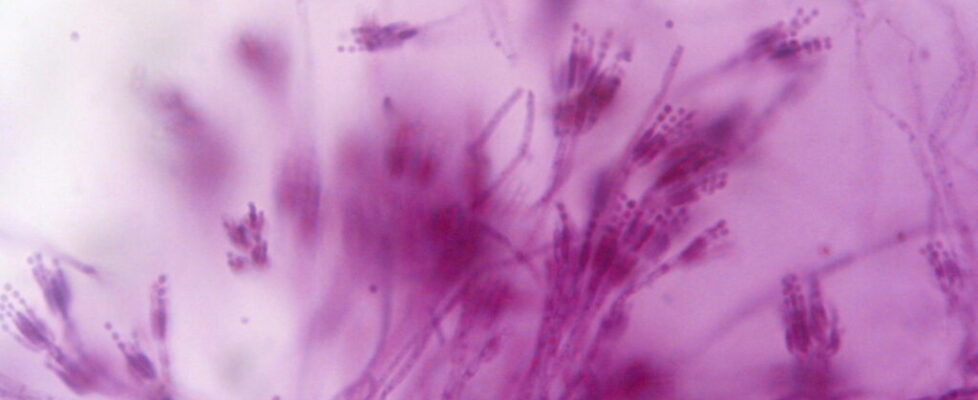
When Alexander Fleming returned from a summer holiday to his lab at St Mary’s Hospital in London in September 1928, a stack of culture plates was waiting to be cleaned. One plate of Staphylococcus bacteria had been contaminated by a blob of mold. Around the mold, the bacteria had died, leaving a clear ring. Fleming was intrigued rather than annoyed.
The mold was a species of Penicillium, and Fleming named the bacteria-killing substance it released penicillin. He published his findings in 1929, but he struggled to purify and stabilize it, and the discovery sat largely dormant for a decade. Even the lucky break may have been a chain of coincidences: the spores might have drifted up from a mycology lab on the floor below, and the summer’s weather may have favored the mold over the bacteria at just the right moment.
The heavy lifting came at the University of Oxford, where Howard Florey, Ernst Chain, Norman Heatley, and colleagues learned to extract and test penicillin around 1940 and 1941. Their first patient, police constable Albert Alexander, improved dramatically, but the tiny supply ran out and he died. In the United States, researchers hunting for better strains found a highly productive one on a moldy cantaloupe from a Peoria, Illinois, market. In 1945, Fleming, Florey, and Chain shared the Nobel Prize.
Luck Favors the Curious
Louis Pasteur put it neatly in 1854: in the field of observation, chance favors only the prepared mind. Every invention on this list needed a fluke, but it also needed a person who stopped, looked twice, and refused to sweep the strange result into the trash. The next accidental breakthrough is probably sitting in someone’s lab right now, waiting to be noticed.
For more surprising backstories, explore these everyday things with surprisingly weird origins, or see how medicine fared before the scientific method caught up in our list of bizarre medical treatments from history.
Quick answers
What inventions were discovered by accident?
Many famous inventions began as accidents, including penicillin, X-rays, the microwave oven, Teflon, super glue, safety glass, the Slinky, and the first mass-produced synthetic dye, mauveine. The implantable pacemaker grew out of a wrong resistor, and Velcro was inspired by burrs stuck to a dog’s fur. In each case, the inventor recognized the value of an unexpected result.
Was the microwave really invented because of a melted chocolate bar?
Partly. Raytheon engineer Percy Spencer reportedly noticed a candy bar melting in his pocket while working near a radar magnetron in 1945, though accounts differ on the type of candy, and other radar workers may have noticed the heating effect first. Spencer’s key contribution was testing it deliberately on popcorn and eggs, which led to Raytheon’s cooking patent.
Who really discovered penicillin?
Alexander Fleming discovered penicillin’s bacteria-killing effect in 1928 at St Mary’s Hospital in London. However, Howard Florey, Ernst Chain, Norman Heatley, and their Oxford team turned it into a usable medicine around 1940 and 1941, and American labs scaled up production. Fleming, Florey, and Chain shared the 1945 Nobel Prize in Physiology or Medicine.
Sources, further reading & photo credits
- Penicillium — Wikipedia
- Slinky — Wikipedia
- Laminated glass — Wikipedia
- Cyanoacrylate — Wikipedia
- William Henry Perkin — Wikipedia
- Velcro — Wikipedia
- Non-stick surface — Wikipedia
- Pacemaker — Wikipedia
- Microwave oven — Wikipedia
- Alexander Fleming — Wikipedia
Cover image: Wikimedia Commons contributor · CC BY-SA 3.0 · via Wikimedia Commons. Photos throughout this list are sourced from Wikimedia Commons under the licenses noted in each caption.