

10 Bizarre Musical Instruments You Won’t Believe Exist

Somewhere in Virginia, a cave plays tunes. On the Croatian coast, the Adriatic hums through slots in a marble staircase. And in a Paris museum stands a bass so tall that its player needs levers and pedals to reach the notes.
Humans will make music out of anything: leather-wrapped wooden snakes, steel pipes on a windy hill, bronze rods dipped in water, glass bowls spinning on a spindle. This countdown of bizarre musical instruments covers ten real creations, from Renaissance oddities to Soviet-era electronics to instruments played by the weather itself. Some still turn up on concert stages. Some sound like a horror-movie soundtrack, because they literally are one. And a few are so enormous that you have to travel to hear them.
10The Serpent
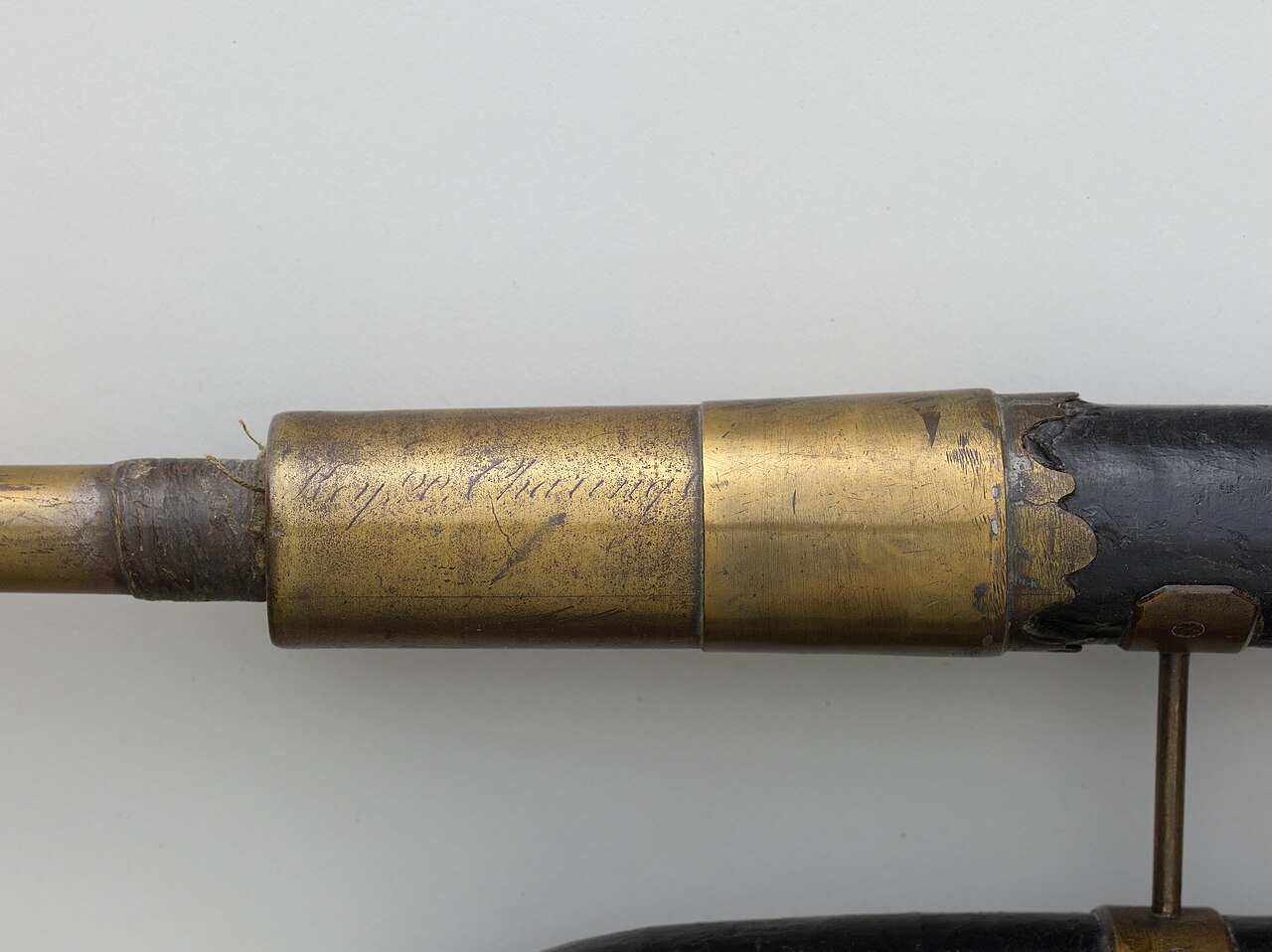
It looks like a python that swallowed a trumpet mouthpiece. The serpent is a bass wind instrument made of about eight feet of tubing bent into a wiggly S, usually carved from wood and wrapped in leather, with a cup-shaped mouthpiece like a brass instrument’s and six finger holes like a woodwind’s.
Tradition credits its invention around 1590 to Edmé Guillaume, a clergyman in Auxerre, France, though hard evidence is thin. In the early 1600s French churches adopted it to support the low voices singing plainchant, and by the mid-18th century it had marched into military bands and orchestras. Its tone is a woody, growling sound somewhere between a tuba and a bassoon, and it is notoriously hard to keep in tune, partly because the finger holes are placed for the player’s reach rather than for ideal acoustics.
By 1900 the serpent had been displaced by the ophicleide and then the valved tuba, and it nearly vanished. Then filmmakers rediscovered it. Bernard Herrmann wrote it into his score for Journey to the Center of the Earth (1959), and Jerry Goldsmith used one in Alien (1979). Today a small, devoted community of players and makers keeps it alive, some building serpents from carbon fiber.
9The Stroh Violin
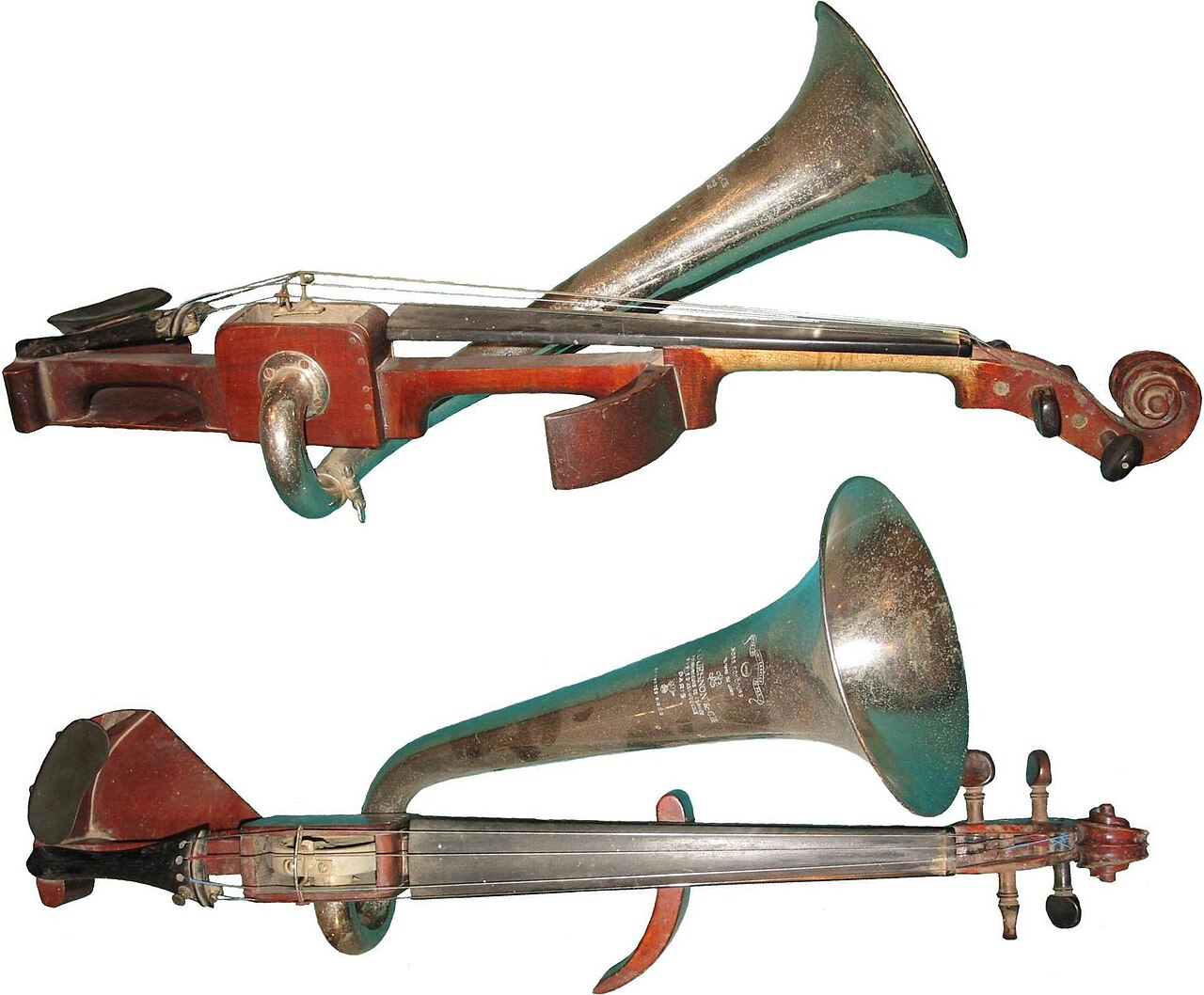
Imagine a violin that ditched its body and grew a gramophone horn. That’s the Stroh violin, invented in London in 1899 by Augustus Stroh, a German-born electrical engineer. The bridge rests on a thin metal diaphragm, and the vibrations are amplified through a metal horn that points straight out from the end of the fingerboard, with a second, smaller horn aimed back at the player’s ear.
It solved a very specific problem. Before electric microphones, records were made acoustically: musicians crowded around a big horn that funneled sound onto a cutting stylus. Ordinary violins came out faint and thin on those recordings. The Stroh violin was louder, punchier and directional, so it became a fixture in recording studios until electrical recording took over in the late 1920s.
The sound is bright, nasal and slightly metallic, like a violin heard through an old telephone. It found a surprising second life in Romania’s Bihor region, where horned fiddles inspired by the design are still played in folk music. Modern musicians chasing a vintage, otherworldly tone, from Tom Waits to film composer Thomas Newman, have picked one up too.
8The Hurdy-Gurdy
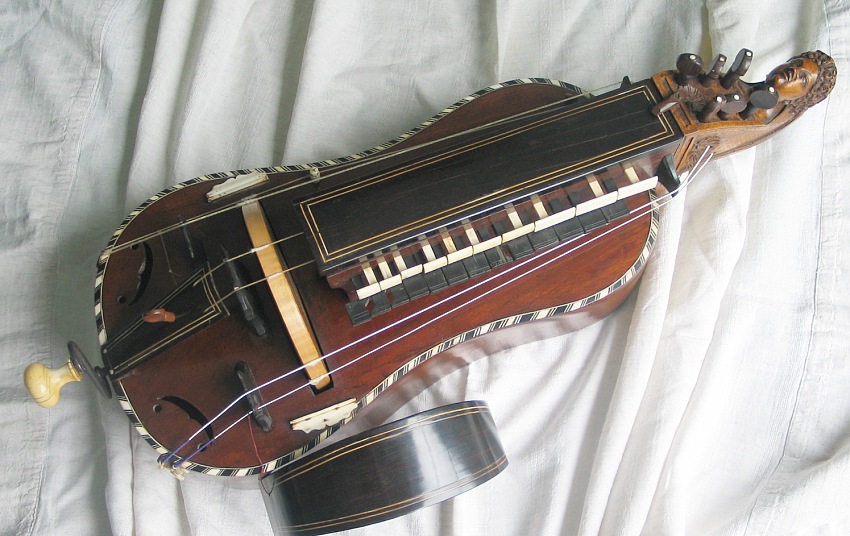
Picture a violin crossed with a bagpipe and a music box, then add a crank. The hurdy-gurdy’s player turns a handle that spins a rosined wooden wheel against the strings, acting like a bow that never runs out. Keys on the side press small wedges called tangents against the melody strings, while drone strings hum a constant note underneath.
The secret weapon is the chien, French for dog, a buzzing bridge on one of the drone strings. Give the crank a little extra snap and it rattles out a percussive buzz, letting a skilled player lay rhythm over the melody. The overall sound is reedy and hypnotic, with a raw, ancient edge.
Its ancestor, the organistrum, appeared in Europe by the 12th century and was so large that it took two people to play: one to turn the crank and one to work the keys. A carving at the cathedral of Santiago de Compostela shows a pair of musicians sharing one. Smaller versions spread through medieval Europe, slid down the social ladder to street musicians, and then, in 18th-century France, became a fad among aristocrats who fancied rustic pastimes. Today the instrument thrives in folk scenes from France and Spain to Hungary and Ukraine, and it pops up in neo-medieval and metal bands.
7The Waterphone
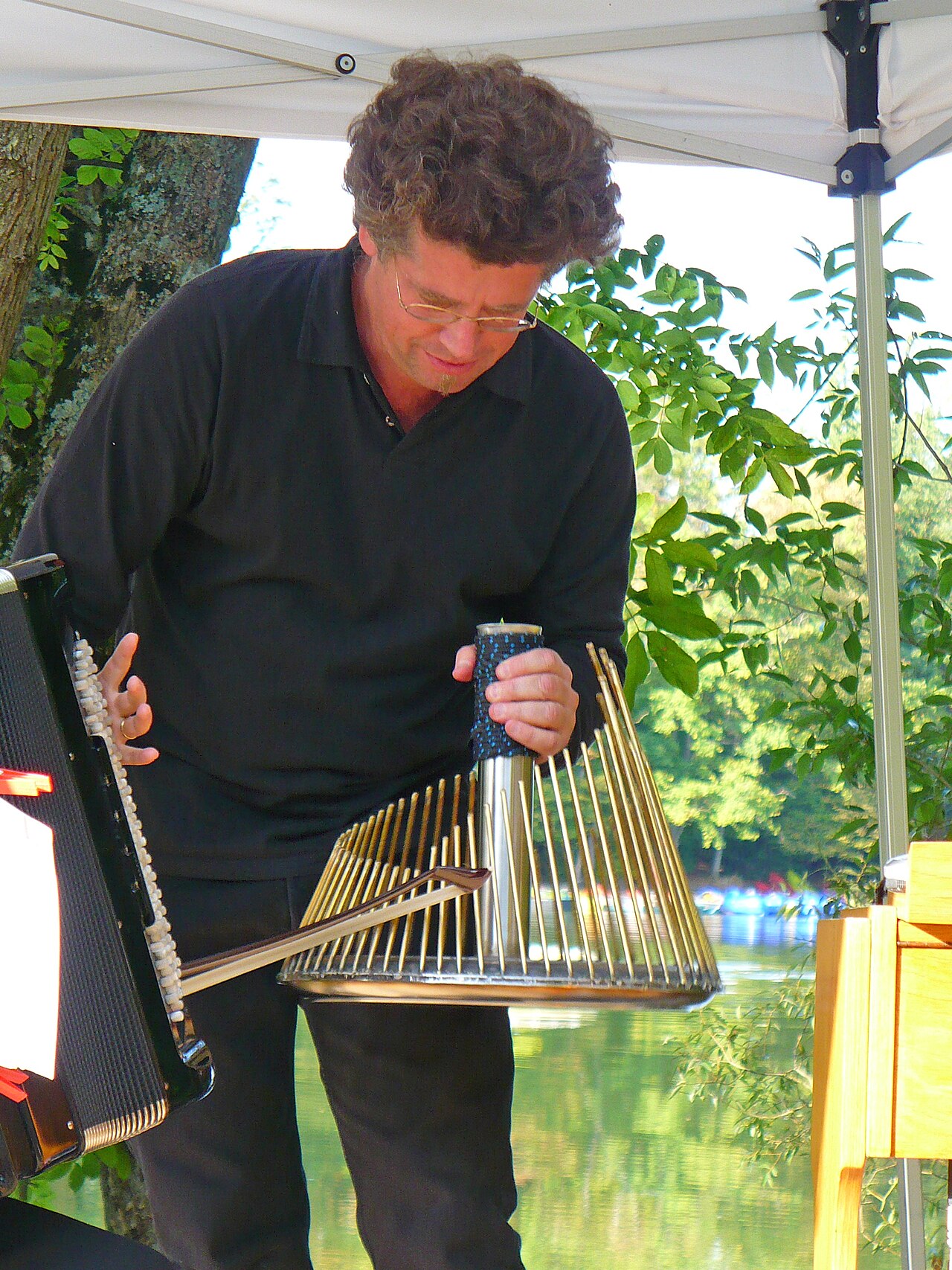
If you’ve ever watched a horror movie and felt a chill at a ghostly, wavering shriek on the soundtrack, there’s a decent chance you were hearing a waterphone. It looks like a piece of abstract sculpture: a stainless steel resonator bowl with a cylindrical neck, ringed by bronze rods of different lengths and thicknesses. A little water sloshes around inside.
The player bows the rods or strikes them with mallets, then tilts and swirls the instrument so the water shifts within the resonator. That bends the pitch and timbre in unpredictable ways, producing glassy moans, whale-like swoops and metallic shimmers. American inventor Richard Waters developed it after encountering a Tibetan drum in the early 1960s that held a small amount of water to shape its sound. His patent was granted in 1975.
Hollywood sound designers embraced it. The waterphone has been credited on films including Poltergeist, Aliens, The Matrix and Star Trek: The Motion Picture. Experimental musicians love it too, and Waters eventually offered it in several sizes, from a compact standard model up to a big bass version.
6The Octobass
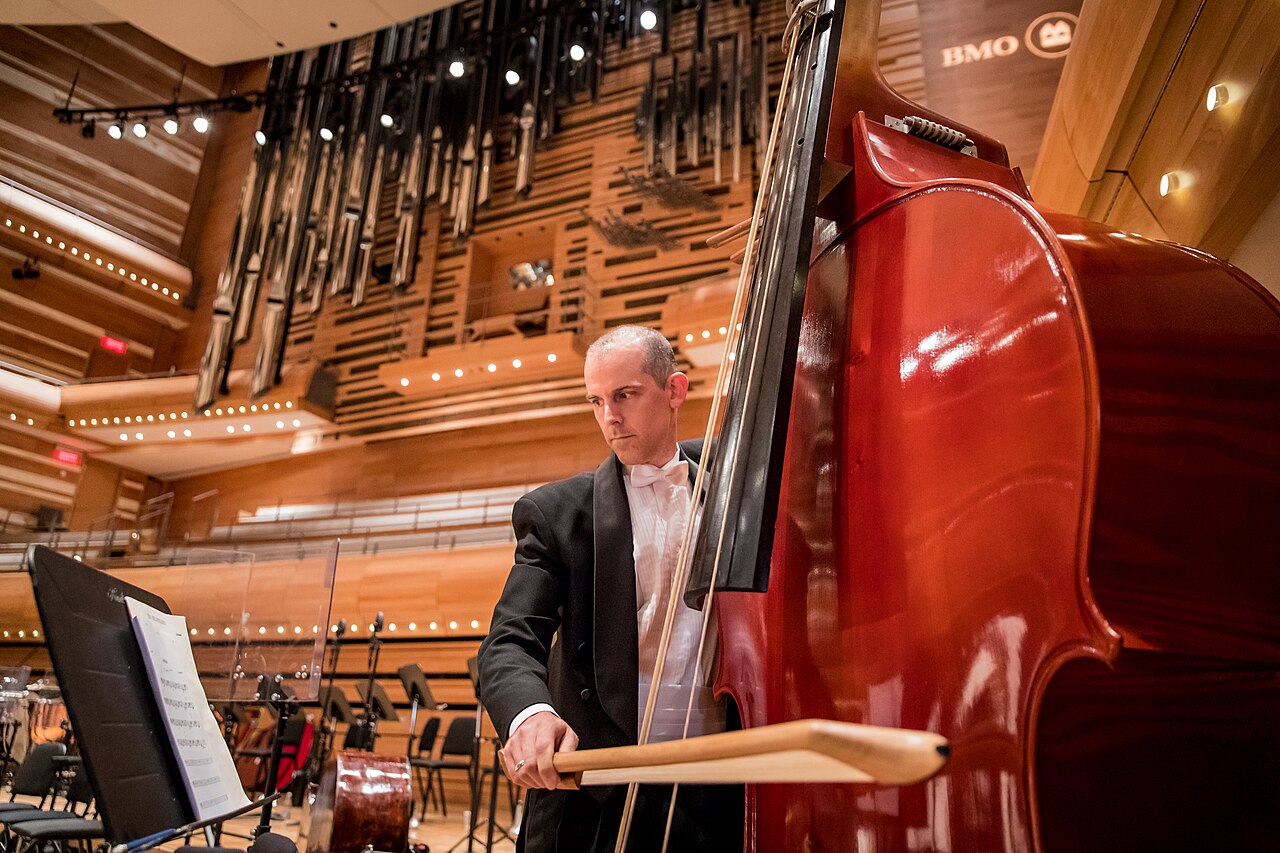
The double bass is already the giant of the orchestra. Around 1850, Parisian luthier Jean-Baptiste Vuillaume decided to go bigger, much bigger. His octobass stands about 3.5 meters (11.4 feet) tall, so tall that the player typically stands on a raised step to bow it, and its neck is so long that no human hand could stop the strings in the usual way.
Vuillaume’s fix was mechanical. The octobass has just three thick strings, and the player works a system of levers and pedals that clamp them at preset positions, like frets operated by remote control. The composer Hector Berlioz praised its powerful low register in his writing on orchestration. Some modern versions are tuned so low that their lowest fundamental notes dip below about 20 hertz, roughly the bottom edge of human hearing, so listeners perceive them through overtones and, up close, through their bodies.
The octobass was never produced on any real scale. One of Vuillaume’s instruments is displayed at the Musée de la Musique in Paris, and another octobass is held in Vienna. The Montreal Symphony Orchestra owns a modern replica and actually performs with it, and the Musical Instrument Museum in Phoenix, Arizona, displays one as well.
5The Glass Armonica
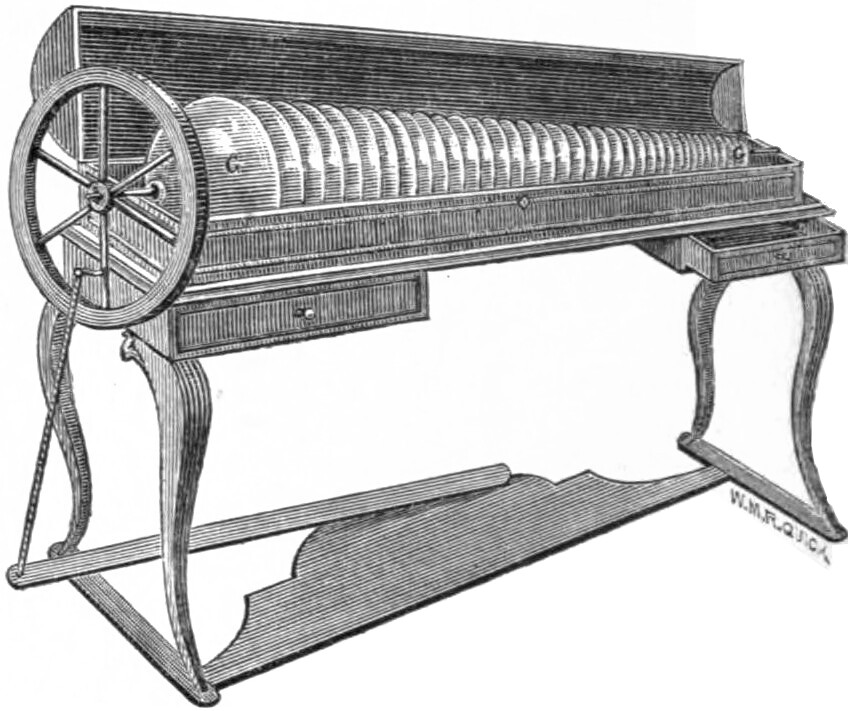
Run a wet finger around the rim of a wine glass and it sings. In 1761, after hearing Edward Delaval perform on a set of tuned glasses, Benjamin Franklin set out to make the trick practical. His armonica mounted dozens of glass bowls, nested inside one another from largest to smallest, on a horizontal iron spindle turned by a foot treadle. The player touches moistened fingertips to the spinning rims and can play chords and melodies at once.
The sound is pure, shimmering and slightly unearthly, and it was a sensation. Mozart composed for it in 1791, and Beethoven used it in an 1814 stage work. Franz Mesmer, the hypnotist whose name gave us mesmerize, used it in his sessions. Gaetano Donizetti originally wanted it to accompany the famous mad scene in his opera Lucia di Lammermoor, but the part was rewritten for flute before the 1835 premiere.
Then its reputation curdled. Rumors spread, mostly in Germany, that its ethereal tones overstimulated the nerves and drove players and listeners toward melancholy or madness. A modern theory blames lead poisoning from the glass, though there’s no solid evidence for it. Either way, the armonica faded in the 19th century, until glassblower Gerhard Finkenbeiner revived it in the 1980s.
4The Theremin
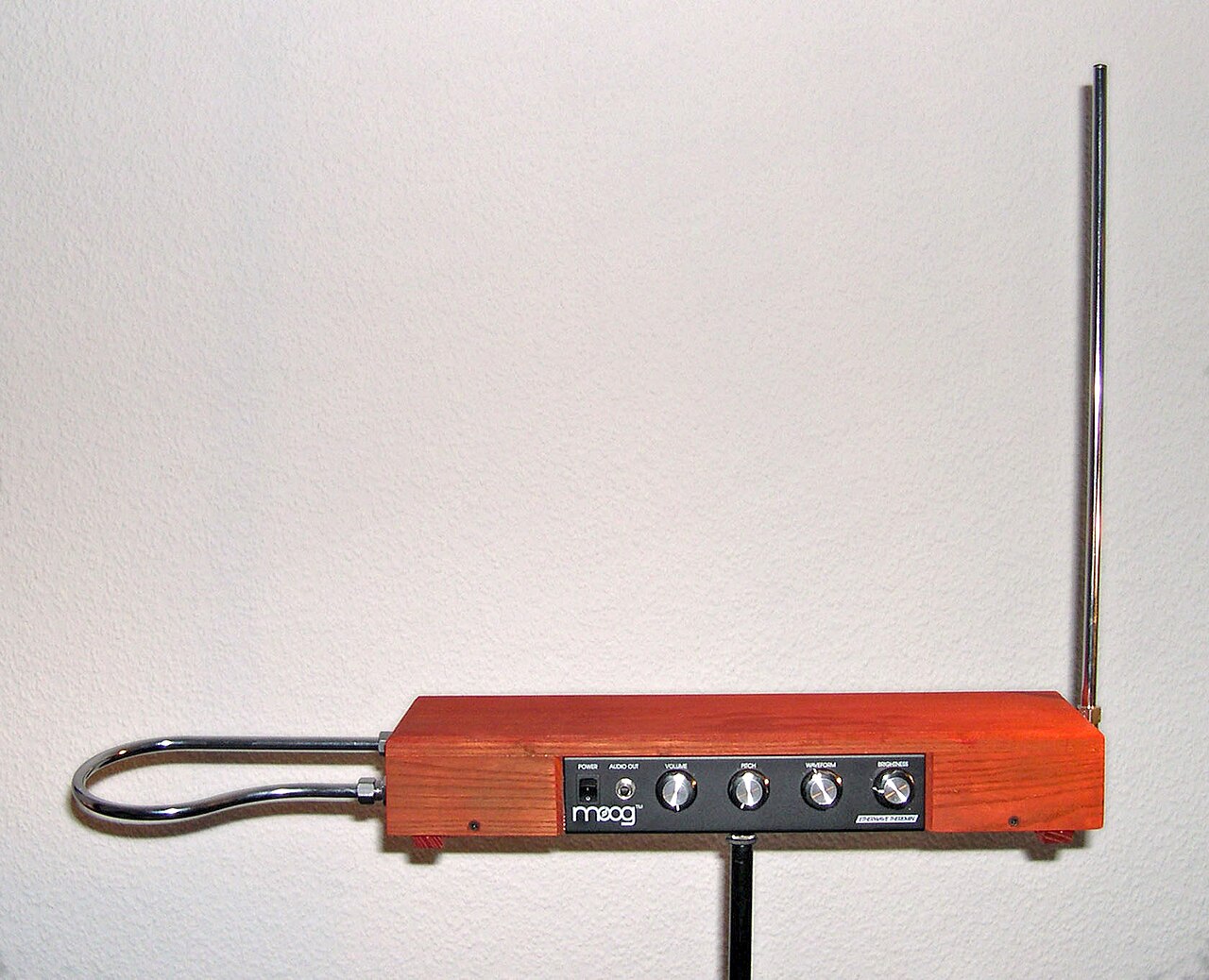
The theremin is the only famous instrument you play without touching it. Two metal antennas sense the position of the player’s hands: one controls pitch, the other volume. Move a hand toward the upright rod and the note climbs; lower the other toward the loop and the sound fades. Playing in tune means holding your hands steady in thin air, with no frets, keys or markings to guide you.
Russian physicist Lev Termen, known in the West as Leon Theremin, invented it in 1920 while researching proximity sensors for the Soviet government. He reportedly demonstrated it for Lenin, then toured Europe and moved to the United States, where RCA released a commercial theremin just after the 1929 stock market crash. Bad timing. Virtuoso Clara Rockmore proved it could handle serious classical repertoire, and its eerie, voice-like wail became Hollywood shorthand for the uncanny in films such as Spellbound and The Day the Earth Stood Still.
Theremin’s own story got stranger. In 1938 he abruptly returned to the Soviet Union, was imprisoned, and ended up in a secret laboratory for prisoner-scientists. There he created The Thing, a passive listening device hidden in a carved wooden Great Seal presented to the U.S. ambassador in Moscow in 1945. It went undetected until 1952.
3The Singing Ringing Tree

On a bare hilltop above Burnley, in Lancashire, a steel tree leans permanently into the wind and sings. That isn’t a metaphor. The Singing Ringing Tree is a sculpture about three meters (10 feet) tall, built from galvanized steel pipes stacked in spiraling layers. When wind sweeps across the Pennine moorland, it pours through the pipes and produces a low, slightly discordant chorus that spans several octaves.
Designed by architects Mike Tonkin and Anna Liu of the firm Tonkin Liu and completed in 2006, the tree was tuned with surprising care. Some pipes are cut across their width so the wind can sound them, and holes drilled into their undersides set each pipe’s pitch. To some ears it resembles a choir warming up; to others, a ghostly organ that never plays the same phrase twice.
It was one of four Panopticons, landmark sculptures commissioned across East Lancashire as symbols of regeneration, and in 2007 it won a RIBA National Award for architectural excellence. It sits near Crown Point, a short walk from the road. Go on a gusty day: on a still afternoon the tree is just a striking silhouette, but when a storm rolls in, it becomes an instrument.
2The Sea Organ

Sit on the white marble steps along Zadar’s waterfront and the sea plays for you. Hidden beneath the stairs is a system of 35 tuned pipes and resonating chambers. Each wave that rolls in pushes air through them, and the sound escapes through slots in the stone above, producing long, breathy chords that rise and fall with the swell.
Croatian architect Nikola Bašić designed the Sea Organ as part of a makeover of a stretch of waterfront that had been rebuilt in plain concrete after heavy damage in World War II. It opened in April 2005. The pipes are arranged in seven groups, each tuned to a set of five tones, but the composer is the Adriatic, so no performance ever repeats. Calm days bring soft sighs, while rougher water and the wakes of passing boats can make it moan like a whale. In 2006 it shared the European Prize for Urban Public Space.
Bašić added a second showpiece a few steps away: Greeting to the Sun, a large circle of glass panels set into the pavement that soaks up solar energy all day and puts on a light show after dark. Come at sunset, when locals and travelers gather on the steps to listen to the water and watch the sky change color.
1The Great Stalacpipe Organ
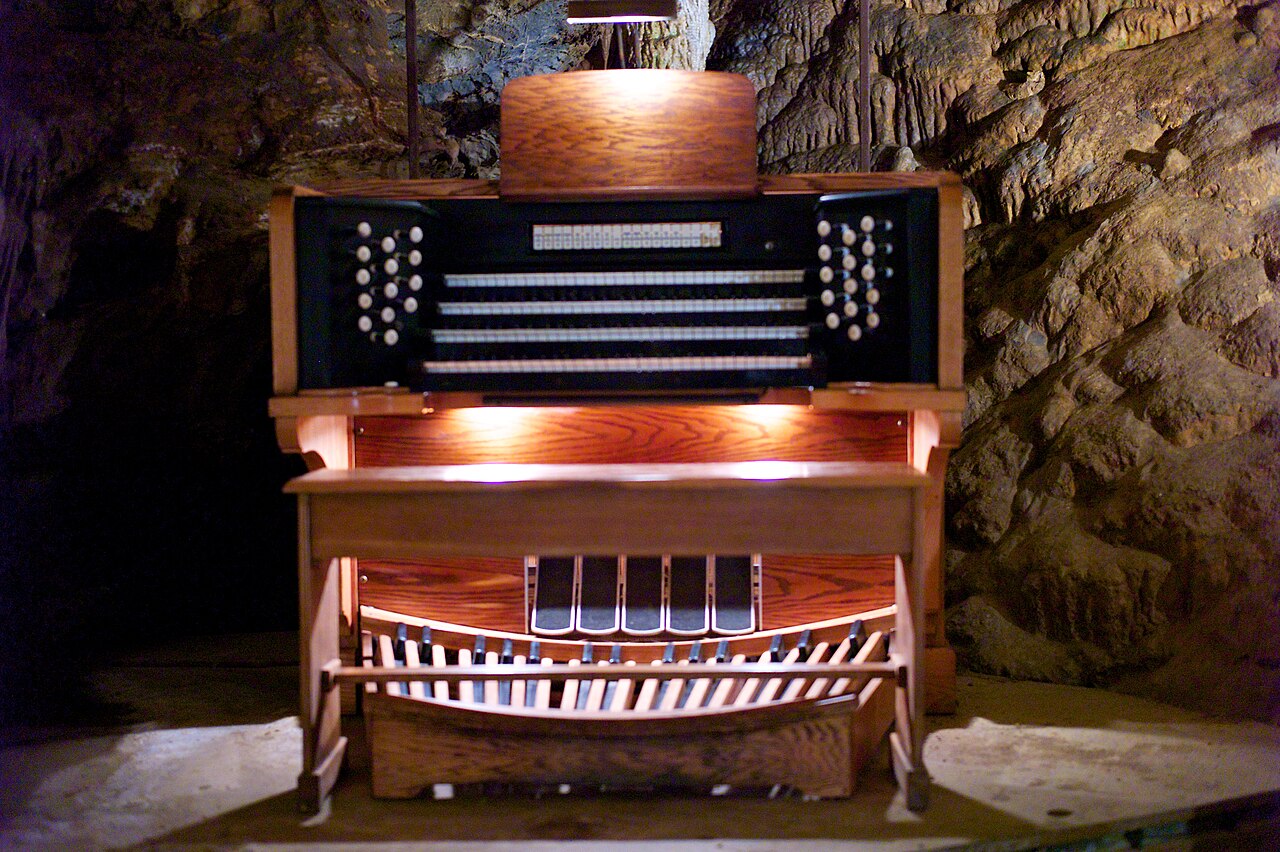
Deep inside Luray Caverns, in Virginia’s Shenandoah Valley, an organ console sits among the rock formations. Press a key and, somewhere out in the darkness, a rubber-tipped mallet taps a stalactite that took countless millennia to grow. The cave rings with a clear, bell-like tone. Play a chord, and the whole cavern answers.
This is the Great Stalacpipe Organ, the brainchild of Leland W. Sprinkle, a mathematician and electronics engineer who worked at the Pentagon. One account says the idea struck during a cave tour in 1954; another, often repeated, says his young son bumped his head on a stalactite and it rang. Either way, Sprinkle spent about three years in the mid-1950s searching the cave for stalactites with the right pitch, sanding some of them to fine-tune their notes, and wiring each one to its own solenoid-driven mallet.
The finished instrument uses 37 stalactites spread across about 3.5 acres of cavern, and its sound carries through the cave’s 64 acres. It’s widely billed as the largest musical instrument in the world, a title Guinness World Records has recognized. Today an automated system plays it for visitors on guided tours, so every group gets a short concert from the rock itself.
Music Is Wherever You Find It
The common thread here is curiosity. Someone hears a stalactite ring, a wine glass sing or the wind whistle through a pipe, and wonders what would happen if they took it seriously. Some of these experiments became footnotes, others became soundtrack staples, and a few turned whole landscapes into concert halls. Not bad for a few pipes, rods, bowls and rocks.
If the singing cave and the musical coastline grabbed you, you’ll love our tour of natural wonders that look like another planet. And for more spectacle made by nature itself, explore these rare natural phenomena most people never see.
Quick answers
What is the largest musical instrument in the world?
The Great Stalacpipe Organ in Virginia’s Luray Caverns is widely cited as the largest, a title recognized by Guinness World Records. Built in the 1950s by Leland W. Sprinkle, it uses solenoid-driven mallets to tap 37 stalactites spread across about 3.5 acres of cavern, all played from a single organ-style console.
Why was the glass armonica said to cause madness?
In the late 18th and early 19th centuries, rumors, mostly in Germany, claimed the armonica’s ethereal tones overstimulated the nerves and caused melancholy or even madness. Some modern writers have blamed lead poisoning from the glass, but there’s no solid scientific evidence for that. Stories of the instrument being banned are often repeated but poorly documented.
How do you play a theremin?
You play a theremin without touching it. The instrument has two antennas that sense the position of your hands: moving one hand closer to the vertical rod raises the pitch, while moving the other toward the horizontal loop changes the volume. Because there are no frets or keys, staying in tune takes precise, steady hand control.
Sources, further reading & photo credits
- Luray Caverns — Wikipedia
- Serpent (instrument) — Wikipedia
- Stroh violin — Wikipedia
- Hurdy-gurdy — Wikipedia
- Waterphone — Wikipedia
- Octobass — Wikipedia
- Glass harmonica — Wikipedia
- Theremin — Wikipedia
- Singing Ringing Tree (sculpture) — Wikipedia
- Sea organ — Wikipedia
- Great Stalacpipe Organ — Wikipedia
Cover image: Paulo Ordoveza from Washington, DC · CC BY 2.0 · via Wikimedia Commons. Photos throughout this list are sourced from Wikimedia Commons under the licenses noted in each caption.