

Science is very good at answers. It can pin down the age of the universe to within a fraction of a percent, read the genome of a Neanderthal who died 50,000 years ago and lower a car-sized rover onto Mars on a rocket-powered sky crane. But every question it settles seems to open two more, and some of the biggest have been sitting on the table for decades, a few of them for centuries.
Here are 100 of the biggest unanswered questions in science, counted down in ten chapters, from the expansion of the universe to the reason you can’t remember being a baby. We didn’t stop at the questions. Each one gets a proper answer: what researchers actually know, the leading explanations and the evidence behind them, why the problem is still open and the best answer anyone can give as of 2026.
Every entry carries a status tag. Open means nobody knows. Hotly debated means there are strong camps and no consensus. Partly answered means big pieces are solved but not the whole thing. Closing in means an answer looks within reach. Grab a coffee: this is the longest list we’ve ever published.
The Cosmos
We can weigh galaxies we will never visit and photograph light that set out more than 13 billion years ago. And yet the universe keeps handing astronomers numbers that refuse to add up.
100Why can’t astronomers agree on how fast the universe is expanding?
Measure the expansion of the universe two different ways and you get two different answers. Start from the cosmic microwave background, the afterglow of the Big Bang, run the standard model of cosmology forward, and space today should be stretching at about 67 to 68 kilometers per second for every megaparsec of distance (a megaparsec is 3.26 million light-years). Clock how fast nearby galaxies are actually receding and you get about 73. That number, the Hubble constant, should come out the same either way.
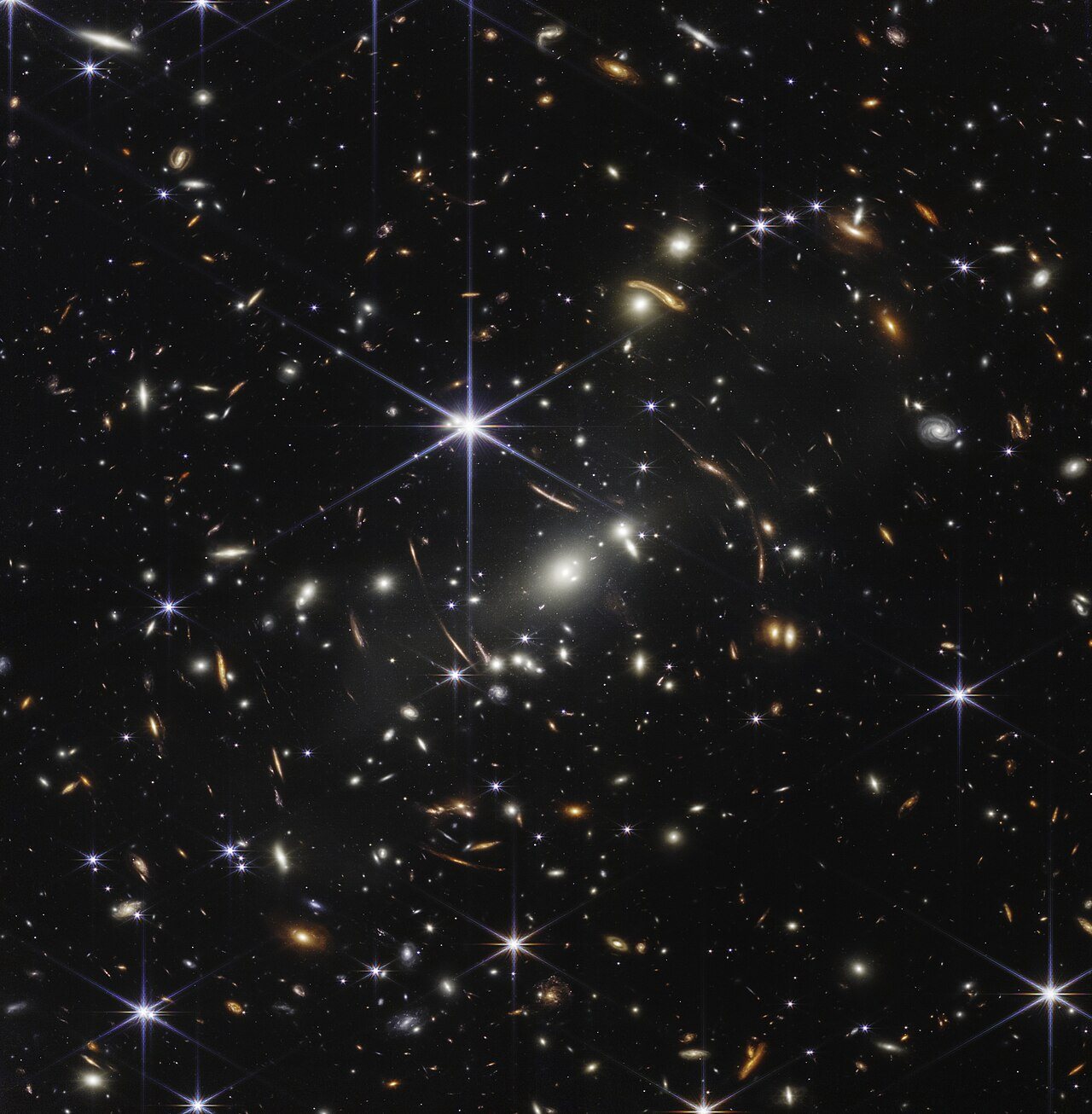
The local figure rests on a “distance ladder.” Pulsating stars called Cepheids, whose true brightness can be read from their rhythm, calibrate distances to galaxies that host Type Ia supernovae, which then reach far deeper into space. Adam Riess’s SH0ES team lands at 73.0, give or take 1.0. When the James Webb Space Telescope re-examined those Cepheids at sharper resolution, the crowding errors critics suspected did not show up. In April 2026 the H0 Distance Network collaboration tied many independent yardsticks into one network and reported 73.50 ± 0.81, a clash of roughly five to seven standard deviations with the early-universe value.
Not everyone is convinced. Wendy Freedman’s Chicago-Carnegie Hubble Program calibrates with different stars, including red giants at a sharp brightness cutoff, and with Webb data gets about 70, close enough that she argues the tension may be a measurement problem. Critics reply that her team used a smaller supernova sample, and methods that skip Cepheids entirely, such as time delays in gravitationally lensed quasars, also tend to come out high.
If the gap is real, the standard model is missing something. The best-known fix, “early dark energy,” adds a brief push of extra repulsion in the universe’s first few hundred thousand years, shrinking the cosmic ruler that the microwave-background prediction depends on. Others add new particles or new interactions in the dark sector. None fits every dataset cleanly, and most studies find that our galaxy sitting inside a giant cosmic void cannot explain the whole gap.
The way out is a ruler that shares no assumptions with the others. Colliding neutron stars, heard in gravitational waves and seen in light, give distances with no ladder at all. A 2026 reanalysis of the famous 2017 merger leaned toward the lower value, but with wide error bars. Dozens more such events should eventually decide it.
99Did the universe really inflate in a split second after the Big Bang?
In December 1979 a young particle physicist named Alan Guth wrote “SPECTACULAR REALIZATION” in his notebook. He had worked out that a strange form of energy in the newborn universe could make space expand exponentially, doubling again and again in a sliver of a second. He called it inflation, and in standard versions it stretched space by a factor of at least 10²⁶ in less than 10⁻³² seconds.
The idea stuck because it solves puzzles the plain Big Bang cannot. Why does the microwave background have the same temperature, to about one part in 100,000, in opposite corners of the sky, regions that never had time to swap heat? Why is space so flat? Inflation answers both: everything we see grew from a patch small enough to even itself out, and the stretching ironed away any curvature. It also predicted that quantum jitters, blown up to cosmic size, would seed galaxies with ripples slightly stronger on large scales than small ones. The Planck satellite measured that tilt, a “spectral index” of about 0.965, just shy of perfectly even.
The clincher would be primordial gravitational waves, which should leave a faint swirl called B-mode polarization in the microwave background. In March 2014 the BICEP2 team announced it had found one; within a year a joint analysis with Planck showed the signal was dust in our own galaxy. The best limit, from BICEP/Keck in 2021, caps the waves at 3.6 percent of the strength of the density ripples, already ruling out several of the simplest inflation models.
Critics such as Paul Steinhardt and Roger Penrose argue the theory is now so flexible it can fit almost any result, and that inflation tends to run forever somewhere, spawning a multiverse that muddies its predictions. In 2017, 33 physicists including Guth, Andrei Linde and Stephen Hawking signed a public reply defending it. In 2025 data from the Atacama Cosmology Telescope nudged the spectral index slightly upward, leaving Alexei Starobinsky’s model, long a favorite, under mild strain.
The Simons Observatory in Chile and BICEP Array at the South Pole aim to probe several times deeper, and Japan’s LiteBIRD satellite is planned for the 2030s, though the US scrapped the larger CMB-S4 project in 2025. A detection would all but confirm inflation and reveal its energy; continued silence would push it into stranger corners.
98How did giant black holes grow so big so early?
Black holes are supposed to be slow eaters. Infalling gas glows so fiercely that its light pushes more gas away, capping how fast a black hole can grow (the Eddington limit). Feed a 100-sun stellar remnant at that cap nonstop and it needs roughly 700 to 800 million years to reach a billion suns. Yet quasars powered by billion-solar-mass black holes were blazing when the universe was about 700 million years old.
The James Webb Space Telescope sharpened the problem. It found a feeding black hole of about 1.6 million suns in the galaxy GN-z11, 430 million years after the Big Bang, and, with Chandra’s X-ray help, UHZ1, tens of millions of suns at around 470 million years. It also turned up swarms of compact, oddly red objects nicknamed little red dots, abundant in the first billion and a half years and rare later. One, CAPERS-LRD-z9, hosts a black hole of about 38 million suns less than 500 million years after the Big Bang. Many of these black holes look too heavy for their small host galaxies.
Two answers compete. One says some seeds started heavy: in rare clouds bathed in ultraviolet light from nearby galaxies, gas skipped ordinary star formation and collapsed into a supermassive star or straight into a black hole of 10,000 to 100,000 suns. UHZ1’s heft relative to its galaxy fits this “direct collapse” idea. The other says small seeds broke the speed limit in short “super-Eddington” binges while thick gas trapped their radiation. A September 2026 Nature simulation led by Sunmyon Chon blended the two: heavy seeds fed inside dense gas dozens of times faster than black holes manage today and came to resemble little red dots.
The dots themselves may be the missing phase. In August 2026 a team led by Rohan Naidu reported in Nature that one of them, MoM-BH*-1, seen 660 million years after the Big Bang, behaves like a “black hole star”: a young black hole wrapped in hydrogen so dense that it glows like the surface of a giant star. Primordial black holes, made in the Big Bang itself, remain an exotic long shot.
Settling it means weighing these objects more precisely, explaining why little red dots are so faint in X-rays, and finding even earlier black holes; the planned LISA gravitational-wave observatory should hear merging seeds in the 2030s.
97What happens to information that falls into a black hole?
Burn a book and, in principle, nothing is lost. Track every photon of light and every speck of smoke and ash, and the laws of physics could run the movie backward. Quantum mechanics insists on that rule. In 1974 Stephen Hawking showed that black holes slowly leak radiation and shrink, and by 1976 he argued that this radiation is featureless heat carrying no trace of what fell in. When the hole finally evaporates, the book seems gone for good. That clash is the black hole information paradox.
For two decades physicists split into camps. In 1997 Hawking and Kip Thorne bet John Preskill that information really is destroyed. Opinion swung after Juan Maldacena found, that same year, a mathematical duality in which a particular kind of universe with gravity is exactly equivalent to an ordinary quantum system without it. There, a black hole is just a complicated quantum object, and information cannot vanish. Hawking conceded in 2004 and handed Preskill a baseball encyclopedia. Thorne never paid up.
Knowing that information gets out is not the same as knowing how. In 1993 Don Page worked out what the radiation should look like if nothing is lost: its quantum entanglement with the black hole should rise, then turn around roughly halfway through the evaporation and fall back to zero, a shape now called the Page curve. Hawking’s calculation only ever rises. In 2019 two groups showed that if the gravity calculation includes exotic geometries called replica wormholes, the Page curve appears on its own. Late in a black hole’s life, part of its interior, dubbed an “island,” effectively counts as part of the radiation outside.
That was a breakthrough, not the finish. The calculations work best in simplified model universes rather than our own, and they deliver the answer without showing the route a bit of information takes from inside to outside. The 2012 “firewall” argument, which suggested that saving information might require a wall of energy at the horizon, still lingers.
Experiments cannot help directly. A black hole with the Sun’s mass glows at about 60 billionths of a degree above absolute zero and would take around 10⁶⁷ years to evaporate. Physicists instead build lab analogs, such as sound waves trapped in ultracold atoms, that mimic Hawking radiation, and look to a full theory of quantum gravity to explain the mechanism.
96Is the universe infinite?
Everything we will ever see sits inside a sphere about 93 billion light-years across, the observable universe: the region from which light has had time to reach us in 13.8 billion years. Its radius is bigger than 13.8 billion light-years because space kept stretching while the light was in transit. Nothing suggests the universe stops at that horizon. The question is whether it stops anywhere.
The best clue is the shape of space. On the largest scales, space could curve like the surface of a ball, which would make it finite, curve the other way like a saddle, or be flat. Hot and cold spots in the cosmic microwave background, and the spacing of galaxies, act as giant triangles to test this. The Planck satellite combined with galaxy surveys finds the curvature consistent with zero, to within about 0.2 percent. A flat universe with the simplest shape is infinite.
There are two loopholes. No measurement can prove space is exactly flat; it could be very slightly curved and close up far beyond our view. Even then, a 2011 statistical analysis concluded, it would span at least about 250 “Hubble volumes,” spheres roughly 14 billion light-years in radius. Second, flat does not automatically mean infinite. Space could wrap around like a video game screen, where flying off one edge brings you back on the other. Astronomers have searched the microwave background for the matching circles such wraparound would produce. None has turned up at scales smaller than the visible universe, though some complex shapes remain untested.
Theory leans toward enormous. Inflation, the leading account of the first instant, stretches any initial curve so flat that the whole should dwarf the part we can see, and in its eternal versions the space inside our “bubble” is formally infinite. But inflation does not require infinity, and some physicists are uneasy about real infinities, which imply that anything possible happens endlessly often.
Better data will help only up to a point. Natural fluctuations in the cosmos set a floor of roughly one part in 10,000, below which curvature cannot be detected. Surveys such as ESA’s Euclid and future radio maps of hydrogen gas should approach it. A clear curve would prove the universe finite. No curve, and the answer may stay out of reach for good.
95Are there other universes?
“Other universes” can mean at least four different things, which is part of why the arguments get heated. The tamest version is simply more of our own: if space runs on far beyond our cosmic horizon, distant regions are effectively separate universes we can never see. The physicist Max Tegmark has sorted the wilder versions into a ladder of levels, and the most discussed rungs are what scientists usually mean by the multiverse.
The leading version comes from inflation, the burst of expansion thought to have started the Big Bang. In many models, inflation never stops everywhere at once. It ends in patches, each of which becomes a bubble universe like ours, while the space between keeps inflating. This “eternal inflation,” developed in the 1980s by Paul Steinhardt, Alexander Vilenkin and Andrei Linde, yields an endless foam of bubbles. Pair it with string theory, whose equations seem to allow something like 10⁵⁰⁰ stable arrangements of space, and each bubble could have its own particle masses and forces.
That combination would explain a nagging puzzle. The energy of empty space, which drives cosmic acceleration, is roughly 120 orders of magnitude smaller than naive quantum estimates, yet just big enough to allow galaxies. In 1987 Steven Weinberg argued that if it varies from universe to universe, observers can only exist where it is tiny, and he estimated how tiny. Its discovery in 1998, at a level his reasoning allowed, is the closest thing multiverse fans have to a successful prediction.
A separate route runs through quantum mechanics. Hugh Everett’s 1957 many-worlds interpretation says every quantum measurement splits reality into branches, one per outcome. Supporters like that it takes the equations at face value without a special collapse rule, but the other branches are unobservable by design.
Can any of it be tested? A collision with a neighboring bubble could leave a circular bruise in the cosmic microwave background. A 2011 search of WMAP data reported tentative hints, and sharper Planck maps found nothing significant. Critics such as George Ellis and Steinhardt, who turned against his own idea, say a theory that cannot be checked is not science and can explain any observation, which means it explains none. Defenders reply that unobservable consequences of well-tested theories can still be real, just as galaxies beyond our horizon surely are.
94Where do the universe’s most energetic particles come from?
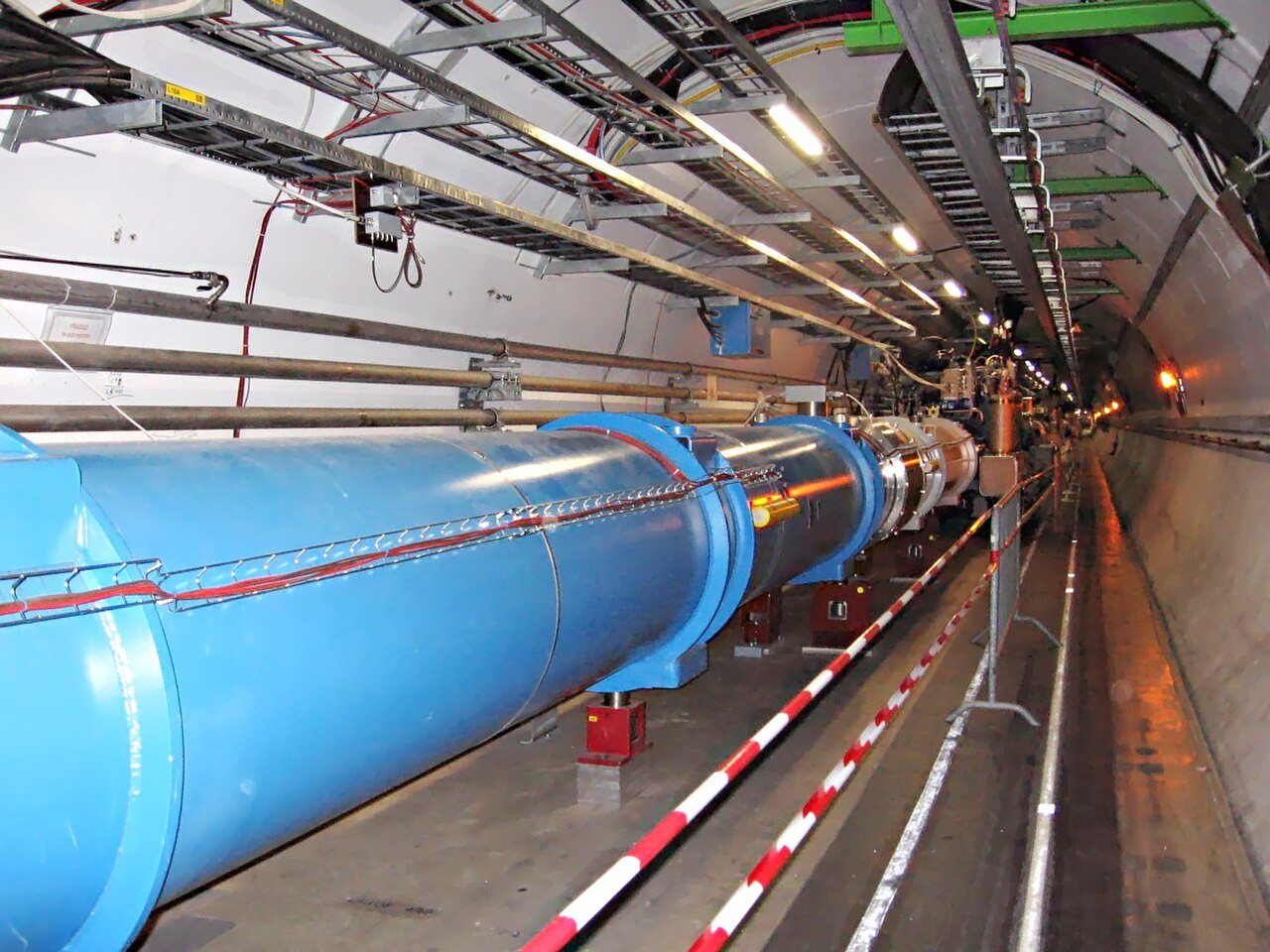
On October 15, 1991, a detector in the Utah desert called Fly’s Eye recorded a single subatomic particle striking the atmosphere with about 51 joules of energy, roughly what a baseball carries when pitched at nearly 60 miles per hour. Physicists nicknamed it the Oh-My-God particle. Thirty years later, on May 27, 2021, the nearby Telescope Array caught another, at about 240 exa-electronvolts (EeV), some 40 million times the energy of a proton in the Large Hadron Collider. Toshihiro Fujii, who spotted it in the data, named it Amaterasu after the Japanese sun goddess.
These ultra-high-energy cosmic rays, protons and atomic nuclei moving at almost light speed, are rare: at the very top of the range, about one hits each square kilometer per century. The Pierre Auger Observatory in Argentina spreads its detectors over 3,000 square kilometers. In 2017 it showed that cosmic rays above about 8 EeV arrive slightly more often from one broad region of sky, well away from the center of the Milky Way. So the most energetic ones come from beyond our galaxy.
Pinning down the actual sources is harder. Cosmic rays carry electric charge, so magnetic fields in space bend their paths, and heavier nuclei swerve more. They also cannot travel very far: above about 50 EeV, collisions with leftover light from the Big Bang sap their energy, a cutoff predicted in 1966 and called the GZK limit. The sources should therefore lie within a few hundred million light-years. Yet Amaterasu seemed to come from the Local Void, a nearly empty stretch of space with no obvious accelerator.
The suspects are the most violent places nearby: jets from feeding supermassive black holes, galaxies bursting with star formation and supernovae, gamma-ray bursts, and fast-spinning, highly magnetized neutron stars. Auger has reported a link with nearby starburst galaxies, just short of the threshold for a firm discovery, and Telescope Array sees a “hotspot” near the Big Dipper. A 2026 study by Francesca Capel and Nadine Bourriche modeled Amaterasu’s path through magnetic fields and found the starburst galaxy M82 a more likely birthplace than the void.
The key now is learning what the particles are made of, since a lone proton points back far more faithfully than an iron nucleus. Auger’s AugerPrime upgrade and Telescope Array’s expansion to about four times its original area are designed to do exactly that.
93What sets off fast radio bursts?
Duncan Lorimer and his student David Narkevic were combing through six-year-old archival data from the Parkes radio telescope in Australia in 2007 when they found a blip lasting less than five milliseconds that had come from far beyond our galaxy. A typical fast radio burst, as such flashes came to be called, releases in that instant about as much energy as the Sun puts out in three days.
For years the running joke was that there were more theories than bursts, ranging from colliding neutron stars to evaporating black holes. Then, on April 28, 2020, a magnetar inside our own galaxy, SGR 1935+2154, roughly 30,000 light-years away, fired off a burst caught by Canada’s CHIME telescope and a small detector in California called STARE2. A magnetar is a neutron star with a magnetic field up to a thousand trillion times Earth’s. The burst was weaker than distant FRBs, but it proved magnetars can make them.
CHIME, which sweeps the whole northern sky every day, has since logged thousands of bursts, and new outrigger stations let it pinpoint them. In March 2025 it caught the brightest FRB yet, nicknamed RBFLOAT, and traced it to a region about 45 light-years across in the galaxy NGC 4141, some 130 million light-years away. Locations like that have exposed awkward variety. Most bursts happen once; a few percent repeat, some on regular cycles. Hosts range from star-forming dwarf galaxies, where young magnetars are expected, to an ancient globular cluster in the galaxy M81 and, reported in 2025, an old galaxy that had largely stopped making stars.
That points to more than one recipe. Magnetars might be born not only in supernovae but also when old neutron stars or white dwarfs merge, which would explain the elderly neighborhoods. Some repeaters may have partners: in January 2026, a team using China’s FAST and Australia’s Parkes telescopes reported in Science that the magnetized gas around repeater FRB 20220529A suddenly surged more than a hundredfold and then recovered within about two weeks, best explained by an eruption from a companion star crossing our line of sight.
So the engine is probably a magnetar in most cases, but how it produces such sharp radio flashes, and whether every FRB shares it, is unsettled. Upcoming arrays such as DSA-2000 and the Square Kilometre Array should localize thousands more, enough to sort them into families.
92Why is the Sun’s outer atmosphere hotter than its surface?
Walk away from a campfire and you get colder. The Sun breaks that rule. Its visible surface, the photosphere, sits at about 5,500 °C, yet a couple of thousand kilometers higher the temperature soars, and the thin outer atmosphere called the corona runs at 1 to 3 million °C. Physicists have been trying to explain that jump for more than 80 years.
The puzzle surfaced around 1940. Eclipse watchers had long seen a green glow in the corona that matched no known element, and some credited it to a new one dubbed “coronium.” Walter Grotrian and Bengt Edlén showed it came from iron stripped of 13 of its 26 electrons, something that happens only at around a million degrees. Coronium was ordinary iron, impossibly hot.
The energy almost certainly comes from magnetism. The Sun’s churning outer layers twist and shake magnetic field lines rooted below the surface, and two ideas compete to explain how that motion becomes heat. One says waves, especially Alfvén waves that run along field lines like vibrations on a plucked string, carry energy upward and dissipate it. The other, championed by Eugene Parker in 1988, says field lines tangle and snap in countless small explosions, which he called nanoflares, each far too faint to see on its own.
Recent missions have caught both at work. ESA’s Solar Orbiter spotted miniature flares nicknamed “campfires” in 2020 and, in 2023, tiny jets streaming out of dark coronal holes. NASA’s Parker Solar Probe became the first spacecraft to fly through the corona in April 2021, and on December 24, 2024, it passed 6.1 million kilometers from the surface at about 690,000 kilometers per hour. Its data, analyzed in 2025, revealed a “helicity barrier” that controls how turbulence dumps heat into the solar wind. In October 2025 the 4-meter Daniel K. Inouye Solar Telescope in Hawaii reported the first direct detection of small twisting Alfvén waves in the corona.
The emerging view is that both mechanisms contribute, in proportions that differ between bright active regions and the quiet Sun. What remains is a full energy budget and the fine details of how energy turns into heat at scales no telescope yet resolves. Combining Parker’s close-up sampling with Solar Orbiter’s images and Inouye’s detailed spectra is the most promising route to it.
91What were the very first stars like?
The carbon in your cells and the oxygen in your lungs were forged inside stars, but the very first stars had none of it to work with. The Big Bang left almost nothing but hydrogen, helium and a dash of lithium, so the first generation, known as Population III, was built from that raw mix, probably within the first 100 to 200 million years.
Today’s gas clouds cool by radiating through heavier elements and dust, which lets them collapse into small clumps and make mostly modest stars. Pristine gas could cool only through molecular hydrogen, which does the job poorly, so the clumps stayed warm and massive. Simulations around 2000 suggested the first stars typically weighed hundreds of suns, burned out within a few million years, and sometimes blew themselves apart completely in “pair-instability” supernovae. Later, sharper simulations found the collapsing gas often fragmented into clusters, including stars of just a few to tens of solar masses.
Any Population III star lighter than about 0.8 suns would still be shining today, since such small stars outlive the current age of the universe. None has been found. The closest match is SDSS J0715-7334, reported in 2025, a red giant whose orbit marks it as a native of the Large Magellanic Cloud and whose heavy-element content is less than about 1/20,000 of the Sun’s. If it is second generation, its chemistry points to debris from a single first star of around 30 solar masses.
The other approach is to look back in time. In May 2026 a team led by Kimihiko Nakajima reported in Nature on LAP1-B, a faint galaxy seen about 800 million years after the Big Bang and magnified roughly 100-fold by the galaxy cluster MACS J0416. Its gas holds only about 1/240 of the Sun’s oxygen and glows under unusually harsh ultraviolet light, consistent with a small cluster of massive, metal-free stars totaling no more than a few thousand suns. Outside experts call it compelling but want independent confirmation.
A third approach listens for the first stars’ collective effect on cosmic hydrogen, a faint radio signal at 21 centimeters. The EDGES experiment claimed to see it in 2018; SARAS 3 found no trace in 2022. Arrays such as HERA and the Square Kilometre Array, and proposed radio telescopes on the far side of the Moon, aim to settle it.
Matter, Energy and the Rules of Reality
Physics has the most precisely tested theories in all of science, and they still disagree with each other at the edges. These are the cracks where the next revolution will probably start.
90Why is there more matter than antimatter?
Every time a particle meets its antiparticle, both vanish in a flash of energy. The Big Bang should have made the two in equal amounts, so the young universe ought to have annihilated itself into a bath of light, leaving no stars, no planets and no readers. Instead, for roughly every billion matter–antimatter pairs that wiped each other out, one extra particle of matter survived. Everything you can see is built from that leftover.
In 1967 the Soviet physicist Andrei Sakharov listed what any explanation needs: a process that changes the number of matter particles, a universe out of thermal balance, and a violation of CP symmetry, the rule that physics should look the same if you swap particles for antiparticles and view the world in a mirror. The hot, expanding early universe supplies the first two. The third is the sticking point. CP violation turned up in kaon decays in 1964, and in 2025 CERN’s LHCb experiment reported it for the first time in baryons, the family that includes protons and neutrons. In one decay route, Lambda-b particles broke up about 2.5 percent more often than their antimatter twins, with a statistical confidence of 5.2 sigma, well past the discovery bar.
The catch is size. All the CP violation in the Standard Model, the textbook theory of particles, falls short of what the cosmos needs by many orders of magnitude, so something new must be involved. One favored idea, leptogenesis, proposes extremely heavy cousins of the neutrino that decayed lopsidedly in the first instants, creating an excess of leptons that known processes then converted into extra quarks. Another, electroweak baryogenesis, needs the Higgs field to have switched on violently, like water flash-boiling, but a 125 GeV Higgs is too heavy for that without extra particles nobody has found.
Antimatter itself has been grilled for differences. CERN’s ALPHA collaboration showed in 2023 that antihydrogen falls downward, just as ordinary matter does, and precision measurements of antiprotons match protons to many decimal places. No crack yet.
The next decisive clue should come from neutrinos. Japan’s T2K experiment has hinted that neutrinos and antineutrinos oscillate differently, which would make leptogenesis more plausible. Hyper-Kamiokande, due around 2028, and the US-led DUNE, aiming for the early 2030s, are built to measure that difference outright.
89Why does time only move forward?
Film a glass shattering and play it backward, and everyone in the room laughs, because shards never leap off the floor and fuse. Yet the equations governing those shards, from Newton’s laws to quantum mechanics, work equally well in either direction. Nothing in them says which way is the future. The British astronomer Arthur Eddington gave the puzzle its name, the arrow of time, in 1927.
The best answer runs through entropy, a measure of how many microscopic arrangements look identical from the outside. In the 1870s Ludwig Boltzmann showed why it tends to rise: messy arrangements vastly outnumber tidy ones, so any system shuffling at random drifts toward mess. Breaking glass, cooling coffee and milk swirling into tea are all entropy climbing. Memory and cause-and-effect seem to ride the same arrow, since making any record requires entropy to increase somewhere.
But Boltzmann’s logic is symmetric too. Run it backward and it predicts entropy was higher yesterday, which is false. The fix is an extra assumption the philosopher David Albert dubbed the Past Hypothesis: the universe began in an extraordinarily low-entropy state. The smooth, evenly spread hot gas seen in the cosmic microwave background fits, because where gravity is concerned, smoothness is the orderly, improbable condition and clumping is the disorderly one. Roger Penrose estimated the odds of such a start arising by chance as one in a number with more zeros than there are particles in the observable universe.
So the arrow is explained only by moving the mystery to the Big Bang. Why did it start so orderly? Cosmic inflation is often invoked, though critics argue it needs special starting conditions of its own. Sean Carroll and Jennifer Chen have proposed that the cosmos keeps spawning baby universes, each with its own arrow, while Julian Barbour argues that time could run outward in both directions from a central “Janus point.”
None of these can yet be tested. Settling the matter probably requires a working theory of the universe’s birth, one that shows whether a low-entropy beginning was inevitable or a fluke. Until then the arrow of time is half solved: we know how it works, not why it exists.
88What really happens when you measure a quantum particle?
Fire electrons one at a time at a screen with two slits, and they slowly build up a striped interference pattern, as if each had passed through both slits like a wave. Put a detector at the slits to see which way each electron goes, and the stripes vanish. Measuring the particle changes what it does. A century after quantum mechanics was written down, physicists still disagree about why.
The theory describes a particle with a wavefunction, a spread-out list of possibilities that evolves smoothly and predictably. Yet every real measurement gives one definite answer, with odds set by a rule Max Born added in 1926. Nothing in the smooth equation says when or how many possibilities become one. That gap is the measurement problem, and Erwin Schrödinger mocked it in 1935 with his cat, supposedly alive and dead in a sealed box until someone looks.
Part of the answer is settled. Decoherence, worked out from the 1970s onward, shows that when a quantum system touches its environment, the delicate links between its possibilities leak into the surroundings, so the world looks classical almost instantly. But decoherence explains why we never see a blurry cat, not why we see one particular outcome.
On that, the interpretations split. The Copenhagen view treats the wavefunction as a tool for predictions and declines to ask more. Many-worlds, proposed by Hugh Everett in 1957, says nothing collapses: every outcome happens, each in its own branch of reality. Pilot-wave theory, from Louis de Broglie and David Bohm, gives particles real positions steered by a wave. Collapse models modify the equations so that large objects spontaneously settle into one state. When Nature surveyed more than 1,100 physicists in 2025, 36 percent favored Copenhagen, 15 percent many-worlds and 7 percent pilot waves, and only about a quarter were confident their choice was correct.
Most interpretations predict identical results, but collapse models do not, which makes them testable. A 2020 experiment under Italy’s Gran Sasso mountain ruled out the simplest version of the gravity-driven collapse idea associated with Roger Penrose and Lajos Diósi. Meanwhile labs in Vienna and elsewhere keep putting bigger objects, now made of thousands of atoms, into superpositions. If quantum behavior holds all the way up, collapse theories die; if it fails at some size, the textbooks change.
87Why do the laws of physics seem fine-tuned for life?
In 1953 Fred Hoyle walked into a Caltech nuclear physics lab and insisted that carbon-12 must have an excited energy level near 7.7 million electron volts, or stars could never have forged the carbon we see around us. The experimenters were skeptical, went looking anyway, and found it at 7.65. The episode became a poster child for a stranger idea: that the constants of nature seem set within narrow windows that allow life.
Other examples pile up. Weaken the strong nuclear force by a modest amount and deuterium, the first rung of stellar fusion, may fall apart. The most extreme case is the cosmological constant, the energy of empty space that drives the universe’s accelerating expansion. Naive quantum estimates put it about 120 orders of magnitude higher than astronomers measure. Make it much larger, even by an amount that is trivial on that scale, and space would have expanded too fast for galaxies to form.
Three broad answers compete. The first is the multiverse: if countless universes exist with different constants, as eternal inflation and string theory’s “landscape” of perhaps 10 to the 500th power possible vacuum states suggest, we necessarily find ourselves in one that permits observers. Steven Weinberg used exactly this reasoning in 1987 to predict a small but nonzero cosmological constant, a decade before astronomers detected one. The second answer is that a deeper theory will fix the constants, making them no more coincidental than the value of pi. The third, design, sits outside what science can test.
Skeptics add a fourth view: the tuning is overstated. A 2006 study built a hypothetical universe with no weak nuclear force at all and found it could still make stars and chemistry. Changing several constants at once can open new life-friendly regions, and with a sample size of one, nobody really knows what life requires.
Settling it means either finding a theory that predicts the constants or finding evidence for other universes, such as bruises in the cosmic microwave background from collisions with neighboring bubble universes, which searches have not found. Hints from the DESI survey in 2025 that dark energy may be changing over time could also reshape the cosmological constant problem entirely.
86Why do neutrinos weigh almost nothing?
Trillions of neutrinos from the Sun stream through your body every second, and almost none of them touch a single atom. For decades textbooks said they had no mass at all. Then in 1998 Japan’s Super-Kamiokande detector showed that neutrinos switch between their three types as they travel, a trick called oscillation that is possible only if they have mass. The discovery earned a share of the 2015 Nobel Prize in Physics.
How much mass is the hard part. In April 2025 the KATRIN experiment in Karlsruhe, Germany, which weighs neutrinos by measuring the energies of electrons from radioactive tritium at the end of a 70-meter beamline, reported that the neutrino mass is below 0.45 electron volts. That makes it at least a million times lighter than the electron. Cosmology squeezes harder: the DESI galaxy survey, combined with the cosmic microwave background, suggests all three types together weigh under about 0.064 eV, uncomfortably close to the minimum of roughly 0.06 eV that oscillation experiments allow.
Other particles get their mass from the Higgs field, but for neutrinos the coupling would have to be millions of times weaker than the electron’s, which looks contrived. The favorite explanation is the seesaw mechanism. If neutrinos are their own antiparticles, as Ettore Majorana proposed in 1937, they could pair with extremely heavy partner particles; the heavier the partner, the lighter the familiar neutrino, like a seesaw with a giant on one end. Those partners might also explain why the universe contains matter at all.
Testing that means hunting for a decay that may not exist. In neutrinoless double beta decay, two neutrons in a nucleus turn into protons and emit two electrons but no neutrinos, which can happen only if neutrinos are their own antiparticles. Experiments such as Japan’s KamLAND-Zen have shown its half-life must exceed 10 to the 26th power years. Larger detectors, including LEGEND-1000 and nEXO, aim to go further.
KATRIN finished collecting data in late 2025 and is analyzing several times more data than went into its record limit, while China’s JUNO detector, running since 2025, aims to reveal which neutrino type is heaviest.
85Is there new physics beyond the Standard Model?
Fermilab’s Muon g-2 experiment spent years measuring how a muon’s internal magnet wobbles inside a giant storage ring, and in June 2025 it released its final answer, precise to 127 parts per billion. For more than two decades, measurements of this number had seemed to clash with theory, the brightest hint of physics beyond the Standard Model. Then theorists recalculated the hardest piece using lattice QCD, a supercomputer simulation of quarks and gluons, and the disagreement largely melted away.
The Standard Model, assembled in the 1970s and completed by the Higgs boson’s discovery in 2012, describes 17 fundamental particles and three of the four forces with astonishing accuracy. Yet it cannot be the whole story. It leaves out gravity, has no candidate for dark matter, does not explain why neutrinos have mass and cannot generate enough matter–antimatter asymmetry to account for our existence. It also has a hierarchy problem: quantum effects should drag the Higgs mass to enormous values unless something cancels them with eerie precision.
The leading fix for that problem, supersymmetry, predicted partner particles that many physicists expected the Large Hadron Collider to find. After more than a decade of searching, none has appeared, pushing the simplest versions out of reach. Other anomalies have come and gone. Hints that B mesons treated electrons and muons differently faded in 2022, and a strikingly heavy W boson reported by Fermilab’s CDF team that year was not reproduced by later LHC measurements.
That leaves the muon in limbo. Lattice calculations now agree with experiment, but the older method, based on electron–positron collision data, gives a different answer, and the collision data sets disagree with one another. If new measurements back the older approach, the anomaly could return.
The search is widening rather than ending. The High-Luminosity LHC, expected to start around 2030, will collect about ten times more collisions than the original design. Smaller precision experiments hunt for dark matter, rare decays and a lopsided charge in the electron, and CERN is studying a 91-kilometer Future Circular Collider. New physics certainly exists; the open question is whether it lies within reach.
84Do protons last forever?
A kilometer under Mount Ikeno in Japan, about 11,000 photomultiplier tubes line a tank holding 50,000 tons of ultrapure water. They are waiting for just one of its countless protons to fall apart. In three decades of watching, Super-Kamiokande has not seen it happen. The upshot: if protons decay into a positron and a pion, the route most theories favor, their average lifetime must exceed 2.4 × 10³⁴ years, more than a trillion trillion times the age of the universe.
Why look at all? In the Standard Model, protons are stable only because of an accidental bookkeeping rule called baryon number conservation, which no deep principle protects. Grand unified theories, which merge the strong, weak and electromagnetic forces into a single force at enormous energies, generally break that rule, letting quarks turn into leptons. The first, proposed by Howard Georgi and Sheldon Glashow in 1974, predicted proton lifetimes of around 10³⁰ to 10³¹ years. Detectors in the 1980s, including Super-K’s predecessor, ruled it out.
There is a cosmic argument too. Most explanations for why the universe contains more matter than antimatter require baryon number to have been broken at some point. That makes a perfectly stable proton look less like a law of nature and more like a very long wait.
Modern unified theories, including supersymmetric versions, typically predict lifetimes between about 10³⁴ and 10³⁶ years, just beyond current reach. That is why the next generation matters. Hyper-Kamiokande, with a fiducial volume eight times that of Super-K, is scheduled to start in 2028. The US-led DUNE, using liquid-argon detectors deep under South Dakota, is designed to start around 2031 and is especially sensitive to decays that produce a kaon.
If none of them sees a proton die, grand unification survives but its simplest routes close. If protons do decay, every atom is ultimately temporary, and in the unimaginably distant future even burned-out stars will dissolve into light and a thin haze of particles.
83Are there hidden dimensions of space?
Theodor Kaluza, a little-known German mathematician, mailed Albert Einstein a startling idea in 1919. Rewrite general relativity in five dimensions instead of four, and the equations of electromagnetism fall out for free. Einstein sat on the paper for two years before backing its publication. In 1926 the Swedish physicist Oskar Klein suggested where the extra dimension might hide: curled into a circle far too small to notice, like the thickness of a garden hose seen from a mile away.
The idea came roaring back with string theory, which is mathematically consistent only in ten dimensions, or eleven in its extension, M-theory. Six or seven of those must be curled up, and their shape would set the masses and forces we observe. In 1998 Nima Arkani-Hamed, Savas Dimopoulos and Gia Dvali added a bolder twist: extra dimensions could be as large as a millimeter if ordinary particles are stuck to our three-dimensional world while gravity alone leaks into the rest. That would explain why gravity is so absurdly weak compared with the other forces. A year later Lisa Randall and Raman Sundrum showed that a single warped extra dimension could do something similar.
These ideas make testable predictions, and so far every test has come back empty. At the University of Washington, the Eöt-Wash group’s torsion pendulums have checked Newton’s inverse-square law of gravity down to 52 micrometers, thinner than a human hair, and found no deviation, so the largest extra dimension must be smaller than about 30 micrometers. The Large Hadron Collider has produced no microscopic black holes or heavy copies of the graviton. And in 2017, gravitational waves from a neutron-star merger 130 million light-years away arrived as strong as expected for that distance, showing gravity had not leaked into extra dimensions en route.
None of this rules out hidden dimensions; it just squeezes them. In most string models they would be near the Planck length, about 10⁻³⁵ meters, hopelessly beyond direct reach. A 2022 proposal called the “dark dimension” instead suggests a single extra dimension around a micrometer across, tied to dark energy, which sharper short-range gravity experiments could catch.
82Are space and time made of something smaller?
Water looks perfectly smooth until you zoom in to molecules. Many physicists suspect spacetime is similar: a seamless fabric at everyday scales, but grainy, or stitched together from something else, at the Planck length, about 1.6 × 10⁻³⁵ meters. At that scale quantum uncertainty and gravity collide. Probing a smaller distance would require packing so much energy into so little space that you would create a black hole, so “smaller” may simply stop meaning anything.
The best clues come from black holes. In the 1970s Jacob Bekenstein and Stephen Hawking showed that a black hole’s entropy, a count of its hidden internal states, grows with the area of its surface rather than its volume. That suggests the information a region of space can hold is limited and somehow stored on its boundary, the so-called holographic principle. In 1997 Juan Maldacena found a precise example: a universe with gravity, in a particular curved space, that is exactly equivalent to a quantum theory without gravity living on its edge. Space in the interior is, in a real sense, emergent.
Work since then, notably by Mark Van Raamsdonk, suggests quantum entanglement is the thread: reduce the entanglement between two parts of the boundary system and the space between them pulls apart. In 2013 Maldacena and Leonard Susskind proposed “ER=EPR,” the conjecture that entangled particles are linked by microscopic wormholes. Rival programs build spacetime from discrete pieces instead. Loop quantum gravity predicts that areas and volumes come in indivisible quanta, and causal set theory treats spacetime as a scattering of points related only by cause and effect.
Testing any of this is brutal. One hope is that grainy spacetime would make high-energy light travel very slightly slower than low-energy light. In 2009 NASA’s Fermi telescope caught photons of very different energies from a gamma-ray burst roughly 7 billion light-years away arriving within about a second of each other, ruling out the simplest version of that effect even at the Planck scale. Fermilab’s Holometer searched for holographic jitter in space and found none. Next up are tabletop experiments designed to check whether gravity can entangle two tiny masses.
81Why is turbulence so hard to predict?
Airliners, arteries and hurricanes all obey a set of equations written down by Claude-Louis Navier in 1822 and George Gabriel Stokes in 1845. They are simply Newton’s second law applied to a fluid, and nobody doubts they are correct for ordinary flows. Yet ask them exactly how candle smoke will curl two seconds from now and even supercomputers struggle. The culprit is turbulence, the chaotic churning that sets in when a fluid moves fast enough.
Osborne Reynolds showed in 1883 that the switch depends on a single number, now named after him, that combines speed, size and viscosity. In a pipe, flow turns turbulent above a Reynolds number of roughly 2,000. Beyond that, energy cascades from big swirls into smaller ones and smaller still, until viscosity turns it into heat. Lewis Fry Richardson summed it up in a 1922 rhyme: “Big whorls have little whorls that feed on their velocity.” In 1941 Andrey Kolmogorov turned the cascade into a statistical law that still works remarkably well on average.
The trouble is that all those scales matter at once. The cost of simulating every eddy grows roughly with the cube of the Reynolds number, and air flowing over an airliner wing has a Reynolds number in the tens of millions. Engineers therefore use approximate turbulence models tuned to experiments, which work in familiar situations and can fail badly in new ones. Turbulence is also chaotic, the effect Edward Lorenz made famous with weather: tiny uncertainties grow exponentially, so detailed forecasts hit a horizon.
Underneath sits a mathematical gap. No one had proved that smooth solutions of the three-dimensional Navier–Stokes equations always exist, or that they can break down, and in 2000 the Clay Mathematics Institute made that a $1 million Millennium Prize Problem. In September 2026 OpenAI announced an AI-generated, machine-checked proof that, pushed by a carefully chosen smooth force, the equations can blow up in finite time; hours earlier, a team led by NYU’s Tristan Buckmaster had posted AI-assisted blowup proofs for related fluid equations. Mathematicians are still checking, and Clay has promised an unhurried review.
Even if the proof holds, hurricanes will not become easier to forecast. The version with no outside force remains open, and a theory that predicts turbulence from first principles, rather than fitting it to data, is still missing.
Life’s Deep History
Life on Earth has been running for about four billion years, and most of the early chapters are missing. Biologists are piecing them back together from fossils, genomes and some very patient lab experiments.
80Why does life use only one “hand” of its molecules?
Hold a sprig of spearmint and a pinch of caraway seed to your nose and you are smelling the same molecule twice. Carvone comes in two mirror-image forms, like a left and a right glove, and your nose can tell them apart. Chemists call this chirality, from the Greek for hand, and life is fanatical about it. Almost every amino acid in your proteins is the “left-handed” form, while the sugars in DNA and RNA are all “right-handed.”
That choice is not cosmetic. Proteins built from a random mix of both hands cannot fold into reliable shapes, and experiments show a single wrong-handed building block can stall the copying of a nucleic acid chain. Yet ordinary chemistry makes both forms in equal amounts, a 50:50 “racemic” mix, as Louis Pasteur realized in 1848 when he sorted tartrate crystals with tweezers. Somewhere between that even split and the first cells, one hand won.
One camp looks to space. Circularly polarized light, detected in star-forming regions such as Orion, destroys one hand slightly faster than the other, and the Murchison meteorite that fell in Australia in 1969 carries a left-handed excess of the amino acid isovaline as large as 18 percent. But when NASA’s OSIRIS-REx mission returned pristine grains from asteroid Bennu, analyses published in January 2025 found its amino acids in an even mix, a blow to the idea that the early solar system handed Earth a ready-made preference.
A second camp argues that the bias can start tiny and grow. In 1953 the physicist Charles Frank showed mathematically that a molecule which copies its own hand while suppressing the other could snowball a minute excess into total dominance, and in 1995 Kenso Soai’s lab in Tokyo found a real reaction that does just that. In 2023 a Harvard team led by Furkan Ozturk and Dimitar Sasselov reported that an RNA precursor crystallizing on magnetite, a common magnetic mineral, favored one hand through an electron-spin effect and then purified itself as the crystals grew.
Each mechanism works in a clean lab setup, but none has been shown to operate under messy early-Earth conditions, or to explain how the choice for sugars and the choice for amino acids became linked. More returned samples from asteroids and comets, plus experiments that chain the magnetite trick to the reactions that build RNA, could tip the balance.
79How did complex cells come to be?
Deep beneath the sea between Greenland and Norway, near a field of hydrothermal vents called Loki’s Castle, researchers pulled up mud and pieced together the DNA of a microbe nobody had ever seen. Described in 2015, it was an archaeon, one of the two great groups of simple cells, yet it carried genes for proteins long thought unique to eukaryotes, the complex cells with nuclei that make up every animal, plant and fungus. Its relatives, now called Asgard archaea after the Norse home of the gods, have rewritten the story of where we came from.
Some things are settled. Mitochondria, the power plants inside our cells, were once free-living bacteria related to today’s alphaproteobacteria, an idea championed by Lynn Margulis in 1967 and confirmed by the small genome they still carry. The host that took them in now looks like an Asgard archaeon. In 2020 Japanese researchers, after 12 years of patient culturing, finally grew one: a tiny, slow-growing cell that sprouted long tentacle-like arms and lived in partnership with other microbes, hinting at how an embrace could become an engulfment.
The details are a brawl. A 2023 analysis put eukaryotes inside one Asgard subgroup, the Heimdallarchaeia. A study in Nature in June 2025 argued instead that our lineage branched off earlier, from an oxygen-free, hydrogen-eating ancestor, which fits the “hydrogen hypothesis” that the partnership began as a trade in chemical food. Then in February 2026 a team led by Brett Baker of the University of Texas at Austin reported that eukaryotes’ closest Asgard cousins live in oxygenated sediments and carry oxygen-using machinery, suggesting the host could already cope with the air its bacterial partner breathed.
The other fight is about order. Did the host first grow a complex interior, with internal membranes and a protein skeleton, and then swallow its partner? Or did the mitochondrion come first and pay for everything else? Biochemists Nick Lane and William Martin argue the latter: only cells with internal power plants could afford big genomes and elaborate machinery, which may explain why bacteria never made the leap alone. Fossils can’t referee, because the oldest widely accepted eukaryote fossils, more than 1.6 billion years old, already look fully complex.
Settling it will take more Asgard genomes, more cultured cells whose biology can be watched rather than inferred, and molecular clocks tied to the rise of oxygen about 2.4 billion years ago.
78Why did sex evolve?
On paper, sex is a terrible deal. In the 1970s the British biologist John Maynard Smith pointed out that an asexual female produces only daughters, each able to bear young, while a sexual female spends half her effort on sons who can’t. All else equal, a clone should double its share of the population each generation and swamp its sexual neighbors within a few dozen generations. This is the twofold cost of sex, and on top of it come the hassles of finding a mate, catching diseases and breaking up gene combinations that already work.
Yet nearly all complex organisms have sex at least occasionally, and the genes for meiosis, the special cell division that makes eggs and sperm, are so widespread that the common ancestor of all eukaryotes probably had them. Sex must pay for itself somehow.
The favorite explanation is the Red Queen, named in 1973 after the character in Lewis Carroll’s Through the Looking-Glass who must keep running just to stay in place. Parasites evolve fast to crack their hosts’ most common genetic locks, so reshuffling genes every generation keeps offspring a moving target. The evidence is good. In New Zealand lakes, Curtis Lively found that freshwater snails reproduce sexually more often where parasitic worms are rife. In a 2011 experiment published in Science, roundworm populations engineered to only self-fertilize went extinct when pitted against an evolving bacterial pathogen, while outcrossing populations survived.
The second idea is genetic housekeeping. Every genome picks up harmful mutations, and an asexual lineage has no easy way to shed them, so its load tends to creep upward one click at a time, a process called Muller’s ratchet. Sex lets selection purge bad mutations in bundles and lets good ones that arise in different individuals combine rather than compete; yeast experiments have shown sexual populations adapting faster to harsh conditions. The famous test case is the bdelloid rotifers, microscopic animals that seemed to have shunned sex for tens of millions of years. Genome studies now suggest they quietly exchange DNA after all.
The likely answer is that no single benefit explains everything. Models show each mechanism works only within certain ranges of mutation rate, parasite pressure and population size, and those numbers are hard to measure in the wild. Field measurements and long-running experiments that pit sexual against asexual strains are slowly sorting out which advantage matters where.
77What lit the fuse on the Cambrian explosion?
High in the Canadian Rockies in 1909, the paleontologist Charles Walcott split open slabs of shale and found a zoo of bizarre animals pressed flat like flowers, 508 million years old. The Burgess Shale and its older Chinese counterpart at Chengjiang capture the aftermath of the Cambrian explosion, when most of the major animal body plans alive today, from arthropods to the forerunners of vertebrates, appear in the fossil record within roughly 20 million years, starting about 539 million years ago.
Darwin fretted about it in On the Origin of Species, because a sudden burst looked awkward for gradual evolution. We now know it did not come from nowhere. Strange soft-bodied Ediacaran organisms flourished for tens of millions of years beforehand, and molecular clocks suggest animal lineages had begun splitting well before the Cambrian. But something turned a quiet seafloor into an arms race, and fast: dating of rocks in Namibia suggests the switch there from Ediacaran life to burrowing Cambrian animals took only about 410,000 years.
The oldest suspect is oxygen. Large, active animals, and predators especially, burn a lot of it, and chemical clues in ancient rocks point to rising, pulsing oxygen levels around this time. A 2019 study of Siberian rocks found that bursts of new species lined up with oxygen spikes and die-offs with lows. Critics counter that oxygen had risen before without sparking anything and that the records are patchy.
Other ideas focus on the spark rather than the fuel. Once animals evolved eyes, hard shells and the ability to burrow, predators and prey were locked in an escalating contest that rewarded new body plans. The genetic toolkit for building complex bodies, including the Hox genes that pattern the head-to-tail axis, was already in place and ready to be tinkered with. Some geologists add ocean chemistry: massive erosion recorded in the Great Unconformity, a vast gap in the rock record, may have flushed calcium and phosphate into the seas, handing animals raw material for skeletons.
Most researchers now suspect a chain reaction rather than a single match: enough oxygen to allow big bodies, a toolkit ready to use, and an ecological feedback loop once predation took off. Pinning down the order requires sharper dates, better oxygen measures and more exceptional fossil sites from the late Ediacaran, the moment just before the fuse burned.
76What was our oldest common ancestor like?
Your cells read the same genetic code as a mushroom, a jellyfish and the E. coli in your gut. They use the same core amino acids, the same DNA-to-RNA-to-protein machinery and the same energy currency, ATP. The simplest explanation is that all of it was inherited from a single population of cells that biologists call the last universal common ancestor, or LUCA. It was not the first life, just the last ancestor shared by everything alive today. Its contemporaries’ lineages died out.
Reconstructing it means working backward from genes. Researchers compare genomes across bacteria and archaea, the two oldest branches of life, and look for genes both inherited from the root rather than swapped later, a messy job because microbes trade genes freely. In 2016 a team led by William Martin identified 355 protein families that pointed to a heat-loving, hydrogen-fueled cell living at a hydrothermal vent and leaning heavily on the vent’s natural chemistry.
The picture sharpened in July 2024. A team led by the University of Bristol, writing in Nature Ecology & Evolution, used gene duplications that happened before LUCA to calibrate a molecular clock and put its age at about 4.2 billion years, with a range of roughly 4.09 to 4.33 billion. That is only a few hundred million years after Earth formed. Their LUCA was surprisingly sophisticated: a genome of about 2.5 million DNA letters encoding some 2,600 proteins, comparable to modern bacteria; an oxygen-free metabolism that likely made acetate from hydrogen and carbon dioxide; and parts of a CRISPR-style immune system, implying viruses were already on the attack.
Not everyone is convinced. Molecular clocks stretched across four billion years carry large uncertainties, and some researchers find it hard to believe such complexity evolved so soon after the planet formed. Others point out that bacteria and archaea build their membranes and copy their DNA in quite different ways, a hint that LUCA was simpler than the 2024 portrait, or more like a gene-sharing community than a single kind of cell.
Better models of gene swapping, more genomes from obscure microbes and firmer ages for the oldest rocks could narrow the debate. For now the trend is clear: LUCA increasingly looks like a proper cell living in an ecosystem with other microbes and viruses, not a lone pioneer on a lifeless rock.
75How many species share the planet with us?
Biologists have formally named a little more than 2.2 million living species, according to the 2025 Catalogue of Life. Ask how many exist in total and serious estimates run from under 10 million to about a trillion, which means we have described somewhere between a quarter of life and roughly 0.0002 percent of it. Few numbers in science are this poorly pinned down.
The best-known figure comes from a 2011 study led by Camilo Mora and Boris Worm, which noticed that the numbers of genera, families and higher groups follow predictable patterns, and extrapolated down to species. The result: about 8.7 million species of animals, plants, fungi and single-celled protists, with roughly 86 percent of land species and 91 percent of ocean species still undescribed. Insects alone make up a large share of the animals.
Newer methods push the total much higher. DNA barcoding keeps revealing cryptic species, look-alikes that turn out to be several genetically distinct species, so one named beetle may really be three. Each insect species may also host its own specialist mites, worms and microbes. A 2017 estimate built on such multipliers put Earth’s total at 1 to 6 billion species, with bacteria making up most of them. A 2016 study that applied ecological scaling laws to microbial DNA surveys went further still, suggesting around a trillion microbial species.
The gulf is partly a problem of definitions. For animals, a species is roughly a group whose members can interbreed. Bacteria don’t breed in that sense and swap genes freely, so biologists draw species lines by genetic similarity, and where to draw them is a judgment call. Fungi are murky too: molecular surveys suggest millions of species, against roughly 150,000 formally named.
Settling the count will take environmental DNA sampling on a planetary scale, an agreed species definition for microbes and many more taxonomists, a profession in short supply. The race has a dark edge, since habitat loss and climate change mean some species will vanish before anyone names them.
74How did single cells team up to build bodies?
Brewer’s yeast can learn to build a body in about two months. In 2012, William Ratcliff and Michael Travisano at the University of Minnesota repeatedly kept only the yeast that sank fastest in a test tube, and the cells evolved into branching “snowflake” clusters that stay stuck together after dividing. In a long-term experiment Ratcliff’s lab at Georgia Tech launched in 2018, those clusters grew more than 20,000 times larger in about 3,000 generations, reaching half a million cells, big enough to see by eye and toughened by tangled branches.
Nature has run this experiment many times. Multicellularity evolved independently at least 25 times, in groups from slime molds to seaweeds, but complex multicellularity, with many specialized cell types, arose in only about six lineages: animals, land plants, red algae, brown algae and two branches of fungi. The oldest convincing multicellular fossil of a complex lineage is a red alga called Bangiomorpha, about 1.05 billion years old.
Why stick together? Being bigger helps avoid being eaten: in lab experiments, single-celled green algae exposed to predators have evolved clumps within hundreds of generations. Size also allows division of labor. Choanoflagellates, the closest living relatives of animals, offer a glimpse of a first step. These single cells form rosette-shaped colonies when triggered by a molecule made by bacteria, suggesting animal multicellularity may have begun in conversation with microbes.
The hard part is not sticking but cooperating. A body works only if most cells give up reproducing and serve a germ line, so cheaters must be policed; cancer is in a sense a relapse into single-cell selfishness. There are two routes. Cells can stay together after dividing, as in animals and plants, which keeps them genetically identical and therefore loyal, or they can aggregate from separate individuals, as slime molds do, which invites cheats. All the complex lineages took the first route.
What remains unexplained is why complex bodies appeared so late and so rarely, after billions of years of single cells. Rising oxygen, the genetics of cell adhesion and signaling, and plain luck are all in the mix. Experiments like the snowflake yeast, now planned to run for decades, let researchers watch the early steps unfold instead of reading them from rare fossils.
73If you rewound evolution, would humans appear again?
On February 24, 1988, Richard Lenski set up 12 flasks of genetically identical E. coli at Michigan State University and let them evolve. More than 75,000 generations later, the experiment, now run at the University of Texas at Austin, is the closest thing biology has to rewinding the tape of life. Mostly, the 12 populations changed in strikingly similar ways, evolving bigger cells and faster growth on their sugary diet. But around generation 31,500, one population did something the others had not: it began eating citrate, a nutrient sitting untouched in every flask.
When the team replayed history from frozen samples, citrate-eating re-evolved only from ancestors taken late in that lineage’s history, after earlier, seemingly neutral mutations had set the stage. That is historical contingency in a flask, and it is what Stephen Jay Gould had in mind in his 1989 book Wonderful Life. Replay the tape from the Burgess Shale, he argued, and the odds of anything like humans showing up again would be vanishingly small.
The rival view holds that evolution keeps finding the same answers. Camera-type eyes evolved separately in vertebrates and octopuses, and eyes of some kind arose perhaps 40 or more times. A crab-like body has evolved independently at least five times. On four Caribbean islands, Anolis lizards split into the same set of specialists, from twig dwellers to trunk climbers to grass runners, again and again. The paleontologist Simon Conway Morris argues that such convergence makes intelligent, tool-using life a likely outcome.
Both camps are partly right, and the argument is really about scale. Physics and ecology constrain the possible solutions, so features like eyes, wings and streamlined swimming bodies recur. But which lineage produces them depends on accidents: an asteroid 66 million years ago cleared the stage for mammals, and our own primate branch hinged on countless such coin flips. Intelligence evolved in crows, parrots, dolphins and octopuses too, yet only once did it produce technology.
Experiments can test only small slices of the question, in microbes over decades rather than animals over eons. Some of the best evidence may eventually come from another world, where a second, independent origin of life would reveal which features biology reaches for every time.
72How do animals find their way across the planet?
A five-month-old bar-tailed godwit wearing a satellite tag left Alaska in October 2022 and flew to Tasmania without landing, roughly 13,560 kilometers in 11 days. It had never made the trip, and no adult led the way. Arctic terns go farther every year, averaging around 71,000 kilometers on their pole-to-pole commute. How animals cross oceans with no landmarks is one of biology’s best detective stories, and it is only half solved.
Some parts are well understood. Many animals use the sun as a compass, correcting for the time of day with an internal clock; monarch butterflies keep part of that clock in their antennae. Others read the night sky. Dung beetles use the Milky Way to roll their balls in straight lines, and in 2025 researchers showed that Australia’s Bogong moths use the stars to steer roughly 1,000 kilometers to cool mountain caves. Salmon find their home river by smell.
The deepest mystery is the magnetic sense. Experiments since the 1960s show that birds, sea turtles, salmon and many other animals detect Earth’s magnetic field, using it as a compass and, in some species, as a map, since the field’s strength and tilt vary from place to place. In a 2025 study, young loggerhead turtles learned to recognize the magnetic signature of spots where they had been fed. Yet nobody has definitively found the receptor.
The leading candidate for the compass is cryptochrome, a light-sensitive protein in birds’ eyes. When blue light strikes it, electrons hop along a chain inside the protein, creating a pair of molecules whose quantum spins respond to magnetic fields. In 2021, cryptochrome 4 from European robins proved magnetically sensitive in the lab, and simulations published in late 2025 suggested the pair survives about a microsecond, long enough to work. Robins also lose their magnetic bearings in weak radio-frequency noise, just as the theory predicts. The map sense may instead rely on tiny crystals of magnetite, a magnetic iron mineral, though a long-touted cluster in pigeon beaks turned out in 2012 to be immune cells.
Closing the case means tracing the signal from receptor to brain and showing that knocking it out leaves an animal lost. Most species probably combine several senses, switching between them as conditions change.
71Do plants talk to each other?
In 1983 two research groups reported that trees under insect attack seemed to warn their neighbors, and newspapers ran headlines about “talking trees.” Many scientists scoffed. Four decades on, the core finding has held up, though not always in the form the headlines promised.
The best evidence is airborne. Plants chewed by insects release volatile chemicals, including the “green leaf” compounds that give cut grass its smell, and nearby plants detect them and ramp up their own defenses before any insect arrives. Richard Karban of UC Davis has shown in field experiments that sagebrush near clipped neighbors suffers less damage, and that it responds more strongly to cues from its own relatives. In 2023, Japanese researchers filmed calcium signals racing through the leaves of the small mustard plant Arabidopsis within minutes of receiving air from caterpillar-damaged plants.
Whether that counts as talking is partly semantic. The damaged plant may gain nothing from being overheard; its neighbors may simply be eavesdropping on a chemical cry that evolved to summon the insects’ predators, which some plants demonstrably do. Plants also make noise. A 2023 study in Cell recorded ultrasonic clicks from drought-stressed tomato and tobacco plants, but there is no evidence that other plants listen.
The most famous claim lives underground. Most plants partner with mycorrhizal fungi, whose threads wrap roots and can link several plants. In 1997 Suzanne Simard reported in Nature that carbon passed between birch and Douglas fir trees, and the “wood wide web” was born, later expanded into “mother trees” that nurture their seedlings. In 2023, Justine Karst of the University of Alberta and colleagues reviewed the evidence and judged the claims that such networks are widespread and that they move resources to help seedlings insufficiently supported. They found no published evidence that mother trees communicate with their offspring this way, and nearly half of recent citations about network function overstated what the original studies showed.
Fungal links exist, and in experiments some carbon and chemical signals appear to travel through them. What is missing is proof that this happens commonly in real forests and actually helps the receiver. Field experiments that sever fungal connections while controlling for roots and soil, paired with isotope tracing, are the way to settle it.
Other Worlds
Astronomers have confirmed more than 6,000 planets around other stars, and our own solar system holds several moons with hidden oceans. The questions about them run from where our Moon came from to whether anyone else is out there.
70If aliens exist, why is it so quiet out there?
Enrico Fermi was walking to lunch at Los Alamos in the summer of 1950 with Edward Teller, Herbert York and Emil Konopinski, talking about flying saucers, when he abruptly asked some version of “Where is everybody?” The Milky Way holds a few hundred billion stars, many of them billions of years older than the Sun, and even a slow-moving civilization could spread across the galaxy in a few million to 50 million years. On cosmic timescales that is a blink. Someone should have arrived by now, or at least left the radio on. The mismatch is the Fermi paradox.
The record so far: nothing confirmed. Radio searches began with Frank Drake’s Project Ozma in 1960. The famous 1977 “Wow!” signal never repeated. Breakthrough Listen, a $100 million program launched in 2015, has scanned well over a thousand nearby stars, and its most tantalizing candidate, a narrow signal from the direction of Proxima Centauri nicknamed BLC1, turned out in 2021 to be human-made interference.
Proposed answers fall into three camps. One says life, or at least intelligence, is rare: complex life may need an improbable run of luck, or some step along the way may act as a “Great Filter” that almost nothing gets past. A second says civilizations don’t last, through war, collapse or simply going radio-quiet. A third says they exist but are hidden, uninterested or deliberately silent, as in the “zoo” hypothesis.
Two 2018 papers reframed the debate. An Oxford team led by Anders Sandberg showed that once the huge uncertainties in the Drake equation, the classic civilization-counting formula, are handled honestly, there is a substantial probability, by their reckoning somewhere between a third and a half, that we are alone in the galaxy. Meanwhile, Penn State’s Jason Wright and colleagues estimated that all searches to date amounted to a hot tub’s worth of water out of Earth’s oceans.
The paradox persists because every argument rests on a sample of one. We don’t know the odds that life starts on a suitable planet, or that it ever builds radio telescopes, so the silence can’t yet distinguish rarity from distance or discretion. What would change that is a biosignature in an exoplanet’s atmosphere, a second origin of life in our own solar system, or a technosignature caught by the next generation of radio arrays. One detection would end the argument; silence only erodes it slowly.
69Did Mars ever host life?
Perseverance found the rock in July 2024: an arrowhead-shaped slab about a meter long in Neretva Vallis, an ancient river channel that once fed the lake in Jezero Crater. Scientists named it Cheyava Falls, and its fine-grained mudstone was speckled with “leopard spots,” pale flecks ringed in dark minerals. The rover drilled a core called Sapphire Canyon, and in September 2025 a team led by Joel Hurowitz of Stony Brook University laid out the analysis in Nature. NASA called it a potential biosignature, the most compelling yet from Mars.
The spots contain vivianite, an iron phosphate, and greigite, an iron sulfide, in rock rich in organic carbon. On Earth that combination often marks places where microbes made a living by shuffling electrons between organic matter and iron or sulfur. Non-living chemistry can make the same minerals, but usually with heat or acid, and these rocks show no sign of either. What nobody knows is whether organic molecules alone could drive the reactions at low temperature. Hence the careful word “potential.”
That Mars was once habitable is settled. River deltas, lake beds and clay minerals record abundant liquid water more than three billion years ago, around the time life was taking hold on Earth. Proving that anything actually lived there has been harder. Viking’s 1976 experiments gave tantalizing results most researchers now blame on reactive soil chemistry, and the supposed microfossils in the meteorite ALH84001, announced in 1996, are widely attributed to non-biological processes. Curiosity has found organic molecules in Gale Crater, including carbon chains up to 12 atoms long reported in 2025, and keeps sniffing fluctuating whiffs of methane that Europe’s Trace Gas Orbiter can’t see at all.
Settling it requires instruments too big to fly and the scrutiny of many independent labs. That was the job of Mars Sample Return, but with cost estimates reaching $11 billion, the mission was left unfunded in the 2026 budget Congress passed in January 2026, effectively ending it. Perseverance’s sealed tubes have no ride home. China’s Tianwen-3 aims to launch around 2028 and bring back its own samples around 2031.
Until rock from Jezero reaches a laboratory on Earth, or a drill like the two-meter one on Europe’s Rosalind Franklin rover gets below the radiation-battered surface, the question stays open. The evidence now says Mars could have hosted life. It does not yet say that it did.
68Could something be swimming in the hidden oceans of Europa or Enceladus?
Saturn’s moon Enceladus is only about 500 kilometers across, small enough to fit inside Texas, yet in 2005 the Cassini spacecraft caught it spraying water into space. Jets erupt from long fractures near the south pole, nicknamed tiger stripes, fed by a salty ocean beneath the ice. Cassini flew through the plume again and again, effectively sampling an alien sea without ever landing.
The results read like a habitability checklist. A 2015 dive, analyzed in 2017, found molecular hydrogen, a sign that hot water is reacting with rock on the seafloor, the same chemistry that feeds microbes at Earth’s deep-sea vents. A 2023 study in Nature found phosphates, a building block of DNA and cell membranes, at concentrations at least 100 times those in Earth’s oceans. In 2025, a fresh look at ice grains Cassini caught straight from the vents in 2008 revealed new classes of organic molecules, hints of chemistry happening in the ocean right now.
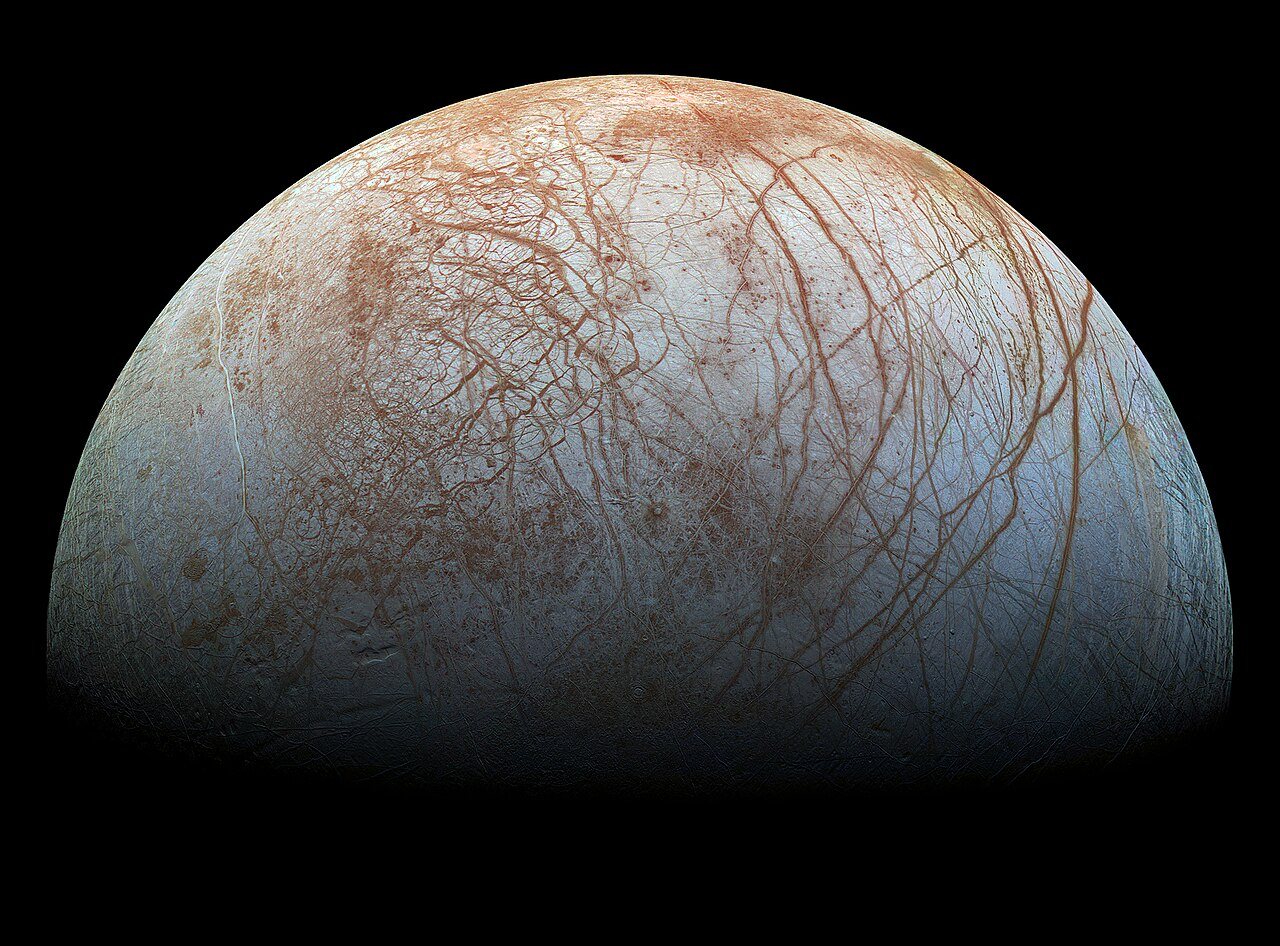
Jupiter’s moon Europa is the bigger prize. Magnetic measurements by the Galileo spacecraft in the 1990s revealed a salty, electrically conducting ocean under an ice shell probably a few to tens of kilometers thick. Radiation at the surface forges oxidants that, if they reach the water, could supply chemical energy for life. Hubble has spotted possible plumes, though those sightings remain contested.
None of this is life. These moons are ocean worlds with liquid water, rock, energy and organic molecules, but whether biology starts wherever those ingredients meet is exactly what we don’t know. Some models suggest Enceladus’s ocean could be far younger than the solar system, leaving less time for anything to emerge, and life in a dark ocean might leave only faint traces in a plume.
Help is on the way, slowly. NASA’s Europa Clipper, launched in October 2024, enters Jupiter orbit in April 2030 and will make nearly 50 flybys of Europa, some as low as 25 kilometers. It isn’t built to detect life, but it will map the ice, probe the ocean and sample the chemistry. Europe’s JUICE arrives in 2031 and visits Europa twice before settling around Ganymede. Enceladus, arguably the easier ocean to sample, has no spacecraft on the way, and the dedicated missions under study would not arrive before the 2040s.
67Does life have to be built from carbon and water?
Frances Arnold’s lab at Caltech pulled off a strange trick in 2016. Starting with an enzyme from an Icelandic hot-spring bacterium, the team used directed evolution, a kind of accelerated breeding for proteins, to make it bond carbon to silicon, something no known organism does, and more efficiently than the best human-made catalysts. Biology can clearly handle silicon. Yet every living thing on Earth is built from carbon and runs its chemistry in water, even though silicon makes up roughly 28 percent of Earth’s crust and carbon only a sliver of one percent.
Chemistry explains much of the preference. Carbon forms four sturdy bonds and links into long chains and rings with hydrogen, oxygen, nitrogen, sulfur and phosphorus, giving it nearly unlimited structural variety, and carbon-based molecules turn up everywhere from interstellar clouds to meteorites. Silicon chains are fragile, many silicon-hydrogen compounds ignite on contact with air, and silicon’s oxide is a solid, sand, rather than a gas like carbon dioxide, so no organism could simply breathe it out.
Water has a similar résumé. Its polar molecules dissolve salts and nutrients, push oily molecules together into membranes and help proteins fold, and it stays liquid across a 100-degree range at Earth’s surface pressure. It has drawbacks too: water tends to break apart the long molecules life needs. Candidate alternatives include liquid ammonia, concentrated sulfuric acid like that in Venus’s clouds, and the liquid methane and ethane that fill the lakes of Saturn’s moon Titan at about minus 180 degrees Celsius.
Exotic biochemistries have a rough record even on paper. A 2015 Cornell proposal for “azotosomes,” cell membranes built from a nitrogen-bearing compound that could work in Titan’s frigid methane, was undercut in 2020 when chemists in Sweden calculated that the structures would not assemble themselves there. Still, chemists have barely explored what might be possible in such alien solvents.
The deeper problem is that we know exactly one kind of life, so we can’t tell whether carbon and water are a cosmic rule or a local habit. The best nearby test is Titan, the only other world with stable liquid on its surface. NASA’s Dragonfly rotorcraft, due to launch no earlier than July 2028 and arrive in 2034, will sample its organic-rich ground. Meanwhile, astrobiologists are developing agnostic biosignatures, ways to recognize life by the complexity of its chemistry rather than by any particular molecule.
66How common are planets like Earth?
The count passed 6,000 in September 2025, when NASA’s Exoplanet Archive reached six thousand confirmed worlds beyond the solar system, with more than 8,000 candidates waiting in line. Not one of them is a confirmed Earth twin: a rocky planet our size, circling a Sun-like star about once a year at a distance where water could stay liquid on the surface.
The census does show that planets are everywhere, with more planets than stars in the Milky Way and small ones outnumbering giants. The most common planets known fall between Earth and Neptune in size, a class our solar system lacks entirely. NASA’s Kepler telescope, which watched about 150,000 stars from 2009 to 2013, supplies the best statistics. A 2021 analysis of its final data estimated between 0.37 and 0.60 rocky planets in the habitable zone, the orbital band where surface water could stay liquid, for every Sun-like star, implying at least 300 million such worlds in our galaxy.
Those numbers carry large error bars. An Earth-like orbit produces only one transit, the tiny dip in starlight as a planet crosses its star, per year, so Kepler caught just a handful near the edge of detectability, forcing astronomers to extrapolate from tighter orbits. Change the assumed width of the habitable zone or the size cutoff for “rocky,” and the estimate moves. Red dwarfs, roughly three of every four stars, often host Earth-size planets in temperate orbits, but their violent flares may strip atmospheres away; JWST observations of the two innermost TRAPPIST-1 planets have found no evidence of thick air.
Earth-size and temperate is also not the same as Earth-like. A habitable-zone planet might be a scorched Venus or a frozen desert, and the “Rare Earth” school argues that plate tectonics, a magnetic field and a large stabilizing moon may be uncommon extras. Reading atmospheres is hard even for JWST: a 2025 claim of a possible biosignature gas on K2-18b, a planet about 2.6 times Earth’s width, was not supported by independent reanalyses.
The fix is better data. Europe’s upcoming PLATO mission is designed to find Earth-size planets on year-long orbits around Sun-like stars, and NASA’s proposed Habitable Worlds Observatory, a space telescope for the 2040s, would directly image a couple of dozen nearby Earth-size planets and check their air for oxygen, water and methane. That would turn an estimate into a real count of Earth analogs.
65Is a giant planet hiding at the edge of the solar system?
Mike Brown helped demote Pluto, so there is some irony in his best-known claim since. In January 2016 he and fellow Caltech astronomer Konstantin Batygin argued that a planet several times Earth’s mass is hiding far beyond Neptune. Their clue was a strange alignment: the long, stretched orbits of the most distant known Kuiper Belt objects, the icy bodies beyond Neptune, seemed to point in roughly the same direction and tilt the same way. Left alone, those orbits should have drifted apart long ago.
The proposed Planet Nine would weigh about five Earth masses and follow an elongated orbit several hundred times farther from the Sun than Earth, taking roughly 10,000 years per lap. Its gravity could herd the clustered orbits, explain a few objects on bizarrely tilted paths, and possibly account for the six-degree tilt of the Sun’s spin relative to the planets. That far out it would be faint enough to have slipped past every survey so far.
Skeptics point to the sample. Only about a dozen objects define the clustering, and telescopes find distant objects only where and when they look, which can fake a pattern. One carefully calibrated survey, OSSOS, found its discoveries consistent with no clustering at all. Others suggest the combined pull of a massive disk of small icy bodies could do the herding without a planet. In 2025, astronomers using Japan’s Subaru Telescope reported 2023 KQ14, nicknamed Ammonite, a distant object whose orbit does not line up with its cousins; simulations suggest a Planet Nine on the predicted path would likely have disrupted it.
A 2025 Princeton study found that the plane of the distant Kuiper Belt appears slightly warped. That could point to a smaller “Planet Y,” somewhere between Mercury and Earth in mass, orbiting 100 to 200 times farther out than Earth. The outer solar system may be hiding something, just not necessarily Planet Nine.
The decisive tool has just switched on. The Vera C. Rubin Observatory in Chile began its ten-year Legacy Survey of Space and Time on June 29, 2026, photographing the visible southern sky every few nights. It is expected to find thousands of new distant objects, enough to show whether the clustering is real, and, if Planet Nine is in view and bright enough, to catch it moving. Within a few years the hypothesis should either have a planet or a much weaker case.
64How did the Moon form?
Apollo astronauts hauled home 382 kilograms of lunar rock, and the samples set up a puzzle that still hasn’t been fully solved. By the mid-1970s, two teams had independently proposed the answer most scientists still favor, the giant-impact hypothesis: about 4.5 billion years ago, a Mars-size planet later nicknamed Theia slammed into the young Earth, and the debris thrown into orbit gathered itself into the Moon.
The idea explains a lot. The Moon has a tiny iron core for its size, because the impact mostly flung out rocky mantle material. It is depleted in volatile elements that would have boiled away in the heat, it was once covered by an ocean of magma, and the Earth-Moon pair carries a large amount of spin, just what a glancing blow would leave behind.
The trouble is chemical. In the classic simulations, most of the Moon is made of Theia, and bodies that formed in different parts of the solar system carry distinct isotopic fingerprints. Yet Moon rocks are virtually indistinguishable from Earth’s mantle in oxygen, titanium and other isotopes. Researchers have proposed several escapes. Theia may simply have formed next door with nearly the same recipe; a November 2025 study in Science using high-precision iron isotopes concluded it probably came from even closer to the Sun than Earth. Or the impact was far more violent, vaporizing both bodies into a spinning, doughnut-shaped cloud called a synestia that mixed everything thoroughly. Or the Moon was assembled from a series of smaller impacts.
Theia may still be with us. A 2023 study in Nature proposed that two continent-size masses of unusual rock deep in Earth’s mantle, beneath Africa and the Pacific, are buried remnants of the impactor. High-resolution simulations published in 2022 even suggested the Moon could have formed within hours of the collision rather than over months or years.
No single scenario fits every constraint, partly because simulations can tune the impactor’s size, speed and angle to match almost anything. Better clues should come from new samples: China’s Chang’e 6 returned the first rock from the Moon’s far side in 2024, and Artemis astronauts aim to collect material near the lunar south pole. Ever more precise isotope measurements will test how much of the Moon came from Theia and how much from Earth.
63Where did Earth’s water come from?
Earth’s oceans look vast, but they make up only about 0.02 percent of the planet’s mass, a thin damp film. Even that much water is a puzzle. Earth formed in the inner solar system, where the young Sun kept the surrounding disk of gas and dust too warm for water ice to survive. Ice was plentiful only beyond the “snow line,” out around today’s asteroid belt, so the rocks that built Earth should have been fairly dry.
The classic answer is delivery by icy bodies from farther out. The fingerprint is the ratio of deuterium, a heavy form of hydrogen, to the ordinary kind, which differs from source to source. Carbonaceous chondrites, water-rich meteorites from the outer asteroid belt, match Earth’s oceans well. Most comets don’t; ESA’s Rosetta found that comet 67P’s water has roughly three times Earth’s deuterium ratio, suggesting comets supplied only a small share. Samples from asteroids Ryugu and Bennu, returned in 2020 and 2023, are rich in water-bearing clays, the kind of material that could have done it.
A rival view says Earth was wet from the start. A 2020 study in Science found that enstatite chondrites, rare meteorites whose chemistry closely resembles Earth’s raw ingredients, hold enough hydrogen to have supplied several times the water in today’s oceans. In 2025, Oxford researchers analyzing an Antarctic enstatite chondrite called LAR 12252 found hydrogen locked up as hydrogen sulfide in its fine-grained matrix, apparently original rather than picked up on Earth. Another idea has the early Earth’s thick hydrogen atmosphere reacting with a magma ocean to make water.
The evidence hasn’t picked a winner. Isotopes of elements such as molybdenum suggest most of Earth’s building material came from the inner solar system, leaving room for only a modest dose from the outer zone. The giant impact that made the Moon may have added water, removed it, or both. Earth’s deep mantle also stores large but poorly known amounts of water, and some ancient lavas carry hydrogen with less deuterium than seawater, hinting at a primordial reservoir.
The likely answer is a blend of homegrown and delivered water, and the fight is over proportions. Settling them will take more isotope work on the Bennu and Ryugu samples, better estimates of how much water hides in the mantle, and observations of young planetary systems, where JWST is tracking water vapor in planet-forming disks.
62Could there be life in the clouds of Venus?
The surface of Venus sits at about 465 degrees Celsius, hot enough to melt lead, under air roughly 90 times as dense as Earth’s. Yet around 50 to 55 kilometers up, inside the planet’s thick cloud deck, temperature and pressure come close to those at Earth’s surface. In 1967 Carl Sagan and the biophysicist Harold Morowitz suggested in Nature that microbes might float there, and the idea never quite went away.
It came roaring back in September 2020, when a team led by Jane Greaves of Cardiff University reported phosphine, a gas that on Earth is made by microbes living without oxygen and by industry, at about 20 parts per billion, using the James Clerk Maxwell Telescope in Hawaii and the ALMA array in Chile. No non-biological process the team modeled could make that much. Within months the claim was under fire: a calibration problem in the ALMA data cut the estimate to a few parts per billion, other groups argued that sulfur dioxide could mimic the signal, and NASA’s airborne SOFIA observatory saw nothing.
Greaves’s group kept looking. In 2024 it previewed new campaigns with far more data than the original detection, plus tentative ammonia seen by the Green Bank Telescope, at a UK astronomy meeting ahead of peer review. Team members suggest sunlight may destroy phosphine, which could explain why some observations miss it.
The case against life is stark. The cloud droplets are concentrated sulfuric acid, and a 2021 study calculated that the clouds’ water activity, a measure of how much water is actually available to organisms, sits about a hundred times below the limit any known Earth microbe tolerates. Optimists answer that Venus’s chemistry is genuinely unexplained: an unidentified ultraviolet absorber in the clouds has puzzled scientists for decades, and a 2024 experiment found that 19 of 20 biological amino acids keep their core structure in sulfuric acid at cloud-like strengths.
Only direct sampling will settle it. NASA’s DAVINCI probe, funded in the 2026 budget and targeting a December 2030 launch, is due to plunge through the atmosphere in 2033, measuring its gases on the way down. ESA’s EnVision orbiter and NASA’s VERITAS are also in the works, though both face budget and schedule uncertainty.
61Why is Uranus knocked on its side?
Most planets spin roughly upright, like tops, and Venus is flipped upside down. Uranus rolls around the Sun on its side, its axis tipped about 98 degrees. Over its 84-year orbit, each pole gets roughly 42 years of continuous sunlight followed by 42 years of darkness. When Voyager 2 flew past in January 1986, still the only spacecraft ever to visit, the south pole was pointing almost straight at the Sun.
The leading explanation is violence. While the giant planets were still assembling, collisions with Earth-size or larger bodies were common, and a big enough blow at the right angle could knock Uranus over. Computer simulations, including a 2018 set from Durham University, show that an impact by an object more massive than Earth can do it, while splashing out debris that might have helped build moons.
Those moons complicate the story. Uranus’s large moons orbit in its tilted equatorial plane, in the same direction the planet spins. A 2012 study led by Alessandro Morbidelli found that a single knockout blow would tend to leave the moons orbiting backward. Two or more impacts, landing before the moons formed from the surrounding disk, fit better, which turns one lucky accident into a series of them.
Some researchers prefer a gentler route: spin-orbit resonance, in which the slow wobble of a planet’s axis falls into step with a periodic gravitational tug and gets pumped up over time. Early versions needed more time or mass than seemed available. A 2022 study proposed that an ancient, now-vanished moon drifting outward could have tipped Uranus over gradually before its orbit destabilized and it crashed into the planet. A similar mechanism, driven by Titan’s slow outward drift, has been proposed for Saturn’s 27-degree tilt.
What keeps the question open is a lack of data. Nearly everything we know comes from one flyby four decades ago, and even basics are still being revised: in 2025, Hubble observations of Uranus’s auroras showed its day lasts 17 hours, 14 minutes and 52 seconds, 28 seconds longer than Voyager’s figure. The 2022 planetary decadal survey made a Uranus orbiter and atmospheric probe NASA’s top priority for its next flagship mission. Measuring the planet’s interior and moons up close is the best way to tell a smash from a slow tilt, but such a mission would not arrive before the 2040s.
Restless Earth
We live on the thin, cool skin of a planet that is still churning underneath. Some of its biggest mysteries sit thousands of kilometers below our feet; others are just offshore, in water no one has ever seen.
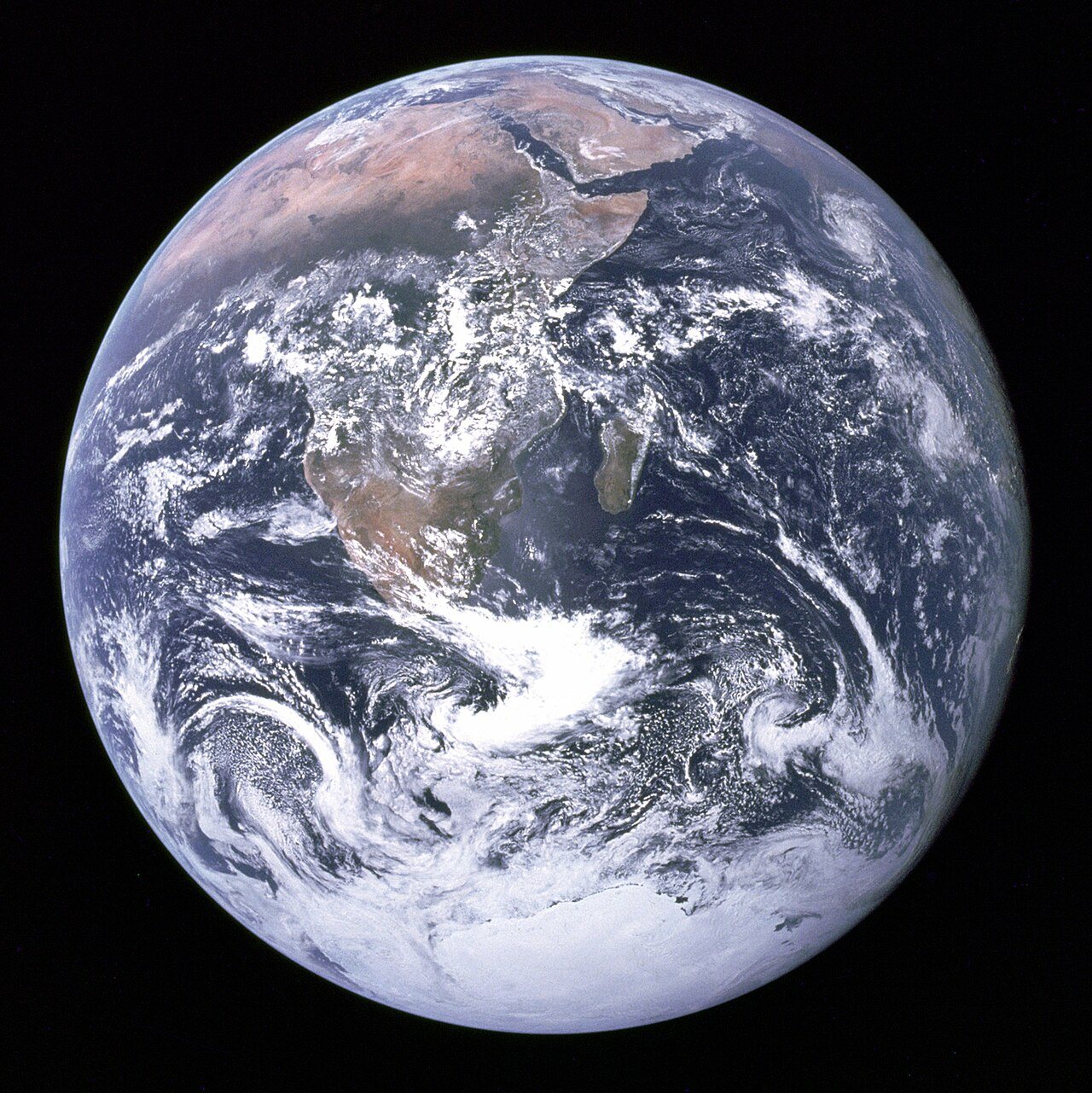
60What’s going on at the very center of the Earth?
No one has come within 5,000 kilometers of it, yet seismologists can sketch it in surprising detail. The inner core is a ball of iron and nickel about 1,220 kilometers in radius, roughly 70 percent the size of the Moon, sitting at around 5,400°C under more than three million times the pressure at sea level. Danish seismologist Inge Lehmann deduced its existence in 1936 from the way earthquake waves bent and bounced through the planet. Nearly everything past those basics is up for argument.
Take its spin. In 1996, Xiaodong Song and Paul Richards reported that the inner core turns slightly faster than the mantle and crust above it. In 2023, Song and Yi Yang argued that this super-rotation had paused around 2009, perhaps as part of a roughly 70-year back-and-forth cycle. A 2024 Nature study led by USC seismologists, using 121 repeating earthquakes near the South Sandwich Islands between 1991 and 2023, concluded that the core began slowing around 2010 and is now backtracking relative to the surface.
In February 2025 the same group reported in Nature Geoscience that some signals were best explained by the inner core’s surface deforming, probably jostled by the churning outer core. A solid metal ball changing shape over years rather than eons surprised almost everyone.
Its recipe is uncertain too. Pure iron would be too dense to match the seismic data, so something lighter is mixed in, with silicon, oxygen, sulfur, carbon and hydrogen all under suspicion. A 2022 Nature study proposed that light elements could make the core “superionic,” a solid iron lattice through which smaller atoms flow almost like a liquid. And a 2023 analysis of waves that ricocheted repeatedly through the planet’s center argued for a distinct innermost inner core, a central ball about 650 kilometers thick, possibly a relic of an earlier phase of growth.
Even its birthday is disputed. The inner core grows as liquid iron freezes onto it, and estimates of when freezing began run from about half a billion to two billion years ago. Much hinges on how well iron conducts heat at core pressures, a number lab experiments still disagree on. Rocks about 565 million years old record a strikingly feeble magnetic field, which some researchers read as the dynamo faltering just before the inner core began to crystallize. More seafloor seismometers and sharper high-pressure experiments are the way forward.
59Why does Earth’s magnetic field flip?
Pick up a chunk of ocean crust from the right stripe of seafloor and the magnetism locked inside it points the wrong way. In 1963, Fred Vine and Drummond Matthews explained why: as new crust forms at mid-ocean ridges it records Earth’s magnetic field, and that field keeps flipping, leaving a striped tape recording across the ocean floor. The record shows at least 183 reversals in the past 83 million years. The most recent full flip, the Brunhes–Matuyama reversal, happened about 780,000 years ago.
The field comes from the geodynamo. Liquid iron in the outer core, stirred by escaping heat and twisted by Earth’s rotation, generates electric currents that sustain the field. In 1995, Gary Glatzmaier and Paul Roberts ran a computer model of this process that reversed on its own, with no outside push. Simulations since then suggest flipping is a natural habit of a turbulent dynamo: patches of reversed field grow at the boundary between core and mantle until they overwhelm the main north-south dipole.
What nobody can explain is the timing. Reversals look statistically random, averaging roughly one every few hundred thousand years, yet the field sometimes holds still for astonishingly long stretches. During the Cretaceous Normal Superchron, from about 120 to 83 million years ago, it did not flip once. A leading idea is that the slowly churning mantle controls how much heat leaves the core, and where, nudging the dynamo between restless and calm modes. How long a flip takes is also contested. Most estimates fall between 1,000 and 10,000 years, but a few studies argue for much faster swings.
Is one coming? Over the past two centuries the main field has lost roughly 9 percent of its strength, and the South Atlantic Anomaly, a zone of unusually weak field stretching from South America toward Africa, keeps growing. In October 2025, a study of 11 years of ESA Swarm satellite data reported that the anomaly had expanded since 2014 by an area nearly half the size of continental Europe. Still, the field remains fairly strong by long-term standards, and weak spells often recover. During the Laschamp excursion about 41,000 years ago, the field sank to perhaps 5 percent of normal and briefly reversed before snapping back.
Sharper answers will come from more detailed magnetic records in lava and sediments, and from dynamo simulations closer to true core conditions, which today’s supercomputers still cannot reach.
58Will we ever be able to predict earthquakes?
In 1985 the US Geological Survey made its most famous bet. Moderate earthquakes had struck Parkfield, California, at fairly regular intervals since 1857, so scientists forecast a magnitude 6 there by 1993 and wired the area with instruments to catch the run-up in the act. The quake finally arrived in September 2004, more than a decade late, and the instruments recorded no clear warning sign beforehand.
A genuine prediction has to name a place, a time window and a magnitude, and get them right more often than chance. By that standard the USGS says flatly that no scientist has ever predicted a major earthquake. The one celebrated success, the 1975 evacuation before the Haicheng quake in China, followed a burst of foreshocks. The next year, the unheralded Tangshan earthquake killed at least 240,000 people.
The difficulty is physical. Faults fail kilometers underground, out of sight, and a small rupture can either fizzle or cascade into a giant one depending on stresses nobody can measure directly. Foreshocks exist, such as the magnitude 7-plus quake two days before Japan’s 2011 Tohoku disaster, but most are recognized only in hindsight, because they look like ordinary small quakes. Proposed precursors such as radon releases, odd animal behavior and electromagnetic signals have not held up under rigorous testing.
Optimists work on two fronts. Machine learning can forecast when laboratory faults will slip by listening to faint crackles that precede failure, first in small rock samples at Los Alamos and, in a 2025 Nature Communications study, on meter-scale lab faults. Whether that scales to real faults, which slip once a century rather than every few seconds, is the open question. Meanwhile, GPS networks now track slow-slip events, weeks-long creep on subduction zones that sometimes comes before big ruptures.
In practice, the field has shifted from prediction to probabilistic forecasting and rapid warning. Forecasts assign odds over decades, such as a 72 percent chance of at least one magnitude 6.7 or larger quake in the San Francisco Bay Area between 2014 and 2043. Early-warning systems like ShakeAlert, which covers California, Oregon and Washington, detect a quake that has already begun and send alerts seconds before strong shaking arrives.
57When did plate tectonics get started?
Earth is the only world we know whose outer shell is cracked into moving plates. Venus and Mars, built from similar rock, are each wrapped in a single rigid shell, a stagnant lid. Plates recycle carbon, build continents and may help keep a planet habitable over billions of years, so the moment Earth’s lid broke matters well beyond geology. Proposed start dates span nearly four billion years.
At one extreme, some researchers see hints of subduction, one plate diving beneath another, in tiny zircon crystals from Western Australia’s Jack Hills, some about 4.4 billion years old. Their chemistry suggests liquid water and granite-like crust existed astonishingly early. At the other extreme, some geologists point out that blueschists and ultrahigh-pressure rocks, the classic fingerprints of cold, deep subduction, become common only in roughly the last billion years, and argue that modern-style plate tectonics is a latecomer.
Many geologists land in between, around 3.2 to 2.5 billion years ago, when the chemistry of continental crust shifts. The sharpest new evidence comes from paleomagnetism, which tracks how ancient rocks moved by reading the magnetic directions and strengths frozen into them. In 2023, John Tarduno’s team reported in Nature that zircons from South Africa and Western Australia recorded a field of nearly constant strength from about 3.9 to 3.4 billion years ago, which they read as crust parked at one latitude under a stagnant lid. Then, in March 2026, a Harvard-led study in Science found that part of Western Australia’s Pilbara region shifted latitude and rotated by more than 90 degrees while South Africa’s Barberton belt stayed nearly still, implying separate moving plates around 3.5 billion years ago.
The two results need not be at war. A hotter early Earth may have eased into tectonics in fits: brief local episodes of subduction, a “squishy” lid, or plates that moved and stalled before the modern system locked in. The trouble is the evidence. Rocks older than 3 billion years are scarce, heavily cooked and deformed, and their magnetic signals can be overprinted. More paleomagnetic sampling from the few surviving ancient cratons, and better models of how a hotter mantle behaves, are the likeliest route to a firm date.
56Why did the rhythm of the ice ages suddenly change?
For most of the past 2.5 million years, ice sheets grew and shrank like clockwork, roughly every 41,000 years, in step with a slow wobble in the tilt of Earth’s axis. Then, between about 1.25 million and 700,000 years ago, the beat changed. Glacial cycles stretched to roughly 100,000 years, ice sheets grew far bigger, and the swings between deep freeze and warm interglacial became more violent. Earth’s orbit did nothing special during that interval. Something inside the climate system changed instead.
That puzzle is the Mid-Pleistocene Transition. It deepens on closer inspection: the 100,000-year rhythm lines up with a stretching of Earth’s orbit whose effect on sunlight is tiny. Many researchers think the ice sheets simply learned to ignore some tilt cycles, growing through two or three of them before collapsing.
The best-known explanation is the regolith hypothesis, proposed by Peter Clark and David Pollard in 1998. Early ice sheets sat on a slippery blanket of soil and weathered rock built up over millions of years, and ice slides easily over mud, so the sheets stayed thin and fragile. Repeated glaciations scraped North America and Scandinavia down to hard bedrock, which gripped the ice and let it pile high enough to survive a warm tilt cycle. A second camp blames a long, slow decline in carbon dioxide that cooled the planet past a threshold. Others look to the Southern Ocean, which may have begun locking more carbon in the deep sea during glacial times. A 2019 modeling study by Matteo Willeit and colleagues reproduced the transition only when it combined regolith removal with falling CO2.
Data are the bottleneck. Continuous Antarctic ice cores, the gold standard for ancient CO2, reach back only about 800,000 years, missing most of the transition. That is why the European Beyond EPICA team drilled 2,800 meters to bedrock at Little Dome C in early 2025, recovering ice whose climate record appears to stretch back about 1.2 million years. If the air bubbles trapped in that ice show CO2 falling across the transition, the carbon explanation gains ground. If CO2 holds steady, the ice-and-bedrock story looks stronger.
55How much will the planet warm as carbon dioxide rises?
Svante Arrhenius took the first serious crack at this in 1896, grinding through calculations by hand to conclude that doubling atmospheric carbon dioxide would warm Earth by roughly 5 to 6°C. More than a century later, that quantity, now called equilibrium climate sensitivity, the long-term warming from doubled CO2, remains the most consequential number in climate science. Humanity has pushed CO2 from about 280 parts per million before industrialization to a May 2026 peak of 432 ppm at Mauna Loa, already more than halfway to doubling.
For decades the official range barely budged. The 1979 Charney report put it at 1.5 to 4.5°C, and IPCC assessments kept roughly that span until 2021. The IPCC’s Sixth Assessment Report then tightened it to a best estimate of 3°C, a likely range of 2.5 to 4°C and a very likely range of 2 to 5°C. The progress came from combining independent lines of evidence instead of leaning on models: warming measured since the 1800s, the physics of individual feedbacks, and past climates such as the last ice age.
The biggest remaining wild card is clouds. Warming could thin the low, bright decks of stratocumulus that shade subtropical oceans, letting in more sunlight and amplifying the heat, or shift clouds in ways that partly offset it. A related puzzle, the “pattern effect,” is that the eastern Pacific has warmed more slowly than expected in recent decades, which may make the climate look less sensitive today than it will prove over centuries.
Several of the newest climate models run hot, with sensitivities above 5°C, and the IPCC down-weighted them because they clash with past-climate evidence. Yet some researchers, including James Hansen, argue the true value sits near the top of the range. A 2024 Science study linked part of 2023’s record heat to an unusually dark planet, with less sunlight reflected, partly because low clouds had thinned. With 2025 averaging about 1.44°C above preindustrial levels, satellite measurements of Earth’s energy budget over the coming decade will be a direct test of who is right.
54Could the Atlantic’s great ocean current shut down?
Western Ireland is far milder than Labrador at the same latitude, and part of the reason is a vast oceanic conveyor belt. The Atlantic Meridional Overturning Circulation, or AMOC, carries warm, salty surface water north, where it cools, sinks and flows back south at depth. Since 2004 the RAPID array of moored instruments at 26.5°N has clocked it at roughly 15 to 19 million cubic meters of water a second, hauling about 1.2 petawatts of heat northward.
Physics says it can stall. Sinking depends on surface water being dense, and both warming and Greenland meltwater make it lighter. In 1961, oceanographer Henry Stommel showed that such a system can have two stable states, running or nearly off, with a tipping point between them. Seafloor sediments and ice cores confirm that the circulation weakened or switched modes repeatedly during the last ice age, with abrupt temperature jumps around the North Atlantic.
Whether decline has already begun is disputed. A 2018 Nature study used a persistent “cold blob” south of Greenland as a fingerprint and estimated about 15 percent weakening since the mid-20th century. A 2025 analysis based on air-sea heat exchange found little sign of decline since the 1960s, and the direct RAPID record is still too short to separate a trend from natural swings. A widely publicized 2023 statistical study projected a collapse between 2025 and 2095, but drew heavy criticism over its assumptions.
Models disagree too. The IPCC’s 2021 assessment judged the AMOC very likely to weaken this century, with medium confidence that it will not collapse abruptly before 2100. A 2025 Nature study of 34 models found a collapse this century unlikely because Southern Ocean winds keep the circulation partly running. But a 2025 study that ran models past 2100 found shutdowns in two-thirds of very high-emission runs and a quarter of low-emission runs. Many oceanographers also suspect models are biased toward stability.
Settling it requires longer direct records, sharper ocean models and trustworthy early-warning signals. The stakes justify the effort: a collapse would sharply cool northwestern Europe, shift tropical rain belts and push up sea levels along the US East Coast.
53What is ball lightning?
On October 21, 1638, during a violent storm, witnesses said a great ball of fire burst into the parish church at Widecombe-in-the-Moor in Devon, England, killing four people and injuring about 60. Reports like it have piled up for centuries: glowing spheres from golf-ball to beach-ball size that drift through rooms, slip through windows, hiss and vanish, sometimes with a bang. Surveys of thousands of workers at Oak Ridge, Tennessee, found that 3 to 6 percent said they had seen one.
For a long time many physicists doubted it existed at all. Then, in July 2012, researchers from Northwest Normal University in China, filming ordinary lightning on the Qinghai Plateau, caught a glowing ball by sheer luck. It lasted about 1.6 seconds and drifted several meters, and their spectrograph recorded light from silicon, iron and calcium, all common in soil.
That fits the leading idea, the vaporized-silicon hypothesis proposed by John Abrahamson and James Dinniss in 2000. Lightning strikes the ground and vaporizes silica in the soil; carbon strips away the oxygen, leaving a cloud of silicon nanoparticles that slowly reoxidize and glow. In 2007, Brazilian physicists made small, long-lived luminous balls by zapping silicon wafers with electric arcs.
But soil chemistry struggles with the strangest reports, such as fireballs inside closed rooms and airliners. In 1963 the radio astronomer Roger Jennison watched a glowing sphere about 20 centimeters across float down the aisle of an Eastern Airlines flight. Rival ideas include Pyotr Kapitsa’s proposal that the ball is a plasma fed by microwaves, which could pass through glass, and a 2010 suggestion from University of Innsbruck physicists that the intense magnetic pulses of nearby lightning can trigger hallucinations in the brain’s visual system. Lab experiments with microwave ovens and underwater electrical discharges have produced glowing blobs, but none match the size and lifetime of the natural thing.
Ball lightning stays unsolved because it is rare, unpredictable and brief, which makes it almost impossible to aim instruments at. More chance captures by automated lightning cameras and spectrographs are the realistic path forward. The answer may turn out to be several different phenomena sharing one name.
52What really caused Earth’s worst mass extinction?
About 252 million years ago, life on Earth came closer to being wiped out than at any other time. Roughly four in five marine species vanished, and some estimates run past 90 percent. On land, most vertebrate species disappeared, and so did many insect groups, making this the only mass extinction known to have hit insects hard. Precise dating of volcanic ash layers in southern China shows the main marine die-off took about 60,000 years, give or take nearly as much, an eye blink in geological time.
The prime suspect is no longer seriously in doubt. The Siberian Traps, a colossal pile of lava flows and buried magma sheets in what is now Russia, erupted on the same timetable and released enormous volumes of carbon dioxide. Some of that magma squeezed into thick coal beds and salt deposits, baking them and releasing still more CO2, methane and ozone-destroying halogens. Oxygen isotopes in fossil teeth from tiny eel-like animals called conodonts suggest tropical seas may have reached around 40°C.
The live question is how the weapons combined. Extreme heat, ocean acidification and spreading oxygen-starved waters are all in the frame. A 2018 Science study modeled how warming raises animals’ oxygen demand while the water holds less oxygen, and found that this squeeze alone could explain more than half of the marine losses. Malformed fossil spores hint that a damaged ozone layer exposed plants to harsh ultraviolet light. A 2014 hypothesis even blames a microbe, Methanosarcina, that may have acquired a new way to make methane and thrived on nickel from the eruptions.
Why this crisis dwarfed other big eruptions is also debated. A 2024 Science study proposed that the warming supercharged El Niño-like swings into decades-long extremes that struck land first and then the oceans. Others stress the sheer volume of carbon from cooked sediments. Researchers still argue over how many pulses the extinction came in and whether land plants suffered a true mass extinction or a severe reshuffle.
Better-dated rock sections on land and sea, plus models that couple volcanoes, carbon and ocean chemistry, keep tightening the story. Its uncomfortable core is a fast, massive release of carbon.
51What’s living in the deep ocean that we’ve never seen?
A small, ghostly snailfish filmed in 2022 at 8,336 meters in the Izu-Ogasawara Trench south of Japan holds the record for the deepest fish ever seen. It is a neat reminder of how little we know about the largest living space on the planet. The deep ocean, everything below about 200 meters where sunlight fades, lies over roughly two-thirds of Earth’s surface. Yet a 2025 study in Science Advances estimated that in more than 43,000 dives since 1958, humans have directly seen less than 0.001 percent of the deep seafloor, a patch about the size of Rhode Island.
Even the maps are thin. In April 2026, the Nippon Foundation-GEBCO Seabed 2030 project announced that 28.7 percent of the ocean floor had been mapped at modern sonar resolution. Global maps of Mars are sharper than those of our own seabed.
Biology lags further behind. Scientists have formally described roughly a quarter of a million marine species, and the Ocean Census, launched in 2023 by the Nippon Foundation and the ocean research group Nekton, is trying to speed up the tally. It announced 866 new species in 2025 and another 1,121 in May 2026, from a free-floating orange sea pen near the South Sandwich Islands to a see-through bristle worm living with a glass sponge 800 meters down off Japan. Wherever researchers look closely, novelty is the rule. A 2023 survey of the Clarion-Clipperton Zone, a Pacific abyssal plain eyed for deep-sea mining, tallied 5,578 animal species, roughly nine in ten of them new to science.
Surprises are not limited to animals. Hydrothermal vent communities were unknown until 1977, and microbes have since been found living deep inside the rock and sediment beneath the seafloor. In 2024, researchers reported that metal-rich nodules on the Pacific floor appear to produce “dark oxygen” without sunlight, a claim still under heavy dispute.
Ships are only one bottleneck. On average it takes more than 13 years for a collected specimen to be formally described, and trained taxonomists are scarce. Cheaper robotic vehicles, environmental DNA filtered from seawater and AI-assisted image analysis could speed things up, ideally before mining or warming changes what is down there to find.
Inside the Mind
The three-pound organ reading this sentence is the most complicated object we know of. Neuroscience can now watch it work in real time and still can’t fully explain why we sleep, dream or forget.
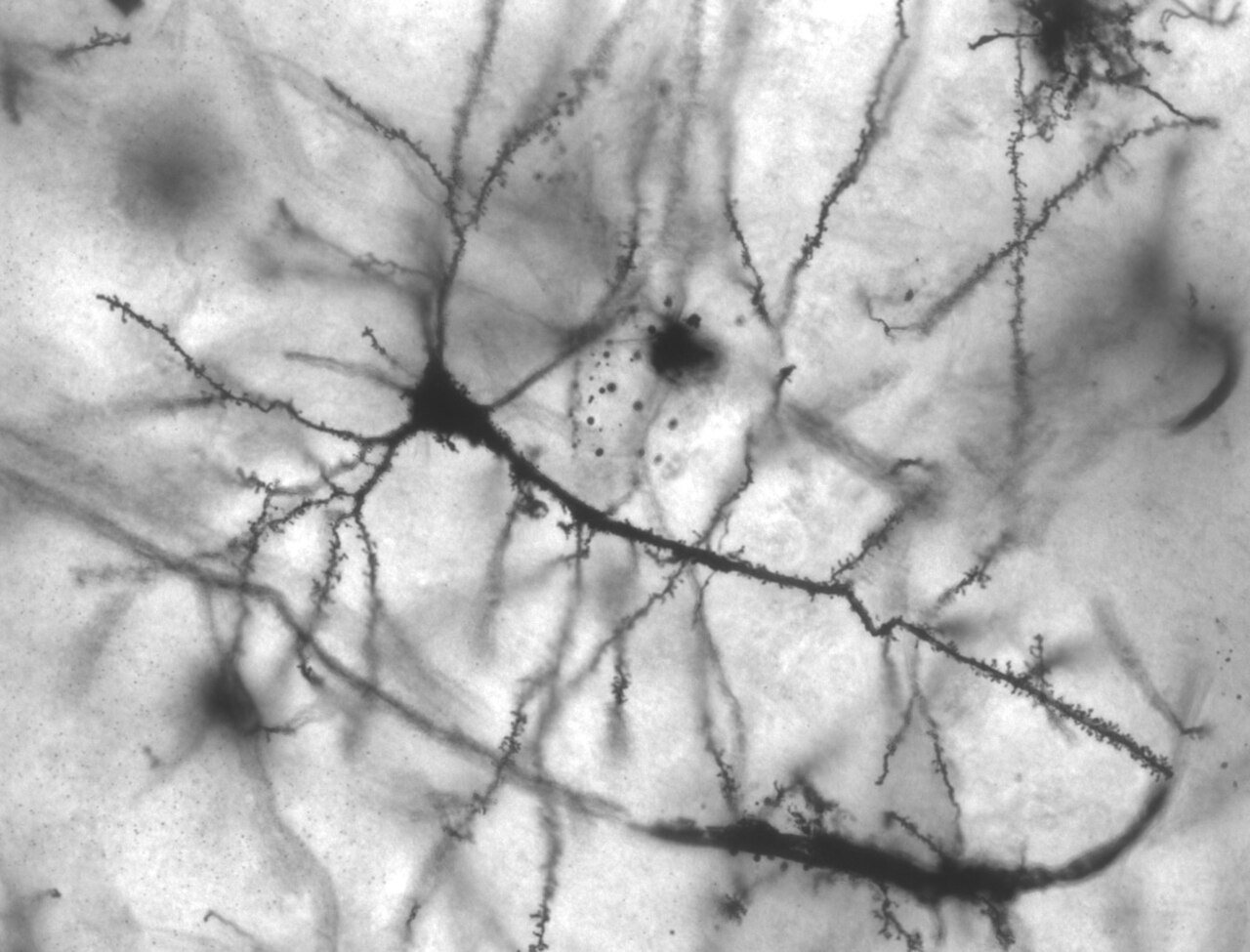
50Why do we sleep?
A rat kept awake around the clock dies within a few weeks. Fruit flies, zebrafish and roundworms all sleep, and so does the upside-down jellyfish Cassiopea, which has no brain at all. Sleep means hours of not eating, not mating and being easy prey, yet researchers have yet to find an animal that clearly does without it. Evolution has evidently judged it worth the risk.
Part of the difficulty is that sleep does many things at once. During deep sleep the hippocampus replays the day’s experiences, a pattern first caught in sleeping rats in the 1990s, and memories hold up better after sleep than after equal time awake. Giulio Tononi and Chiara Cirelli argue that waking strengthens connections between neurons and sleep trims them back; a 2017 mouse study found synapses shrank by roughly 18% during sleep. Sleep also tunes immunity, hormones and metabolism.
The most headline-grabbing idea came in 2013, when Maiken Nedergaard’s lab reported that the spaces between brain cells widen by about 60% in sleeping mice, letting fluid flush out waste such as amyloid-beta through what her team calls the glymphatic system. In 2024, Nick Franks and Bill Wisden at Imperial College London tracked a dye directly and found the opposite: clearance was about 30% lower in sleeping mice and 50% lower under anesthesia. Nedergaard’s group reported in 2025 that slow waves of norepinephrine during non-REM sleep make blood vessels pulse like a pump, and that the sleeping pill zolpidem dampened those waves in mice.
Human evidence is only starting to arrive. A small 2026 crossover study of 39 people, run by researchers at a company developing brain-clearance technology, found that normal sleep raised morning blood levels of amyloid-beta and tau compared with a night of deprivation, which the authors read as waste leaving the brain. And a 2020 Harvard study found that sleep-deprived fruit flies died from toxic molecules piling up in the gut, with antioxidants preventing the early deaths. Sleep’s job may not be confined to the head.
The likeliest story is that sleep began with one simple function in early animals and gathered others over hundreds of millions of years, which is why no single theory covers it. Settling the details needs tools that can measure fluid flow and synapse strength in sleeping humans, not just mice.
49Why do we dream?
In 2021, sleep labs in the United States, France, Germany and the Netherlands reported something that sounds like science fiction: they asked sleeping people questions and got answers. Lucid dreamers, people aware that they are dreaming, heard simple math problems and yes-or-no questions and replied with prearranged eye movements or facial twitches, without waking up. Dreams are not as sealed off from the world as they seem. Why we have them at all is a harder problem.
One old assumption has fallen. Dreaming is not confined to REM sleep. A 2017 study at the University of Wisconsin woke 46 volunteers repeatedly through the night and found dreams in both REM and non-REM sleep. What predicted dreaming was a drop in slow electrical activity in a posterior hot zone at the back of the brain, which flagged dreaming 92% of the time. Dream content also recruited the same regions used when awake: dreams with speech engaged language areas.
Freud’s idea of dreams as disguised wishes has little experimental support. In 1977 Allan Hobson and Robert McCarley proposed the activation-synthesis model, in which the forebrain spins a story from random signals fired by the brainstem during REM. Others see dreams as a byproduct of memory processing. In a classic experiment, people who played hours of Tetris saw falling blocks as they drifted off, including amnesic patients who could not remember playing.
Then there are theories of purpose. Finnish psychologist Antti Revonsuo argues dreams rehearse threats, which would explain all the chases and missed exams. Others suggest dreaming lets the brain revisit emotional memories while stress chemistry is low. Neuroscientist Erik Hoel’s 2021 “overfitted brain” hypothesis borrows from machine learning: strange, noisy dreams keep the brain from over-learning the day’s specifics, much like the noise engineers inject when training AI.
The trouble is that dreams can only be studied through reports given after waking, which are patchy and quickly forgotten, and it is hard to separate what REM sleep does from what the experience itself does. Real-time communication with lucid dreamers and sounds played during sleep to steer dream content now let researchers test whether changing a dream changes next-day memory or mood.
48How does the brain store a memory?
Henry Molaison was 27 when a surgeon removed much of both his hippocampi in 1953 to stop his seizures. The operation worked, but he could no longer form lasting memories of new events. Yet he got steadily better at tracing a star while watching his hand in a mirror, a skill he never remembered practicing. Brenda Milner’s studies of “H.M.” showed that memory is several systems, and that the hippocampus is essential for recording new experiences.
In 1949 psychologist Donald Hebb proposed that memories live in the connections between neurons, strengthened when cells fire together. In 1973 Tim Bliss and Terje Lømo found the mechanism: brief bursts of stimulation could strengthen synapses for hours or days, a process called long-term potentiation. Eric Kandel’s work on sea slugs, honored with a Nobel Prize in 2000, showed that short-term memory tweaks existing proteins while long-term memory requires new genes to switch on and new synapses to grow.
The physical trace of a memory is called an engram, a word coined in 1904. Karl Lashley spent decades damaging parts of rat brains looking for it and concluded that memories could not be pinned to any single spot. In 2012 Susumu Tonegawa’s team at MIT tagged the neurons active while mice learned to fear a box, then switched only those cells on with light; the mice froze in a completely different, safe box. A year later the lab planted a false memory. Engrams turn out to be sparse groups of cells spread across several regions.
Big puzzles remain. The proteins inside synapses are replaced within days, yet memories last decades; a 2024 study proposed that two molecules, KIBRA and PKMzeta, keep tagged synapses strong as individual molecules come and go. Recall itself is reconstructive: retrieving a memory makes it briefly editable again, which helps explain why vivid memories can be wrong. And over years memories seem to shift from the hippocampus into the cortex, though how is debated.
Scientists can now find and trigger a memory’s cells but cannot read its content from them. Complete wiring maps of animal brains before and after learning may eventually show exactly what changes.
47What causes Alzheimer’s disease?
When Alois Alzheimer examined the brain of his patient Auguste Deter in 1906, he found two oddities: clumps of material between neurons and tangled fibers inside them. Deter had died at 55 after years of confusion, paranoia and memory loss. Those plaques and tangles still define the disease, and 120 years later researchers still argue about what sets them off.
The plaques are made of amyloid-beta, a sticky protein fragment; the tangles are a protein called tau. The dominant theory since 1992, the amyloid cascade hypothesis, holds that amyloid builds up first, as much as 20 years before symptoms, and triggers tau tangles, inflammation and the death of neurons. Genetics backs it: rare mutations that boost amyloid production cause early-onset Alzheimer’s, and people with Down syndrome, who carry an extra copy of the amyloid gene, almost all develop the disease’s brain changes. In 2024 researchers argued that carrying two copies of the common APOE4 variant amounts to a genetic form of the disease.
Drugs became the test. The antibodies lecanemab and donanemab, which strip plaques from the brain, won US approval in 2023 and 2024 and slowed decline by roughly a quarter to a third over 18 months in early-stage patients. The benefit is real but modest, both can cause brain swelling and small bleeds, and in 2026 the FDA approved a weekly under-the-skin injection of lecanemab for starting treatment. Supporters call it proof that amyloid matters; skeptics note that clearing plaques does not halt the disease.
Other suspects are in play. Tau’s spread tracks symptoms more closely than amyloid does. The brain’s immune cells, microglia, are implicated by risk genes such as TREM2. Herpes viruses, damaged blood vessels and faulty metabolism all have advocates, though two large trials of the diabetes drug semaglutide failed to slow Alzheimer’s in 2025. The field was also shaken when a landmark 2006 amyloid paper was retracted in 2024 over image manipulation concerns.
The emerging view is that Alzheimer’s has several routes to one destination, with amyloid as an early trigger in most people. Prevention trials giving anti-amyloid drugs before symptoms appear should show how far that trigger can be defused.
46Do animals have feelings and inner lives?
Give bumblebees a few small wooden balls and some will roll them around again and again with no sugar on offer. In a 2022 study, Lars Chittka’s team at Queen Mary University of London argued that the behavior met the criteria scientists use to identify play in mammals. Play implies something it is like to be a bee, which is exactly the kind of claim science has struggled to test.
The behavioral evidence keeps piling up. Rats chirp ultrasonically when tickled and chase the hand that tickles them. Crayfish stressed with mild shocks avoid bright, open areas, and a human anti-anxiety drug reverses the effect. Cleaner wrasse, small reef fish, have tried to scrape off a mark they could see on their throats only in a mirror. Octopuses avoid places where they were hurt and respond to painkillers.
Scientists have begun to say so formally. The 2012 Cambridge Declaration on Consciousness stated that mammals, birds and octopuses have the brain machinery for conscious states. In April 2024, philosophers Jonathan Birch, Kristin Andrews and Jeff Sebo launched the New York Declaration on Animal Consciousness, signed at first by about 40 researchers. It holds that there is strong scientific support for conscious experience in mammals and birds, and a “realistic possibility” of it in all vertebrates and many invertebrates, including insects, crabs, lobsters and octopuses. Britain’s 2022 Animal Welfare (Sentience) Act already extends legal recognition to octopuses, crabs and lobsters.
The holdup is the old problem of other minds. Feelings are private, and complex behavior can run without experience; a reflex withdraws a hand before pain is felt, and robots dodge obstacles without suffering. Skeptics argue that much of this evidence shows damage detection, called nociception, rather than felt pain, and that insect brains are too small to tell. Theories of consciousness disagree about which brain features matter, so they give conflicting verdicts on fish and bees.
Researchers now look for converging markers instead: trading off pain against reward, tending wounds, and learning to avoid harm. A tested theory of consciousness would settle it; until then, the evidence is strongest for mammals and birds and grows less certain further from us.
45How does anesthesia switch the mind off?
On October 16, 1846, in a Boston operating theater now called the Ether Dome, dentist William Morton held ether to the face of a young man named Gilbert Abbott while surgeon John Collins Warren cut a tumor from his neck. Abbott did not scream. Nearly 180 years and countless operations later, nobody can fully explain why.
The chemistry is baffling. Ether, chloroform, nitrous oxide, propofol, ketamine and even xenon, a noble gas that barely reacts with anything, all cause unconsciousness. Around 1900, Hans Meyer and Charles Overton noticed that potency tracks how readily a drug dissolves in oil, suggesting anesthetics act on fatty cell membranes. In 1984 Nick Franks and William Lieb showed anesthetics could block a protein with no membrane present, shifting attention to proteins. Today the targets are well mapped: propofol and etomidate amplify GABA-A receptors, the brain’s main brakes, while ketamine, nitrous oxide and xenon block NMDA receptors, which normally excite neurons.
Knowing where a drug binds does not explain why experience vanishes. At the level of whole brains, anesthetics seem to break communication between regions, especially feedback signals from the front of the cortex to the back and loops running through the thalamus. In the “zap and zip” method, researchers pulse the cortex with a magnetic coil and measure how complex the echo is. Under propofol the echo is simple and local; under ketamine, which leaves people dreaming, it stays complex. A 2024 MIT study found that propofol destabilizes cortical activity in animals, so the brain takes longer and longer to settle after each input.
Some ideas are more exotic. In 2024 Wellesley College researchers reported that rats given a drug stabilizing microtubules, the scaffolding inside cells, took about 69 seconds longer to lose consciousness under isoflurane, and linked it to quantum theories of mind. Most neuroscientists remain unconvinced.
Anesthesia is the consciousness problem run in reverse: without knowing what produces experience, nobody can say which disruption switches it off. Finding the common brain signature shared by chemically unrelated drugs is the best route to an answer.
44How does the brain make language?
For 21 years, a Parisian named Louis Victor Leborgne could say only one syllable, “tan,” though he understood what people said to him. When he died in 1861, the physician Paul Broca examined his brain and found damage in the left frontal lobe, a patch still called Broca’s area. In 1874 Carl Wernicke described the mirror image: patients with damage farther back in the left temporal lobe who spoke fluently but produced nonsense and struggled to understand.
That two-region textbook picture has given way to networks. Brain imaging reveals a mostly left-sided language network spanning frontal and temporal cortex that responds to sentences in any language a person knows, whether heard, read or signed. MIT neuroscientist Evelina Fedorenko has shown that it stays largely quiet during arithmetic, music and reading computer code, and some people who lose language to stroke can still solve math problems. Word meanings, by contrast, are spread widely: a 2016 study that scanned people listening to podcasts found them tiled across much of the cortex in both hemispheres.
In the past few years, brain implants have begun turning neural activity into words for people who have lost speech. These devices mostly read the motor commands meant for the lips, tongue and larynx, and one 2024 implant let a man with ALS communicate with about 97% accuracy, showing how detailed the brain’s code for speaking is.
The deeper mystery is structure. Language lets us combine a finite set of words into endless new sentences with nested meaning, and nobody knows how neurons do it. Noam Chomsky argued for an innate universal grammar; others say children extract grammar from the statistics of what they hear. Large language models have revived the fight, since they learn grammar from statistics alone and their internal activity predicts brain responses to sentences surprisingly well.
Progress is slow because no animal has human language, ruling out the invasive experiments that cracked vision in monkeys. Recordings from patients undergoing brain surgery, and comparisons with AI models, are now the most promising tools.
43How does the placebo effect work?
Harvard researchers in 2010 gave people with irritable bowel syndrome a bottle plainly labeled as placebo pills, told them the pills contained nothing active, and asked them to take two a day. After three weeks, 59% reported adequate relief, compared with 35% of a group given no pills. A 2021 trial with 262 patients found these honest placebos worked about as well as concealed ones.
Much of what gets called the placebo effect is not caused by the pill at all. People tend to join trials when symptoms are at their worst and then improve naturally, a statistical quirk called regression to the mean, and many conditions wax and wane. A 2001 review that compared placebo groups with no-treatment groups found little genuine effect except on pain and other symptoms that people report themselves. Placebos change how illness feels far more than they shrink tumors or kill bacteria.
Where the effect is real, its biology is increasingly clear. In 1978 researchers in San Francisco showed that placebo pain relief after dental surgery could be blocked by naloxone, a drug that blocks opioid receptors, so the brain had been releasing its own painkillers. People with Parkinson’s disease given a placebo they believe is medication release dopamine. Two ingredients seem to drive it: expectation, shaped by what people are told and by the ritual of care, and conditioning, in which the body learns from past treatments. Conditioning may explain why open-label placebos work.
Expectation cuts both ways. In COVID-19 vaccine trials, people injected with saltwater reported headaches and fatigue too, and researchers estimated that roughly three-quarters of side effects reported after a first dose could be attributed to this nocebo effect.
What remains unclear is why responses vary so much between people, why candidate genes have not held up consistently, and how to use the effect ethically in everyday medicine. Large trials combining brain imaging, genetics and measured expectations are aimed at those questions.
42What causes déjà vu?
Some people with temporal lobe epilepsy get a warning just before a seizure: an overwhelming sense that this exact moment has happened before. Neurologists have recognized these “dreamy states” since the 19th century, and when surgeons electrically stimulate the rhinal cortex, a region beside the hippocampus, patients sometimes report the same feeling. That gives déjà vu a physical address.
For everyone else it is a harmless, fleeting glitch. Surveys suggest about two-thirds of people have experienced it, most often in their teens and twenties, and it becomes rarer with age. It is more common in people who travel a lot and in those who are tired or stressed. The French term was coined by the scholar Émile Boirac in 1876. The defining feature is a clash: you know the situation is new while it feels familiar.
Psychologists distinguish familiarity, a vague sense of having met something before, from recollection, the ability to retrieve where and when. Déjà vu may be familiarity firing without recollection. Anne Cleary at Colorado State University has tested a version called gestalt familiarity: in virtual-reality experiments, people walking through a scene whose layout matched one they had seen and forgotten reported more déjà vu. Many also felt they could predict what came next, though they could not. Other researchers propose a brief misfire in temporal lobe circuits, or a timing slip between two routes that carry the same information.
A newer idea treats déjà vu as the brain’s fact-checker at work. Researchers including Chris Moulin and Akira O’Connor have induced a lab analog using lists of related words, and their imaging suggested frontal decision-making regions, not memory regions, were most active. On this view, déjà vu is the moment the brain catches a false sense of familiarity, which might explain why it fades with age.
The obstacle is practical: déjà vu is brief and unpredictable, so it almost never happens inside a scanner. Recordings from epilepsy patients with implanted electrodes offer the best chance of catching it in the act.
41Why can’t we remember being babies?
By their first birthday, babies recognize familiar faces, understand words and remember how to make a toy work for weeks. Yet adults remember almost nothing from that time, and most people’s earliest memories date to around age three. This blank, called infantile amnesia, is so universal that its strangeness is easy to miss: the years when we learn fastest are the ones we keep least.
The classic explanation was that the infant hippocampus, the brain’s recorder for events, is too immature to store them. A twist from Paul Frankland and Sheena Josselyn in Toronto is that the young hippocampus grows new neurons so quickly that it rewires its own circuits and overwrites old memories; in a 2014 study, slowing that growth in young mice reduced forgetting. Another view stresses language and a sense of self, which emerge in the second and third years and may change how memories are filed. Yet rats and mice, which have neither, show infantile amnesia too.
In March 2025, a Yale team led by Tristan Yates and Nick Turk-Browne published the first brain scans of awake infants forming memories. Twenty-six babies aged 4 months to 2 years viewed pictures inside an MRI scanner. When the hippocampus was more active during the first viewing, babies later looked longer at that picture, a sign of recognition. The effect came mainly from infants older than one year, in the same posterior hippocampal region tied to event memory in adults. Babies do record memories; the question is what happens to them.
Animal work suggests they may survive but become unreachable. In a 2023 mouse study from Trinity College Dublin, inflammation during pregnancy left offspring without the usual infant forgetting, and in ordinary mice, switching on the right memory cells with light brought back infant memories that had seemed lost.
Whether human infant memories are lost or merely locked away cannot yet be tested directly. The Yale group is now checking whether young children recognize home videos filmed from their own baby’s-eye view, which could show how long such memories last.
The Human Body
Medicine has mapped the human genome, transplanted faces and turned some cancers into manageable conditions. These are the bodily puzzles, from yawning to aging, that still have no complete explanation.
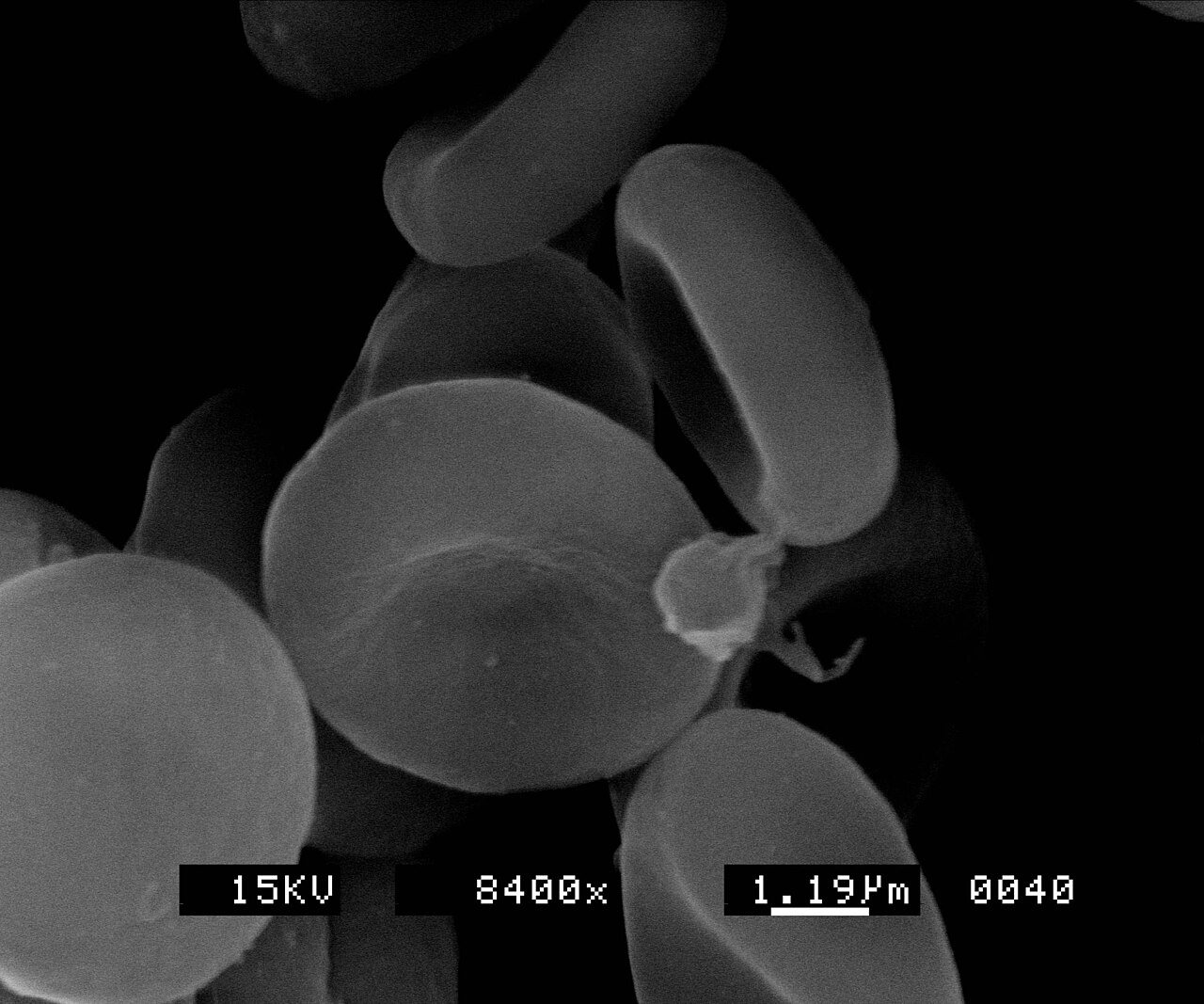
40Why do we age, and can it be slowed?
Jeanne Calment, born in Arles, France, in 1875, died in 1997 at 122 years and 164 days, and no verified human has outlived her since. That ceiling hints that aging is not one ticking clock but a pileup of damage. In an influential 2023 update, Carlos López-Otín and colleagues listed twelve hallmarks of aging, from mutations and fraying telomeres (the protective caps on chromosomes) to misfolded proteins, flagging mitochondria, worn-out stem cells and smoldering inflammation. Each one feeds the others.
Evolution explains why the damage goes unrepaired. Natural selection barely notices what happens after we have reproduced, so genes that cause harm late in life slip through, especially if they help early on, an idea George Williams called antagonistic pleiotropy in 1957. Thomas Kirkwood’s “disposable soma” theory adds that bodies spend their energy budget on growth and breeding rather than on perfect maintenance.
Can it be slowed? In the lab, clearly yes. Cutting calories extends life in yeast, worms, flies and many strains of mice. The drug rapamycin, which dampens a growth-signaling hub called mTOR, lengthened mouse lifespans in a 2009 study even when treatment began at 600 days old, roughly a 60-year-old human. Clearing out senescent cells, which stop dividing but linger and leak inflammatory signals, extended median mouse lifespan by about a quarter in 2016.
People are harder. The TAME trial, proposed in 2015 to test the cheap diabetes drug metformin in about 3,000 adults aged 65 to 79, has spent years chasing funding and has reported no efficacy results. Small human studies of low-dose rapamycin suggest it is tolerable but say nothing yet about lifespan, and the Dog Aging Project is testing it in pet dogs.
The real bottleneck is measurement. A human trial that waits for participants to die would take decades, so researchers are racing to validate biomarkers such as epigenetic clocks, which estimate biological age from chemical tags on DNA. If one proves trustworthy, anti-aging trials could shrink from decades to a few years.
39Will cancer ever be cured?
When Richard Nixon signed the National Cancer Act in 1971, plenty of people expected victory within a generation. More than half a century later, the American Cancer Society projects about 2.1 million new US diagnoses and 626,000 deaths in 2026. The same report carries a milestone, though: 70 percent of patients now survive at least five years, and the US cancer death rate has fallen 34 percent since its 1991 peak, averting roughly 4.8 million deaths.
There is no single cure because there is no single disease. Cancer is hundreds of conditions united by one process: cells pile up mutations that let them ignore the body’s rules on growth and death. Every tumor is a population undergoing clonal evolution, so a drug that kills 99 percent of its cells can leave behind a resistant few that regrow.
Some cancers are already curable. Most testicular cancers, even after they spread, and most childhood leukemias respond to chemotherapy. Imatinib, approved in 2001, turned chronic myeloid leukemia into a manageable condition with near-normal life expectancy for many patients. Scotland, which began vaccinating girls against HPV in 2008, has recorded no cervical cancer cases among women fully vaccinated at 12 or 13.
Immunotherapy has pushed further. Two leukemia patients treated with CAR-T cells (their own immune cells, rewired to hunt cancer) at the University of Pennsylvania in 2010 were still in remission more than a decade later, and their doctors were willing to use the word “cure.” Personalized mRNA vaccines built from each patient’s tumor mutations are now in large trials.
The hardest cases remain hard. Pancreatic cancer’s five-year survival is about 13 percent, and cancer that has spread widely is still usually incurable. Progress will come cancer by cancer, through prevention (falling smoking rates drive much of the drop in deaths), earlier detection and drug combinations designed to outflank resistance before it emerges.
38What is the gut microbiome actually doing?
For decades, textbooks claimed bacteria outnumber our own cells ten to one. A 2016 recount by Ron Sender, Shai Fuchs and Ron Milo at Israel’s Weizmann Institute put the ratio closer to one to one: about 38 trillion bacteria, mostly in the colon, beside roughly 30 trillion human cells. Still, the gut microbiome carries a gene catalog roughly 150 times larger than our own.
Some of its jobs are well established. Gut microbes ferment fiber we cannot digest into short-chain fatty acids such as butyrate, which fuels the cells lining the colon. They make vitamin K and some B vitamins, rework bile acids and crowd out invaders. Mice raised germ-free have stunted immune tissue in the gut, a sign that microbes help train the immune system. Microbes even process drugs: Eggerthella lenta can inactivate the heart medicine digoxin.
The clearest medical proof involves Clostridioides difficile, a gut infection that often returns after antibiotics. In a 2013 Dutch trial, stool from healthy donors cleared it in 81 percent of patients after one infusion, against 31 percent on the antibiotic vancomycin. The FDA approved Rebyota, the first microbiome-based product to prevent recurrent C. diff, in 2022, and a capsule version, Vowst, in 2023.
Beyond that, causation gets murky. Gut microbes from the obese member of a twin pair made germ-free mice gain more fat than microbes from the lean twin, and the microbiome has been linked to depression, autism, Parkinson’s and responses to cancer drugs. Most human findings are correlations, though, and illness, diet and medication all reshape the microbiome, so the arrow could point either way.
The other problem is individuality. Healthy people host strikingly different communities, and a switch to an all-animal diet changed volunteers’ gut bacteria within days in a 2014 experiment. Researchers now want controlled trials of specific microbes and the chemicals they make, rather than vague “gut health” claims, to sort the real levers from the passengers.
37What causes long COVID?
By one 2024 estimate in Nature Medicine, some 400 million people worldwide have had long COVID: exhaustion that floors them after minor exertion, brain fog, a racing heart, breathlessness. That same year the US National Academies defined it as an infection-associated chronic condition lasting at least three months after a SARS-CoV-2 infection and affecting one or more organ systems. What it still lacks is an agreed mechanism.
The leading suspect is viral persistence. A UCSF team led by Michael Peluso reported in 2024 that viral RNA could be found in gut and other tissues up to two years after infection, and spike protein in blood up to 14 months later. A hidden reservoir of virus or viral debris could keep the immune system on permanent alert.
Other explanations overlap. A 2023 Nature study from Yale and Mount Sinai found that people with long COVID showed signs of reawakened dormant viruses such as Epstein-Barr, exhausted T cells and, strikingly, low levels of the hormone cortisol. Other groups have reported tiny clots and runaway complement, an arm of the immune system, in patients’ blood. A 2024 preprint found that antibodies taken from some patients reproduced symptoms when injected into mice, hinting at autoimmunity.
Treatment trials have been humbling. In RECOVER-VITAL, an NIH-funded trial of 959 adults published in August 2026, a 25-day course of the antiviral Paxlovid did no better than placebo, echoing an earlier negative Stanford study. That does not rule out persistence, but it suggests that hitting the virus alone does not help most patients.
Most researchers now suspect long COVID is several conditions sharing one label, overlapping with myalgic encephalomyelitis/chronic fatigue syndrome (ME/CFS). The path forward is to sort patients by biomarkers, such as lingering viral protein, autoantibodies or clotting signs, and test matched treatments in each group. Vaccination lowers the risk of developing it in the first place.
36How much of our DNA actually does anything?
The South American lungfish carries about 91 billion letters of DNA, roughly 30 times as many as you do, and nobody thinks a lungfish needs 30 times the instructions. That mismatch between genome size and complexity sits at the heart of a long fight over how much of our own 3-billion-letter genome actually matters.
Only about 1.5 percent of human DNA spells out proteins. Roughly half consists of transposable elements, parasitic stretches that copy themselves around the genome; one family, Alu, alone has about a million copies. In 1972 geneticist Susumu Ohno called much of this material “junk DNA.” Yet parts of the noncoding remainder are clearly vital, including switches called enhancers that turn genes on in the right tissue at the right moment.
In 2012 the ENCODE consortium reported “biochemical function” across 80 percent of the genome, and headlines declared junk DNA dead. Evolutionary biologists objected that ENCODE counted almost any chemical activity, such as being copied into RNA in some cell, as function. Random DNA gets transcribed too.
Their preferred yardstick is evolutionary constraint: if a sequence matters, mutations in it get weeded out, so it stays similar across species. A 2014 analysis put the constrained share of the human genome at about 8 percent. The Zoonomia Project, comparing 240 mammal genomes in 2023, estimated a minimum of 10.7 percent. And mice missing more than two million letters of noncoding “gene desert” DNA, deleted in a 2004 experiment, seemed perfectly healthy.
The disagreement is narrower than it sounds. Constraint can miss functions that are recent and unique to humans, and some DNA may matter only through its bulk, by spacing genes apart or influencing cell size. Junk can also be recycled: syncytin, a gene essential for building the placenta, came from an ancient virus. Large experiments that delete or scramble noncoding regions in cells and animals should help settle the final tally.
35Why are allergies and autoimmune diseases on the rise?
Amish and Hutterite children in the American Midwest share European ancestry and similar lifestyles, yet a 2016 study in the New England Journal of Medicine found asthma about four times less common among the Amish. The difference lay in the barn. Amish families farm the old way, living beside their animals, while Hutterites use industrial methods. Dust from Amish homes protected mice from allergic airway disease; Hutterite dust did not.
That is a modern take on the hygiene hypothesis, proposed by epidemiologist David Strachan in 1989 after he noticed hay fever was rarer in children with older siblings. It has since been refined into the “old friends” idea: our immune systems evolved expecting constant contact with soil microbes, parasites and diverse gut bacteria, and without them the regulatory brakes develop poorly. Antibiotics, cesarean births, low-fiber diets and city living all thin those exposures.
Food allergy added a twist. Parents of at-risk babies were once advised to delay peanuts, but the 2015 LEAP trial of 640 high-risk British infants found that feeding peanut early cut peanut allergy by about 81 percent, and guidelines changed. The leading theory is that proteins met through inflamed, broken skin sensitize the immune system, while the same proteins eaten early teach it tolerance.
Autoimmune diseases, in which the immune system attacks the body’s own tissue, are climbing too. A 2023 Lancet study of 22 million people in the UK found about one in ten has at least one of 19 common autoimmune conditions, women nearly twice as often as men. Celiac disease, Graves’ disease and Sjögren’s syndrome roughly doubled in incidence between 2000 and 2019.
Not all of the rise is real, since better testing finds cases that once went unnoticed. But genes cannot change in a few generations, so environment must drive much of it. Suspects beyond missing microbes include low vitamin D, processed foods, air pollution and detergents that may damage skin and gut barriers. Untangling them will take long birth-cohort studies tracking microbes, diet and immunity from infancy.
34How do organs know when to stop growing?
Cut away two-thirds of a rat’s liver and within a week or two it grows back to almost exactly its original mass, then stops. Human livers do much the same, which is why a living donor can give part of theirs away. The organ somehow “knows” its target size, and how any organ reaches the right size and then halts is one of developmental biology’s oldest puzzles.
Part of the answer is built in. In 1931 Victor Twitty and Joseph Schwind swapped limb buds between a large and a small salamander species; each transplanted limb grew to the size typical of its donor, not its host. In the 1960s Donald Metcalf grafted several fetal thymus glands into mice and found each grew to full size, whereas multiple grafted spleens stopped once their combined mass equaled one normal spleen. Some organs follow internal programs; others obey body-wide signals.
The best-known molecular brake is the Hippo pathway, uncovered through fruit fly mutants whose tissues overgrew into folds that reminded researchers of a hippopotamus. Hippo signaling switches off a growth-promoting protein called YAP. In a 2007 study, mice engineered to keep YAP active in the liver grew livers about four times normal size, which shrank back when YAP was turned off.
Hippo responds to crowding, stretching and contact between cells, which suggests mechanical feedback: cells may sense when a tissue is packed tightly enough. Gradients of signaling molecules called morphogens, which spread from a source and fade with distance, also scale growth in developing fly wings. Hormones such as insulin-like growth factor set the overall growth budget.
What remains unclear is how these inputs combine into a precise stopping point, and how organs stay in proportion with each other and the body. The answer matters well beyond curiosity: Hippo signaling is disrupted in many cancers, and controlled regrowth is the goal of regenerative medicine. Live imaging of growing tissues, paired with mathematical models, is how researchers hope to crack it.
33Why do we yawn?
A human yawn lasts about six and a half seconds, the longest of 19 mammal species timed in a 2016 study led by psychologist Andrew Gallup, then at SUNY Oneonta. Mice manage less than a second. Across species, longer yawns went with bigger brains holding more neurons. We start yawning in the womb and never stop, yet nobody can say for certain what the reflex is for.
The old textbook answer, that yawning pulls in oxygen or flushes out carbon dioxide, has been on life support since 1987. Robert Provine had volunteers breathe pure oxygen or air spiked with carbon dioxide; their breathing changed, but their yawning did not.
The leading idea now is brain cooling. A yawn’s deep inhalation and wide jaw stretch boost blood flow through the skull and swap heat with cooler incoming air. In Gallup’s experiments, people holding cold packs to their foreheads, or breathing only through the nose, yawned less while watching yawning videos. Field studies in Arizona and Austria found people yawn most when the air is moderate, less in extreme heat or cold, and in rats brain temperature tends to rise before a yawn and fall afterward. Critics reply that the cooling effect looks small and that correlation is not purpose.
Other theories focus on changing gears. People yawn on waking, before sleep and when bored, but also before stressful moments such as competitions, suggesting yawns help shift the brain toward alertness. Then there is contagion. Chimpanzees and bonobos catch yawns, and in a 2008 study 21 of 29 dogs yawned after watching a stranger yawn. Whether contagious yawning reflects empathy remains disputed.
Settling the question will take direct measurements of brain temperature and arousal during natural yawns in people, which is technically difficult. It is entirely possible that yawning does several jobs at once.
32Can we make a flu vaccine that works every year?
Every February and September, World Health Organization advisers meet to bet on which influenza strains will dominate the next flu season, and manufacturers then spend about six months producing shots to match. When the bet goes wrong, protection collapses. The CDC estimates the 2014–15 vaccine was just 19 percent effective after a drifted H3N2 strain took over; in a good year such as 2010–11 it reached 60 percent.
The trouble is that our antibodies mostly target the head of hemagglutinin, the lollipop-shaped protein studding the virus’s surface. That head mutates constantly, a process called antigenic drift. The stalk beneath it and the virus’s internal proteins change far less, but the immune system tends to overlook them.
Universal vaccine designs try to redirect that attention. Mount Sinai researchers use “chimeric” hemagglutinins, pairing unfamiliar heads with a familiar stalk so mainly stalk antibodies get boosted; a phase 1 trial reported encouraging results in 2020. The NIH has tested stalk proteins displayed on tiny ferritin nanoparticles. Other candidates aim T cells at conserved internal proteins, and a University of Pennsylvania mRNA vaccine carrying hemagglutinins from all 20 known influenza A subtypes and B lineages protected mice and ferrets in 2022.
Failures temper the optimism. BiondVax’s M-001, built from conserved fragments of flu proteins, showed no benefit over placebo in a 12,400-person phase 3 trial in 2020. The NIH’s own bar is steep: at least 75 percent effectiveness against symptomatic flu, protection against both major groups of influenza A, at least a year of durability and suitability for all ages. Newer entrants, such as the startup Centivax’s Centi-Flu 01, which began dosing volunteers in early 2026, are still in early trials.
The hardest part is proof. A universal vaccine must protect against strains that may not exist yet, which demands large trials spanning several seasons. H5N1 bird flu’s spread into US dairy cattle since 2024 has given the effort fresh urgency.
31Why do women tend to outlive men?
American women born in 2024 can expect to live 81.4 years and men 76.5, according to the CDC, a gap of nearly five years. Women outlive men in virtually every country, and males die at higher rates at almost every age, starting in infancy. Even in famines and epidemics, from the Irish potato famine to Iceland’s 19th-century measles outbreaks, women survived better.
Behavior explains a big share. Men have historically smoked and drunk more, take more risks, die more often from accidents, violence and suicide, and see doctors less. The US gap peaked at 7.8 years in 1979, after decades of heavy male smoking, and narrowed as men quit. When demographer Marc Luy compared Bavarian monks and nuns, who lead nearly identical lives, the gap shrank to roughly a year.
Biology supplies a residual advantage. The leading genetic idea, the unguarded X hypothesis, notes that women have two X chromosomes, so a harmful mutation on one can be masked by the other; men, with one X and a small Y, have no backup. A 2020 analysis of 229 species found that the sex with mismatched sex chromosomes generally dies earlier. In birds, where females carry the mismatched pair, males tend to live longer.
Hormones matter too. Estrogen appears to protect blood vessels, while testosterone may cost men in immune function and heart health. Records of Korean court eunuchs, castrated before puberty, suggest they lived about 14 to 19 years longer than other men of similar status, though historical records are hard to verify. Many men also lose the Y chromosome from blood cells as they age, a change linked to heart disease.
The open question is the balance. Estimates of how much of the gap is biological versus social vary widely, and women, paradoxically, report more years of illness and disability despite living longer. Pinning down the split will take studies that track genes, hormones and behavior together across countries where the gap ranges from a couple of years to more than ten.
The Human Story
Our species has been around for roughly 300,000 years, and for almost all of that time we left no written record. Ancient DNA, footprints and a few stray bones are rewriting the story almost every year.
30When did humans start talking?
Words do not fossilize. The oldest writing, from Mesopotamia, is only about 5,200 years old, yet speech is clearly far older: every human population ever studied speaks a fully complex language, and none has been found with a “primitive” one. Dating the first conversations means reading indirect clues from bones, genes and broken stones.
Anatomy offers the first hints. A Neanderthal hyoid, the small horseshoe-shaped bone that anchors the tongue, found at Kebara Cave in Israel and about 60,000 years old, is nearly identical to ours. Neanderthals also carried the modern human version of FOXP2, a gene whose mutations cause severe speech disorders, and fossil ear bones suggest their hearing was tuned to the frequencies that carry speech. The throat may matter less than once assumed: X-ray studies of macaques in 2016 concluded that monkey vocal tracts are “speech-ready,” so the real limit lies in the brain.
That leaves two broad camps. Gradualists argue language grew piece by piece over hundreds of thousands of years or more, from gestures and calls to a simple protolanguage, perhaps already present in Homo erectus or Homo heidelbergensis. Noam Chomsky and Robert Berwick argue that the core of language, the ability to nest ideas inside one another, which they call Merge, appeared abruptly and only in Homo sapiens, sometime between about 200,000 and 60,000 years ago.
Genetics narrows the window from the other side. Because every living population has full language, the capacity was presumably in place before the earliest branches of our species split apart. A 2025 analysis led by MIT linguist Shigeru Miyagawa used genomic studies to put that first split, and so the capacity for language, at least 135,000 years ago. Symbolic objects fit: a crosshatched ochre drawing from South Africa’s Blombos Cave is about 73,000 years old, and shell beads from North Africa are older still.
The catch is that capacity is not the same as use, and a hyoid tells you what a throat could do, not what its owner said. Ancient DNA tying brain-development genes to language would help, as would natural experiments like Nicaragua in the late 1970s and 1980s, where deaf children gathered at new schools built a complete sign language within a generation. Brains, it seems, assemble grammar fast once people need to talk.
29How many kinds of humans shared the planet with us?
For most of its existence, Homo sapiens has had company. When our species appeared in Africa roughly 300,000 years ago, Neanderthals lived in Europe, Homo erectus still walked Java, and in a South African cave system a small-brained species called Homo naledi was alive too. Today we are the last humans standing, and the question of how many others there were keeps getting harder, not easier.
The confirmed roster is surprisingly long. Besides us, Neanderthals, erectus and naledi, there were the Denisovans of Asia; the meter-tall “hobbit,” Homo floresiensis, on the Indonesian island of Flores; and Homo luzonensis, named in 2019 from teeth and bones at least 50,000 years old in a cave on Luzon in the Philippines. That makes six other kinds of human in the past 300,000 years, several of them overlapping with us for tens of thousands of years.
Denisovans show how fast the list changes. For years they were known mostly from a finger bone and a few teeth in a Siberian cave and a jaw from the Tibetan Plateau, plus the DNA they left in living people. Then, in 2025, ancient proteins identified a jaw dredged up off Taiwan as Denisovan, and proteins plus mitochondrial DNA from dental plaque tied the massive Harbin skull from northeast China, nicknamed “Dragon Man” and at least 146,000 years old, to the same group. That could give Denisovans a formal species name, Homo longi. In September 2026, protein analysis added the first known Denisovan forearm bone, from Bianfu Cave in southwest China.
Then there are the ghosts. Genomes from some West African populations carry traces of an archaic group nobody has found as a fossil, and Papuan DNA points to more than one distinct Denisovan population. The deeper problem is what counts as a species. Neanderthals, Denisovans and modern humans interbred repeatedly, straining the textbook rule that separate species do not produce fertile offspring. “Lumpers” would fold several groups into one or two species; “splitters” count each distinct population.
The tally will keep moving because the record is so patchy: the tropics, where many lineages probably lived, are terrible at preserving bone and DNA. Protein analysis of unclassified fossils, such as the million-year-old Yunxian skull that a provocative 2025 study placed on the Denisovan branch, plus more ancient genomes from Africa, offer the best hope of an honest count.
28Why did the Neanderthals disappear?
Neanderthals made it through several hundred thousand years of Ice Age Europe and western Asia. They hunted big game, controlled fire, cooked birch tar into glue and probably buried some of their dead. Then, within a few thousand years of Homo sapiens spreading into Europe, they were gone. Radiocarbon dates from dozens of sites suggest the last populations vanished around 40,000 years ago.
They did not simply blink out on contact. Modern humans reached Europe in waves, possibly as early as 54,000 years ago at Grotte Mandrin in France, and the two groups met often enough to have children together. Two genetic studies published in December 2024 dated the main episode of interbreeding to around 47,000 years ago, and one estimated that it lasted roughly 7,000 years. That is why most people outside Africa carry 1 to 2 percent Neanderthal DNA.
The leading explanations overlap. One is competition: modern humans may have had larger social networks, broader diets and better projectile weapons, letting them outnumber Neanderthals in shared territory. Another is climate, which swung violently in this period; around 40,000 years ago a huge eruption near today’s Naples blanketed parts of eastern Europe in ash. A third is demographic fragility. Genomes from Siberia’s Altai Mountains revealed tiny, inbred groups, and a Neanderthal from France nicknamed Thorin belonged to a lineage that had been isolated for some 50,000 years.
A fourth idea is absorption: Neanderthals may have been swamped rather than wiped out, their small populations folded into much larger modern human ones. Yet a study of 27 late Neanderthals from Belgium and France, published in Nature in June 2026, complicated the picture. These northwestern groups showed no sign of inbreeding or declining genetic health, and no detectable modern human ancestry, in the millennia just before Neanderthals vanished.
The best guess today is a regional story, with different Neanderthal groups disappearing for different reasons as climate stress, small numbers and pressure from newcomers combined. Tighter dating of the final sites, and genomes from the last Neanderthals in Iberia, the Caucasus and Central Asia, could show whether the end was one collapse or a slow fade.
27When did people first reach the Americas?
The footprints are small, and many belong to teenagers and children. They were pressed into the mud of an ice age lakeshore in what is now White Sands National Park, New Mexico, and when they were published in 2021 they implied that people were living south of North America’s great ice sheets roughly 22,000 years ago, about 10,000 years earlier than the old textbook story allowed.
That story was Clovis first: the idea that the earliest Americans were big-game hunters who made distinctive fluted spear points about 13,000 years ago, after walking from Siberia through an ice-free corridor in Canada. It cracked in 1997, when leading archaeologists accepted Monte Verde in Chile as about 14,500 years old, and Cooper’s Ferry in Idaho, dated to about 16,000 years ago, pushed occupation back further. Because the inland corridor was probably not passable that early, many researchers now favor a route down the Pacific coast, possibly by boat.
White Sands goes far beyond even those dates, so it has been attacked hard. The first ages came from seeds of an aquatic plant, which can absorb old carbon from lake water and look older than they are. The team answered in 2023 with dates from conifer pollen and from quartz grains, and in 2025 a study led by Vance Holliday of the University of Arizona radiocarbon-dated the mud itself to between about 20,700 and 22,400 years ago. Three independent methods now agree. The nagging problem is that no stone tools or campsites have turned up with the prints.
Genetics adds a wrinkle. A 2026 review of ancient DNA concluded that the ancestors of today’s Indigenous Americans most likely arrived no earlier than about 21,000 years ago, so the White Sands walkers may have belonged to an early population that left no detectable descendants. Meanwhile, a paper in Science in March 2026 argued that Monte Verde is thousands of years younger than claimed, a conclusion its original excavator, Tom Dillehay, and other archaeologists reject.
Settling it will take more early sites with tools in place, more ancient genomes from the Americas, and surveys of Pacific shorelines drowned when the ice melted, where the first coastal camps would now lie underwater.
26Why did humans start farming?
About 14,400 years ago, hunter-gatherers at a site called Shubayqa 1 in northeastern Jordan baked flatbread from wild cereals and tubers. Charred crumbs from their fireplace are the oldest bread yet found, and they predate farming in the region by some 4,000 years. People clearly knew how to exploit wild grain long before they planted it.
Cultivation took off in the Fertile Crescent of southwest Asia around 11,500 years ago, with wheat, barley and lentils, and soon goats and sheep. It was not a one-off invention. Over the next several thousand years, people in China domesticated rice and millet, Mesoamericans grew squash and early maize, and New Guinea, the Andes, Africa and eastern North America followed, each apparently on its own. Ancient DNA even suggests that two genetically distinct populations in the Fertile Crescent, in the Levant and Iran’s Zagros Mountains, developed farming in parallel.
That is the puzzle. Early farmers generally worked harder than foragers, grew shorter, suffered more tooth decay and lived crowded together with their animals’ diseases. Jared Diamond once called agriculture “the worst mistake in the history of the human race.” Why would anyone choose it?
Climate best explains the timing. For about 100,000 years before, ice age weather swung wildly and low carbon dioxide levels held back plant growth. After about 11,700 years ago the Holocene brought warmer, wetter and far steadier conditions, and farming appeared on several continents within a few millennia. Climate made agriculture possible; other pressures made it attractive. Leading candidates include growing populations in rich areas where foragers had already settled down, a sharp cold snap called the Younger Dryas that may have pushed people to tend wild cereals, and social motives such as competitive feasting. Göbekli Tepe in Turkey, a complex of carved stone pillars raised by hunter-gatherers about 11,600 years ago, hints that large communal gatherings came before farming.
What remains unsettled is cause and effect. Ohalo II, a 23,000-year-old camp in Israel, shows trial cultivation of wild cereals, complete with weeds, long before the Holocene. Better dated plant remains and ancient DNA from crops and people at transition sites are slowly separating triggers from consequences.
25How did wolves become dogs?
Every dog on Earth, from a Chihuahua to a Great Dane, descends from gray wolves, yet no living wolf population is its direct ancestor. The wolves that gave rise to dogs belonged to an Ice Age population that has since vanished, which is one reason pinning down where and when domestication happened has taken so long.
The dates keep moving backward. In March 2026, two papers in Nature that analyzed ancient DNA from more than 200 dogs and wolves identified a genetically confirmed dog in Turkey about 15,800 years old, roughly 5,000 years older than the previous record for dog DNA. By about 14,000 years ago, dogs were living with hunter-gatherers across western Europe and southwest Asia, millennia before anyone farmed. Genetic comparisons put the split between dogs and their wolf ancestors somewhere between about 20,000 and 40,000 years ago, an upper limit rather than a birthday.
Where is murkier. A 2022 study of 72 ancient wolf genomes found that dogs are overall more closely related to ancient wolves from eastern Eurasia than to western ones, though early dogs in the Near East and Africa drew up to half their ancestry from a separate southwest Asian wolf source. One proposal places the first dogs in Siberia by about 23,000 years ago, though no dog bones that old have been found there.
How it happened is the deepest question. The self-domestication hypothesis holds that bolder, less fearful wolves scavenged around human camps and gradually became a tamer, people-tolerant population. A related idea notes that Ice Age hunters, who could not live on lean meat alone, may have had spare protein to toss to wolves in winter. Others argue people deliberately raised captured pups. Genes hint at selection for friendliness: some dogs carry changes in genes that, in humans, are linked to Williams-Beuren syndrome, a condition marked by unusual sociability.
The trail goes cold because the key period has few fossils, and early dogs and wolves look nearly identical. More ancient genomes from Siberia and East Asia, the likeliest birthplace, are what researchers most want.
24Why do we cry when we’re sad?
Your eyes make three kinds of tears. Basal tears keep the cornea wet, reflex tears flush out grit and onion fumes, and emotional tears flow when you are grieving, overwhelmed or, oddly, deliriously happy. The first two have obvious jobs. The third has puzzled scientists at least since Charles Darwin, who in 1872 judged weeping an accidental byproduct with no purpose of its own.
As far as anyone can show, humans are the only animals that shed tears from emotion. Many mammals make distress calls, and human babies start out crying without tears; emotional tears appear at around one to two months of age. Tears look like a late addition to a far older alarm signal.
The leading idea, championed by Dutch psychologist Ad Vingerhoets, is that tears are a social signal of helplessness that invites comfort and calms conflict. A tear is hard to fake and works at close range, exactly where help comes from. In a 2009 experiment, digitally removing tears from photos of crying faces made them look far less sad, sometimes merely puzzled. Some researchers add that blurry, tear-filled eyes are an honest sign of vulnerability, since a crying person is in no state to fight.
Tears may carry a chemical message as well. In 2011, researchers at Israel’s Weizmann Institute found that men who sniffed women’s emotional tears, which have no noticeable smell, showed lower testosterone and sexual arousal. A 2023 follow-up from the same lab found that sniffing tears cut men’s aggression in a computer game by about 44 percent, and identified four smell receptors that respond to tears.
The popular belief that a good cry flushes out stress hormones has weak support, since tears cannot carry away much of anything. Lab studies suggest crying makes people feel worse at first, with mood recovering, sometimes to above where it started, over the following hour or two. The chemical studies are small, and the signaling theory has barely been tested across cultures. Identifying the active molecule in tears, and repeating the experiments with larger and more varied groups, would go a long way toward an answer.
23Why does every culture make music?
The oldest musical instruments ever found are flutes carved from bird bone and mammoth ivory in caves of southern Germany’s Swabian Jura, roughly 40,000 years ago. One, made from a griffon vulture’s wing bone, has five neatly bored finger holes. Singing leaves no trace at all, so music is almost certainly far older.
It is also one of the few behaviors found in every human society. A 2019 study in Science, led by Samuel Mehr, found song in all 315 cultures documented in a major ethnographic archive, and listeners hearing recordings from unfamiliar cultures could often tell whether a song was a lullaby, a dance song or a healing song. Infants relax to lullabies from cultures they have never heard. Whatever music is, its basic forms seem rooted in shared biology.
Why it exists is another matter. Darwin suspected music began as courtship display, like birdsong. Steven Pinker countered that it might be “auditory cheesecake,” a pleasant byproduct of abilities that evolved for language, emotion and hearing. Today’s main contenders are the social bonding hypothesis, which holds that singing and moving in time tie groups together, and the credible signaling hypothesis, which says music evolved to broadcast information: a group performance advertises a coalition’s unity, and a lullaby tells an infant that someone is paying attention.
Both have support. Synchronized singing and dancing raise pain thresholds, a sign of endorphin release, and make strangers more cooperative. Keeping time to a beat is surprisingly rare in nature; outside humans it shows up mainly in a few vocal-learning animals such as parrots, most famously a dancing cockatoo named Snowball.
The question stays open because behavior does not fossilize and music is not one thing. Pitch, rhythm and dance may have separate evolutionary histories, and the hypotheses overlap so much that it is hard to design an experiment that pits one against another. Cross-cultural studies of how babies and adults respond to music, and comparisons with rhythm in other species, are the most promising routes.
22Why are most people right-handed?
Long before birth, the bias is already there. Ultrasound studies in the early 1990s found that most fetuses at around 15 weeks prefer to suck their right thumb, and a follow-up showed that this early preference predicted which hand the children used years later. About 90 percent of people are right-handed, a share that holds across continents and, judging from art, has barely changed for thousands of years.
The tilt is old. Scratch marks on Neanderthal front teeth, made when they gripped meat in their mouths and sliced it with stone tools, show a strong right-hand bias too. Our closest relatives are different: individual chimpanzees often favor one hand, but across the species the split is weak. A recent comparison of 41 monkey and ape species in PLOS Biology found that humans’ strong rightward bias stands out, and that much of the difference tracks two of our oddities, walking upright and having large brains.
The classic explanation ties handedness to brain lateralization, the division of labor between the brain’s two halves. The left hemisphere controls the right hand and, in about 95 percent of right-handers, also handles language, so fine motor control for toolmaking and speech may have evolved together on the left. But the link is loose, since most left-handers also process language on the left. The asymmetry may even start below the brain: a 2017 study found left-right differences in gene activity in the spinal cords of fetuses as young as 8 weeks.
Genes matter but do not decide. Twin studies put heritability at roughly 25 percent, spread across dozens of variants with tiny effects. Why left-handers persist at all is a separate puzzle. The fighting hypothesis says lefties keep a surprise advantage in combat precisely because they are rare. Left-handers are overrepresented in fencing, boxing and baseball, and a 2005 survey of traditional societies found more left-handers where homicide rates were higher. Cooperation, which rewards using shared tools the same way, may keep them a minority.
Larger genetic studies, and handedness data from more primates and ancient skeletons, could show whether the right-hand bias rose with tool use, language or upright walking.
21Why do we laugh?
Tickle a rat and it laughs. The chirps, at around 50 kilohertz, are too high for human ears, but neuroscientist Jaak Panksepp showed in the late 1990s that young rats squeak when tickled, chase the hand that tickles them and seek out more. Chimpanzees, bonobos, gorillas and orangutans pant-laugh during rough play too. Laughter is far older than jokes.
A 2009 study comparing tickle-induced laughter in great apes and human infants traced it to a common ancestor that lived more than 10 million years ago. Human laughter changed along the way: apes pant in and out, while we chop a single exhaled breath into a staccato “ha-ha-ha.” Playful vocalizations have now been recorded in dozens of species.
Comedy is not what most laughter is about. The psychologist Robert Provine, who eavesdropped on everyday conversations in public places, found that fewer than one in five laughs followed anything resembling a joke; most punctuated ordinary remarks. Speakers laughed more than their listeners, and people are about 30 times more likely to laugh in company than alone. Listeners in 24 societies can even tell, from brief clips of shared laughter, whether the laughers are friends or strangers.
That points to a social bonding function. Anthropologist Robin Dunbar argues that laughter is grooming at a distance: apes bond by picking through one partner’s fur at a time, but a laugh can bond several people at once. A 2017 brain-imaging study found that laughing with friends triggered release of the brain’s own opioids, and social laughter raises pain tolerance. Other theories focus on the trigger: laughter may be an “all clear” signal that a surprise or mock threat is harmless, which would explain why incongruity and play danger, from peekaboo to slapstick, are funny.
Still missing is an account of how an ancient play signal got hooked to abstract humor, why laughter is so contagious, and exactly which brain circuits run it. Studies comparing spontaneous and deliberate laughs, which sound different and may use separate brain pathways, are starting to fill the gaps.
Numbers, Machines and Energy
Some of the hardest open problems are not about nature at all, but about numbers, computers and the machines we hope to build. Two of them carry million-dollar prizes.
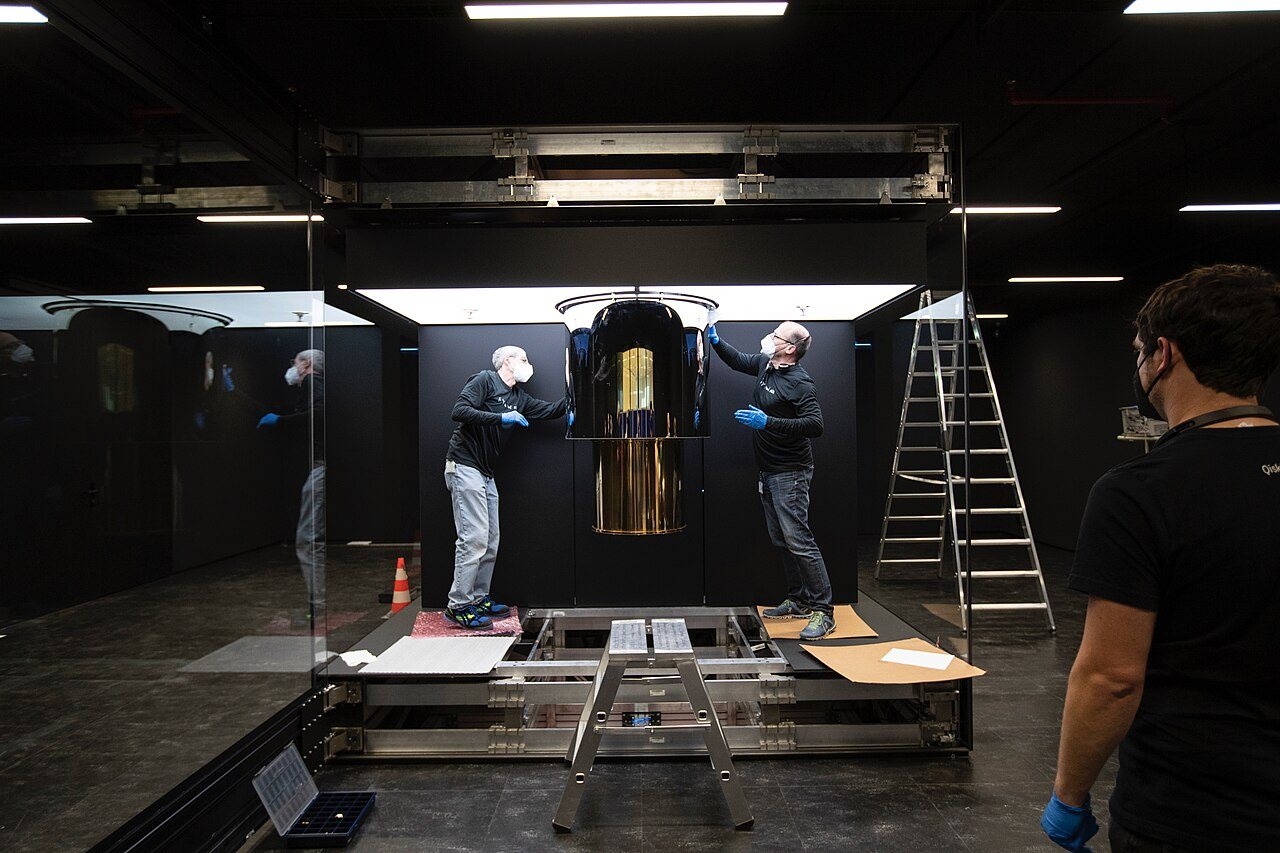
20Does P equal NP?
Give a computer a filled-in sudoku and it can confirm the answer in a blink. Hand it an enormous blank grid and every known method can bog down hopelessly. That gap between checking an answer and finding one is the heart of P versus NP, the most famous open problem in computer science. P covers problems a computer can solve quickly; NP covers problems whose solutions can be checked quickly. The question is whether the two are secretly the same.
Stephen Cook pinned the question down in 1971, and Leonid Levin reached it independently in the Soviet Union. A year later Richard Karp showed that 21 classic problems were all “NP-complete,” meaning a fast method for any one of them would give a fast method for everything in NP. Thousands of problems have since been shown to be at least that hard, from the traveling salesman problem to a generalized version of Candy Crush, proved NP-hard in 2014.
Most experts are convinced P does not equal NP. In William Gasarch’s 2018 poll of 124 researchers, 88 percent said so. The intuition is that if finding were as easy as checking, creativity would be automatic: any proof that can be verified could be discovered by brute machinery. Decades of failed hunts for fast algorithms count as circumstantial evidence. A minority note that surprising algorithms do turn up, like László Babai’s 2015 shortcut for telling whether two networks are identical.
The trouble is proving it, and the field has even mapped out why its tools keep failing. In 1975 Theodore Baker, John Gill and Robert Solovay showed that a broad family of simulation arguments cannot settle the question. In the 1990s Alexander Razborov and Steven Rudich showed that most “natural” combinatorial approaches would, if they worked, also break cryptography believed to be secure. Scott Aaronson and Avi Wigderson added a third barrier in 2008. Any successful proof has to slip past all three.
Most modern encryption depends on certain problems in NP being hard; a proof that P equals NP, with a usable algorithm attached, would strip that protection away while also supercharging logistics and drug design. A proof that they differ would mostly confirm what engineers already assume, but it would probably require mathematics nobody has invented yet. The Clay Mathematics Institute put a $1 million bounty on it in 2000.
19Is the Riemann hypothesis true?
Bernhard Riemann’s 1859 paper on prime numbers ran to about eight pages. In passing he called a certain statement “very probably” true, adding that he had set aside the search for a proof. More than 160 years later, that aside is the Riemann hypothesis, widely regarded as the most important unsolved problem in mathematics.
Primes look scattered at random, yet their overall density obeys a law: near a large number x, roughly one number in every ln(x) is prime. Riemann found that the wobbles around that law are controlled by the zeros of what is now called the zeta function. The hypothesis says all the interesting zeros (the “nontrivial” ones) lie on a single vertical line in the complex plane, where the real part is exactly 1/2. If so, primes are spread as evenly as possible, with errors in the prime count growing only about as fast as the square root of x.
By ordinary standards the evidence is overwhelming. In 2021 Dave Platt and Tim Trudgian confirmed that the first 12.4 trillion or so zeros all sit exactly on the line. G. H. Hardy proved in 1914 that infinitely many do; Norman Levinson showed in 1974 that at least a third do, and Brian Conrey pushed that past 40 percent in 1989. Physics offers a striking clue. In 1972 Hugh Montgomery described his formula for the spacing between zeros to Freeman Dyson over tea, and Dyson recognized it at once: it matched the statistics of energy levels in heavy atomic nuclei.
That revived an old dream credited to David Hilbert and George Pólya: find a physical system whose energy levels are exactly the zeta zeros, and the hypothesis would follow, because such energies must be real numbers. Nobody has found it. Computer checks cannot close the case either, since number theory is full of patterns that hold for unimaginably long stretches and then break.
Progress comes in small, hard-won steps. In 2024 Larry Guth and James Maynard improved a limit on how many zeros could stray from the line, a bound Albert Ingham set in 1940, sharpening what is known about primes in short intervals. Maynard has said a full proof will need a big idea from somewhere else. Meanwhile over a thousand published results begin by assuming the hypothesis, and all of them are waiting.
18Can a machine ever truly understand anything?
Imagine a man locked in a room with a giant rulebook. Notes in Chinese slide under the door; he matches the symbols against the book and slides back flawless replies. To the people outside he seems fluent, yet he understands not a word. John Searle offered this Chinese Room in 1980 to argue that running a program, however clever, is not the same as understanding. Large language models have turned his seminar puzzle into a live question.
Part of the fight is over the word itself. Alan Turing sidestepped it in 1950, proposing that if a machine’s conversation cannot be told apart from a person’s, we should stop quibbling. By that yardstick machines have arrived. In a 2025 study at UC San Diego, a chatbot told to adopt a humanlike persona was picked as the human in 73 percent of short three-way chats, more often than the real people were. Skeptics reply that fooling a judge measures imitation, not comprehension.
Their case is that these systems learn statistical patterns in text without ever touching the world the words describe. Linguists Emily Bender and Alexander Koller argued in 2020 that meaning cannot be learned from form alone, comparing a text-only model to a clever octopus tapping an undersea cable, able to mimic the chatter but useless if asked how to fend off a bear. Models also stumble revealingly: a 2023 study found that models trained on “A is B” often could not infer “B is A.”
The other side points inside the machine. When researchers trained a small model only on move sequences from the board game Othello, it built an internal map of the board, and editing that map changed its moves accordingly. To many researchers, a system that builds and uses a model of its world deserves the word understanding, even if it differs from ours.
The field is genuinely split. In a 2022 survey of natural-language-processing researchers, the question of whether a text-only model could ever understand language in some nontrivial sense divided them almost exactly in half. Understanding is also distinct from consciousness: a system might model meaning well without there being anything it is like to be that system, and nobody knows how to test for the second. Interpretability research, which pries open the black box, is at least making the first question testable.
17When will quantum computers actually be useful?
Google’s 105-qubit Willow chip made headlines in December 2024 by finishing a benchmark calculation in under five minutes that, by the company’s estimate, would take a top supercomputer 10 septillion years. Impressive, and useless: the task was built to be hard for ordinary computers, not to answer a question anyone needed answered. That gap between raw speed and real value is the story of quantum computing so far.
Quantum computers store information in qubits, which can hold blends of 0 and 1 and become entangled, letting certain calculations exploit patterns that ordinary bits cannot. The catch is fragility. Heat, stray radiation and even their own control signals knock qubits out of their delicate states, so today’s best machines make roughly one error per thousand operations. The algorithms people actually want need millions to billions of operations.
The fix is quantum error correction: spread one reliable “logical” qubit across many physical ones and check constantly for mistakes. For decades it worked better on paper than in labs, because adding qubits added noise. Willow’s real milestone was showing the opposite. As Google enlarged its error-correcting grid from 3×3 to 5×5 to 7×7 qubits, the logical error rate roughly halved at each step. In October 2025 the same chip ran a “Quantum Echoes” experiment, published in Nature, that Google says beat the best classical supercomputers 13,000-fold on a task linked to molecular measurement, with a result another quantum machine could verify.
So when does it pay off? The likeliest first wins are simulating molecules and materials, problems that are quantum to begin with: catalysts, batteries, drug candidates. Optimization and machine learning, often hyped, have far shakier evidence of real speedups. IBM has laid out plans for a fault-tolerant machine with 200 logical qubits by 2029, and rivals such as Quantinuum have published similar end-of-decade roadmaps.
Then there is the application everyone fears. Peter Shor showed in 1994 that a big enough quantum computer could break the encryption guarding most internet traffic. In 2025 Google’s Craig Gidney estimated that 2048-bit RSA could fall to fewer than a million noisy qubits running for under a week, a twentyfold drop from his 2019 estimate, and preprints in early 2026 pushed the figure lower still. No existing machine comes close, but the US finalized its first post-quantum encryption standards in 2024 just in case.
16Will fusion ever power our homes?
On April 7, 2025, the 192 lasers of the National Ignition Facility in California crushed a peppercorn-sized capsule of hydrogen fuel and got back 8.6 megajoules of fusion energy for the 2.08 megajoules of laser light that went in, a gain of more than four. NIF first achieved ignition, more fusion energy out of the fuel than the lasers delivered, in December 2022. After 70-odd years of research, the basic physics of fusion power is no longer in doubt.
What remains in doubt is the engineering. NIF’s lasers draw roughly 300 megajoules from the grid per shot and fire hours apart; a power plant would need far higher gains and around ten shots a second. The other main route, magnetic confinement, holds plasma hotter than the Sun’s core inside a doughnut-shaped tokamak. Europe’s JET set an energy record of 69 megajoules in its final experiments in 2023, but no tokamak has yet produced more fusion power than it took to heat its plasma.
The international flagship, ITER, under construction in southern France, has slid badly. Its 2024 schedule overhaul moved the start of research operations to 2034 and full deuterium-tritium fuel to 2039, roughly a decade behind the previous plan, at an extra cost of about €5 billion. And ITER is an experiment; it will never send electricity to the grid.
Private companies promise to move faster. Commonwealth Fusion Systems, an MIT spinout, is building SPARC, a compact tokamak built around powerful new superconducting magnets, and is aiming for first plasma and net energy gain in 2027 after earlier targets slipped. It plans a 400-megawatt plant, ARC, in Virginia in the early 2030s. Helion Energy says its Polaris machine became the first privately built device to fuse deuterium and tritium, in early 2026, and it is building a plant in Malaga, Washington, to supply Microsoft as early as 2028.
The problems left are not small. Fusion neutrons batter and weaken reactor walls, tritium barely exists in nature and must be bred from lithium inside the machine, and record tokamak plasmas have lasted only about 20 minutes, not the months a power plant needs. Fusion electricity on the grid by the late 2030s is plausible. Fusion as a big share of the power reaching homes looks like a story for the second half of the century.
15Does a room-temperature superconductor exist?
For a few weeks in the summer of 2023, the internet was convinced the future had arrived. Korean researchers posted preprints claiming that LK-99, a copper-doped lead compound, superconducted at up to 127°C at ordinary pressure. Videos of flakes half-levitating over magnets went viral, and labs worldwide rushed to replicate. Within about a month the verdict was in: copper sulfide impurities, which change their electrical behavior sharply near 104°C, had mimicked the signal, and pure crystals turned out to be insulators.
The prize they were chasing is enormous. A superconductor carries electric current with zero resistance and expels magnetic fields. Since Heike Kamerlingh Onnes found the effect in 1911 in mercury chilled to about 4 kelvins (−269°C), it has given us MRI scanners and particle accelerators, but only with costly cooling. A material that worked at room temperature and normal pressure could mean lossless power lines, cheaper MRI and far simpler magnets for fusion reactors.
No known law forbids it, and the record keeps creeping up. Copper-oxide “cuprates,” discovered in 1986, smashed the old limits, and a mercury-based cuprate reached 133 kelvins in 1993, a record for ordinary pressure that stood for over 30 years. In March 2026 a University of Houston team led by Paul Chu reported in PNAS that squeezing that compound and then releasing the pressure locked in superconductivity at 151 kelvins, about −122°C. Hydrogen-rich compounds go higher still: lanthanum hydride superconducts near −23°C, but only at around 1.7 million times atmospheric pressure.
The field has also been burned. Ranga Dias, then at the University of Rochester, published two Nature papers claiming room-temperature superconductivity in hydrides; both were retracted, the second in 2023, and the university later found research misconduct. The episodes reinforced a hard rule: a credible claim needs zero resistance, magnetic expulsion and independent replication, all at once.
The deeper obstacle is theory. The 1957 BCS theory explains conventional superconductors, in which vibrations of the crystal lattice bind electrons into pairs, and it guided the hydride discoveries. But 40 years after cuprates were found, physicists still do not agree on what pairs their electrons, so there is no recipe for designing a better one. Machine-learning searches and newer families such as nickelates are widening the hunt.
14Why does math describe the universe so well?
When Paul Dirac wrote down an equation for the electron in 1928, he was mainly trying to make quantum mechanics agree with relativity. The math insisted on an extra set of solutions describing a particle like the electron but with opposite charge. Dirac first tried to explain it away as the proton. In 1932 Carl Anderson spotted the real thing, the positron, in cosmic-ray tracks. An equation written to satisfy a symmetry had predicted antimatter.
Eugene Wigner named the puzzle in a 1960 essay, “The Unreasonable Effectiveness of Mathematics in the Natural Sciences.” Again and again, structures mathematicians built for their own reasons turn out to be exactly what nature uses. Bernhard Riemann’s curved geometry of the 1850s became the language of Einstein’s gravity. Complex numbers, once treated as useful fictions, sit at the core of quantum mechanics. The Higgs boson appeared in equations in 1964 and in detectors in 2012. Quantum electrodynamics predicts the electron’s magnetism to better than one part in a billion.
Explanations fall into a few camps. Platonists say math is discovered, not invented, and works because reality is mathematical at bottom; Max Tegmark goes furthest, proposing that the universe simply is a mathematical structure. A second camp suspects selection effects. Richard Hamming argued in 1980 that we see what we look for, invent new math when the old fails (modern vector analysis was built for physics), and that huge areas of experience lie beyond equations entirely. Outside physics, in biology, economics or weather more than a couple of weeks ahead, equations predict far less well.
A third view is evolutionary: brains shaped by a world of objects, quantities and regular motions naturally produce math that fits that world. That explains counting and geometry nicely. It struggles with why abstractions pursued for pure beauty so often find physical jobs decades later. Group theory and non-Euclidean geometry were not invented with particle physics or general relativity in mind.
There may be no single experiment that settles this, since it is partly a question about what mathematics is. If a final theory of physics turns out to be strikingly simple and elegant, the Platonists gain ground. If physics keeps splintering into approximate models that each work only at certain scales, pragmatists will say math only seems effective because we use it where it works.
13Are there infinitely many twin primes?
Yitang Zhang was a little-known lecturer at the University of New Hampshire who had spent years in odd jobs, including at a Subway sandwich shop, when he submitted a paper in the spring of 2013 that stunned number theorists. He proved that infinitely many pairs of primes are separated by less than 70 million. That sounds like a strange number to celebrate, but before Zhang nobody could prove that any fixed gap recurs forever.
Twin primes are primes two apart, like 11 and 13 or 41 and 43. Euclid proved more than 2,000 years ago that primes never run out, and the twin prime conjecture says the same holds for these pairs. The evidence is lopsided. There are about 808 trillion twin pairs below a billion billion, and the largest known pair, found in 2016, has 388,342 digits. A formula G. H. Hardy and J. E. Littlewood proposed in 1923 for how many pairs there should be has tracked the actual counts remarkably closely.
Zhang’s breakthrough set off a race. Later in 2013 James Maynard, and independently Terence Tao, found a simpler and stronger method that cut the gap to 600. A collaborative online effort called Polymath, organized by Tao, drove it down to 246 by 2014. There the bound has stalled for more than a decade. If an unproven conjecture about how evenly primes spread across arithmetic sequences is true, the same methods would reach 6, still short of 2.
Why not 2? The main tools are sieve methods, descendants of the ancient Sieve of Eratosthenes, which strain out numbers with small factors. They run into the “parity problem,” identified by Atle Selberg: sieves cannot reliably distinguish numbers with an odd count of prime factors from those with an even count. So a sieve cannot be sure whether a number is a prime or the product of two primes, which is exactly the distinction twin primes require. Chen Jingrun got as close as sieves allow in 1973, proving there are infinitely many primes p for which p + 2 is either prime or the product of two primes.
Nearly every number theorist expects the conjecture to be true, and Maynard’s work on prime gaps helped earn him a Fields Medal in 2022. Settling it will most likely require an idea that gets around the parity barrier, something no one has yet found.
12What is glass, really?
Tour guides love to say that old cathedral windows are thicker at the bottom because glass is a slow liquid that has sagged over centuries. It isn’t so. Medieval glassmakers simply made uneven panes, and a 2017 analysis of glass from Westminster Abbey estimated it would flow at room temperature by about a nanometer per billion years. Yet the myth points at a real puzzle: physicists still cannot agree on what glass fundamentally is.
Cool most liquids and they crystallize, their molecules snapping into an orderly lattice at a sharp freezing point. Cool others fast enough, such as molten silica or many polymers, and they skip crystallization. Instead the liquid grows sluggish at an astonishing rate, its viscosity climbing more than a trillionfold over a modest temperature range until the molecules are effectively jammed. That is the glass transition. Structurally, a glass looks like a frozen snapshot of a liquid. Mechanically, it is a solid.
The question is whether anything fundamental happens at that point. Unlike freezing, the glass transition shifts with cooling rate (cool faster and the liquid jams at a higher temperature), which suggests a purely kinetic story in which molecules simply run out of time. But in 1948 Walter Kauzmann noticed that if you extrapolate a cooling liquid’s entropy downward, it would eventually dip below that of the crystal, an apparent absurdity. Some theorists see in this a hidden “ideal glass” transition that real materials are always too slow to reach.
That splits the field. Random first-order transition theory, developed by Peter Wolynes and colleagues, says a true thermodynamic transition lurks underneath. Dynamic facilitation theory, championed by David Chandler and Juan Garrahan, says glassiness comes from mobile regions that can move only when their neighbors free them up, with no hidden transition at all. Exact solutions for idealized models in infinitely many dimensions, building on ideas from Nobel laureate Giorgio Parisi, support parts of the first picture, but real glasses live in three dimensions.
Testing these ideas requires more patience than any lab has, so researchers cheat. They swap particles in simulations to speed up virtual liquids, grow ultrastable glasses slowly from vapor, and study ancient material: a 2013 study of 20-million-year-old amber, a natural glass that predates humanity, hinted that the sluggishness never truly becomes infinite. The debate is far from over.
11Can extinct animals be brought back to life?
A Pyrenean ibex, or bucardo, was born in Spain in 2003, three years after the last of its kind died. It was a clone, made from preserved skin cells of that final female, Celia, and carried by an ibex-goat hybrid. It died minutes after birth from a lung defect. That brief life remains the closest anyone has come to bringing back an extinct animal in the strictest sense.
In April 2025 the Texas company Colossal Biosciences claimed something bolder: three white, fluffy pups named Romulus, Remus and Khaleesi, billed as the first dire wolves in more than 10,000 years. The reality was more modest. Colossal had taken cells from gray wolf blood, rewritten 20 sites across 14 genes to mimic variants found in ancient dire wolf DNA, and cloned the results in dog surrogates. No ancient DNA was inserted, and the dire wolf genome differs from the gray wolf’s at millions of positions.
Critics were blunt. The IUCN’s canid specialist group said the animals are not dire wolves and that creating them does not contribute to conservation, and many geneticists simply called them modified gray wolves. Colossal’s chief scientist, Beth Shapiro, has acknowledged that an exact copy of an extinct genome is not really possible, and says the goal is “functional” versions of lost species.
That is the honest state of de-extinction. True resurrection would need a complete genome and living cells, and DNA starts falling apart at death. For recently lost species, the realistic route is editing a close living relative toward the extinct form. Colossal is pursuing the woolly mammoth through Asian elephants, along with the thylacine and the dodo, and produced shaggy “woolly mice” in 2025 as a test. It has spoken of mammoth-like calves around 2028, but elephant pregnancies last about 22 months and some outside scientists think it is closer to a decade away.
The deeper questions are about purpose. Supporters argue the same tools can rescue species still hanging on: Colossal says its cloning methods have produced pups of the critically endangered red wolf, and researchers are using IVF to try to save the northern white rhino, now down to two females. Critics worry that promises of resurrection make extinction look reversible and draw money away from protecting habitat. Whether an edited proxy counts as the real thing is partly a matter of definition.
The Biggest Questions of All
The final ten are the questions that keep cosmologists, biologists and philosophers up at night. Nobody can answer them yet, but we can show you exactly where the answers stand.
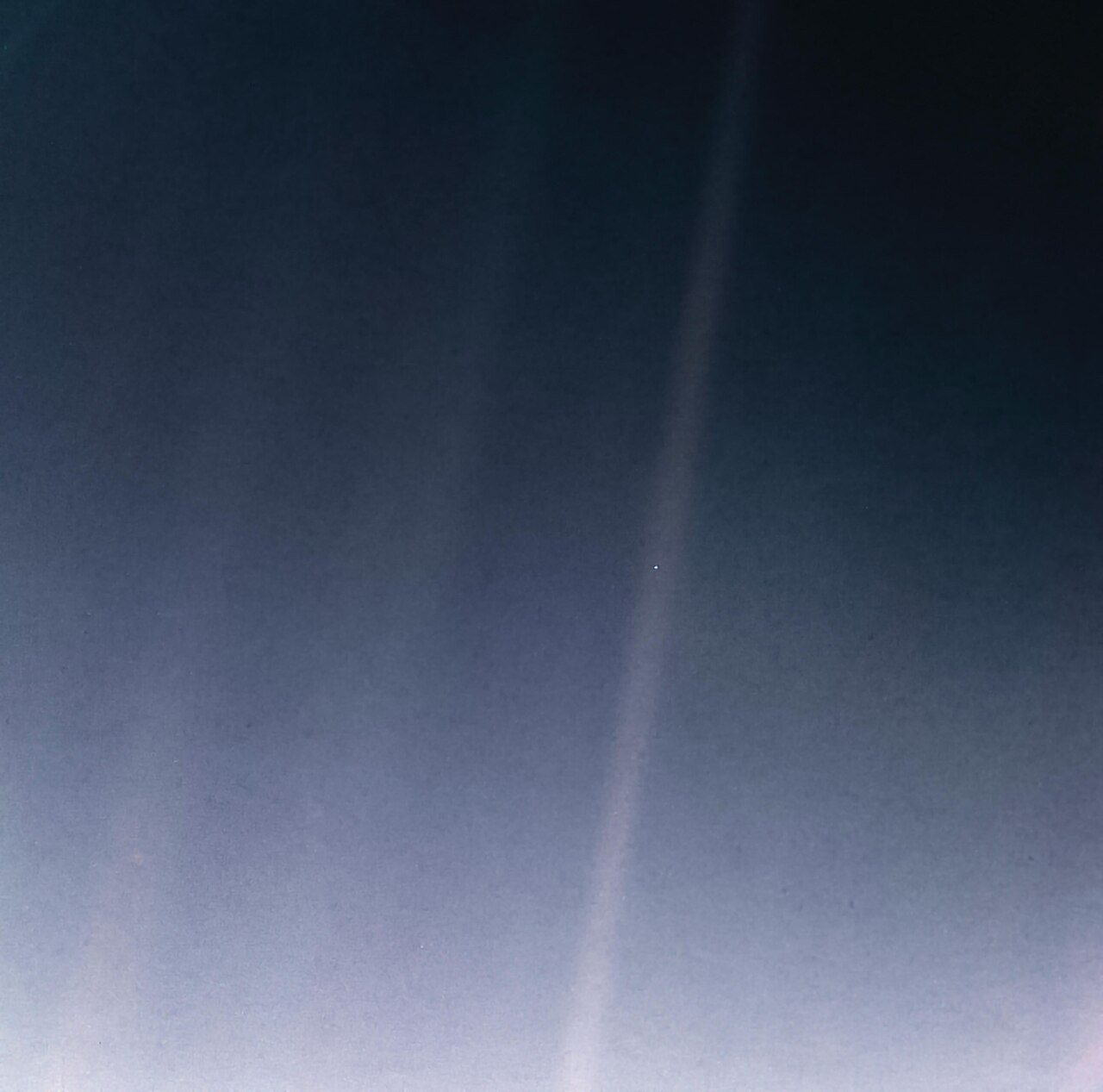
10How will the universe end?
For most of the past quarter century, cosmologists thought they knew how the story ends. In 1998 two teams discovered that the expansion of the universe is speeding up, driven by something now called dark energy. If dark energy is a cosmological constant, a fixed energy built into empty space itself, the acceleration never stops. Distant galaxies slip over the horizon, stars burn out, and the cosmos drifts toward a cold, dark, nearly empty “heat death.”
That ending is slow beyond imagining. The Sun swells into a red giant in about 5 billion years. Across the universe, star formation sputters out within roughly 100 trillion years as galaxies run out of gas. After that come dead stars, black holes that very slowly evaporate, and an ever-thinner haze of particles. Nothing dramatic happens; things simply stop happening.
The plot depends entirely on what dark energy does. If it grows stronger, the expansion eventually tears apart galaxies, solar systems and finally atoms: the Big Rip. If it fades or flips sign, gravity wins and everything falls back together in a Big Crunch. A wild card lurks beneath them all: Higgs boson and top quark measurements suggest our vacuum may be only metastable, so a bubble of lower-energy vacuum could in principle appear and spread at nearly light speed, though the odds of that happening anytime soon are effectively zero.
Then came DESI, the Dark Energy Spectroscopic Instrument at Kitt Peak in Arizona. In March 2025, after mapping nearly 15 million galaxies and quasars, the team reported signs that dark energy is weakening, at a statistical significance of 2.8 to 4.2 sigma depending on which supernova catalog was folded in. Physicists normally demand 5 sigma before claiming a discovery, and a November 2025 recalibration of the Dark Energy Survey’s supernovae cut the strongest combined figure from 4.2 to 3.2 sigma. The hint survives, but it has cooled.
If the hint is real, the crunch is back on the table. In a 2025 paper, Cornell physicist Henry Tye and colleagues fit the data with a hypothetical ultralight particle plus a slightly negative cosmological constant. Their universe stops expanding about 11 billion years from now and collapses roughly 20 billion years from now, a total lifespan of about 33 billion years. The model leans on a particle nobody has detected, and other fits to the same data still allow eternal expansion.
The tiebreakers are already collecting data. DESI has finished its original five-year survey and kept observing, Europe’s Euclid telescope is due to release its first full-scale dataset in November 2026, and Chile’s Vera C. Rubin Observatory should catch millions of supernovae over the next decade. We should soon know far more about the ending, even if nobody will be around to see it.
9Do we really have free will?
Benjamin Libet’s famous 1983 experiment asked very little of its volunteers. They flexed a wrist whenever they felt like it and noted, using a fast-moving clock, the moment they first felt the urge. Electrodes on their scalps told a disquieting story. A slow buildup of brain activity, the readiness potential, began roughly half a second before the movement, while the conscious urge showed up only about 200 milliseconds beforehand. The brain seemed to start before “you” did.
Later work raised the stakes. In 2008 a team led by John-Dylan Haynes used brain scans to predict which of two buttons people would press several seconds before they reported deciding, though with only about 60 percent accuracy. Headlines declared free will dead.
The verdict has since been appealed. In 2012 Aaron Schurger and colleagues showed that the readiness potential could arise from random neural noise drifting toward a threshold. Averaged over many trials, that noise looks like a plan forming, but it may just be the brain idling until a fluctuation tips it over. A 2019 study led by Uri Maoz found the signal was largely absent when people made meaningful choices, such as which charity should receive a real donation, rather than arbitrary ones. Libet had been measuring decisions nobody cared about.
Neuroscience cannot settle the deeper question alone, because so much depends on what free will means. Hard determinists, such as Stanford neurobiologist Robert Sapolsky in his 2023 book Determined, argue that every choice is the output of genes, upbringing and prior brain states, leaving no room for ultimate responsibility. Libertarians, in the philosophical sense, hold that genuine choices somehow escape that chain of causes. The largest camp, the compatibilists, say free will never required escaping physics: it means acting on your own reasons, free of coercion, with a brain capable of weighing options. Surveys of professional philosophers find roughly three in five take that view.
Quantum physics is no rescue for the libertarian. Randomness at the level of atoms would make choices less predictable, not more yours. The neuroscientist Kevin Mitchell, in his 2023 book Free Agents, argues instead that evolution built real agents: organisms whose brains model the world and select among options are genuine causes, not mere conduits for physics.
Progress will come from experiments on deliberate, real-world decisions, better models of how brains weigh reasons, and sharper definitions. The likely outcome is not a yes-or-no verdict but a revised picture of what choosing actually is.
8Could we be living in a simulation?
The modern version of the idea fits in a single argument, published by the Oxford philosopher Nick Bostrom in 2003. Suppose civilizations can eventually run detailed simulations of their ancestors, complete with conscious simulated minds. Then at least one of three things must be true: almost no civilizations reach that stage, almost none that reach it choose to run such simulations, or we are almost certainly living in one, because simulated minds would vastly outnumber biological ones.
Notice what the simulation argument does not claim. It does not say we are simulated; it says that if you reject the first two options, you are stuck with the third. Elon Musk popularized the strongest reading in 2016, suggesting the chance we live in “base reality” is one in billions. Bostrom has been far more cautious.
Critics attack every premise. Nobody knows whether consciousness can run on a computer at all. Simulating a universe down to its quantum details may be prohibitively expensive: a 2017 study by Zohar Ringel and Dmitry Kovrizhin argued that certain quantum effects in materials cannot be efficiently simulated on classical computers, even in principle. Defenders reply that a simulation need only render what observers actually look at, like a video game that draws only the scenery in front of the player.
Physicists have tried to imagine a test. In 2012 Silas Beane, Zohreh Davoudi and Martin Savage suggested that if reality ran on a cubic grid, like the lattices used in supercomputer simulations of quarks, the highest-energy cosmic rays might show subtle directional preferences aligned with that grid. No such signature has turned up, but its absence rules out only crude simulators. A competent programmer could hide the seams.
That is the deeper problem. A hypothesis that can absorb any observation does no scientific work, which is why many physicists treat the idea as philosophy, or as theology with a server farm. The physicist Sabine Hossenfelder has dismissed it as pseudoscience. Even attempts to put numbers on it mostly expose their assumptions: a 2020 Bayesian analysis by Columbia astronomer David Kipping came out close to a coin flip, leaning slightly toward base reality.
Philosopher David Chalmers offers a consolation in Reality+ (2022): even if we are simulated, tables, cats and people are still real, just built from bits rather than from whatever lies underneath. The question may be unanswerable, but it has sharpened thinking about what “real” means in the first place.
7What came before the Big Bang?
Around AD 400, Saint Augustine recorded a joke he did not endorse. Asked what God was doing before he made heaven and earth, someone had replied that he was preparing hell for people who pry into such questions. Augustine’s serious answer was startlingly modern: time is part of creation, so there was no “before” at all.
Einstein’s general relativity, run backward, seems to agree. Rewind the expansion and everything converges, about 13.8 billion years ago, on a state of infinite density where time itself begins. But that singularity is less a discovery than an error message. Near the Planck time, about 10⁻⁴³ seconds after the start, gravity should behave quantum mechanically and relativity stops being trustworthy. The honest statement is that our physics runs out there, not that time demonstrably began.
Most cosmologists think the hot Big Bang was preceded by inflation, a split-second burst of extreme expansion, but that only pushes the question back. In 2003 Arvind Borde, Alan Guth and Alexander Vilenkin showed that a universe that has, on average, always been expanding cannot be extended infinitely into the past. Many read that as evidence of a true beginning, though the theorem is silent about what happened at that boundary.
Theorists have filled the gap with remarkably different stories. In the no-boundary proposal of James Hartle and Stephen Hawking (1983), time near the beginning behaves like a direction in space, so the universe has no edge, and asking what came before is like asking what lies north of the North Pole. Bounce models, including loop quantum cosmology, replace the singularity with the rebound of an earlier, collapsing universe. Roger Penrose’s conformal cyclic cosmology proposes an endless chain of eons, each one’s vast, cold future becoming the next one’s Big Bang. Other ideas make our universe one bubble in an eternally inflating multiverse.
Testing any of this is hard because the early universe hides behind a curtain. The oldest light we can see, the cosmic microwave background, dates from about 380,000 years after the start. Penrose claims to spot traces of a previous eon in it; most analyses find nothing beyond chance. The best hope is primordial gravitational waves, ripples from the first instant that would leave a faint swirling pattern in that light. A claimed detection by the BICEP2 team in 2014 turned out to be dust in our own galaxy. The Simons Observatory in Chile and Japan’s planned LiteBIRD satellite are hunting for the real thing, whose strength could separate inflation from some of its rivals.
Until physics has a working theory of quantum gravity, “before the Big Bang” may remain a question we can ask but not yet answer.
6Can gravity and quantum physics ever be united?
Every phone in your pocket runs on both of physics’ great theories at once. Its chips depend on quantum mechanics, and its GPS fix depends on Einstein’s relativity: clocks on orbiting satellites tick faster than clocks on the ground by about 38 microseconds a day, mostly because gravity is weaker up there. Each theory has passed every test thrown at it. They simply refuse to work together.
The trouble runs deep. Quantum theory describes forces as fields made of discrete packets, jittering with uncertainty on a fixed stage of space and time. General relativity says space and time are not a stage at all but a flexible fabric bent by mass and energy. Treat gravity like the other forces, as a quantum field whose particles are called gravitons, and the calculations fill with infinities that cannot be tamed, a failure confirmed in painstaking calculations during the 1970s and 1980s. The clash matters wherever both theories are needed at once, above all at the centers of black holes and in the first instant of the Big Bang.
String theory, the most studied contender, replaces point particles with tiny vibrating strings, one of whose vibrations naturally behaves like a graviton. It requires extra dimensions of space, allows a vast landscape of possible universes, and after five decades has made no confirmed prediction. Loop quantum gravity instead quantizes space itself into a network of discrete chunks, but struggles to show that smooth, familiar spacetime emerges at large scales. Other approaches, from asymptotic safety to causal sets, have smaller followings. One striking idea from string theory, holography, shows that in certain idealized universes a theory with gravity is exactly equivalent to a quantum theory without gravity living on the boundary, a strong hint that spacetime is built from something deeper.
The bigger obstacle is experimental. Quantum gravity effects should become obvious near the Planck energy, around 10¹⁹ GeV, roughly a quadrillion times beyond what the Large Hadron Collider reaches. No conceivable collider gets there.
So physicists are getting creative. Tabletop experiments aim to show whether gravity can entangle two tiny masses, which would mean it obeys quantum rules; in 2021 a team in Vienna measured the gravitational pull between gold spheres weighing just 90 milligrams, a step toward that regime. Astronomers check whether high-energy light from distant gamma-ray bursts arrives with tiny delays that some quantum gravity models predict, so far without seeing any, and gravitational-wave detectors listen for deviations near merging black holes.
Most theorists believe a unified theory exists, because nature presumably does not run on two incompatible rulebooks. Whether humans can find it, and prove it right, is another matter.
5How did life begin?
A 22-year-old graduate student at the University of Chicago named Stanley Miller started the modern hunt in 1952. He filled glass flasks with water, methane, ammonia and hydrogen, then zapped the mix with electric sparks to mimic lightning. Within days the water turned brown with amino acids, the building blocks of proteins. It looked as if the recipe for life might be cracked within a generation. Seven decades later, chemists can make many of life’s ingredients, but nobody has made life.
The timeline is tight. Earth formed about 4.54 billion years ago, and fossil microbial mats in Western Australia strongly suggest life was established by about 3.5 billion years ago, possibly much earlier. Somewhere in that window, chemistry became biology: molecules began copying themselves, wrapping themselves in membranes and harvesting energy.
The leading framework is the RNA world. Modern cells split the work between DNA, which stores information, and proteins, which run the chemistry. RNA can do both. In the early 1980s researchers discovered ribozymes, RNA molecules that act as catalysts, and the heart of the ribosome, the machine that builds every protein, turns out to be made of RNA. In 2009 chemists led by John Sutherland showed that RNA building blocks can form under plausible early-Earth conditions by a route nobody had suspected. Labs have since evolved ribozymes that copy other RNA strands, though none can yet copy itself in full.
Where it happened is fiercely argued. Some researchers favor deep-sea hydrothermal vents, whose natural gradients of acidity and minerals resemble the energy machinery inside every cell. Others prefer shallow ponds or volcanic hot springs, where repeated wetting and drying concentrates molecules and drives them to link into chains, something open ocean water tends to undo. Darwin himself, in an 1871 letter, imagined life starting in a “warm little pond.”
Space may have stocked the pantry. Samples from asteroid Bennu, delivered to Earth by NASA’s OSIRIS-REx mission in 2023, contain 14 of the 20 amino acids used in Earth’s proteins and all five nucleobases used in DNA and RNA. In December 2025 researchers reported ribose, the sugar in RNA, and glucose in the samples as well, but no deoxyribose, the sugar in DNA, a pattern that fits the idea that RNA came first.
Two results would transform the field. A lab demonstration of a self-sustaining, evolving chemical system built from plausible starting materials would show how life can begin, though not necessarily how it did. A second, independent origin found elsewhere, on Mars or an icy moon, would reveal whether the process is easy or a cosmic fluke.
4Are we alone in the universe?
On August 15, 1977, the Big Ear radio telescope in Ohio recorded a narrow burst of radio emission from the direction of Sagittarius so striking that astronomer Jerry Ehman circled it on the printout and scribbled “Wow!” in the margin. It lasted 72 seconds and has never been detected again, despite decades of looking. Nearly half a century later, that sums up the hunt for life beyond Earth: tantalizing hints, no proof.
The case for company rests on numbers. Astronomers have confirmed more than 6,400 planets orbiting other stars, and statistics from NASA’s Kepler mission suggest that a sizable fraction of Sun-like stars host a roughly Earth-sized planet in the temperate zone where liquid water could exist. With 100 billion or more stars in the Milky Way, that implies billions of potentially habitable worlds in our galaxy alone.
Against that sits a sample size of one. We do not know how easily life starts, how often it becomes complex, or how long technological civilizations last. The Drake equation, written by Frank Drake for a 1961 meeting in Green Bank, West Virginia, multiplies these unknowns together; depending on the guesses plugged in, it returns anything from a galaxy teeming with civilizations to one where we are alone. The silence so far, known as the Fermi paradox, only sharpens the puzzle.
The search now runs on three tracks. Closest to home, Mars and the buried oceans of Jupiter’s moon Europa and Saturn’s moon Enceladus are prime targets. In 2025 NASA reported a potential biosignature in a Martian rock called Cheyava Falls, though non-biological chemistry may yet explain it, and the Europa Clipper spacecraft reaches Jupiter in 2030. Farther out, the James Webb Space Telescope sniffs exoplanet atmospheres for gases that living things produce. A 2025 claim of dimethyl sulfide, a gas made on Earth by marine microbes, on the planet K2-18b drew headlines, but independent reanalyses found the signal weak or absent. Meanwhile radio and optical searches such as Breakthrough Listen hunt for technology rather than biology.
Proof will probably come slowly. Confirming the Mars result would likely require bringing the rock to laboratories on Earth, a plan mired in cost overruns and budget fights. NASA’s proposed Habitable Worlds Observatory, a space telescope planned for the 2040s, is designed to image Earth-like planets around nearby stars and read their air. One unambiguous detection of a second biology, anywhere, would answer the question for good. Continued silence can only narrow it.
3What is most of the universe made of?
Everything you have ever seen or touched, every star, planet and person, adds up to only about 5 percent of the universe. Measurements by ESA’s Planck satellite put the rest at roughly 27 percent dark matter, which pulls but does not shine, and 68 percent dark energy, which drives space apart ever faster. Neither has been identified.
The evidence for dark matter is old and strong. In 1933 Fritz Zwicky noticed that galaxies in the Coma Cluster moved too fast to be held together by their visible mass. In the 1970s Vera Rubin and Kent Ford found that stars at the edges of spiral galaxies orbit as fast as those near the center, as if each galaxy sat inside an invisible halo. Gravitational lensing, the pattern of hot and cold spots in the cosmic microwave background, and colliding clusters such as the Bullet Cluster, where the mass visibly separated from the hot gas, all point the same way: there is about five times more matter than we can see.
What it is remains wide open. For decades the favorite candidate was the WIMP, a weakly interacting massive particle. The LUX-ZEPLIN experiment, seven tonnes of liquid xenon nearly a mile under South Dakota, waits for one to bump into a xenon nucleus. Its December 2025 results, from 417 days of data, set world-leading limits and for the first time reached down to WIMPs only three to nine times the mass of a proton, without finding any. The detector did catch neutrinos from the Sun’s core, a sign that such experiments are approaching the “neutrino fog,” where dark matter becomes hard to tell from background. Other candidates include axions, ultralight particles hunted with tuned microwave cavities, and primordial black holes.
A minority view holds that there is no dark matter at all, only gravity behaving differently at very low accelerations. That idea, MOND, proposed by Mordehai Milgrom in 1983, fits galaxy rotation remarkably well but struggles with galaxy clusters and the cosmic microwave background.
Dark energy is stranger still. It might be the energy of empty space itself, though quantum theory overestimates that energy so badly that the puzzle returns at the top of this list, and 2025 hints that it is weakening would rule out the simplest version. ESA’s Euclid telescope, mapping more than a billion galaxies, is scheduled to release its first major dataset in November 2026, and the Vera C. Rubin Observatory in Chile, which unveiled its first images in 2025, is embarking on a ten-year survey of the southern sky. Together with bigger underground detectors, they could reveal whether the missing 95 percent is one thing, two things, or a sign that our theory of gravity needs rewriting.
2What is consciousness?
The most famous wager in brain science ended with a case of wine changing hands. In 1998 neuroscientist Christof Koch bet philosopher David Chalmers that within 25 years researchers would pin down a clear neural signature of conscious experience. In June 2023, at a conference in New York, Koch conceded and paid up. The bet captures the field: enormous progress in mapping what the brain does, little agreement on why any of it feels like something.
Chalmers had named the crux in 1995: the hard problem. Explaining how the brain tells colors apart, stores memories or steers attention is difficult but tractable, the “easy problems.” Explaining why those processes come with inner experience, why seeing red feels like anything at all, is another matter. Some philosophers, called illusionists, argue that the hard problem rests on a mistake about our own minds. Others think it shows physical science is missing an ingredient.
Scientists have more than 20 candidate theories, and two lead the field. Global neuronal workspace theory, developed by Bernard Baars and Stanislas Dehaene, says a perception becomes conscious when it is broadcast widely across the brain, especially via networks in the prefrontal cortex, making it available to memory, speech and planning. Integrated information theory, or IIT, from Giulio Tononi, says consciousness is integrated information itself, measurable in principle as a quantity called phi, and locates it mainly toward the back of the brain. IIT carries startling implications, including that some simple physical systems have a sliver of experience. In 2023 more than 100 researchers signed an open letter labeling it pseudoscience, provoking a backlash of its own.
In April 2025 the two camps went head to head. In an adversarial collaboration called Cogitate, proponents of both theories agreed in advance on predictions that would embarrass their own view, and seven labs tested 256 volunteers using fMRI, MEG and electrodes placed inside the brains of epilepsy patients. Neither theory came out clean. IIT’s predicted sustained synchronization in the back of the brain did not appear, and neither did the burst of prefrontal “ignition” that the workspace theory predicted when a conscious image disappears. The results, published in Nature, were less a verdict than proof that consciousness theories can be made to risk failure.
The stakes keep rising. Doctors need better ways to detect awareness in unresponsive patients, some of whom turn out to be conscious; animal welfare rules depend on which creatures can feel; and fluent AI systems have turned machine experience from a thought experiment into a practical question. A real answer would need a theory that predicts, from a system’s structure alone, whether it is conscious, and that survives testing in brains.
1Why is there something rather than nothing?
In 1714 the German polymath Gottfried Wilhelm Leibniz wrote down what may be the hardest question anyone has asked. Everything must have a sufficient reason, he argued, so the first question we are entitled to ask is why there is something rather than nothing, since nothing is simpler and easier than something. Two centuries later Martin Heidegger called it the fundamental question of metaphysics.
Physics has a surprising amount to say about nothing, starting with how hard it is to find. Pump every atom out of a box and chill it toward absolute zero, and the quantum vacuum left behind still seethes, because quantum fields can never sit perfectly still. The effects are measurable. Vacuum fluctuations nudge the energy levels of hydrogen, a shift Willis Lamb measured in 1947, and two metal surfaces held a few micrometers apart are pulled together by the Casimir effect, measured precisely in 1997. Naive estimates of the vacuum’s energy, though, overshoot the observed dark energy by up to 120 orders of magnitude, perhaps the worst prediction in physics.
Some physicists go further. In 1982 Alexander Vilenkin proposed that a universe could tunnel into existence from no space and no time at all, and Lawrence Krauss’s 2012 bestseller A Universe from Nothing argued that “nothing” is unstable, so something is all but inevitable.
Philosophers were unimpressed, with good reason. A quantum vacuum is not nothing; it is a physical state with energy, governed by laws. Vilenkin’s nothing still comes with quantum mechanics attached. The physicist’s nothing is a very quiet something, and the real puzzle is why there are fields and laws at all, and why these ones. Physics explains things with laws; explaining the laws themselves risks going in a circle.
The philosophical answers fall into a few families. Leibniz’s own was theistic: the chain of explanation ends in a necessary being, God, who needs no further reason, though critics ask why a necessary universe would not serve as well. Bertrand Russell, debating Frederick Copleston on BBC radio in 1948, gave the brute-fact answer: the universe is just there, and that is all. Peter van Inwagen argued that there is only one way for there to be nothing but endless ways for there to be something, so something was overwhelmingly likely. Plenitude theories, from David Lewis to Max Tegmark, hold that every possible world or mathematical structure exists, so ours needs no special explanation. Others call the question malformed, since absolute nothing is not a state that could ever have obtained.
No experiment can test these answers, and no argument has carried the field. The Columbia philosopher Sidney Morgenbesser, asked the question once, gave the reply that has outlived the rest: “If there were nothing, you’d still be complaining.”
Why the unanswered questions matter
It’s tempting to read a list like this as a catalog of failures. It’s the opposite. Most of these questions could not even have been asked a century ago, when nobody knew the universe was expanding, what makes the Sun shine or that genes are made of DNA. Every answer science has delivered has come with sharper, stranger questions attached.
Some of the entries above may be settled within a decade. The James Webb Space Telescope, the Vera C. Rubin Observatory, NASA’s Europa Clipper, the Hyper-Kamiokande neutrino detector and a new generation of brain-imaging and DNA-sequencing tools are all aimed squarely at problems on this list. Others, like number 1, may never yield to an experiment at all. Consider this a snapshot of where human knowledge stands in October 2026, edges and all.
Quick answers
What is the difference between dark matter and dark energy?
Dark matter is an unseen form of mass that adds gravitational pull, holding galaxies and clusters together; it makes up about 27 percent of the universe. Dark energy is a property of space, or something filling it, that drives the accelerating expansion of the universe and makes up about 68 percent. Both are inferred from their effects; neither has been directly detected.
What is the hard problem of consciousness?
The hard problem, named by philosopher David Chalmers in 1995, is the question of why physical processes in the brain give rise to subjective experience at all. Explaining how the brain processes information is difficult but tractable; explaining why that processing feels like something from the inside has resisted every scientific and philosophical attempt so far.
How many habitable planets are in the Milky Way?
Nobody has an exact count, but estimates based on NASA’s Kepler data suggest that a meaningful fraction of Sun-like stars host an Earth-sized planet in the zone where liquid water could exist. With 100 billion or more stars in the galaxy, that implies billions of potentially habitable worlds, though “habitable” does not mean inhabited.
What is the RNA world hypothesis?
The RNA world hypothesis proposes that early life relied on RNA both to store genetic information and to catalyze chemical reactions, before DNA and proteins took over those roles. Support comes from ribozymes, RNA molecules that act like enzymes, and from the RNA core of the ribosome. No fully self-replicating RNA has yet been made in the lab.
What is the Hubble constant in simple terms?
It is how fast the universe is expanding today. A value of 70 km/s/Mpc means a galaxy one megaparsec (3.26 million light-years) away recedes at about 70 kilometers per second, and a galaxy twice as far recedes twice as fast. Turned upside down, the number also gives a rough age for the universe of about 14 billion years.
Does sleep really clean toxins out of the brain?
Possibly, but it is contested. Mouse studies from 2013 suggested sleep speeds the fluid flow that flushes out waste like amyloid-beta. A 2024 mouse study measured clearance directly and found it slower during sleep, while 2025 work tied sleep-time norepinephrine waves to fluid pumping. Early human data from 2026 lean toward sleep helping, but the question is open.
Does metformin slow aging in healthy people?
Nobody knows yet. Early observational studies of people with diabetes taking metformin hinted at lower rates of some age-related diseases, but such comparisons are prone to bias, and more recent analyses are less encouraging. The TAME trial was designed to test it properly in about 3,000 older adults, but it has struggled for funding and has published no efficacy results.
What happens if someone proves P equals NP?
It depends on the proof. If it came with a practical algorithm, much of today’s public-key encryption could be broken, and hard optimization problems in logistics, chip design and biology would become easy. If the proof were nonconstructive or the algorithm impractically slow, daily life might barely change, though the prover would still collect a $1 million Clay prize.
Sources & further reading
- 100. Scientists report most precise measurement yet of the universe’s expansion (H0DN) (Center for Astrophysics | Harvard & Smithsonian) · Cosmic conflict continues: new data fuel the Hubble tension debate (Physics World) · Hubble’s law (Wikipedia)
- 99. Inflation (cosmology) (Wikipedia) · BICEP and Keck Array (Wikipedia)
- 98. Astronomers discover a brand-new type of astrophysical object: a black hole star (MIT News) · The oldest known black hole formed more than 13.3 billion years ago (Science News) · JWST’s mysterious little red dots may be black holes growing at incredible speeds (ScienceDaily)
- 97. The most famous paradox in physics nears its end (Quanta Magazine) · Black hole information paradox (Wikipedia)
- 96. Shape of the universe (Wikipedia) · Observable universe (Wikipedia)
- 95. Multiverse (Wikipedia) · Eternal inflation (Wikipedia)
- 94. Cosmic investigations: tracing the origin of the astrophysical particle Amaterasu (ORIGINS Excellence Cluster) · Amaterasu particle (Wikipedia) · Ultra-high-energy cosmic ray (Wikipedia)
- 93. Astronomers pinpoint the location of the brightest fast radio burst to date (University of Toronto) · A sudden signal flare reveals the hidden partner behind fast radio bursts (ScienceDaily) · Fast radio burst (Wikipedia)
- 92. Scientists finally spot hidden waves powering the Sun’s corona (ScienceDaily) · Solar Orbiter and Parker Solar Probe jointly take a step forward in understanding coronal heating (ESA) · Parker Solar Probe (Wikipedia)
- 91. Baby ‘cosmic fossil’ galaxy brings JWST closer to glimpsing the universe’s first stars (Scientific American) · A nearly pristine star from the Large Magellanic Cloud (arXiv (Ji et al.)) · Stellar population (Wikipedia)
- 90. A new piece in the matter–antimatter puzzle (Symmetry Magazine) · Observation of charge–parity symmetry breaking in baryon decays (LHCb) (arXiv / Nature) · Baryon asymmetry (Wikipedia)
- 89. Arrow of time (Wikipedia) · Thermodynamic Asymmetry in Time (Stanford Encyclopedia of Philosophy)
- 88. Physicists can’t agree on what quantum mechanics says about reality (Scientific American) · The measurement problem, measured (CERN Courier) · Measurement problem (Wikipedia)
- 87. Fine-Tuning (Stanford Encyclopedia of Philosophy) · Fine-tuned universe (Wikipedia) · Cosmological constant problem (Wikipedia)
- 86. New KATRIN results (Karlsruhe Institute of Technology) · Neutrinos weigh less than 0.45 electronvolts (Max Planck Institute for Nuclear Physics) · Neutrino (Wikipedia)
- 85. Muon g-2 achieves record precision, but theoretical tensions remain (Physics World) · Fermilab’s final word on muon g-2 (CERN Courier) · Physics beyond the Standard Model (Wikipedia)
- 84. Proton decay (Wikipedia) · Tour of Hyper-Kamiokande’s massive vertical cavern (University of Tokyo) · Super-Kamiokande (Wikipedia)
- 83. New test of the gravitational 1/r² law at separations down to 52 µm (arXiv (Eöt-Wash group)) · Inverse Square Law (University of Washington Eöt-Wash Group) · Kaluza–Klein theory (Wikipedia)
- 82. Holographic principle (Wikipedia) · ER = EPR (Wikipedia) · Quantum Gravity (Stanford Encyclopedia of Philosophy)
- 81. AI and the $1 million Navier–Stokes problem (Quanta Magazine) · Navier–Stokes existence and smoothness (Wikipedia) · Turbulence (Wikipedia)
- 80. NASA finds ingredients of life in fragments of a lost world (Bennu) (NASA Scientific Visualization Studio) · Left-handed isovaline excess found in meteorites (ScienceDaily / NASA) · Homochirality (Wikipedia)
- 79. Deep origin of eukaryotes outside Heimdallarchaeia within Asgardarchaeota (Nature) · Oxygen-using Asgard archaea and the origin of complex life (ScienceDaily / University of Texas at Austin) · Symbiogenesis (Wikipedia)
- 78. Red Queen hypothesis (Wikipedia) · Evolution of sexual reproduction (Wikipedia)
- 77. Cambrian explosion (Wikipedia) · Oxygen linked with the boom and bust of early animal evolution (Lancaster University) · New high-resolution age data from the Ediacaran–Cambrian boundary (Terra Nova, 2019) (TU Dresden)
- 76. The nature of the last universal common ancestor and its impact on the early Earth system (Nature Ecology & Evolution) · Insight into one of life’s earliest ancestors revealed in new study (University of Bristol) · All life on Earth today descended from a single cell. Meet LUCA. (Quanta Magazine)
- 75. A count of life on planet Earth (Dalhousie University) · How many species are there on Earth? Progress and problems (PLOS Biology (via PubMed Central)) · How many species are there? (Our World in Data)
- 74. A journey to the origins of multicellular life: long-term experimental evolution in the lab (ScienceDaily / Georgia Institute of Technology) · Multicellular organism (Wikipedia) · Bangiomorpha (Wikipedia)
- 73. E. coli long-term evolution experiment (Wikipedia) · Convergent evolution (Wikipedia) · Wonderful Life (book) (Wikipedia)
- 72. Computational support for cryptochrome-based magnetoreception in birds (Princeton University) · Magnetoreception (Wikipedia) · Arctic tern (Wikipedia)
- 71. Positive citation bias and overinterpreted results on common mycorrhizal networks (Karst et al., 2023) (Scimex) · Mycorrhizal network (Wikipedia) · Plant communication (Wikipedia)
- 70. Fermi paradox (Wikipedia) · In the search for aliens, we’ve only examined a cosmic hot tub (Smithsonian Magazine) · Dissolving the Fermi Paradox (Sandberg, Drexler, Ord) (arXiv)
- 69. NASA says Mars rover discovered potential biosignature last year (NASA) · Perseverance finds potential signs of ancient life in Martian rock (ScienceDaily) · Life on Mars (Wikipedia)
- 68. NASA Cassini study finds organics fresh from ocean of Enceladus (NASA JPL) · Key building block for life found at Saturn moon Enceladus (Southwest Research Institute) · Europa Clipper mission timeline (NASA)
- 67. Hypothetical types of biochemistry (Wikipedia) · Life on Titan cannot rely on cell membranes, according to computational simulations (ScienceDaily)
- 66. The NASA Exoplanet Archive hits 6,000 planets (IPAC / Caltech) · More than half of all sunlike stars in the Milky Way may have a habitable planet (Space.com) · Kepler retrospective: Earth-like planets are common (Sky & Telescope)
- 65. Planet Nine (Wikipedia) · New sednoid “Ammonite” discovery deepens Planet Nine mystery (Astronomy) · Planet Y: a hidden world in the Kuiper Belt? (EarthSky)
- 64. Theia and Earth were neighbors (Max Planck Society) · Giant-impact hypothesis (Wikipedia)
- 63. Scientists find evidence that overturns theories of the origin of water on Earth (University of Oxford) · Origin of water on Earth (Wikipedia)
- 62. Venus may be able to support life, new atmospheric evidence suggests (Space.com) · NASA’s ambitious ‘decade of Venus’ exploration may bank on 1 probe (Space.com) · Life on Venus (Wikipedia)
- 61. Hubble helps determine Uranus rotation rate with unprecedented precision (NASA) · Double impact: did 2 giant collisions turn Uranus on its side? (Scientific American) · A migrating moon might have turned Uranus over on its side (Universe Today)
- 60. USC study confirms the rotation of Earth’s inner core has slowed (USC Today) · Earth’s inner core is less solid than previously thought (USC Today) · Earth’s inner core (Wikipedia)
- 59. Swarm reveals growing weak spot in Earth’s magnetic field (European Space Agency) · Geomagnetic reversal (Wikipedia)
- 58. Can you predict earthquakes? (US Geological Survey) · Earthquake prediction (Wikipedia)
- 57. Hadaean to Palaeoarchaean stagnant-lid tectonics revealed by zircon magnetism (Nature) · Plate tectonics not required for the emergence of life (ScienceDaily) · Plate tectonics (Wikipedia)
- 56. Historic drilling campaign in Antarctica reaches more than 1.2 million years old ice (Stockholm University) · Exploring the dramatic shift in ice age duration (Eos (AGU)) · Mid-Pleistocene Transition (Wikipedia)
- 55. Climate Change 2021: The Physical Science Basis (AR6 WG1) (IPCC) · #NotAllModels (RealClimate) · WMO confirms 2025 was one of warmest years on record (World Meteorological Organization)
- 54. AMOC: Is global warming tipping key Atlantic ocean currents towards ‘collapse’? (Carbon Brief) · Climate change: AMOC likely to withstand future warming (Met Office) · Atlantic meridional overturning circulation (Wikipedia)
- 53. First Spectrum of Ball Lightning (APS Physics) · Burning soil fuels ball lightning (Physics World) · Ball lightning (Wikipedia)
- 52. Mega El Niño may have led to major mass extinction 252 million years ago (Eos (AGU)) · The anatomy and lethality of the Siberian Traps large igneous province (US Geological Survey) · Permian–Triassic extinction event (Wikipedia)
- 51. Ocean census reveals more than 1,100 new species (Scientific American) · Global seabed mapping reaches new milestone as five million square kilometres added in a year (International Hydrographic Organization) · Humans still haven’t seen 99.999% of the deep seafloor (NPR / Michigan Public)
- 50. Scientists find sleep may not clear brain toxins as previously thought (UK Dementia Research Institute) · Researchers discover the pump for the brain’s ‘washing machine’ (University of Copenhagen) · Sleep (Wikipedia)
- 49. Research shows ‘hot zone’ that’s active during dreaming (University of Wisconsin–Madison) · Lucid dreamers can hear and answer questions while asleep (Northwestern University) · Dream (Wikipedia)
- 48. Henry Molaison (Wikipedia) · Engram (neuropsychology) (Wikipedia) · Long-term potentiation (Wikipedia)
- 47. Dementia fact sheet (World Health Organization) · Lecanemab (Leqembi) (Alzheimer’s Association) · Alzheimer’s disease (Wikipedia)
- 46. Animal consciousness: scientists push new paradigm (NBC News) · The New York Declaration on Animal Consciousness (NYU) · Animal consciousness (Wikipedia)
- 45. Study reveals how an anesthesia drug induces unconsciousness (MIT News) · How knocking out plants is solving the mystery of anesthesia (Smithsonian Magazine) · General anaesthesia (Wikipedia)
- 44. Broca’s area (Wikipedia) · Wernicke’s area (Wikipedia) · Neurolinguistics (Wikipedia)
- 43. Open-label ‘honest’ placebo works as well as double-blind placebo in irritable bowel syndrome (Beth Israel Deaconess Medical Center via Newswise) · Placebo (Wikipedia) · Nocebo (Wikipedia)
- 42. Déjà vu (Wikipedia) · Temporal lobe epilepsy (Wikipedia)
- 41. Childhood amnesia (Wikipedia) · Many people’s earliest memories may be fictional (Association for Psychological Science) · Autism brain states hold the key to unlocking childhood memories (Trinity College Dublin)
- 40. A cheap drug may slow down aging. A study will determine if it works (NPR (via WAMC)) · Senescence (Wikipedia) · Greenland shark (Wikipedia)
- 39. Cancer Statistics, 2026 report (American Cancer Society) · Peto’s paradox (Wikipedia) · CAR T cell (Wikipedia)
- 38. Revised estimates for the number of human and bacteria cells in the body (PLOS Biology) · Gut microbiota (Wikipedia) · Fecal microbiota transplant (Wikipedia)
- 37. COVID-19 virus can stay in the body more than a year after infection (University of California, San Francisco) · RECOVER biosamples and data advance understanding of what may cause Long COVID (NIH RECOVER Initiative) · Long COVID (Wikipedia)
- 36. Junk DNA (Wikipedia) · Zoonomia Project sequences mammals’ DNA to unlock human genome secrets (STAT) · South American lungfish has largest animal genome sequenced so far (Sci.News)
- 35. Autoimmune disorders found to affect around one in ten people (University of Oxford) · Innate immunity and asthma risk in Amish and Hutterite farm children (Johns Hopkins University) · Hygiene hypothesis (Wikipedia)
- 34. Hippo signaling pathway (Wikipedia) · Liver regeneration (Wikipedia)
- 33. The bigger your brain, the longer your yawn (Scientific American) · Yawning (University of Washington, Neuroscience for Kids) · Yawn (Wikipedia)
- 32. Past seasons’ flu vaccine effectiveness estimates (CDC) · Universal influenza vaccine technology landscape: November 2025 updates (CIDRAP, University of Minnesota) · Universal flu vaccine (Wikipedia)
- 31. CDC report shows US life expectancy rose in 2024 (Healio) · Life expectancy (Wikipedia)
- 30. Origin of language (Wikipedia) · FOXP2 (Wikipedia) · Nicaraguan Sign Language (Wikipedia)
- 29. Scientists link nearly complete skull to humans’ Denisovan relative (Chinese Academy of Sciences) · Denisovan jawbone helps reveal appearance of ancient human species (Natural History Museum, London) · Homo luzonensis (Wikipedia)
- 28. Neandertals in north-western Europe in focus (Max Planck Society) · Neanderthal extinction (Wikipedia) · Interbreeding between archaic and modern humans (Wikipedia)
- 27. Ancient mud confirms age of White Sands human footprints (ScienceDaily (University of Arizona)) · Ancestors of today’s Indigenous people arrived during the coldest part of the last ice age (Live Science) · Settlement of the Americas (Wikipedia)
- 26. The Neolithic Agricultural Revolution (National Geographic) · The origin of cultivation and proto-weeds, long before Neolithic farming (PLOS ONE (via PubMed Central)) · Neolithic Revolution (Wikipedia)
- 25. Grey wolf genomic history reveals a dual ancestry of dogs (Nature) · Origin of the domestic dog (Wikipedia)
- 24. A chemical signal in human female tears lowers aggression in males (PLOS Biology) · Crying (Wikipedia)
- 23. Universality and diversity in human song (Science) · Evolutionary musicology (Wikipedia)
- 22. Handedness (Wikipedia) · Handedness (Encyclopaedia Britannica)
- 21. Social laughter triggers endogenous opioid release in humans (Journal of Neuroscience) · Laughter (Wikipedia)
- 20. P vs NP (Millennium Prize Problem) (Clay Mathematics Institute) · P versus NP problem (Wikipedia)
- 19. Riemann Hypothesis (Millennium Prize Problem) (Clay Mathematics Institute) · Sensational Proof Delivers New Insights Into Prime Numbers (Quanta Magazine) · Riemann hypothesis (Wikipedia)
- 18. The Chinese Room Argument (Stanford Encyclopedia of Philosophy) · Chinese room (Wikipedia) · Turing test (Wikipedia)
- 17. Meet Willow, our state-of-the-art quantum chip (Google) · How to factor 2048 bit RSA integers with less than a million noisy qubits (Gidney, 2025) (arXiv) · Google Quantum AI Achieves Verifiable Quantum Advantage on Willow Chip with Quantum Echoes Algorithm (Quantum Computing Report)
- 16. National Ignition Facility, FY2025 annual report (Lawrence Livermore National Laboratory) · ITER fusion reactor hit by massive decade-long delay and €5bn price hike (Physics World) · Helion achieves new industry-first fusion energy milestones (Helion Energy)
- 15. Ambient-pressure 151-K superconductivity in HgBa2Ca2Cu3O8+δ via pressure quench (arXiv) · LK-99 (Wikipedia) · Room-temperature superconductor (Wikipedia)
- 14. The Unreasonable Effectiveness of Mathematics in the Natural Sciences (Wikipedia) · Mathematical universe hypothesis (Wikipedia)
- 13. Twin prime (Wikipedia) · Twin prime conjecture (Encyclopaedia Britannica) · Yitang Zhang (Wikipedia)
- 12. Glass transition (Wikipedia) · Glass (Wikipedia)
- 11. Did Scientists Actually De-Extinct the Dire Wolf? (Scientific American) · Gene-edited woolly mice are a step toward woolly mammoths (MIT Technology Review) · Pyrenean ibex (Wikipedia)
- 10. DESI results strengthen hints that dark energy is evolving (EurekAlert! / Berkeley Lab) · Physicist: After 33 billion years, universe will end in a big crunch (Cornell Chronicle) · DES supernova reanalysis with updated calibration (arXiv)
- 9. Free Will (Stanford Encyclopedia of Philosophy) · Neural precursors of decisions that matter: an ERP study of deliberate and arbitrary choice (eLife) · Neuroscience of free will (Wikipedia)
- 8. Simulation hypothesis (Wikipedia) · Nick Bostrom (Wikipedia)
- 7. Big Bang (Wikipedia) · Hartle–Hawking state (Wikipedia) · Conformal cyclic cosmology (Wikipedia)
- 6. Quantum gravity (Wikipedia) · String theory (Wikipedia) · Loop quantum gravity (Wikipedia)
- 5. Sugars, gum, stardust found in NASA’s asteroid Bennu samples (NASA) · Abiogenesis (Wikipedia) · RNA world (Wikipedia)
- 4. NASA Exoplanet Archive (NASA / Caltech IPAC) · NASA says Mars rover discovered potential biosignature last year (NASA JPL) · Drake equation (Wikipedia)
- 3. LZ experiment sets new record in the hunt for dark matter (Brown University) · Euclid data release timeline (Caltech IPAC) · Dark matter (Wikipedia)
- 2. Rethinking consciousness: when science puts itself to the test (Max Planck Institute for Empirical Aesthetics) · Adversarial testing of global neuronal workspace and integrated information theories of consciousness (Nature (via PubMed)) · Hard problem of consciousness (Wikipedia)
- 1. Why there is anything at all (Wikipedia) · Nothingness (Stanford Encyclopedia of Philosophy) · Casimir effect (Wikipedia)
Cover image: NASA, ESA, CSA and STScI · Public domain · via Wikimedia Commons. Chapter photos are from Wikimedia Commons under the licenses noted in each caption.

Jenny Hayes
Curator of curiosities at Lists Resource, digging up the facts, oddities and rankings worth sharing.