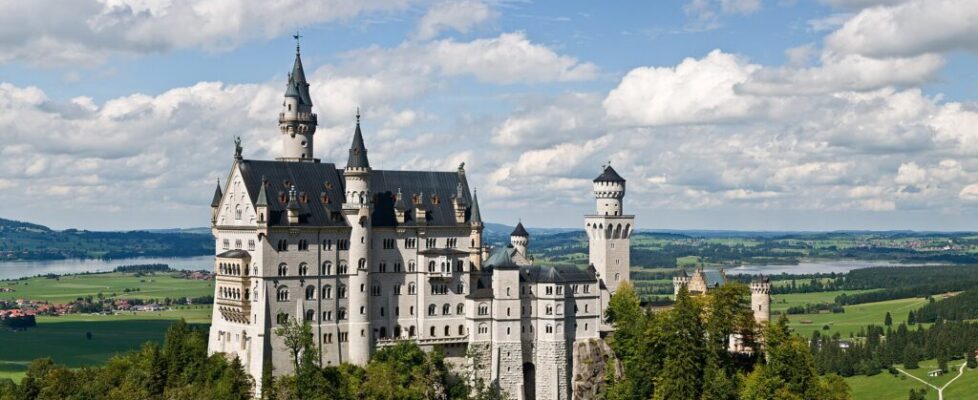
10 Real Fairy-Tale Castles You Can Actually Visit

The castle at the heart of Disneyland owes a debt to a real one in the Bavarian Alps, built for a king who lived in it for just 172 days. It turns out the storybook castle isn’t a Hollywood invention at all. Europe and Asia are dotted with towers, turrets, and drawbridges that look like they were sketched for a bedtime story.
Here are 10 real fairy-tale castles you can visit, from a Polish palace bristling with turrets to a Japanese fortress named for a white heron. Each comes with a practical tip on getting there or timing your trip. Opening hours and ticket rules change often, though, so always check the official website before you set off.
10Moszna Castle, Poland
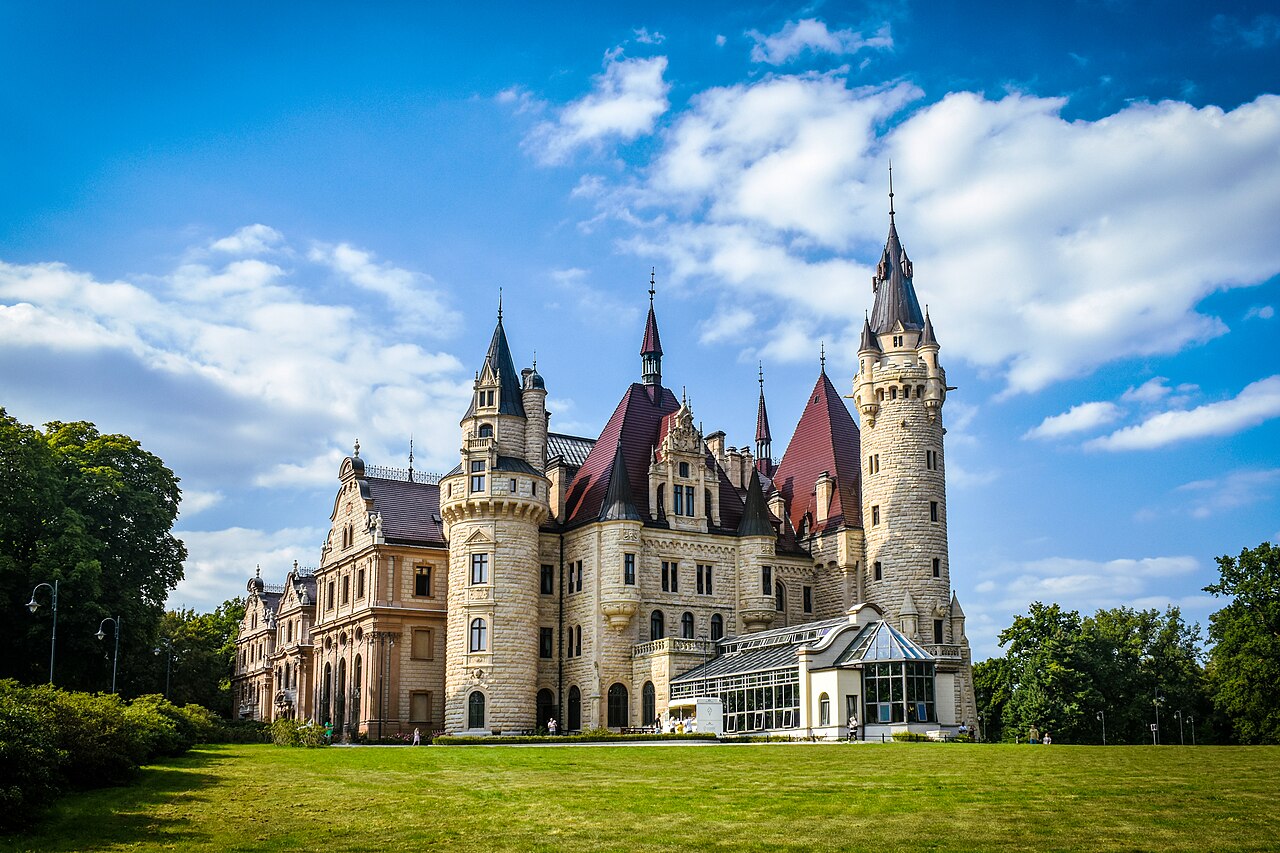
Try counting the spires on Moszna Castle and you’ll be at it a while. The palace in southwestern Poland is said to have 99 turrets and 365 rooms, an extravagant thicket of towers, gables, and pinnacles that looks as if three different castles were stitched together. In a sense, they were.
The core is an 18th-century baroque palace. After it burned on April 2, 1896, Franz Hubert von Tiele-Winckler, heir to a wealthy industrial dynasty, rebuilt it and then kept going. A neo-Gothic eastern wing with an orangery was finished by 1900, and a neo-Renaissance western wing followed between 1912 and 1914. The Tiele-Winckler family lived here until 1945, and Kaiser Wilhelm II came to hunt on the estate in 1911 and 1912.
After World War II, the castle spent decades as a health facility, a far cry from its days of imperial hunting parties. Today it’s open to visitors, with a chapel used as a concert hall, rotating art exhibitions, and a sprawling park of oak and chestnut avenues, canals, and rhododendrons. Visiting tip: Moszna sits about 30 kilometers south of Opole and is easiest to reach by car. Aim for late spring, when the rhododendrons in the park are blooming.
9Bojnice Castle, Slovakia
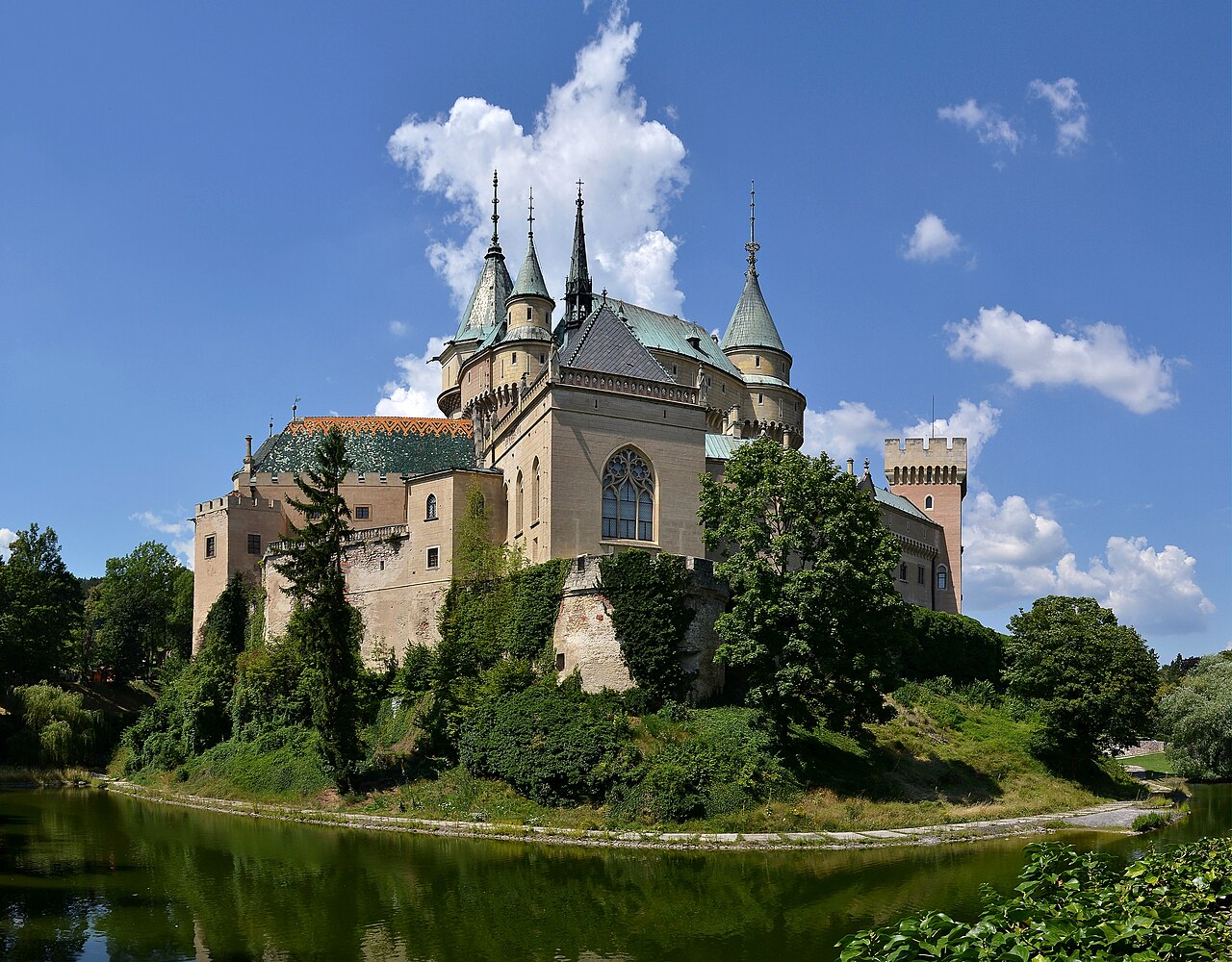
If Bojnice Castle looks like it wandered over from France’s Loire Valley, that’s because its last great builder wanted exactly that. Pointed spires, steep roofs, and romantic turrets rise above a small spa town in central Slovakia, framing one of the most photographed views in the country.
The site is far older than it looks. The castle appears in written records in 1113, and over the centuries it passed through the hands of Hungarian nobles and kings. King Matthias Corvinus is said to have issued decrees beneath a linden tree that still carries his name. The fairy-tale look came much later. Between 1889 and 1910, Count Ján Pálffy, an obsessive art collector, rebuilt the castle in a romantic style modeled on the châteaux of the Loire, acting as his own architect and interior designer.
Beneath the fourth courtyard lies a natural travertine cave about 26 meters down, rediscovered in 1888. Today the castle is a museum run under the Slovak National Museum and one of the most visited sights in Slovakia, hosting events such as the International Festival of Ghosts and Spirits. Visiting tip: pair the castle with the Bojnice Zoo in the surrounding park, the oldest zoo in Slovakia, and check the events calendar first, because festival days get packed.
8Corvin Castle, Romania
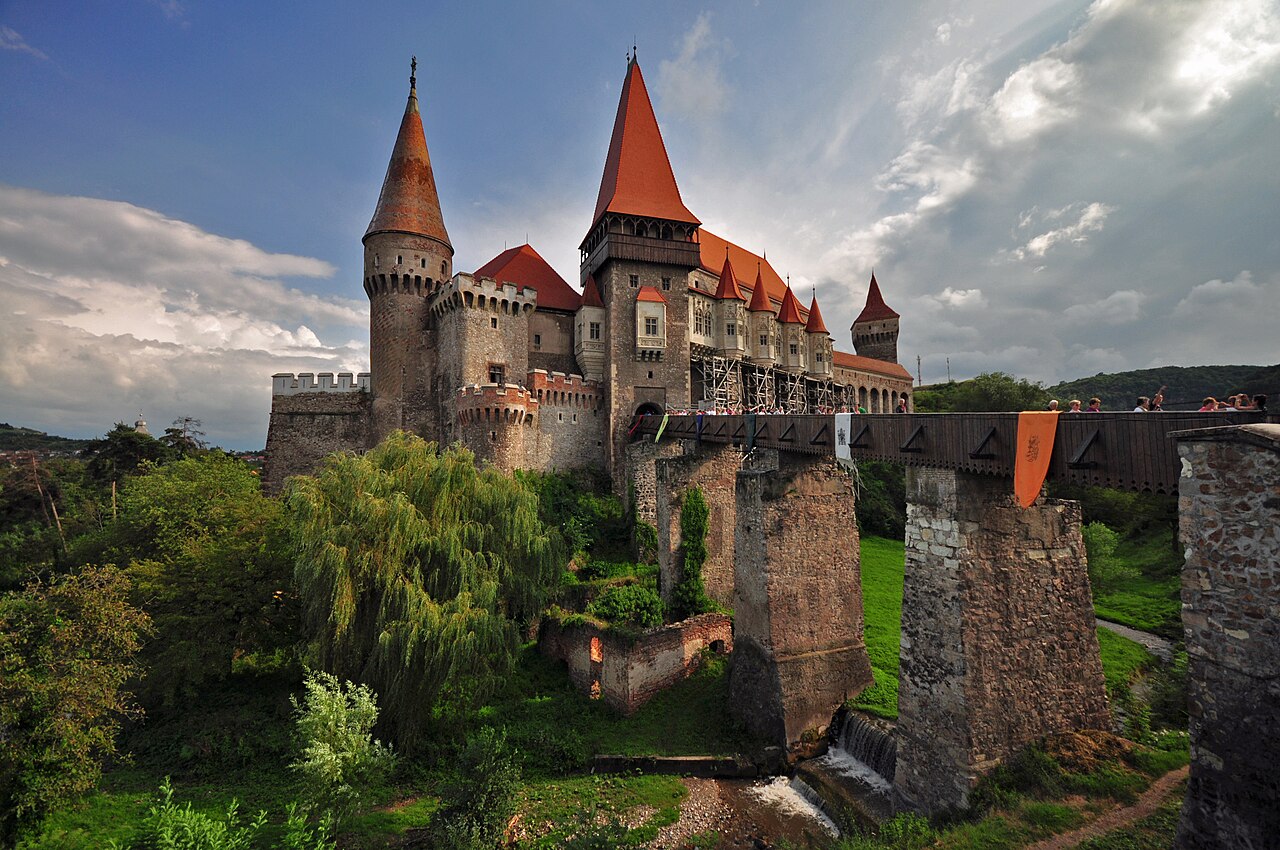
Corvin Castle doesn’t just sit on its rock; it bristles. A long bridge on tall stone piers leads across a ravine to the gatehouse, and behind it rise pointed towers, jagged battlements, and steep roofs that look made for a vampire movie. Filmmakers agree. The castle appears in the 2018 horror film The Nun and the 2024 Nosferatu.
The castle in Hunedoara, Transylvania, grew from an older keep that Sigismund of Luxembourg granted to the Hunyadi family in 1409. From 1446, John Hunyadi, regent of Hungary and a celebrated commander against the Ottomans, transformed it into a grand Gothic residence, and work continued under his son Matthias Corvinus, later king. Its Knights’ Hall, with rows of columns supporting Gothic vaults, was built for feasting. Today it’s considered one of the largest castles in Europe.
Legends cling to the walls. Guides like to say Vlad the Impaler, whose nickname helped inspire Dracula, was once held prisoner here by Hunyadi, though historians treat the story with caution. Much of what you see today reflects a romantic 19th-century restoration after a disastrous fire. Visiting tip: Hunedoara is an easy side trip from Deva, about 20 kilometers away, and the castle is at its most atmospheric on misty autumn mornings.
7Eilean Donan, Scotland
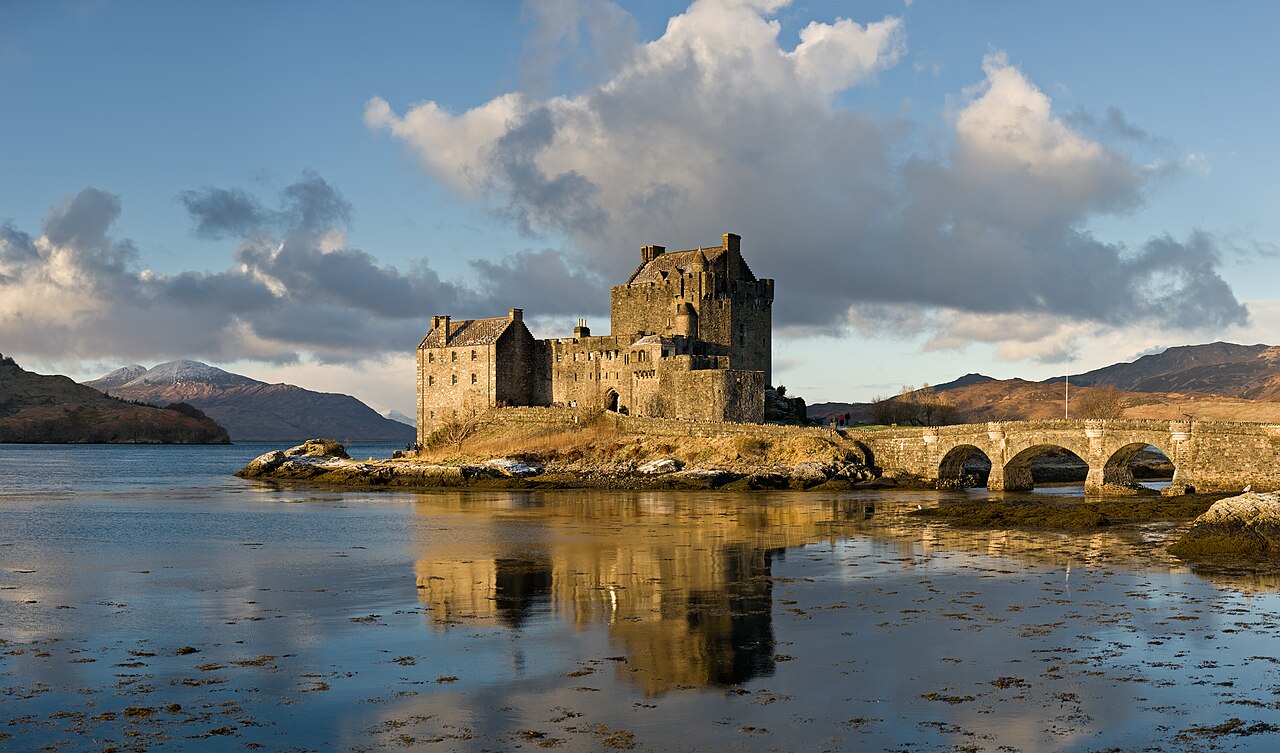
Eilean Donan is often called the most photographed castle in Scotland, and one glance explains why. It sits on a tiny island where three sea lochs meet, Loch Duich, Loch Long, and Loch Alsh, linked to the shore by an arched stone bridge with Highland mountains piled up behind it.
A castle has stood here since the 13th century. In 1719, during a Jacobite rising, it was garrisoned by Spanish soldiers backing the Jacobite cause. Royal Navy frigates bombarded it, and it was then destroyed with gunpowder, leaving a ruin that sat roofless for nearly two centuries. In the early 20th century, Lieutenant Colonel John MacRae-Gilstrap bought the island and spent years rebuilding the castle from the ruins, finishing in 1932 and adding the bridge along the way. It opened to the public in 1955.
Hollywood loves it. Eilean Donan appears in Highlander, the Bond film The World Is Not Enough, and Elizabeth: The Golden Age. Visiting tip: the castle sits right beside the A87, the main road to the Isle of Skye, so it slots neatly into a Skye road trip. Come early in the morning or near dusk for softer light and fewer tour coaches, and check opening dates before you go, especially in winter.
6Château de Chenonceau, France
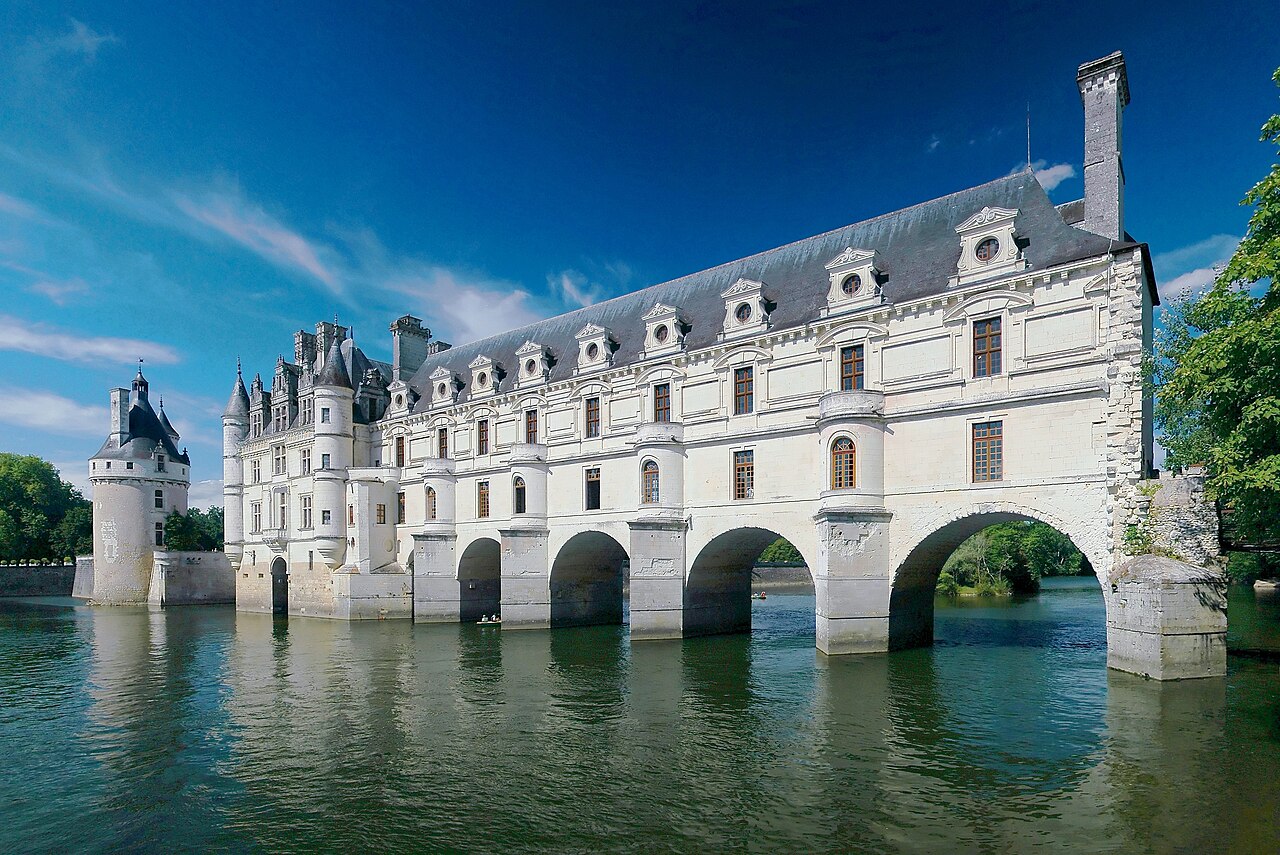
Château de Chenonceau doesn’t stop at the riverbank. Its long gallery marches straight across the River Cher on a row of graceful arches, so the whole building seems to float on its own reflection.
It’s often nicknamed the “Château des Dames” because women shaped it at nearly every turn. Katherine Briçonnet oversaw the original residence for her husband, Thomas Bohier, in the 1510s. King Henry II later gave it to his mistress, Diane de Poitiers, who had the bridge built across the river. After Henry’s death, his widow, Catherine de’ Medici, pushed Diane out and added the two-story gallery on top. During the French Revolution, Louise Dupin is credited with saving the château by pointing out that it was the only bridge across the river for miles.
The 20th century brought more drama. The Menier family, chocolate makers who bought Chenonceau in 1913 and still own it, turned the gallery into a hospital ward during World War I. In World War II, the Cher formed part of the line between occupied and “free” France, and the château became a crossing point. Visiting tip: trains run from Tours to the little Chenonceaux station, a short walk from the gates. Arrive right at opening time to have the gallery almost to yourself.
5Himeji Castle, Japan
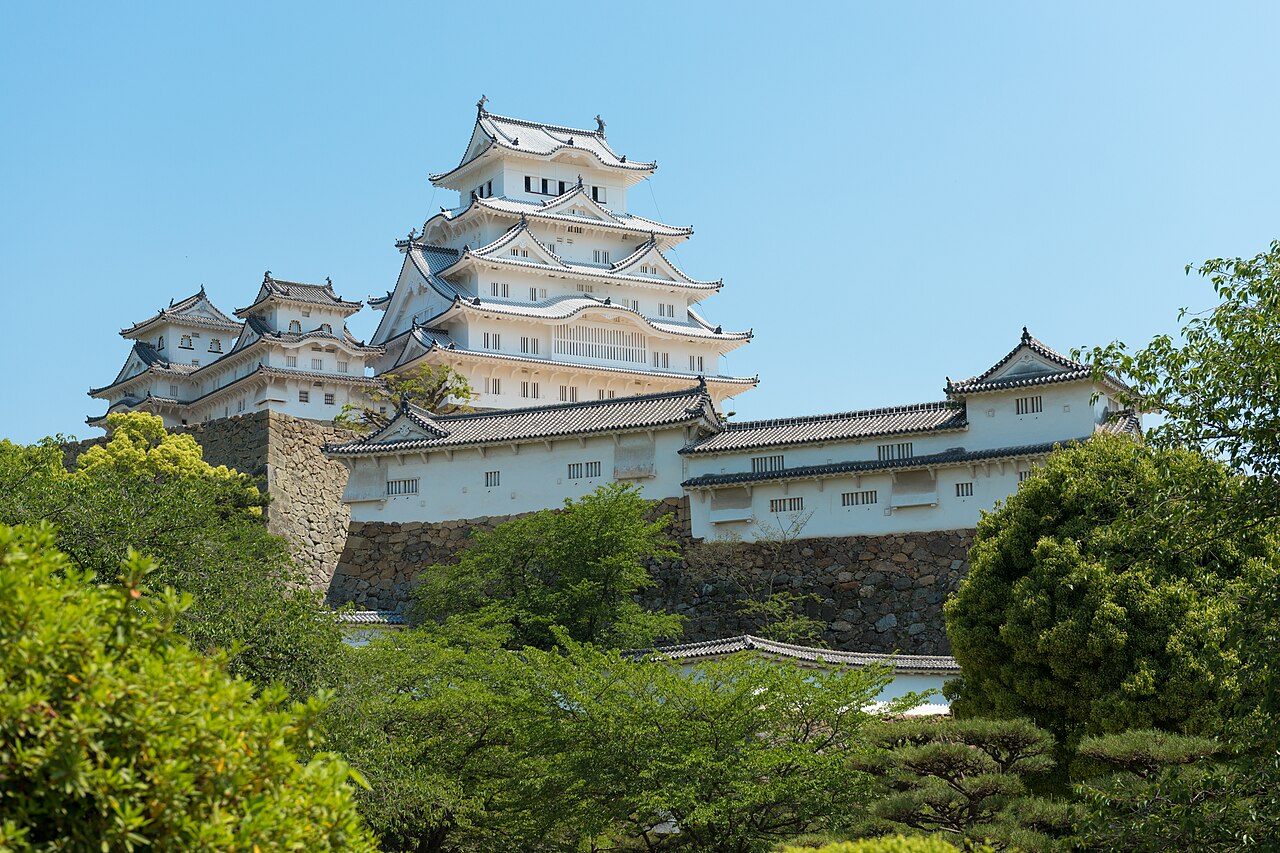
Himeji Castle earned its nickname, Shirasagi-jō or “White Heron Castle,” from the brilliant white plaster on its walls and the way its layered roofs seem to spread like wings. It’s the largest and most celebrated of Japan’s original surviving castles, and arguably the most beautiful.
A fort first went up on Himeyama hill in 1333. Toyotomi Hideyoshi expanded it in the 1580s, and between 1601 and 1609 the lord Ikeda Terumasa transformed it into the vast complex seen today, with 83 structures and a maze of gates, walls, and winding paths designed to confuse attackers. That gleaming plaster wasn’t just for looks. It helped protect the wooden buildings from fire.
Its luck is the stuff of legend. In 1945, bombing raids burned much of Himeji city, but the castle survived, and a firebomb that landed on the top floor failed to explode. It also rode out the 1995 Great Hanshin earthquake virtually unharmed. In 1993 it became one of Japan’s first UNESCO World Heritage Sites. Visiting tip: the castle is roughly a 15-minute walk straight up the main avenue from Himeji Station, a Shinkansen stop. Go in early April, when cherry blossoms frame the keep, and get there early.
4Alcázar of Segovia, Spain
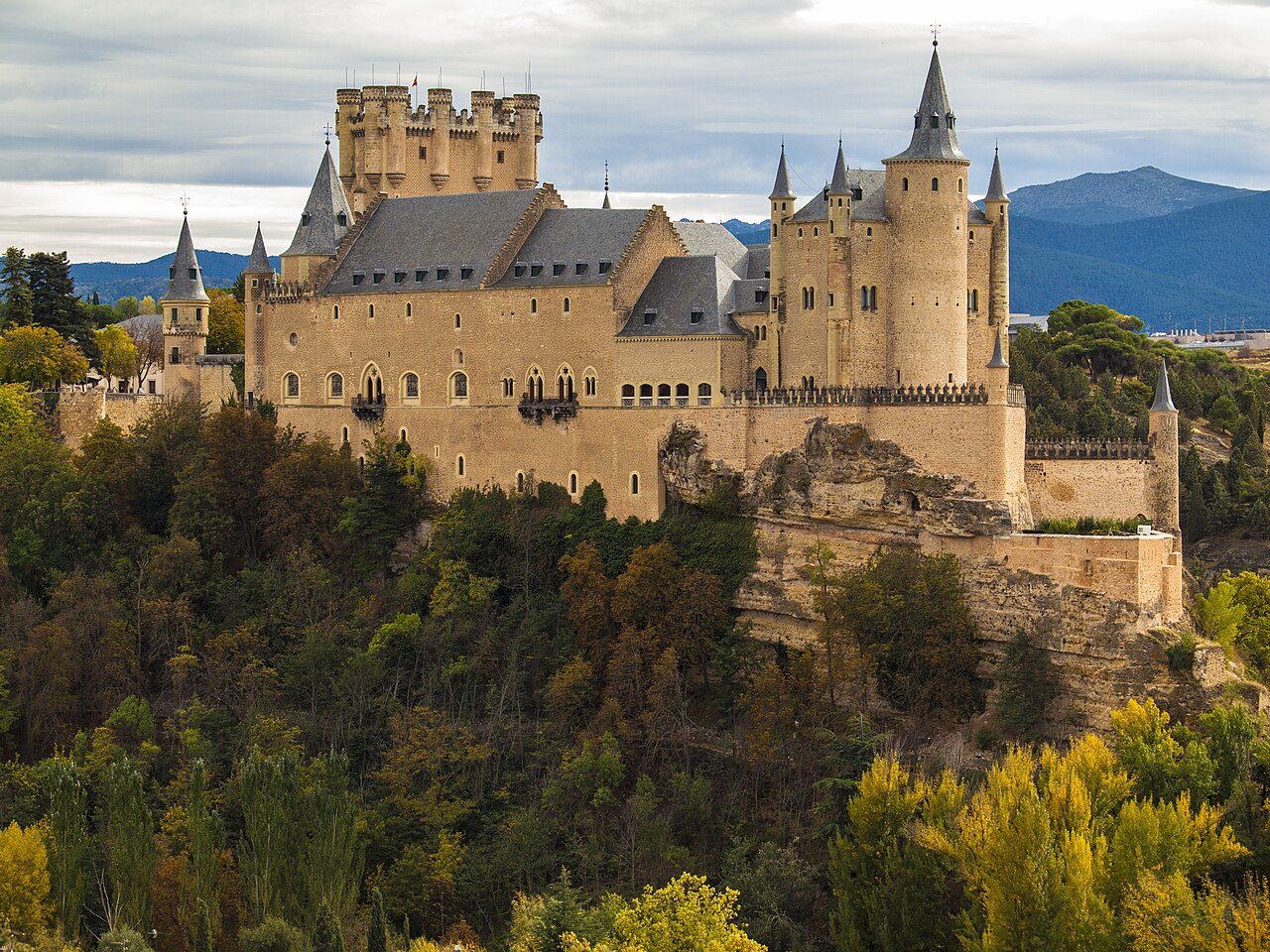
Seen from the valley below, the Alcázar of Segovia looks like a stone ship sailing out of the city. The fortress stands on a rocky crag where the Eresma and Clamores rivers meet, its narrow tip jutting out over the gorge like a prow and its slate-capped turrets crowding the skyline.
Built on a site fortified since Roman times, it became a favorite residence of Castilian monarchs. In December 1474, when news arrived of King Henry IV’s death, his half-sister Isabella took refuge here and was proclaimed queen of Castile in Segovia the next day. Philip II married Anna of Austria in its chapel in 1570, and in 1764 Charles III installed the Royal Artillery College inside. A fire in 1862 destroyed the ornate ceilings of the royal rooms, which were later restored with the help of earlier engravings.
The silhouette is often said to have inspired the castle in Disney’s 1937 Snow White and the Seven Dwarfs, though that’s more lore than documented fact. Visiting tip: high-speed trains from Madrid reach Segovia in about half an hour, and a local bus runs into town. Start at the famous Roman aqueduct, wander through the old town to the Alcázar, and climb the 156 steps of the Tower of John II for the view.
3Hohenzollern Castle, Germany
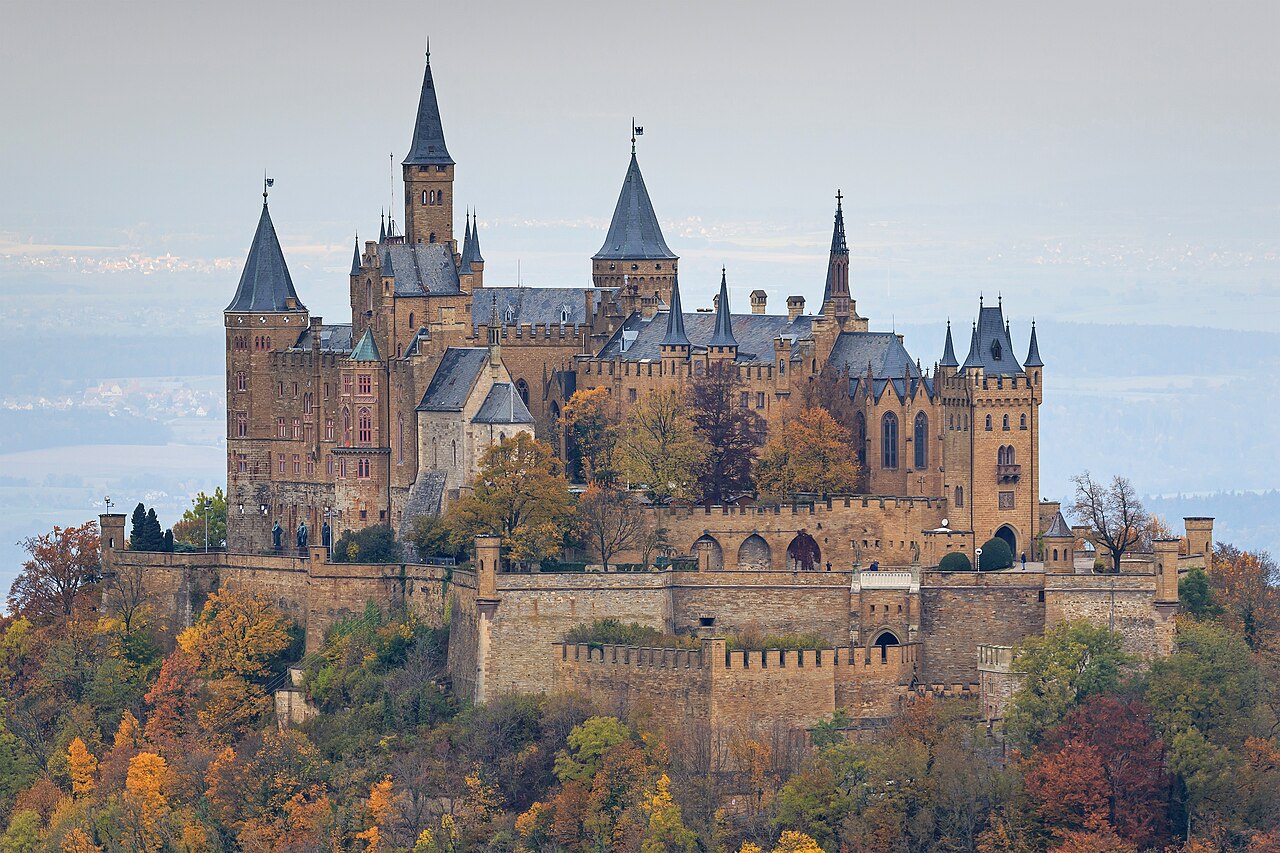
On some autumn mornings, Hohenzollern Castle seems to hover above a sea of fog, its towers and battlements poking out of the clouds atop a lone mountain at the edge of the Swabian Jura. It looks like it was built for a storybook, and it was built with exactly that kind of grandeur in mind.
This is the third castle on the summit. The first, built in the 11th century by the Counts of Zollern, was destroyed in 1423 after a long siege by an alliance of Swabian cities. A second rose from 1454 but eventually fell into disrepair. The current Gothic Revival fortress was commissioned by King Frederick William IV of Prussia, designed by Friedrich August Stüler, and completed in 1867 as a monument to the Hohenzollern dynasty, which produced Prussia’s kings and Germany’s emperors.
Remarkably, it’s still privately owned by the family, split between its Prussian and Swabian branches. The treasury displays the crown made for Kaiser Wilhelm II and a uniform worn by Frederick the Great. Visiting tip: the castle is about 50 kilometers south of Stuttgart. Drive or take a train to Hechingen, then ride the shuttle bus or hike the steep path up from the parking area. For the famous fog photos, watch for clear autumn mornings and view it from nearby hills.
2Pena Palace, Portugal
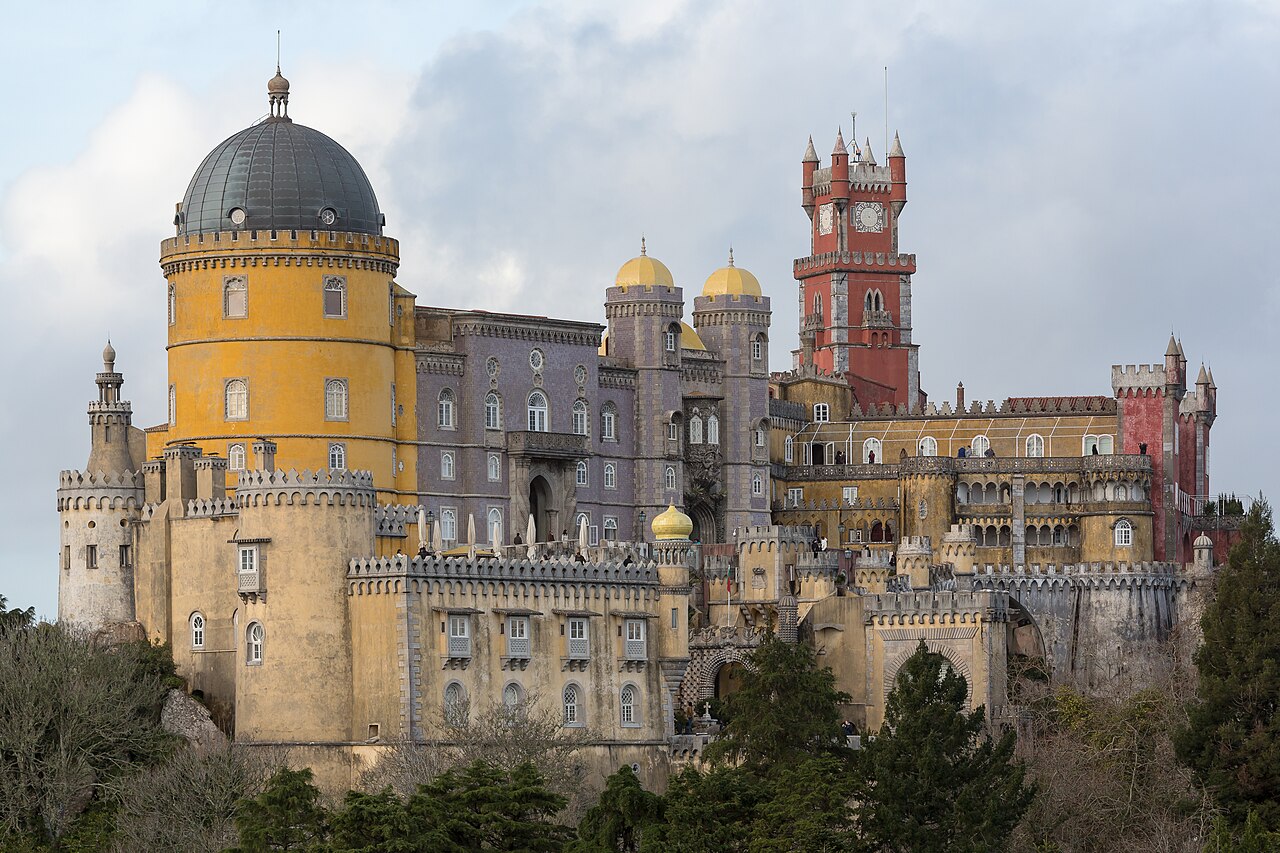
Pena Palace looks like a child’s drawing come to life and colored in with the boldest crayons in the box. Mustard-yellow and brick-red towers, Moorish arches, domed turrets, and a gateway guarded by a fierce stone sea creature crown a forested peak high above Sintra.
It began as a monastery. Lightning damaged it in the 18th century, and the 1755 Lisbon earthquake reduced it to ruins. In 1838, King Ferdinand II, a prince of the German house of Saxe-Coburg and Gotha who had married Queen Maria II, bought the site and set about building a romantic fantasy, with Baron Wilhelm Ludwig von Eschwege as architect. Construction ran from 1842 to 1854, blending Gothic, Manueline, Moorish, and Renaissance styles in a gloriously cheerful jumble. Its bright colors faded to gray for decades before being restored in the late 20th century.
Ferdinand also laid out the surrounding park, more than 200 hectares of exotic trees and winding paths. The palace belongs to the Cultural Landscape of Sintra, a UNESCO site since 1995. Visiting tip: trains from Lisbon’s Rossio station reach Sintra in about 40 minutes, but the palace sits high above town, so take a shuttle bus or taxi up the hill. Book a timed ticket in advance and aim for a weekday morning.
1Neuschwanstein Castle, Germany
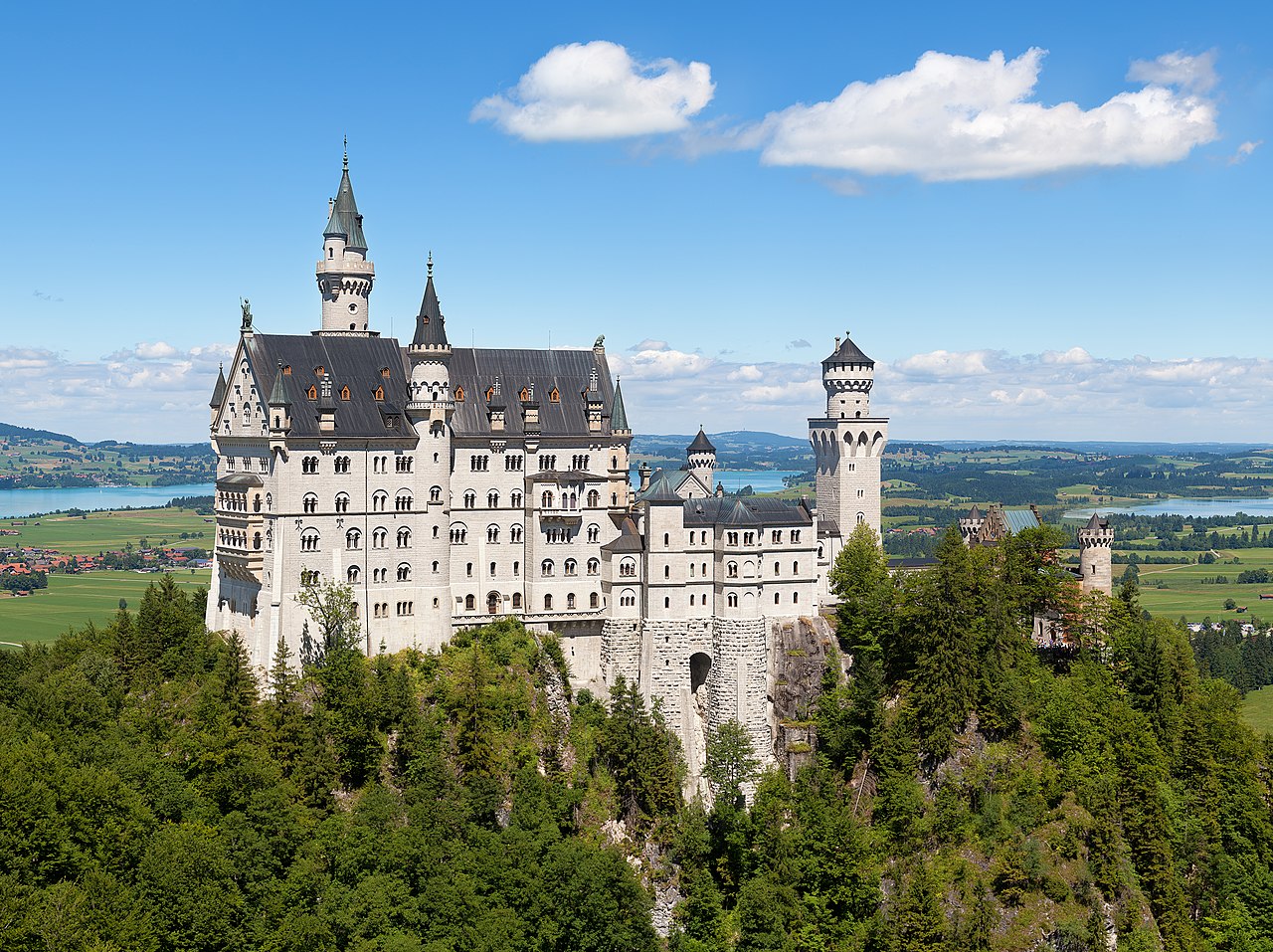
Neuschwanstein was dreamed up less by an architect than by a romantic. Its first designs came from Christian Jank, a theater set painter, and the man who commissioned it, King Ludwig II of Bavaria, wanted a medieval knight’s castle straight out of the Wagner operas he adored. The result, perched on a crag above a gorge in the Bavarian Alps, became the template for fairy-tale castles everywhere.
The foundation stone was laid on September 5, 1869, but Ludwig never saw it finished. He lived there for a total of just 172 days before he was declared unfit to rule in June 1886, and days later, on June 13, he died in still-mysterious circumstances in Lake Starnberg. Within about six weeks, the castle opened to paying visitors. Only around 15 rooms were ever completed, among them the Hall of the Singers, inspired by Wartburg Castle, and a throne hall that never received its throne.
Today Neuschwanstein draws well over a million visitors a year, it famously helped inspire Disneyland’s Sleeping Beauty Castle, and in July 2025 it joined UNESCO’s World Heritage list alongside Ludwig’s other palaces. Visiting tip: trains from Munich reach Füssen in about two hours, and local buses continue to Hohenschwangau. Interiors are seen by guided tour only and tickets sell out, so book online well ahead. For the classic view, walk to the Marienbrücke over the Pöllat Gorge when it’s open.
Happily Ever After (Tickets Required)
Look closely and most fairy-tale castles turn out to be love letters to an imagined past. Neuschwanstein, Pena, Bojnice, and Hohenzollern were all built or rebuilt in the 1800s and early 1900s by people who adored the Middle Ages more than they ever could have enjoyed living in them. Others, like Himeji and Chenonceau, simply survived centuries of fire, war, and fashion. Either way, the magic is real enough to stand in line for.
If ruins appeal more than restorations, wander through abandoned places that feel frozen in time, or travel even further back with lost cities rediscovered after centuries.
Quick answers
Which castle inspired Disney’s Sleeping Beauty Castle?
Neuschwanstein Castle in Bavaria is the best-known inspiration for Sleeping Beauty Castle at Disneyland, which opened in 1955. Disney’s designers borrowed its slender towers and dreamy, romantic silhouette. Spain’s Alcázar of Segovia is also often linked to Disney’s earlier Snow White castle, though that connection is based more on lore than on documentation.
Can you go inside Neuschwanstein Castle?
Yes, but only on a guided tour. Visitors see the finished rooms, including the Hall of the Singers and the throne hall. Tickets are timed and tied to a specific tour slot, and they often sell out in summer, so booking online in advance is strongly recommended. Allow time for the steep walk or shuttle up from the village of Hohenschwangau.
When is the best time to visit Europe’s fairy-tale castles?
Late spring and early fall usually offer the best balance of good weather, longer opening hours, and smaller crowds than peak summer. Autumn brings bonus fog and foliage at castles like Hohenzollern, while spring gardens shine at Moszna and Chenonceau. Some castles, especially in the Scottish Highlands, keep shorter hours or close for part of winter.
Sources, further reading & photo credits
- Neuschwanstein Castle — Wikipedia
- Moszna Castle — Wikipedia
- Bojnice Castle — Wikipedia
- Corvin Castle — Wikipedia
- Eilean Donan — Wikipedia
- Château de Chenonceau — Wikipedia
- Himeji Castle — Wikipedia
- Alcázar of Segovia — Wikipedia
- Hohenzollern Castle — Wikipedia
- Pena Palace — Wikipedia
Cover image: Jürgen Matern · CC BY-SA 3.0 · via Wikimedia Commons. Photos throughout this list are sourced from Wikimedia Commons under the licenses noted in each caption.