10 Animals That Went Extinct Surprisingly Recently

Extinction sounds like something that happened to dinosaurs and woolly mammoths, safely buried in deep time. But plenty of animals disappeared within living memory. Some were photographed, filmed, given pet names and fussed over by zookeepers before the last one died. A few vanished after most people alive today were born.
These animals that went extinct recently are ordered roughly from the earliest loss to the latest. One note on dates: scientists usually wait years, sometimes decades, before officially declaring a species extinct, so we’ve separated when each animal was last seen from when it was formally written off. In several cases, the gap between the two tells its own story.
10Passenger Pigeon
In 1813, John James Audubon watched passenger pigeons stream over Kentucky in flocks so dense they darkened the midday sky. He tried counting the flocks and tallied 163 in 21 minutes. The birds kept coming for three days.
At their height, passenger pigeons numbered an estimated 3 to 5 billion and may have been the most abundant bird on the planet. One ornithologist, A. W. Schorger, estimated they made up 25 to 40 percent of all land birds in the United States. A flock reported over Ontario in 1866 was said to be about 1.5 kilometers wide and 500 kilometers long, and took 14 hours to pass. They nested in enormous colonies, and that made them easy targets. Commercial hunters used the telegraph and the railroads to find nesting sites and ship birds to city markets by the barrel, while logging stripped away the forests they depended on.
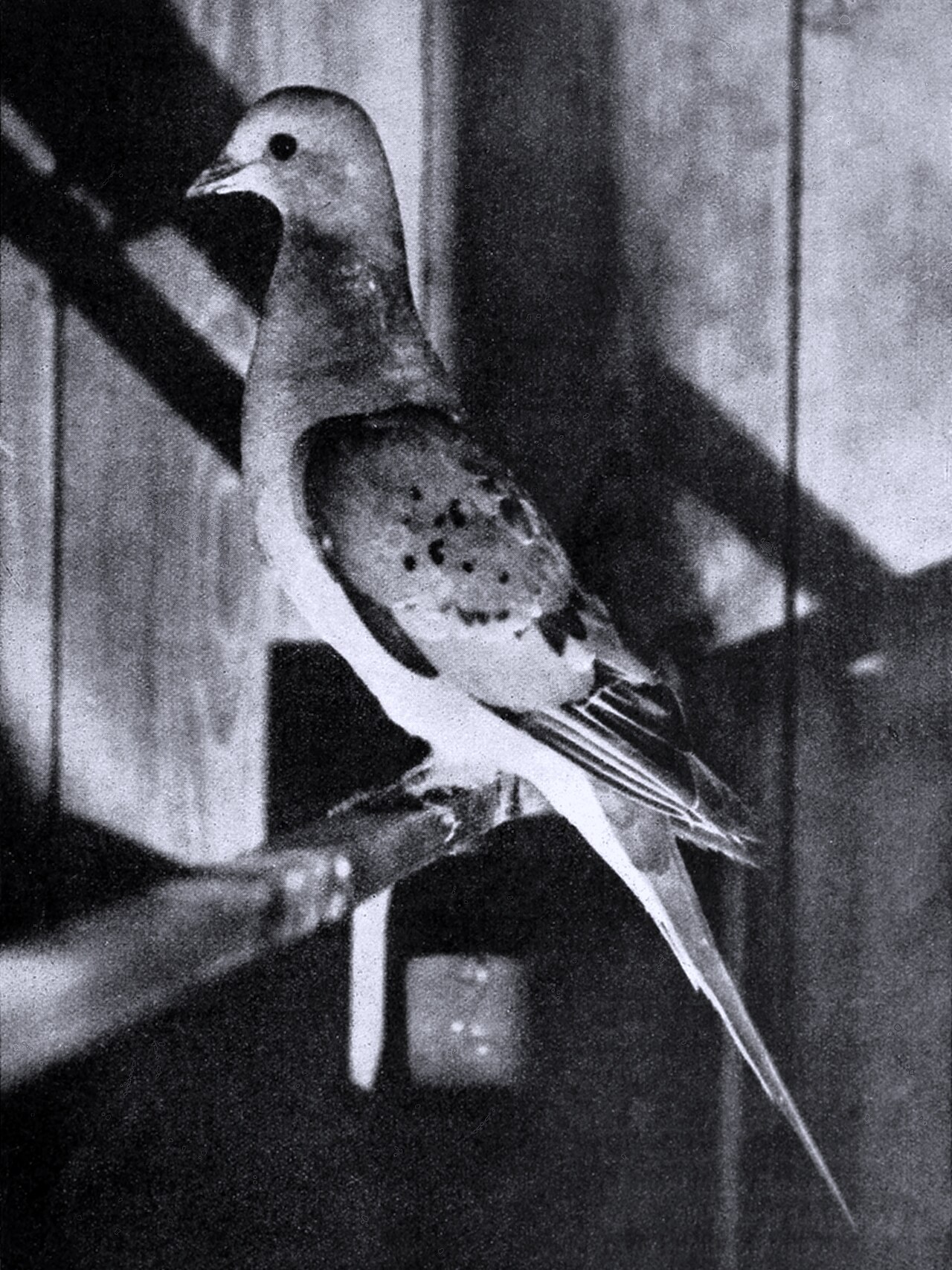
The collapse took only a few decades. The last confirmed wild birds were shot around 1900. Martha, the last known passenger pigeon, died at the Cincinnati Zoo on September 1, 1914. Her body was frozen into a block of ice and shipped to the Smithsonian Institution, where she was preserved.
9Thylacine (Tasmanian Tiger)
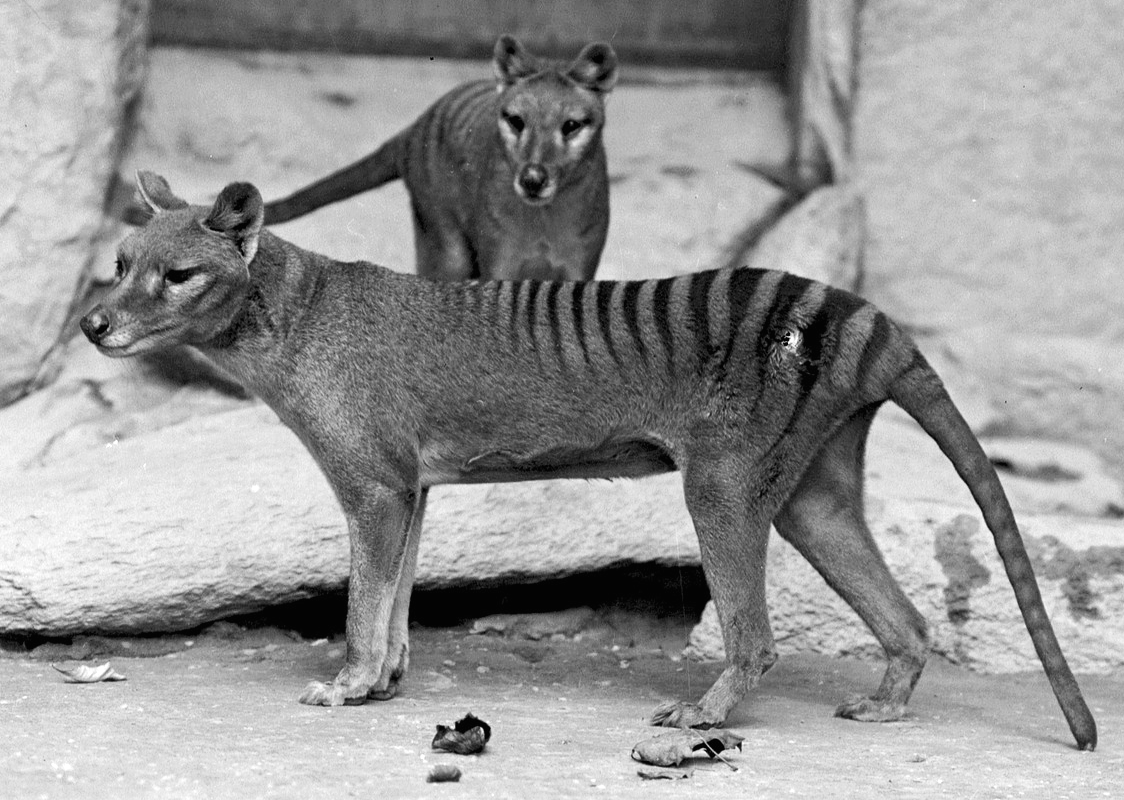
On September 7, 1936, the last known thylacine died at Hobart Zoo in Tasmania. Just 59 days earlier, on July 10, the Tasmanian government had finally granted the species legal protection.
Nicknamed the Tasmanian tiger or Tasmanian wolf, the thylacine was a carnivorous marsupial with a dog-like body, a stiff tail and dark stripes across its lower back. It disappeared from mainland Australia thousands of years ago, surviving only on Tasmania. There, sheep farmers blamed it for livestock losses, and from 1888 to 1909 the government paid more than 2,200 bounties for dead thylacines. Habitat loss and disease likely finished what the bounty hunters started. The last known wild thylacine was shot in 1930 by a farmer named Wilf Batty in northwest Tasmania.
The famous name “Benjamin” for the last captive animal appears to have been invented decades later, in 1968. The IUCN declared the species extinct in 1982, and Tasmania followed in 1986. Unconfirmed sightings still pour in, and a 2023 study argued it may have survived into the late 1990s or later, a claim other researchers dispute. In 2022, the company Colossal Biosciences and the University of Melbourne announced a project to recreate the animal, though many scientists remain skeptical.
8Caribbean Monk Seal
In August 1494, during Christopher Columbus’s second voyage to the Americas, a ship’s crew anchored off the island of Alta Velo, south of Hispaniola, and killed eight seals sleeping on the beach. It was an omen of what would follow.
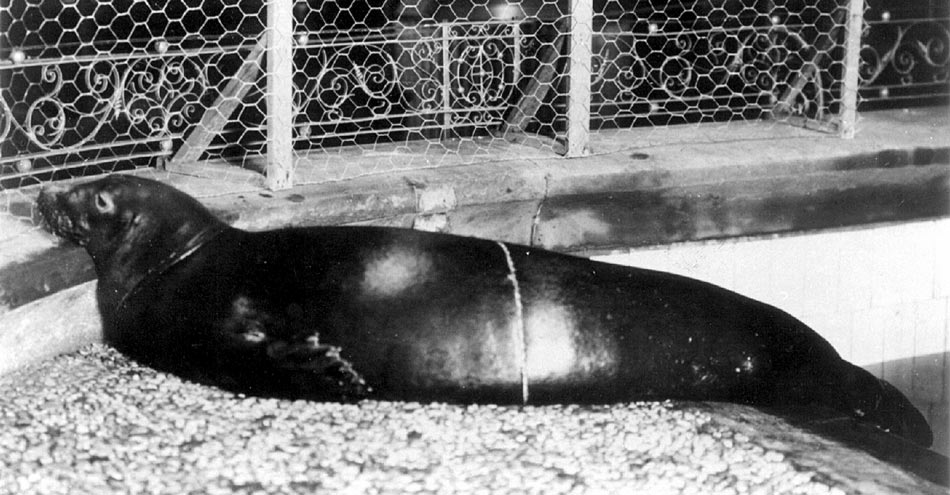
Caribbean monk seals once hauled out on beaches and reefs across the Caribbean, the Bahamas and the Gulf of Mexico. Adults could reach nearly 2.4 meters long and weigh 170 to 270 kilograms, and that thick layer of blubber made them valuable. As early as 1688, plantation owners sent hunting parties out at night to kill hundreds of seals for oil to lubricate machinery, and a 1707 account described fishermen slaughtering them by the hundreds. By 1850 there were too few left to hunt commercially. Overfishing of the reef fish they ate made recovery even harder.
A handful lived in captivity. The New York Aquarium kept a female captured in 1897 for about five and a half years and acquired four more in 1909. The last confirmed sighting of a wild Caribbean monk seal came in 1952, at Serranilla Bank, a remote stretch of reefs between Jamaica and Nicaragua. After a five-year search, the US government officially declared the species extinct in 2008.
7Golden Toad
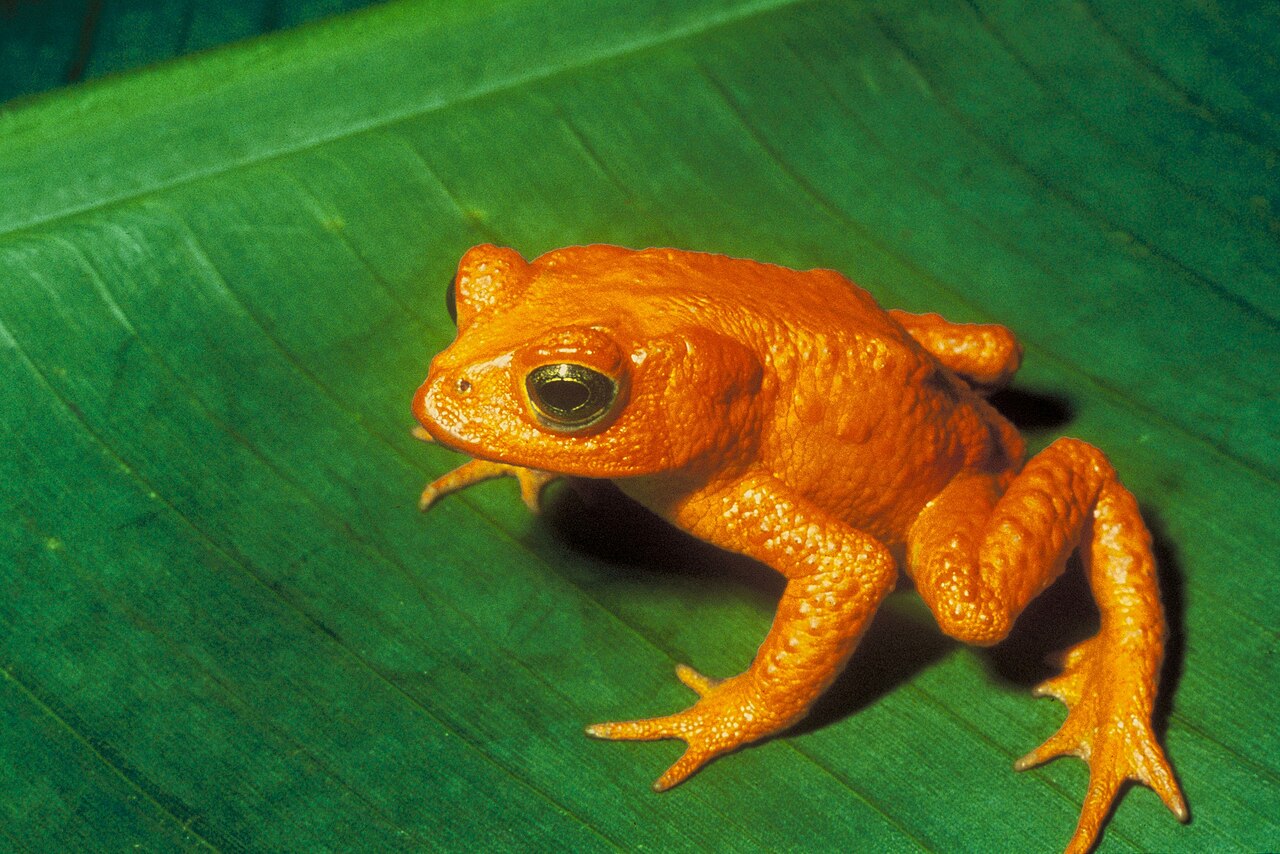
On a single day in April 1987, biologist Martha Crump counted 133 golden toads mating in one small pool in the cloud forest above Monteverde, Costa Rica. That breeding season, about 1,500 adults were seen. Two years later, the species was gone.
The males were a brilliant, almost unreal orange, and only about 4 to 5 centimeters long. Females were larger and darker, charcoal-colored with yellow and red markings. Herpetologist Jay Savage formally described the species in 1966. It lived in a tiny patch of high-elevation forest north of Monteverde, an area of just a few square kilometers, and spent most of the year hidden underground, emerging for short, frenzied breeding gatherings after spring rains.
In 1988, only ten or eleven toads turned up. On May 15, 1989, Crump spotted a single male, and no one has seen a golden toad since. The IUCN declared the species extinct in 2004. The exact cause is still debated. Unusually warm, dry conditions linked to the 1986–87 El Niño may have dried out breeding pools, and the chytrid fungus that ravaged amphibians across Central America very likely played a role, although the evidence isn’t conclusive.
6Pyrenean Ibex (Bucardo)

The last Pyrenean ibex, a female named Celia, was found dead on January 6, 2000, in Spain’s Ordesa y Monte Perdido National Park, crushed by a fallen tree. Her death should have been the end of the story. It wasn’t.
The bucardo, as it’s known in Spanish, was a subspecies of Iberian ibex, a sturdy wild goat with thick, sweeping horns. Centuries ago it was common in the Pyrenees, but heavy hunting in the 19th and 20th centuries crushed its numbers. By 1900 fewer than 100 remained, and after 1910 the population never rose above about 40. In 1999, researchers captured Celia and took small skin samples from her ear, freezing the cells in liquid nitrogen in case science could someday use them.
Science tried. Researchers built 285 cloned embryos from Celia’s cells and transferred 54 of them into 12 surrogate mothers, Spanish ibexes and ibex-goat hybrids. Most pregnancies failed. On July 30, 2003, a single clone was born alive, but it died within minutes from a severe lung defect, including an extra lobe in one lung. For those few minutes, an extinct animal had been brought back to life, which is why the bucardo is often described as the first animal to go extinct twice.
5Poʻouli
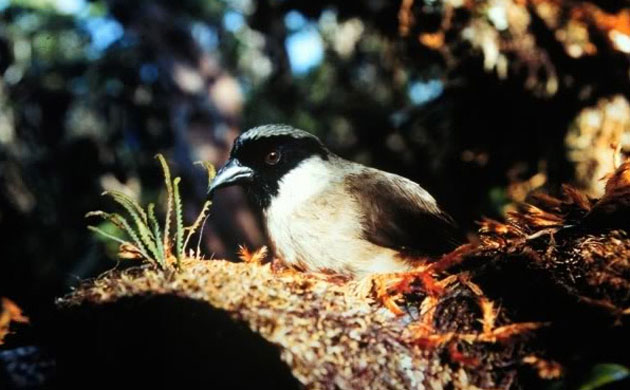
Few species have gone from discovery to extinction as quickly as the poʻouli. University of Hawaiʻi students found the stocky little honeycreeper in 1973 on the northeastern slopes of Haleakalā, the great volcano of Maui. It was new to science and had no known place in Hawaiian oral tradition.
The poʻouli was brown with a black mask, and it stood out among Hawaiian honeycreepers for relying heavily on native land snails for food. Its population was small from the start, and it fell by more than 90 percent between 1975 and 1985 as forests degraded and invasive rats, cats, pigs and mosquito-borne avian malaria took their toll. By 1997, only three birds were known, each living alone in a separate territory. In April 2002, biologists carried a female across the mountain to the home range of a male, hoping the two would meet. Radio tracking showed her flying straight back home.
In September 2004, the team captured the male, an old bird with one eye, and brought him to the Maui Bird Conservation Center, hoping to find him a mate. He died on November 26, 2004. The other two birds were never seen again. The IUCN listed the species as extinct in 2019, and the US government removed it from the endangered species list in October 2023.
4Baiji (Yangtze River Dolphin)
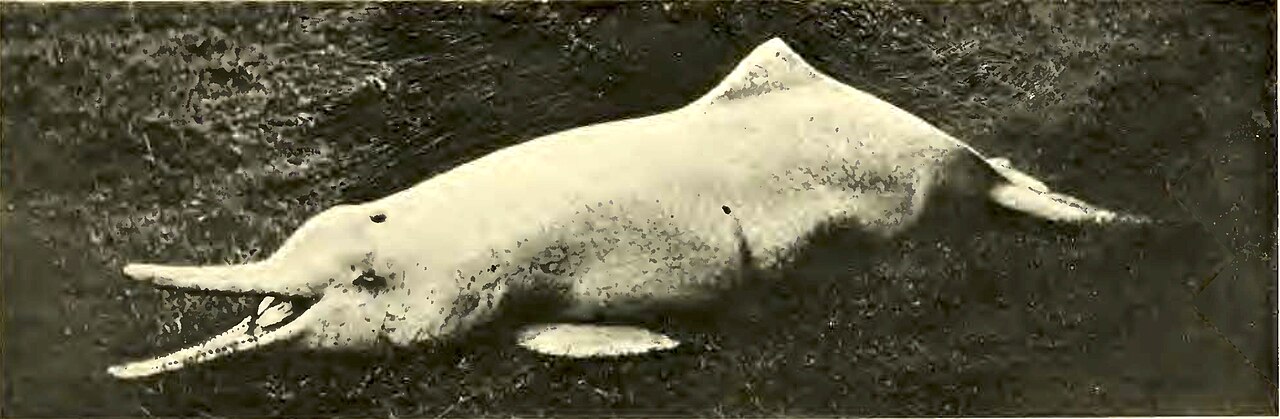
In late 2006, a team of 30 researchers spent six weeks scanning the Yangtze River for China’s river dolphin, the baiji. They didn’t find a single one. On December 13, 2006, the expedition’s leaders declared the species functionally extinct, meaning too few could remain to sustain a population.
The baiji was a pale, gray-white dolphin with a long, narrow beak and tiny eyes, relying on echolocation to navigate the murky river. Its lineage split from its closest relatives roughly 16 million years ago, and local fishermen revered it as the “Goddess of the Yangtze.” There were an estimated 6,000 baiji in the 1950s. By the 1980s, around 400 remained, as the river transformed into one of the busiest waterways on Earth, crowded with ships, fishing nets, dams and pollution, and loud enough to scramble a dolphin’s sonar.
The best-known baiji was Qiqi, a male rescued after being injured by fishing hooks in 1980. He lived at the Wuhan Institute of Hydrobiology for about 22 years and died on July 14, 2002. A blurry 2007 video of a large white animal in the river raised brief hopes, and the IUCN still lists the baiji as Critically Endangered (Possibly Extinct). If it is gone, it would be the first dolphin species driven to extinction by humans.
3Western Black Rhinoceros
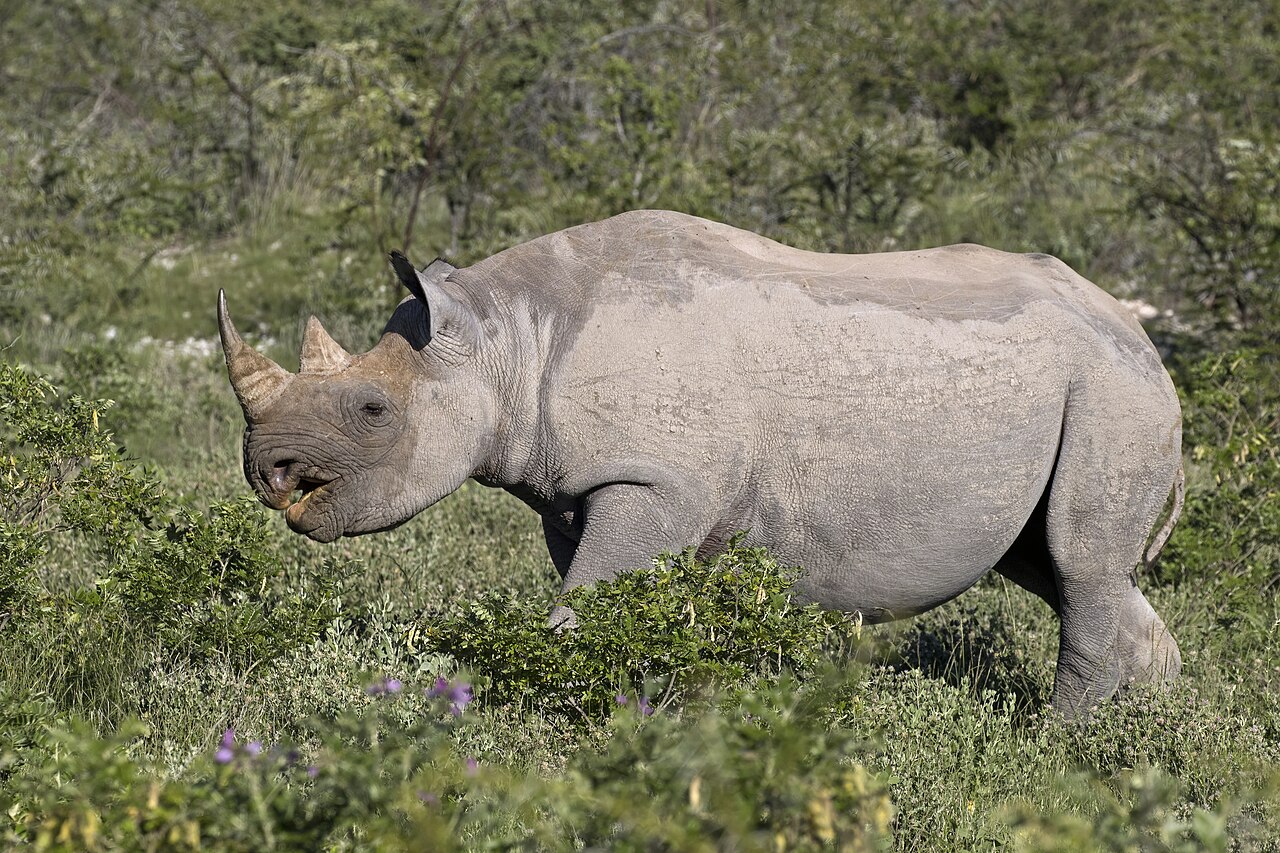
In 2006, survey teams spent six months on about 2,500 kilometers of patrols across northern Cameroon, searching for the western black rhinoceros. They found no rhinos and no fresh signs of any.
The western black rhino was a subspecies of black rhinoceros that once roamed the savannas of west-central Africa, including Chad, the Central African Republic, Cameroon and Nigeria. Protection measures helped its numbers rise in the 1930s, but poaching surged later in the century. By 1980 only hundreds remained. By 2000 there were an estimated 10, and by 2001 just five. A 2004 estimate of about 30 animals later turned out to be based on falsified data.
The driving force was the market for rhino horn, prized in parts of Asia as a traditional medicine with no scientific basis and in Yemen for ornate dagger handles. The IUCN declared the subspecies extinct in 2011. Black rhinos overall fell by about 96 percent between 1970 and 1992, but other subspecies have slowly recovered under heavy protection. By the end of 2022, Africa’s black rhinos numbered about 6,487, up from their lowest point decades earlier, though the western black rhino will never be part of that comeback.
2Pinta Island Tortoise
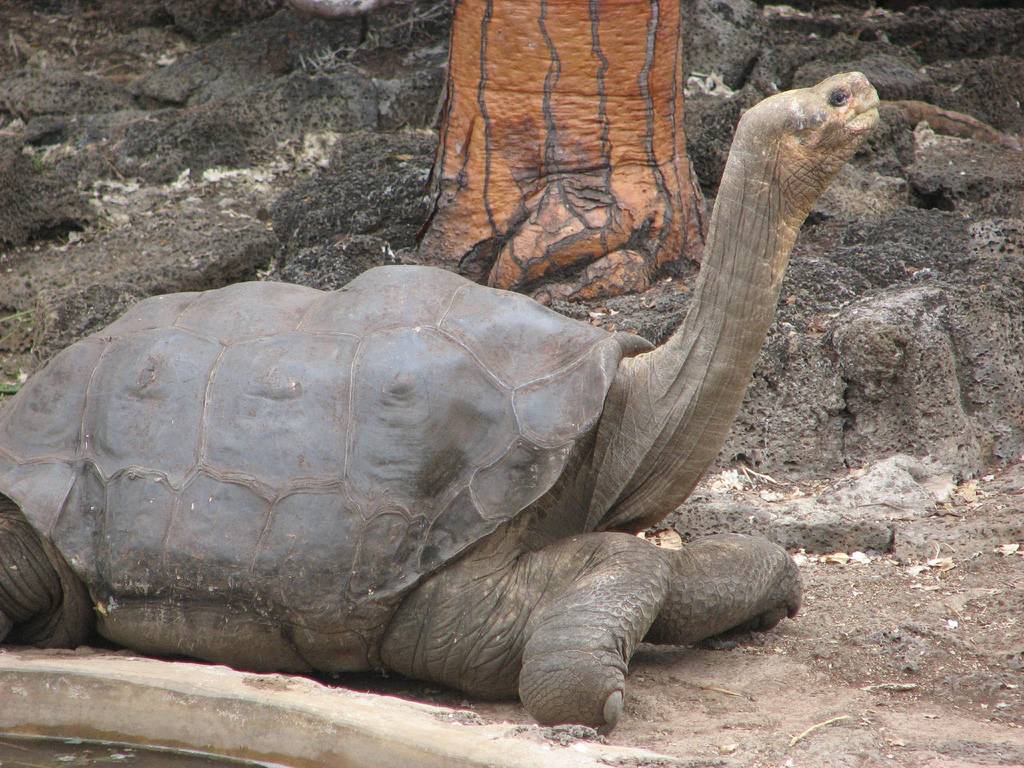
On the morning of June 24, 2012, ranger Fausto Llerena, who had cared for him for about 40 years, found Lonesome George dead in his pen at the Charles Darwin Research Station in the Galápagos. George was believed to be around 100 years old, and he was the last known Pinta Island tortoise.
He had been something of a miracle from the start. On November 1, 1971, Hungarian snail researcher József Vágvölgyi spotted a giant tortoise on Pinta Island, where the species was thought to be extinct. In the 19th century, whalers and sailors had hauled off huge numbers of Galápagos tortoises as living food, since the animals could survive months in a ship’s hold. Later, feral goats stripped Pinta’s vegetation. George was brought into captivity and became a global symbol of conservation.
For decades, scientists tried to find him a mate. The Darwin Station offered a $10,000 reward for a Pinta female, and none was ever found. George was penned with two females from Wolf Volcano on Isabela Island, and in 2008 and 2009 they laid eggs, but every clutch proved inviable. After his death, taxidermists at the American Museum of Natural History in New York preserved his body. He returned to the Galápagos in February 2017 and is now on display on Santa Cruz Island.
1Bramble Cay Melomys
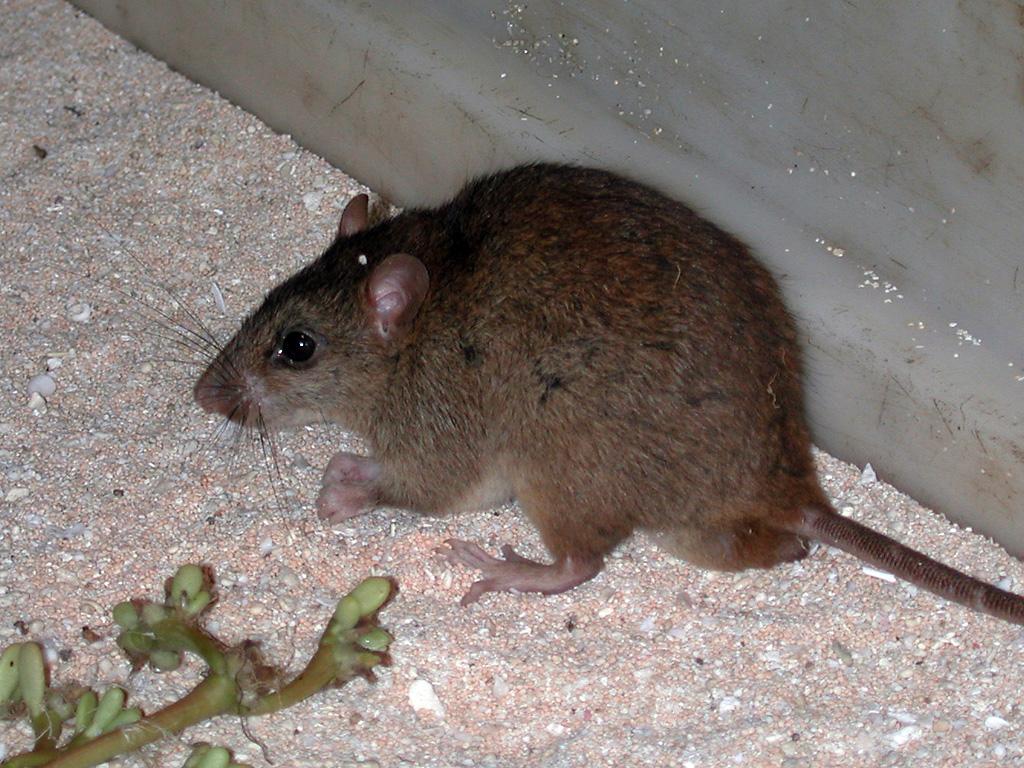
Bramble Cay is a speck of sand at the northern end of the Great Barrier Reef, about 340 meters long and 150 meters wide, and never more than 3 meters above sea level. For as long as scientists knew about it, that cay was the only known home of a small brown rodent, the Bramble Cay melomys.
The melomys had a body about 15 to 16.5 centimeters long, a scaly tail about as long again, and a weight of roughly 78 to 164 grams. It lived on the cay’s patch of low vegetation, only about 2 hectares at most. A 1978 survey estimated the population in the hundreds. By 1998, researchers estimated about 90, and by 2008 fewer than 100 remained in total. The last confirmed sighting came in 2009. Surveys in 2011 and 2014 found nothing, and an exhaustive search in 2015 failed to turn up a single animal.
The culprit was the ocean. Storm surges and rising seas repeatedly washed over the cay, killing off the plants the rodents ate and sheltered in. A 2016 report by Queensland researchers concluded that this “probably represents the first recorded mammalian extinction due to anthropogenic climate change.” The Australian government made it official on February 18, 2019.
Not Every Story Ends Here
There are glimmers of hope. Spix’s macaw, made famous by the movie Rio, was declared extinct in the wild in 2019. Captive-bred birds were flown home to Brazil in 2020, released in Bahia starting in 2022, and hatched chicks in the wild by 2023, although a virus outbreak in the small wild flock in 2025 showed how fragile comebacks can be. And in 2019, an elderly female tortoise turned up on Fernandina Island in the Galápagos, from a species previously confirmed only from a single male collected in 1906.
For more animal wonders, meet these animals with real-life superpowers or explore the deadliest animals on Earth.
Quick answers
What was the first animal to go extinct because of climate change?
The Bramble Cay melomys, a small rodent from a tiny island in Australia’s Torres Strait, is widely considered the first mammal extinction linked to human-caused climate change. Rising seas and storm surges destroyed its island habitat. It was last seen in 2009, and the Australian government officially declared it extinct in February 2019.
Is the Tasmanian tiger really extinct?
Officially, yes. The last known thylacine died at Hobart Zoo in 1936, and the species was declared extinct by the IUCN in 1982 and by Tasmania in 1986. Unconfirmed sightings continue, and a 2023 study suggested it may have survived into the late 1990s, but no confirmed evidence of a living thylacine has emerged since 1936.
Can scientists bring extinct animals back to life?
Not yet in any lasting way. The closest attempt came in 2003, when scientists cloned the extinct Pyrenean ibex, but the kid died within minutes. Companies such as Colossal Biosciences are now working on projects involving the thylacine and other species using gene editing. Many scientists argue that any results would be close copies, not the original animal.
Sources, further reading & photo credits
- Monteverde Cloud Forest Reserve — Wikipedia
- Passenger pigeon — Wikipedia
- Thylacine — Wikipedia
- Caribbean monk seal — Wikipedia
- Golden toad — Wikipedia
- Pyrenean ibex — Wikipedia
- Poʻouli — Wikipedia
- Baiji — Wikipedia
- Western black rhinoceros — Wikipedia
- Lonesome George — Wikipedia
- Bramble Cay melomys — Wikipedia
Cover image: Haakon S. Krohn · CC BY-SA 3.0 · via Wikimedia Commons. Photos throughout this list are sourced from Wikimedia Commons under the licenses noted in each caption.