10 Rare Natural Phenomena Most People Never See

Most of us have seen a rainbow, a thunderstorm, maybe a shooting star if we stayed up late enough. But nature keeps a second, stranger catalog for anyone in the right place at the right moment: clouds that hang like udders, rocks that wander across a desert, and a waterfall that bleeds red out of an Antarctic glacier.
This countdown of rare natural phenomena covers ten sights most people will never witness, along with the surprisingly elegant science behind each one and where (and when) your odds are best. Some require patience, some require travel, and a couple require serious planning and safety precautions. Every one of them is real, and every one has been caught on camera.
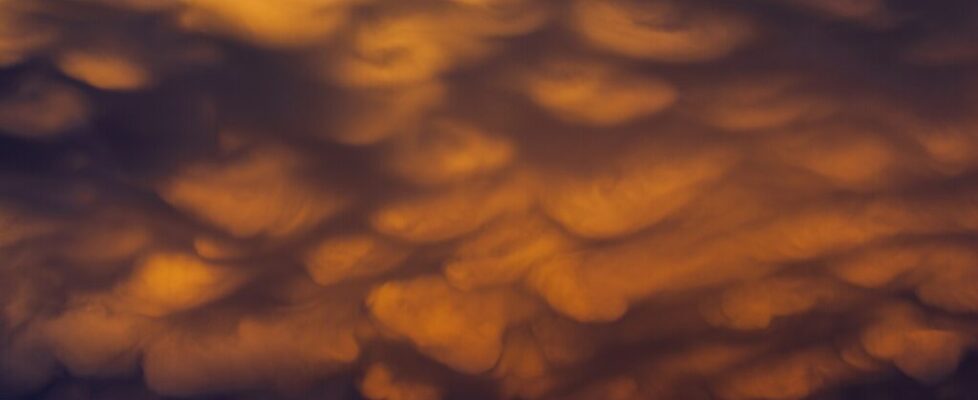
10Mammatus Clouds

After a violent thunderstorm rolls through, people sometimes look up and see the sky turned inside out: a ceiling of smooth, drooping pouches, glowing gold or pink if the sun is low. These are mammatus clouds, named from the Latin mamma, meaning udder or breast, and they look far more menacing than they are.
Most clouds form where air rises and cools. Mammatus do the opposite. They usually hang from the underside of the anvil, the flat, spreading top of a towering cumulonimbus storm cloud, where cold air loaded with ice crystals and droplets sinks into drier air below. Those sinking pockets of cloudy air bulge downward into lobes that often span a kilometer or more. Scientists still debate exactly which processes dominate, from cooling as the cloud evaporates to turbulence along its base.
Where to see them: anywhere big thunderstorms brew, but the US Great Plains in late spring and summer are a classic stage. Look toward a storm that is departing or passing at a distance, especially near sunset, when low light makes the pouches glow. Mammatus aren’t dangerous on their own, but they often accompany severe storms, so watch from a safe spot and keep an eye on local weather warnings.
9Light Pillars
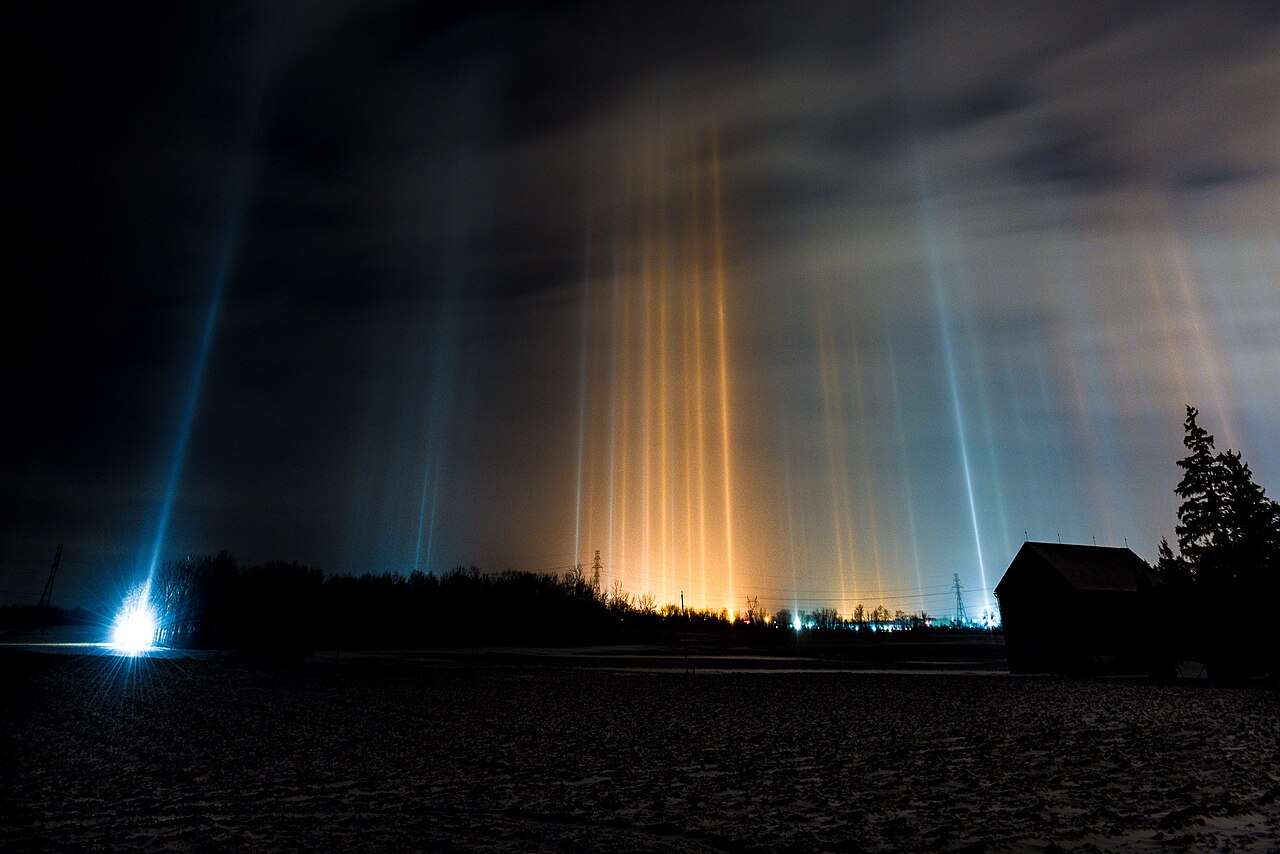
On certain frigid nights in places like Alberta, Alaska, or northern Finland, towns wake up to what looks like a sci-fi invasion: glowing columns of colored light beaming straight up from the streets into the sky. No aliens, no searchlights. Just ice.
Light pillars form when flat, six-sided ice crystals, tiny hexagonal plates, drift through calm, cold air. As they fall, air resistance tends to keep them nearly horizontal, the way a leaf glides, and their faces act like millions of little mirrors. Light from a source below or behind them, whether a low sun, the moon, or a streetlamp, reflects off those gently wobbling plates toward your eye, stretching each light into a vertical streak. The pillar isn’t really a beam hovering over the light. It’s an optical effect created by countless crystals between you and the source.
Where to see them: still, bitterly cold winter nights with ice crystals hanging in the low air, often around freezing fog, in Canada, the northern United States, Scandinavia, and Russia. City, stadium, and parking-lot lights produce the most colorful displays, with each pillar taking on the hue of its source. The daytime version, a sun pillar, shows up shortly after sunrise or before sunset as a golden shaft rising from the sun.
8Moonbows
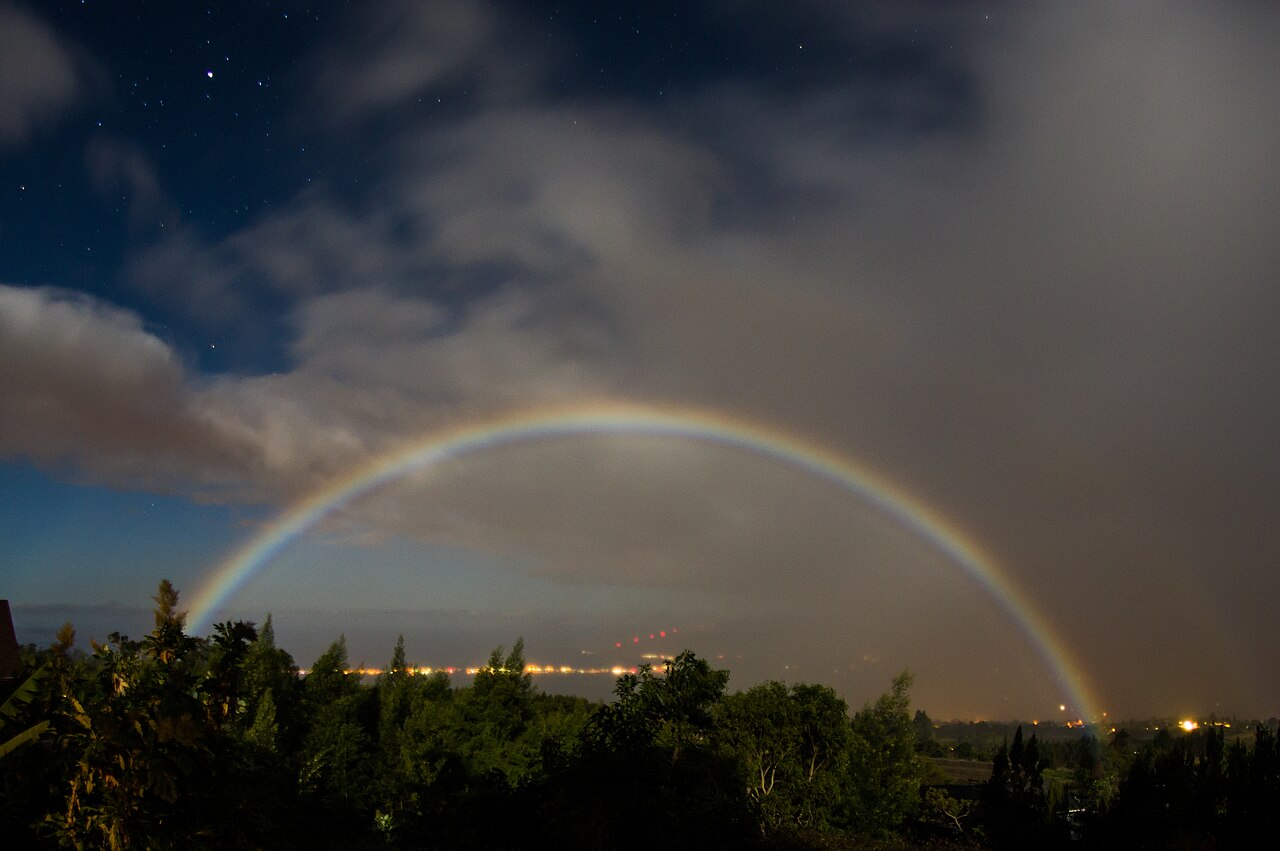
A rainbow at midnight sounds like something out of a storybook, but under the right moon it’s just physics. Moonbows, also called lunar rainbows, form exactly like ordinary rainbows: light enters water droplets, bends, reflects off the back of each drop, and exits split into colors. The difference is the light source, sunlight bounced off the Moon, which is far dimmer.
That dimness is why most moonbows look ghostly white to the naked eye. In low light, our eyes lean on rod cells, which are great at detecting brightness but can’t distinguish color. A long-exposure photograph reveals the full spectrum hiding in plain sight. The recipe is demanding: a bright moon at or near full, sitting low in the sky (below about 42 degrees), dark surroundings, and plenty of water droplets on the opposite side of the sky.
Where to see them: waterfalls are your best bet because they supply spray on demand. Cumberland Falls in Kentucky, often nicknamed the “Niagara of the South,” is famous for moonbows on clear nights around the full moon, and Victoria Falls on the Zambia–Zimbabwe border is another celebrated spot. Yosemite Falls in spring, when snowmelt peaks, draws night photographers too.
7The Green Flash
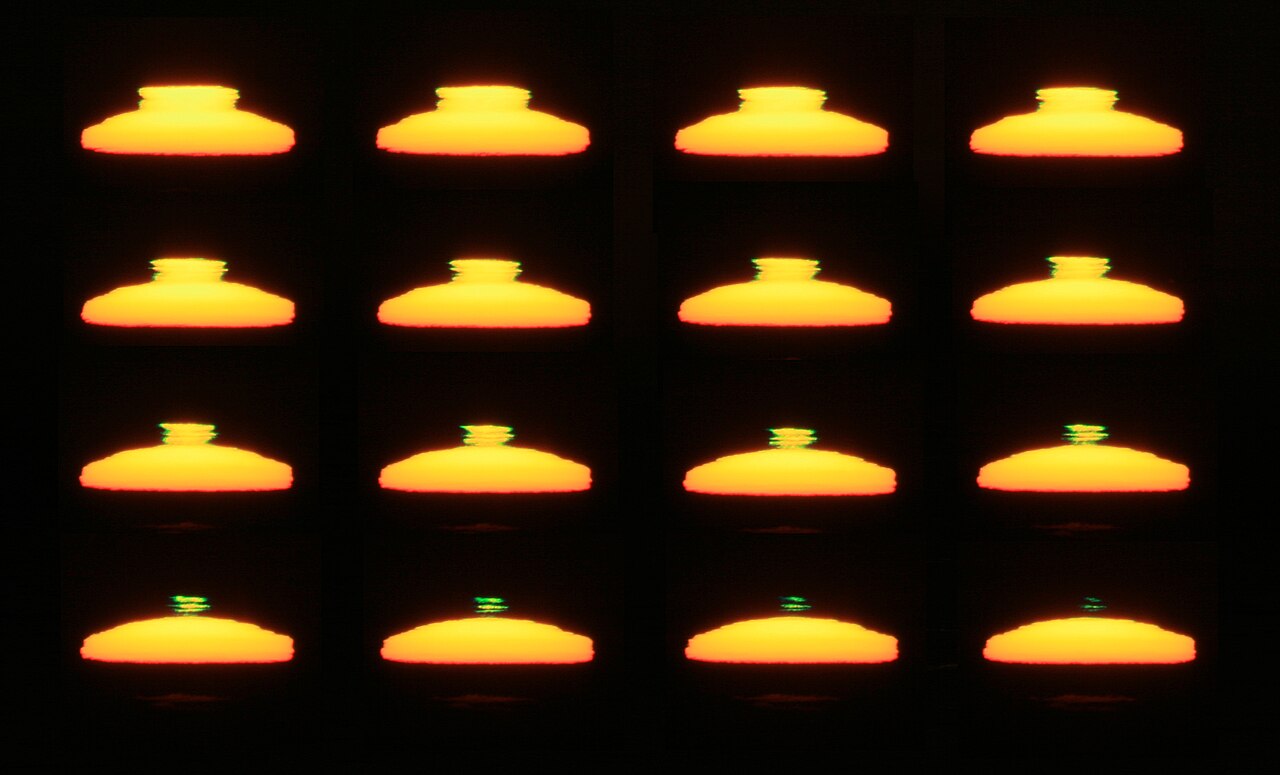
Sailors have chased it for centuries, and Jules Verne built an entire 1882 novel, The Green Ray, around it. Just as the last sliver of the Sun slips below a clear horizon, its top edge can flare emerald green for a second or two, then vanish. Blink and you’ve missed it, which is exactly why so many people assume it’s a myth.
It’s very real. Earth’s atmosphere acts like a weak prism, bending shorter wavelengths of light such as green and blue a little more than longer ones like red. Near the horizon, sunlight passes through so much air that the colors separate by a tiny sliver, and the very top of the setting Sun shows the most strongly bent colors last. Blue and violet are mostly scattered away along the long path, leaving green as the final color standing. Layers of warm and cool air can act as a natural magnifier, making the flash easier to catch.
Where to see it: anywhere with a perfectly clear, distant horizon, ideally over the ocean, from Hawaii and Southern California to the Florida Keys and the Mediterranean. Wait for a cloudless sunset, avoid staring at the full Sun, and watch only the final sliver. Skip binoculars and cameras’ optical viewfinders; magnified sunlight can damage your eyes.
6The Sailing Stones of Racetrack Playa
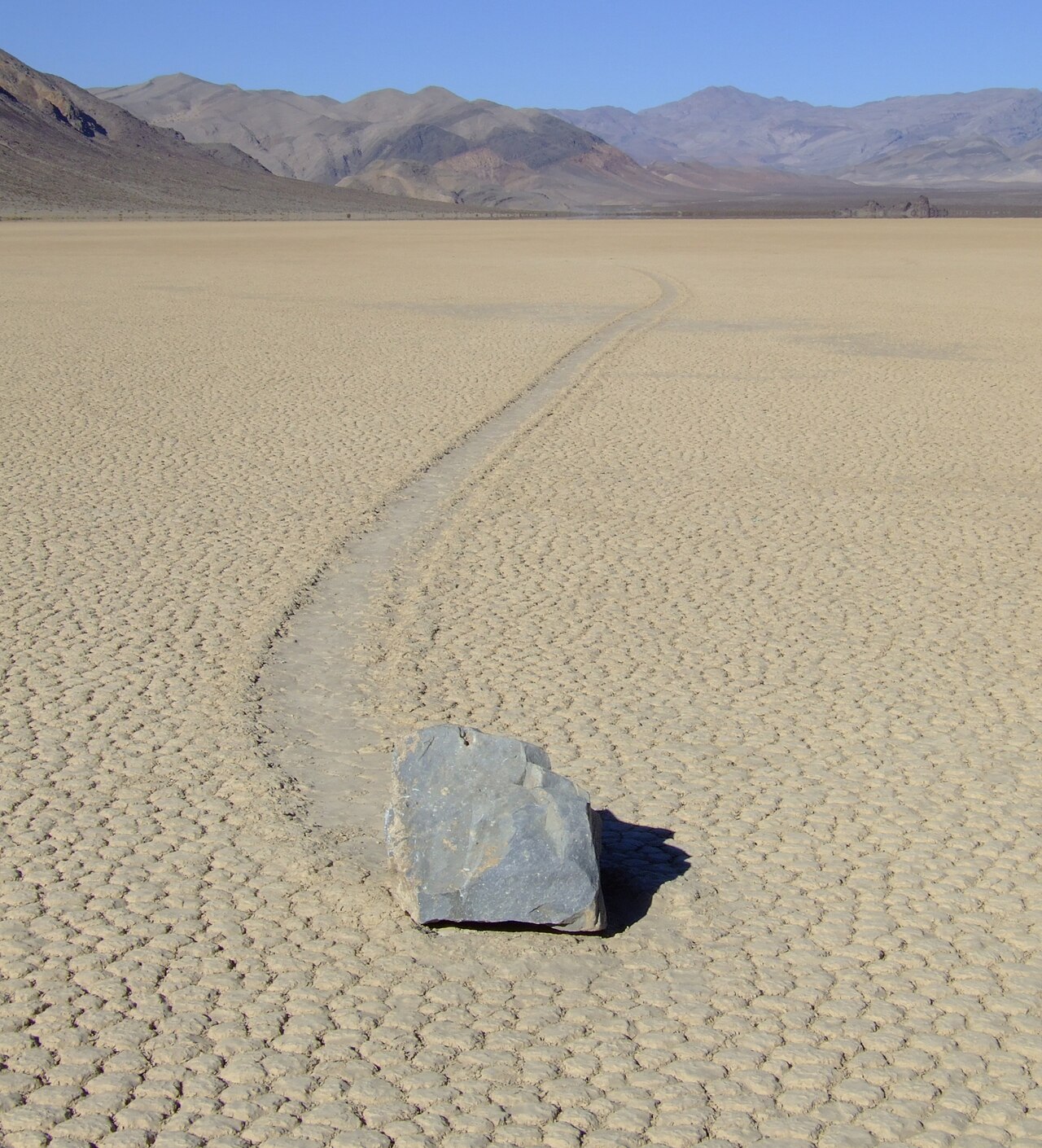
For decades, the rocks of Death Valley’s Racetrack Playa seemed to move on their own. Some weigh hundreds of pounds, yet they leave long trails scored into the cracked, bone-dry lakebed, some stretching hundreds of meters, and nobody had ever seen one budge. Theories ranged from hurricane-force winds to sheets of ice to pranksters.
The answer arrived in 2014. Cousins Richard and James Norris, working with a team of scientists, had placed GPS-tagged stones and time-lapse cameras on the playa, and in December 2013 they finally caught the rocks in the act. After rain and snowmelt formed a shallow pond, overnight cold froze its surface into ice panes only a few millimeters thick. On sunny mornings the ice broke into large floating sheets that light breezes pushed across the water, shoving the rocks along at a few meters per minute. The team published its findings in the journal PLOS ONE.
Where to see them: Racetrack Playa sits in a remote corner of Death Valley National Park, reached by a long, rough dirt road notorious for flat tires. The park recommends a high-clearance vehicle with sturdy tires and a full-size spare. Visit in the cooler months, carry plenty of water, and never move or take a rock; it’s illegal, and thefts have already damaged the site.
5The Morning Glory Cloud
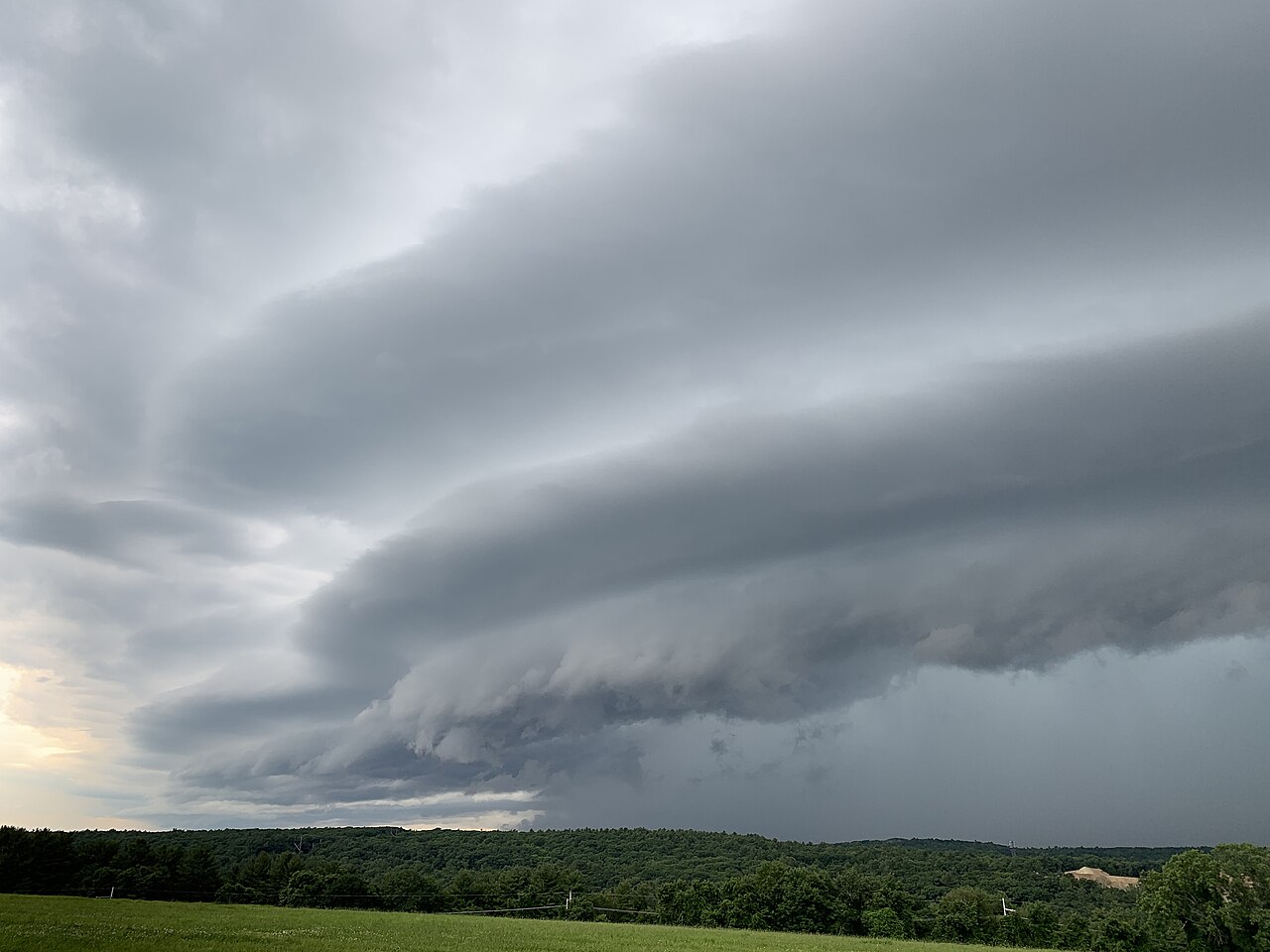
Every Southern Hemisphere spring, glider pilots haul their aircraft to Burketown, a tiny outback town in northern Queensland, and wait for dawn. If they’re lucky, a colossal tube of cloud rolls in from the Gulf of Carpentaria, and they ride it like surfers on a wave. This is the Morning Glory, one of the most spectacular cloud formations on Earth.
A Morning Glory is a roll cloud, a horizontal cylinder that can stretch up to roughly 1,000 kilometers (620 miles) long and stand 1 to 2 kilometers tall, often skimming just 100 to 200 meters above the ground. It marks the crest of a solitary atmospheric wave. Sea breezes from both sides of the Cape York Peninsula collide overnight, launching a disturbance that travels along a layer of cool, stable air near the surface. Air lifts and cools at the wave’s leading edge, so moisture condenses into cloud, then sinks and evaporates at the trailing edge, which makes the cloud appear to roll as it advances.
Where to see it: Burketown and the southern Gulf of Carpentaria, usually from late September to early November, in the early morning. Appearances aren’t guaranteed, so plan for several days. Smaller roll clouds pop up elsewhere in the world, but few places produce them this reliably.
4Blood Falls
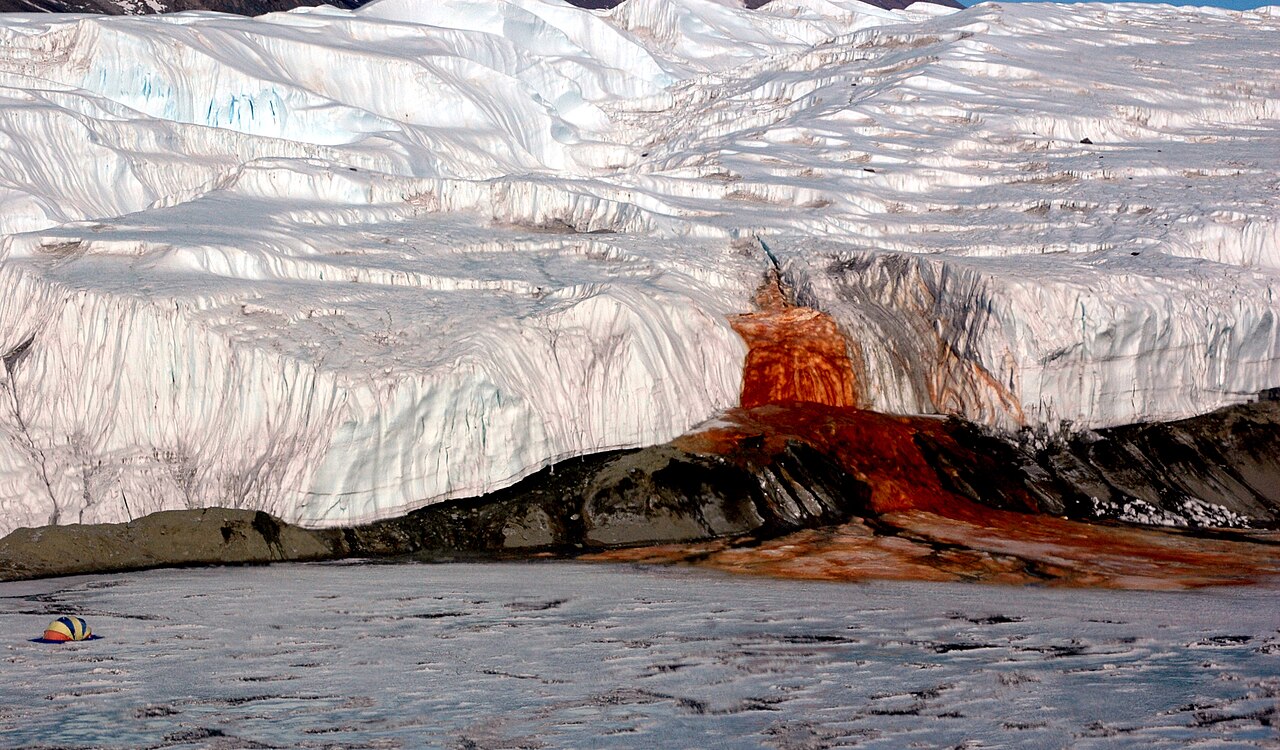
In the McMurdo Dry Valleys of Antarctica, one of the coldest and driest places on Earth, a glacier appears to be bleeding. A rust-red stain spills from the face of Taylor Glacier onto the ice of West Lake Bonney below, like a crime scene in the middle of a frozen desert.
British geologist Thomas Griffith Taylor came across it in 1911 during Robert Falcon Scott’s Terra Nova Expedition, and early explorers blamed red algae. The real culprit is iron. Deep beneath the glacier lies a reservoir of extremely salty brine, salty enough to stay liquid well below the normal freezing point of water. The brine is rich in iron and nearly devoid of oxygen. When it seeps out and meets the air, the iron oxidizes and turns red, much like a rusting nail. A 2023 study led by Johns Hopkins scientist Ken Livi found that much of the color comes from iron-rich nanospheres about 100 times smaller than a human red blood cell.
The brine also harbors life. Microbes in the dark, oxygen-starved reservoir appear to survive by using iron and sulfur compounds, offering a model for how life might persist beneath the ice of Mars or Jupiter’s moon Europa. Seeing the falls in person usually means joining a research team or a rare, costly Ross Sea expedition cruise.
3Bioluminescent Waves
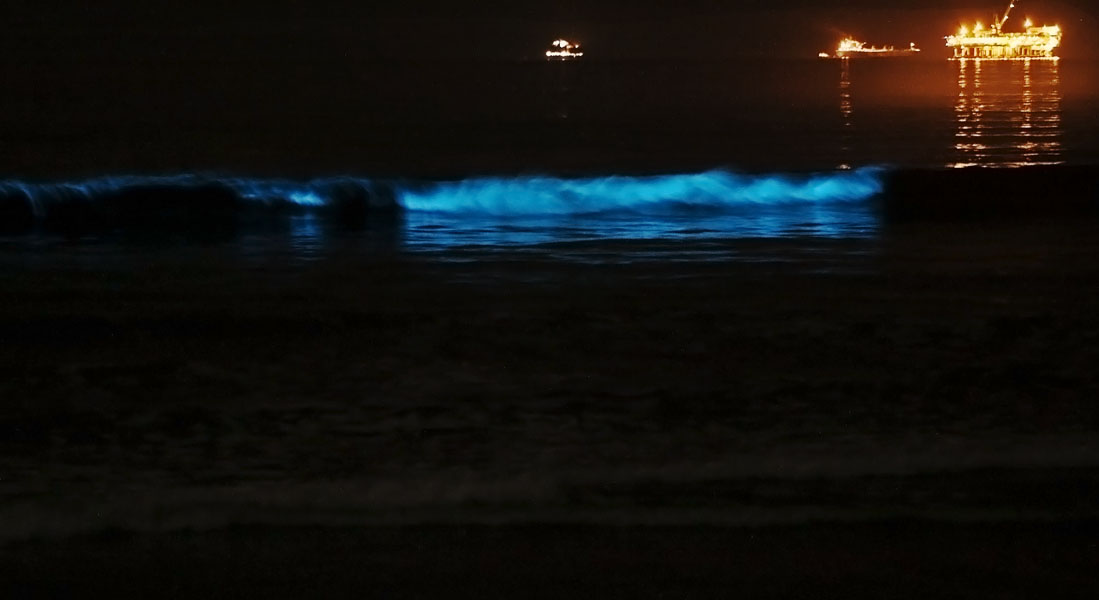
Picture a dark beach where every breaking wave flares electric blue and footprints in the wet sand sparkle like spilled stars. That’s no photo filter. It’s the work of countless single-celled organisms called dinoflagellates, and when conditions line up, they turn the surf into a light show.
Many dinoflagellates carry a light-producing compound, luciferin, and an enzyme, luciferase. When the water around them gets jostled by a wave, a paddle, or a passing fish, the mechanical stress triggers a rapid chemical reaction inside each cell, releasing a brief flash of blue light. A leading idea is that it works like a burglar alarm: the glow can startle grazers or draw in bigger predators that eat whatever is eating the plankton. Blooms dense enough to light up whole waves are irregular and hard to forecast, which is part of the magic.
Where to see them: Southern California beaches during blooms of Lingulodinium polyedra, which can tint the water reddish-brown by day; the Maldives, especially Vaadhoo Island; and Puerto Rico’s bioluminescent bays. Mosquito Bay on Vieques holds the Guinness World Records title for brightest bioluminescent bay. Go on a moonless night with a licensed tour, which typically uses kayaks or electric boats, and follow guides’ rules about sunscreen and bug spray.
2Volcanic Lightning
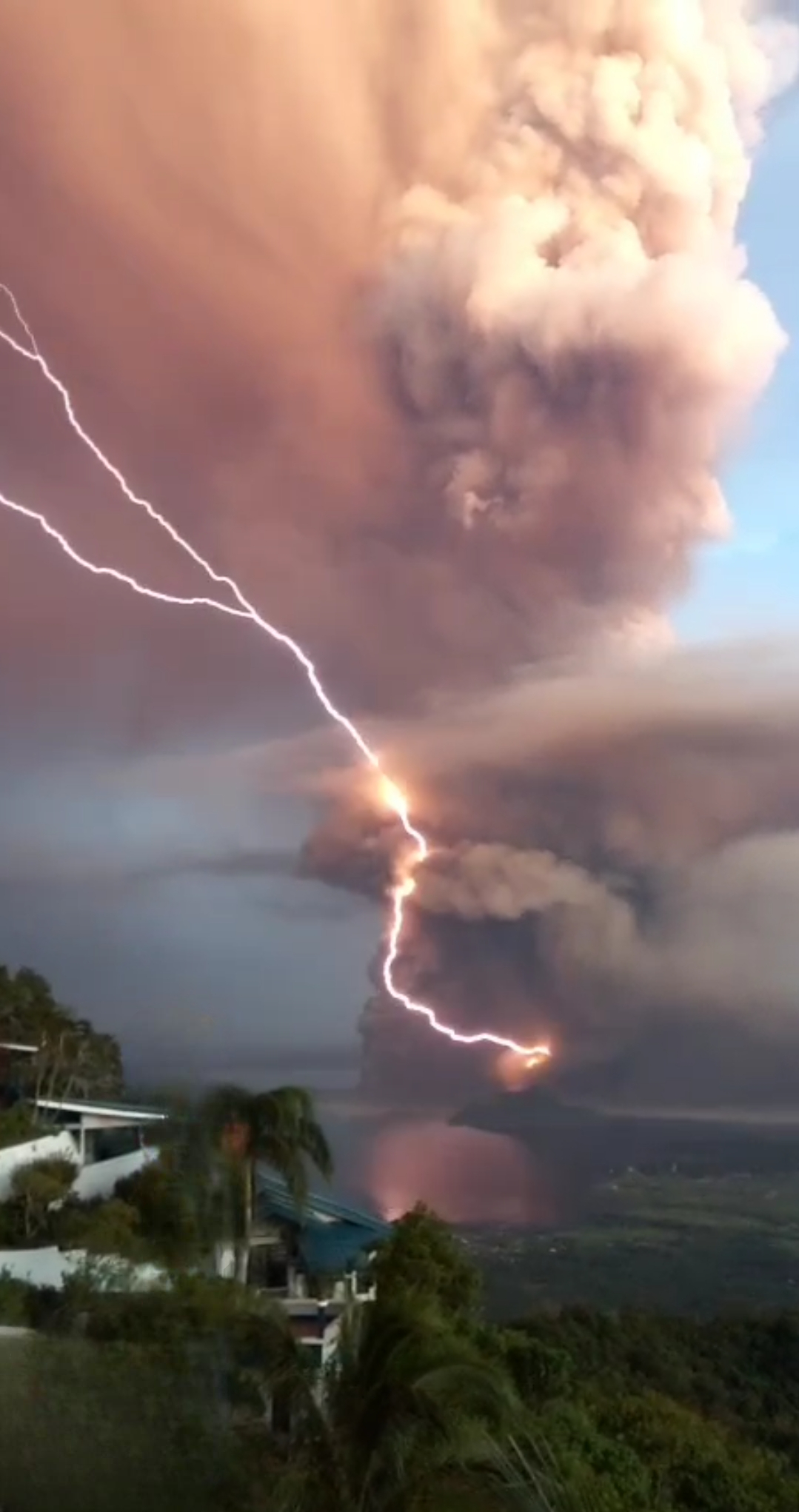
When Mount Vesuvius erupted in AD 79, the Roman writer Pliny the Younger described a terrifying darkness split by flashes of lightning. Nearly two thousand years later, cameras confirm what he saw. Some eruptions generate their own thunderstorms, wrapping columns of ash in forked bolts.
The leading explanation is static electricity on a colossal scale. As an eruption blasts out ash, pulverized rock, and steam, particles collide and rub against each other, separating positive and negative charges, a bit like shuffling your socks across a carpet. Rock fragments shattering near the vent add more charge, and in tall plumes that rise above the freezing level, colliding ice particles electrify the cloud the same way they do in an ordinary thunderstorm. When the charge difference grows large enough, lightning bridges the gap, sometimes right above the crater.
The record holder is the January 2022 eruption of Hunga Tonga–Hunga Haʻapai in the South Pacific. Its plume shot roughly 58 kilometers high, and the lightning detection company Vaisala counted almost 590,000 strikes over about three days, around 400,000 of them in the six hours after the main blast. Where to see it: only from a safe distance during eruptions at frequently active volcanoes, such as Sakurajima in Japan, and always within official exclusion zones.
1Catatumbo Lightning
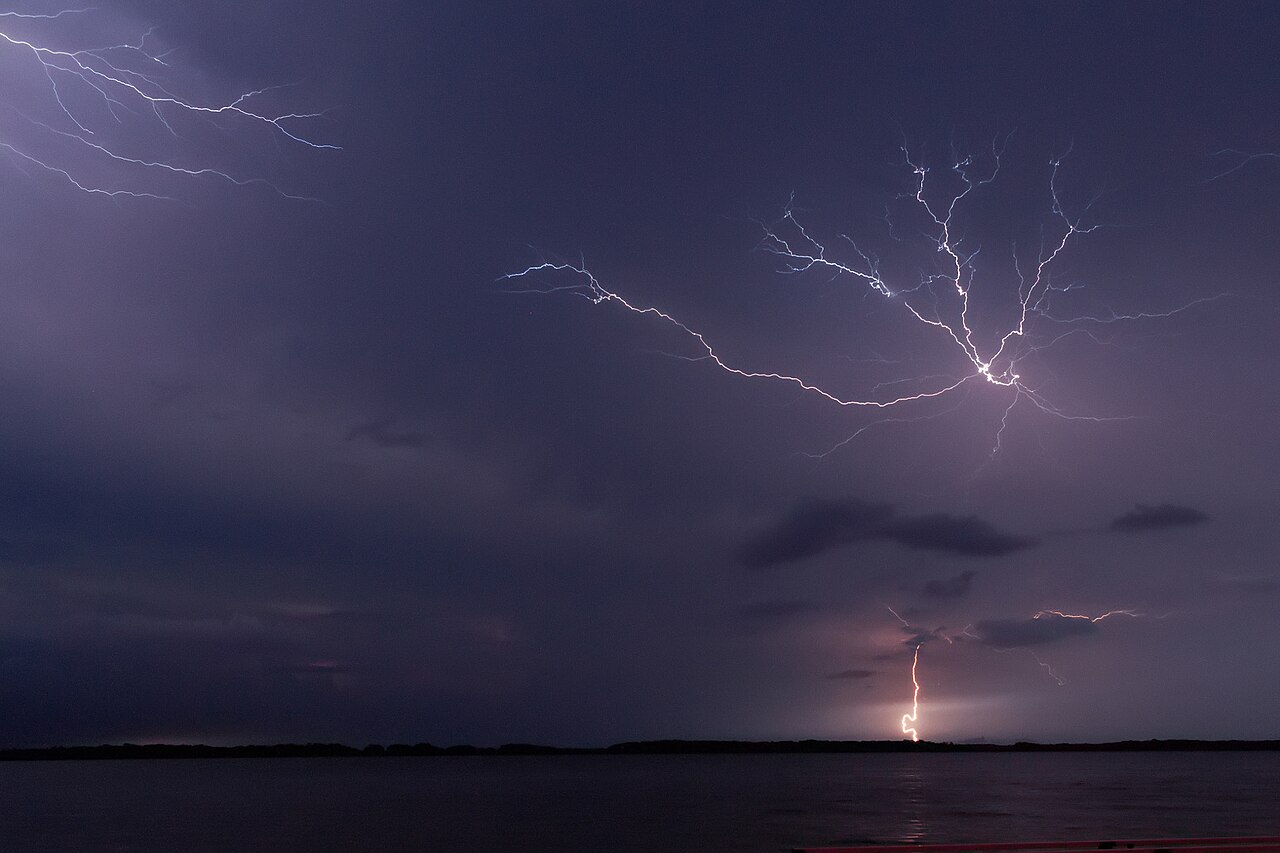
Sailors on Lake Maracaibo have long had a lighthouse that needs no bulb. On most nights of the year, a storm flickers over the southwestern corner of the lake, where the Catatumbo River flows in, with lightning so frequent and persistent that locals call it the “Lighthouse of Maracaibo.” Displays can go on for up to nine hours a night.
Guinness World Records recognizes the area as having the highest concentration of lightning on Earth, at nearly 250 flashes per square kilometer each year, and NASA satellite data also ranks Lake Maracaibo as the planet’s top lightning hotspot. The cause is geography. Warm, humid air builds over the lake by day, and at night cool winds sliding down from the surrounding Andes ranges collide with it, building towering thunderstorms over the same spot again and again. An older theory credited methane from the region’s swamps and oil fields, but researchers now emphasize this wind-and-terrain setup.
The storm is woven into local identity. Lightning appears on the flag of Venezuela’s Zulia state, and legend has it that lightning exposed a nighttime attack by Sir Francis Drake’s ships, though historians treat that story with caution. Where to see it: boat tours and stilt-house villages on the lake have offered viewing trips, but check your government’s current travel advisories before planning any visit to Venezuela.
Keep Your Eyes on the Sky
The common thread in all ten? Timing. Most of these sights demand the right season, the right weather, and a willingness to stand around in the dark or the cold waiting for something that might not happen. Check forecasts, moon phases, and local conditions, bring a camera with a tripod, and treat every successful sighting as the small miracle it is.
If these wonders have you dreaming of travel, start with our list of natural wonders that look like another planet, or look even higher with these space facts that will break your brain.
Quick answers
Where is the lightning capital of the world?
Lake Maracaibo in northwestern Venezuela holds the title. Guinness World Records lists the area near the mouth of the Catatumbo River as having the highest concentration of lightning on Earth, at nearly 250 flashes per square kilometer per year, and NASA satellite data ranks it as the planet’s top lightning hotspot. Storms there can flicker for hours on most nights.
How do the sailing stones in Death Valley move?
Researchers solved the puzzle in 2014. After winter rain forms a shallow pond on Racetrack Playa, thin sheets of ice freeze overnight. On sunny mornings, the ice breaks into floating panes that gentle winds push across the water, shoving the rocks along at a few meters per minute. The rocks leave trails in the soft mud beneath.
What causes a moonbow?
A moonbow forms the same way as a rainbow, when light is refracted and reflected inside water droplets, but the light comes from the Moon. Because moonlight is so faint, moonbows usually look white to the naked eye, though cameras reveal their colors. They need a bright, low, nearly full moon, dark skies, and spray or rain opposite the Moon.
Sources, further reading & photo credits
- Morning Glory cloud — Wikipedia
- Mammatus cloud — Wikipedia
- Light pillar — Wikipedia
- Moonbow — Wikipedia
- Green flash — Wikipedia
- Sailing stones — Wikipedia
- Arcus cloud — Wikipedia
- Blood Falls — Wikipedia
- Bioluminescence — Wikipedia
- Volcanic lightning — Wikipedia
- Catatumbo lightning — Wikipedia
Cover image: David Zhang from Canada · CC BY-SA 2.0 · via Wikimedia Commons. Photos throughout this list are sourced from Wikimedia Commons under the licenses noted in each caption.